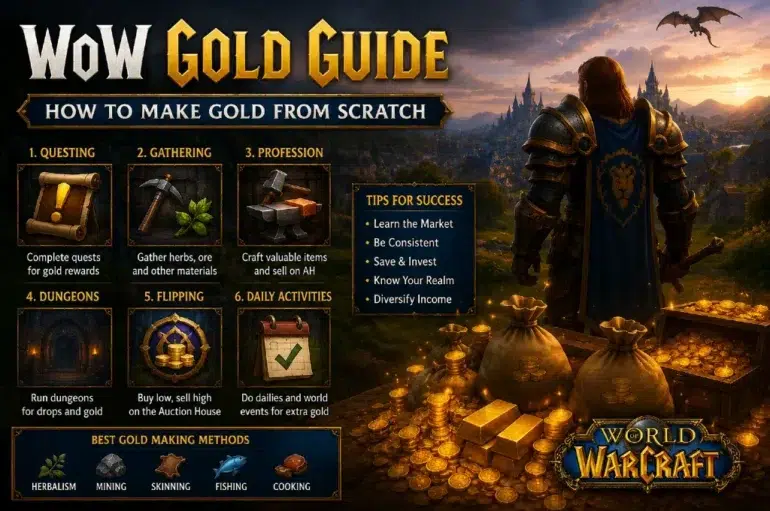
It is always fun and exciting to make a new character in WoW, but it also starts to get less fun after the initial expenditures. Bags, repair costs, profession supplies, enchants, consumables, crafted items, mounts, and Auction House transactions can deplete your funds very quickly. That is why World of Warcraft gold becomes important right from the beginning, no matter if you just created a new character.
The great thing about creating an economy is that there is nothing difficult about it. You do not need a large sum of money to create a solid foundation and sell useful materials, avoid bad purchases, and gradually move to better means of income generation. This principle applies to all expansion packs, including Midnight, because WoW economy always values knowledge of demand, timing, and supply.
Why Gold Matters on a Fresh Character
Gold plays a much greater role in character development than most people realize: initially, you might just use gold for mounts, bags, repairs, and upgrading your basic equipment; eventually, there will be a lot more uses for your money, and it includes enchants, gems, flasks, food, tradeskill items, crafting components, and maybe some cosmetic awards as well.
The new player lacks all the little conveniences that experienced players have in reserve. You have no bank of materials to draw from, you don’t have any maxed out professions, you have no stock of consumables, and no regular market activity either.
This is also where players begin comparing time and value. Some farm every coin manually, while others look at World of Warcraft gold for sale when they want a faster starting budget for basic progression costs. Either way, the smarter approach starts with knowing what you actually need.
Simple WoW Gold Farming Methods
The easiest way to make gold from zero is to focus on activities with low entry costs. Gathering professions are a good starting point for new characters and alts. Herbalism, Mining, and Skinning do not require expensive recipes, rare tools, or deep market knowledge. You collect materials while leveling, post them on the Auction House, and let crafters create the demand.
Current expansion materials are generally going to perform better than old world materials, particularly in the first couple of weeks of the season. Currently, WoW Midnight gold generation is going to work according to the usual pattern seen in many previous expansions, where herbs, ore, leather, cloth, and reagents will become valuable as the raiders, Mythic+ users, and the profession experts need them urgently.
Legacy content is as profitable as the previous method, but it still works. Raw gold, vendor items, transmog pieces, pets, and rare loot from old dungeons, raids, and world content farms will come into play here.
For fresh characters, the best early farming methods are:
- gathering current herbs and ore while leveling;
- skinning mobs in busy questing areas;
- selling cloth, meat, and profession materials;
- running raids from older expansions for collectibles;
- completing weekly activities that provide raw rewards;
- checking world content that drops tradeable items.
Do not chase every farm at once. Pick one or two methods and repeat them long enough to understand the real profit. Alternatively, look for WoW Gold for sale in case you aren’t sure farming any kind of content is your cup of tea.
Use Professions Before Risky Auction House Flips
Professions can turn a weak economy into a steady one, but timing matters. Gathering works well from day one because it creates income without heavy investment, and crafting becomes much better later, once you understand recipes, margins, and buyer demand.
A common mistake is leveling an expensive crafting profession too early. Many players rush into Blacksmithing, Tailoring, Alchemy, Jewelcrafting, or Enchanting before checking material costs. Then they discover that the finished items sell for less than the reagents. This is not a profession problem. It is a planning problem.
- If you start from zero, use gathering first. Build capital, watch prices, and only then move into crafting.
- Once there’s enough gold for you, switch to items that players buy repeatedly. Consumables, enchants, gems, bags, profession tools, and gear enhancements usually stay relevant longer than random crafted armor.
This is also why WoW gold buying becomes an option for many player in new seasons. Some players want to skip the slow start and cover their first crafting setup, while others prefer building everything through professions. Both paths still require market awareness. Having more gold does not help if you spend it on items with poor resale value.
For profession research, it is useful to check databases and guides like Wowhead’s profession section, especially when you need recipe sources, reagent lists, or crafting updates.
Learn the Auction House Before Spending Big
The Auction House is where most gold mistakes happen. New players often buy items at peak prices, undercut too aggressively, or hold materials until demand disappears. The system looks simple, but the market changes throughout the week.
Before investing, watch the market for a few days. Check which materials sell often, which crafted goods have stable demand, and which items only look expensive because nobody buys them. A high listing price does not always mean real value.
Some players compare farming time with the current WoW gold price when deciding how to build their budget. Others search for the best place to buy WoW gold when they need a faster setup for consumables, crafted gear, or profession progress. In that context, WoW gold fits naturally into economy planning: decide your goal first, estimate the cost, and avoid wasting resources on upgrades that do not support your character’s next step.
The same mindset helps with regular Auction House use. Never buy everything at once because the item is available. Check the price history, compare similar items, and ask one simple question: will this purchase help my character now, or can it wait?
Build a Weekly WoW Gold Routine
A good gold routine should feel manageable. If your plan requires hours of farming every day, you will probably drop it after a week. Instead, build a small weekly loop that fits around your normal gameplay.
For example, gather materials while doing world content, run a few legacy raids when you want something chill, and check the Auction House before logging off. If you raid or run Mythic+, craft or buy consumables before prices spike. If you level alts, send useful materials to your main instead of vendoring everything too quickly.
This routine works because it turns gold-making into a habit rather than a grind. You stop thinking of gold as something you farm only when broke. Instead, you keep a small flow of income running in the background.
Players who prefer faster starts may choose to buy WoW gold before a season begins, especially when they want to cover consumables, crafted gear, or profession costs without delaying progression. Others avoid that route and rely on farming only. In both cases, the important part is budgeting. Gold disappears quickly when every purchase feels “small.”
A simple weekly routine can look like this:
- sell gathered materials two or three times per week;
- restock raid consumables before reset-day prices rise;
- keep a reserve for repairs, enchants, and gems;
- avoid buying cosmetic items during progression weeks;
- use old raids or world content as backup income;
- review Auction House prices before large purchases.
This approach keeps your character ready without forcing you into endless farming loops.
Manage Gold Around Raids, Mythic+, and Crafting
Endgame content changes how players spend gold. Raiding and Mythic+ usually create repeated expenses, and repairs stack up during progression. Consumables become mandatory in serious groups. Crafted gear can require expensive reagents, optional materials, and profession services. Even if you farm well, a few intense weeks can burn through your savings.
That is why you should separate “progression gold” from “fun gold”:
- Progression gold covers power-related expenses: enchants, gems, crafted pieces, consumables, repairs, and profession upgrades.
- Fun gold goes into mounts, transmog, toys, pets, and optional purchases.
- Mixing both budgets often leads to problems. You buy a mount, then realize you cannot afford your raid setup.
If someone chooses buying WoW gold, it makes more sense to treat the gold as a progression budget rather than random spending money. A clear budget helps you avoid the classic trap: getting more gold, spending it fast, and ending up with no long-term benefit.
Long-Term Gold Habits That Still Work
WoW’s economy changes every expansion, but good habits stay useful. Players who make steady gold usually do not rely on one magic farm. They understand demand, avoid panic spending, and keep their income sources flexible.
Do not invest your whole budget into one item type. Markets can shift after tuning changes, profession updates, or new content releases. Also, avoid buying expensive materials during the first rush unless you truly need them. Prices often settle once more players begin farming.
It also helps to track what your character uses every week. If you always buy the same flasks, food, gems, or enchants, learn when they are cheaper. If you craft often, keep a small stock of common reagents. If you play several alts, organize your bank so useful materials do not get lost or vendored by mistake.
The best long-term gold habits are simple:
- keep a reserve before major patches or seasons;
- sell high-demand materials when activity peaks;
- avoid emotional purchases after lucky drops or big sales;
- use professions that match your playstyle;
- check real demand before crafting expensive items;
- keep your gold plan flexible when the market shifts.
Making gold from zero in World of Warcraft is less about one perfect farm and more about consistency. A fresh character needs a practical plan: gather early, sell useful materials, learn the Auction House, use professions carefully, and protect your budget during progression.
Midnight may change materials, prices, and seasonal priorities, but the foundation stays the same. Players who understand the economy spend smarter, prepare faster, and avoid the constant feeling of being broke before every raid night.
Gold should support your character, not control your entire play session. Build a routine that fits your playstyle, keep your spending realistic, and treat every purchase as part of long-term progression.