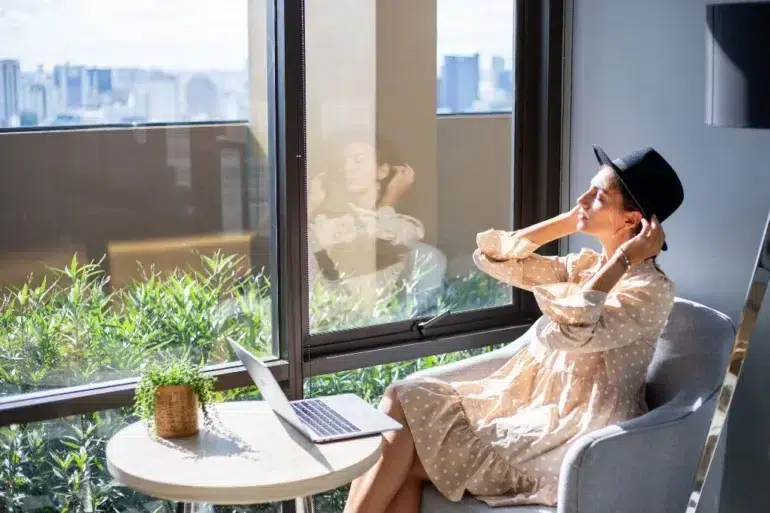
There was nothing wrong with the chair. At least that was the official position. The chair was comfortable. The café was popular. The coffee was good. Yet every afternoon, around the same time, the table near the front window became the last one anyone wanted. Customers would walk in, glance towards it, and choose somewhere else.
If the café was busy, somebody would eventually sit there. Then five minutes later they would start shifting around. Moving their drink. Squinting at a laptop screen. Pulling a chair slightly to the left in search of shade that didn’t really exist.
One afternoon a staff member laughed and said, “That table loses customers every sunny day.” Everyone knew exactly which table she meant. Funny thing is, conversations about windows rarely begin with windows. They begin with sunlight. Heat. Glare. A room that doesn’t feel quite right. The chair wasn’t the problem. The table wasn’t the problem either. The real issue was something people experienced every day but struggled to describe.
And that’s often how discussions around coloured glass film for windows begin. Not through a renovation plan or design project. Through small observations that repeat often enough to become impossible to ignore. The table by the window was simply the latest example.
The Conversation Usually Starts Somewhere Else
A lot of home improvement decisions arrive quietly. Nobody gathers the family together and announces they need to rethink their windows. Instead, somebody comments on the heat in one room. Someone else mentions a lack of privacy. A colleague complains about glare reflecting off a computer screen every afternoon. The conversation starts there.
A homeowner I spoke with recently said she spent months rearranging furniture before realising the furniture wasn’t the issue. She moved a reading chair. Then a desk. Then a small table. Nothing solved the problem. The sunlight simply followed.
Eventually she started looking into coloured glass film for windows. Not because she had always wanted it. Because she was tired of reorganising her living room around one section of glass. Which sounds strange.
Still, most practical decisions start with practical frustrations. Not grand visions. Not design trends. Just everyday experiences people would rather improve.
The Thing People Notice Every Day
There are certain features in a building that become invisible. Until they don’t. Windows fall into that category. Most people don’t spend much time thinking about them. Then summer arrives. Or the afternoon sun starts landing directly across a workspace. Or a room feels brighter than comfortable. Suddenly windows become the most discussed part of the property.
A business owner once described it perfectly. He said nobody mentioned the windows for years. Then one employee moved desks, and the conversation never stopped. Glare became a topic.
Comfort became a topic. The overall atmosphere of the space became a topic. Eventually that discussion led them towards coloured glass film for windows. What’s interesting is that nobody started the conversation by talking about window film.
They started by talking about how the room felt. That’s a pattern that appears again and again. People often arrive at Coloured Glass Film For Windows through experience rather than intention.
A room that’s too bright. A space that lacks privacy. A meeting room that feels different depending on the time of day. Small observations. Repeated often enough to create bigger questions.
The Part Nobody Plans For
A lot of people think design decisions are about appearance. Sometimes they are. But not always. Sometimes they’re about behaviour. The way people use a room. The way they avoid a room. The way they naturally gather in certain parts of a space while ignoring others.
A neighbour recently told me they started exploring coloured glass film for windows after noticing nobody used a particular corner of the house during summer afternoons.
The room itself was beautiful. Large windows. Good furniture. Plenty of space. Yet family members kept choosing other rooms. Nobody announced a boycott. They just drifted elsewhere. It was strange. Once they noticed it, they couldn’t stop noticing it.
That’s probably why discussions around coloured glass film for windows often feel surprisingly personal. They’re rarely about glass alone. They’re about comfort. Atmosphere. How a space supports daily life. Or, occasionally, how it gets in the way.
People considering coloured glass film for windows are often responding to patterns they see every day. Patterns that seem small until somebody points them out. Then they appear everywhere.
Not Everybody Ends Up in the Same Place
Some people prioritise privacy. Others focus on reducing glare. Some simply want a room to feel different. There isn’t one conversation. There are hundreds of different conversations that somehow arrive at a similar destination.
That’s probably why Coloured Glass Film For Windows from My Tint tends to emerge gradually. A homeowner notices afternoon heat. An office manager notices employee complaints. A café owner notices customers avoiding certain seats. Different starting points.
Similar observations. And perhaps that’s what makes these decisions interesting. They aren’t usually driven by a single dramatic moment. They’re shaped by repetition. The same experience occurring again and again until somebody finally decides to pay attention to it.
Back at the café, the afternoon sun was beginning to move lower. The famous table near the window was empty again. Not because anything was wrong with it. Because people had quietly learned where the sunlight would land.
A customer walked in, looked around, and almost sat there before choosing another table a few metres away. The staff member noticed and laughed. “See? Happens every day.” Outside, people continued walking past the window without giving it a second thought.
Inside, the sunlight stretched across the floor exactly where it always had. And for a moment it seemed funny that something as ordinary as a window could become the centre of so many conversations, even when nobody realised that was what they were talking about.