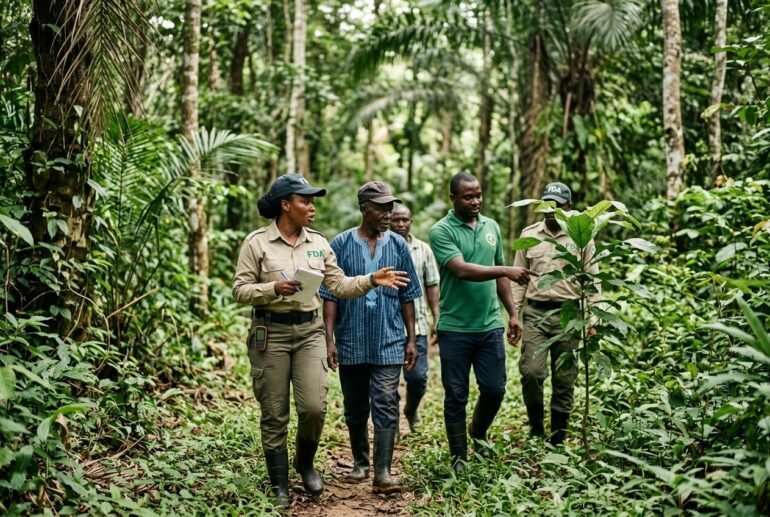
A Forestry Development Authority plays a much bigger role than many people realize. Most people think of forests as quiet green spaces, but behind every protected forest, tree plantation, logging permit, conservation project, or community forestry program, there is usually a public body responsible for planning, regulation, and long-term protection.
Forests are not just about trees. They support water systems, wildlife, soil health, rural jobs, climate balance, and local communities. According to the FAO Global Forest Resources Assessment 2025, forests cover about 4.14 billion hectares, or around 32% of the world’s land area. That makes forest governance a serious public responsibility, not just an environmental topic.
A well-run Forestry Development Authority helps balance two important needs: protecting natural resources and allowing responsible economic use. That balance is not always easy. People need land, timber, fuelwood, jobs, roads, and housing. At the same time, forests need protection from illegal logging, fires, overharvesting, land grabbing, and poorly planned development.
That is where the authority’s role becomes important.
What Is a Forestry Development Authority?
A Forestry Development Authority is usually a government or public agency responsible for managing, protecting, regulating, and developing forest resources within a country, state, province, or region.
Its exact name and legal powers may vary from place to place, but the purpose is often similar. It works to make sure forests are used in a way that supports people today without destroying natural resources for future generations.
In simple words, it is the body that helps answer questions like:
Who can harvest timber?
Which forest areas should be protected?
How can degraded land be restored?
What rules should apply to forest businesses?
How can local communities benefit from forest resources?
How can illegal logging and forest fires be controlled?
A Forestry Development Authority does not only “guard trees.” It often handles policy, permits, monitoring, public education, conservation planning, business regulation, forest restoration, and community support.
Why the Forestry Development Authority Matters
Forests are valuable, but they are also vulnerable. Once a forest is badly damaged, it can take decades to recover. In some cases, the original biodiversity may never fully return.
This is why forest management needs more than good intentions. It needs planning, enforcement, funding, trained staff, reliable data, and public cooperation.
The Forestry Development Authority matters because it connects all those pieces.
It helps create rules for sustainable forestry. It checks whether those rules are being followed. It supports restoration where forests have been damaged. It also works with communities, businesses, farmers, researchers, and environmental groups.
Without a strong authority, forest resources can easily be misused. Timber may be harvested without proper controls. Protected areas may be cleared. Wildlife habitats may shrink. Local communities may lose access to resources they depend on. Government revenue may also be lost through illegal trade.
The World Resources Institute reported that tropical primary forest loss fell by 36% in 2025 compared with the record high of 2024, but the world still lost about 4.3 million hectares of tropical primary forest that year. That shows one important point: progress is possible, but only when policies, monitoring, and enforcement are taken seriously.
Main Role of a Forestry Development Authority
The main role of a Forestry Development Authority is to manage forest resources responsibly. That sounds simple, but in real life it includes many different tasks.
A strong authority usually works in these areas:
Forest conservation
Timber regulation
Licensing and permits
Reforestation and afforestation
Wildlife habitat protection
Forest fire control
Community forestry
Environmental education
Research and data collection
Monitoring illegal forest activity
Public reporting and transparency
Each of these areas affects how forests are used and protected.
For example, if a company wants to harvest timber, the authority may require a license, harvesting plan, environmental review, and payment of fees. If a forest is damaged by fire or illegal cutting, the authority may help plan restoration. If a local community depends on forest products, the authority may support community-based forest management.
Forestry Development Authority Services
The services provided by a Forestry Development Authority can vary depending on national laws and local needs. Still, most forestry agencies provide a mix of regulatory, technical, public, and environmental services.
Forest Permits and Licensing
One of the most common services is issuing permits and licenses.
These may include:
Timber harvesting permits
Transport permits for forest products
Charcoal production permits
Sawmill or processing licenses
Land-use permissions related to forest areas
Plantation development approvals
These permits are important because they help control how much forest material is removed, who is allowed to remove it, and whether the activity follows legal standards.
Without proper licensing, illegal logging can become difficult to control. It can also hurt honest businesses that follow the rules.
Forest Conservation Programs
A Forestry Development Authority often leads conservation programs to protect natural forests, watersheds, wildlife habitats, and biodiversity-rich areas.
These programs may include:
Protecting old-growth forests
Restoring degraded land
Supporting native tree planting
Creating buffer zones around sensitive areas
Preventing soil erosion
Protecting riverbanks and water catchments
Forests play a key role in water regulation. Healthy forest areas can reduce erosion, support cleaner water, and help protect communities from flooding and landslides.
Reforestation and Tree Planting
Reforestation is the process of planting trees again in areas where forests have been removed or damaged. Afforestation means planting trees on land that was not recently forested.
Both activities are often part of the authority’s work.
But good tree planting is not just about putting seedlings in the ground. The real work includes choosing the right species, preparing the land, protecting young trees, involving local people, and monitoring survival rates.
A poorly planned tree planting project may look good in photos but fail after a year. A serious project focuses on long-term survival and ecological value.
Public Education and Awareness
Many forest problems start with a lack of awareness. People may cut trees without understanding the effect on soil, water, and future income. Farmers may burn land in ways that spread into forest areas. Businesses may not fully understand permit requirements.
A Forestry Development Authority can help by running public education campaigns.
These may focus on:
Fire prevention
Legal timber use
Tree planting methods
Forest conservation
Community rights and responsibilities
Climate and biodiversity awareness
School and youth programs
Education matters because forest protection cannot depend only on enforcement. People are more likely to cooperate when they understand why forests matter.
Public Responsibilities of a Forestry Development Authority
Public responsibility means the authority must serve the public interest, not just government offices or private businesses.
That responsibility includes fairness, transparency, environmental protection, and accountability.
A Forestry Development Authority should make decisions that protect forests while also respecting communities and legal economic activity.
Protecting Public Forest Resources
Forests are often public assets. Even when forest land is privately owned, its environmental effects reach beyond property lines.
A forest can influence rainfall patterns, water quality, air quality, wildlife movement, and soil stability. That means forest decisions affect more than the landowner.
The authority’s public responsibility is to make sure forest resources are not destroyed for short-term gain.
Supporting Local Communities
Many rural communities depend on forests for income, medicine, fuelwood, food, grazing, building materials, and cultural practices.
A good Forestry Development Authority does not treat local people as outsiders. Instead, it works with them.
Community forestry programs can help local people manage forest areas, earn income, report illegal activity, and protect resources they rely on.
This approach often works better than strict top-down control because communities understand the land closely. When they receive fair benefits, they are more likely to protect the forest.
Regulating Commercial Forest Use
Commercial forestry can create jobs and support economic growth. Timber, paper, furniture, construction materials, and other forest-based industries depend on managed forests.
But commercial use must be controlled.
The authority may require companies to follow harvesting limits, replant trees, protect water sources, avoid sensitive habitats, and report production volumes.
This protects the environment while allowing legal businesses to operate.
Preventing Illegal Logging
Illegal logging is one of the biggest challenges in forest governance. It damages ecosystems, reduces government revenue, creates unfair competition, and can involve corruption or organized crime.
A Forestry Development Authority may fight illegal logging through:
Field inspections
Timber tracking systems
Transport checkpoints
Satellite monitoring
Community reporting
Penalties and legal action
Cooperation with police and customs agencies
Modern forest monitoring increasingly uses digital tools, including satellite imagery, GPS mapping, and online permit systems. These tools make it harder for illegal activity to stay hidden.
How Forestry Development Authority Supports Sustainable Development
Sustainable development means meeting today’s needs without harming the ability of future generations to meet theirs.
Forests are directly connected to that idea.
A Forestry Development Authority supports sustainable development by helping forests remain productive, healthy, and useful over time.
For example, sustainable timber harvesting allows wood production while maintaining forest cover. Community forestry can create income while reducing illegal cutting. Restoration projects can improve damaged landscapes while supporting biodiversity.
This is not only about the environment. It is also about jobs, public health, climate resilience, and long-term economic planning.
FAO reports that the annual rate of net forest loss has declined compared with previous decades, but forests remain under pressure. That means better governance is helping, yet there is still serious work to do.
Common Services Citizens May Need
Many people interact with a Forestry Development Authority only when they need a specific service.
Here are common situations where citizens, landowners, farmers, or businesses may need to contact the authority.
| Situation | Possible Service Needed |
|---|---|
| A landowner wants to cut trees legally | Tree cutting permit or harvesting approval |
| A business wants to transport timber | Forest product transport permit |
| A farmer wants advice on tree planting | Technical forestry support |
| A community wants to protect a local forest | Community forestry registration or partnership |
| A school wants conservation education | Awareness program or educational material |
| A company wants to start a plantation | Land-use review and plantation approval |
| A citizen notices illegal logging | Complaint reporting or enforcement contact |
| A degraded area needs restoration | Reforestation project support |
These services make the authority practical and relevant to everyday life.
Real-World Example: Why Enforcement Matters
Imagine a forest area near a rural community. For years, local families have used it carefully for firewood, fruits, herbs, and small-scale timber. Then an unlicensed operator starts cutting trees heavily at night.
At first, the damage may seem limited. But after a few months, the forest becomes thinner. Rain begins washing soil into nearby streams. Wildlife disappears. The community loses shade, water quality declines, and legal timber sellers face unfair competition.
In this situation, a Forestry Development Authority must do more than write rules. It needs to investigate complaints, inspect the site, stop illegal harvesting, apply penalties where needed, and support restoration.
That is the difference between policy on paper and real public service.
Role in Climate Protection
Forests absorb and store carbon, which makes them important in climate action. When forests are cleared or burned, stored carbon can be released into the atmosphere.
A Forestry Development Authority can support climate goals by protecting natural forests, restoring degraded land, promoting sustainable plantations, and reducing forest fires.
This work becomes especially important as climate-related risks increase. Droughts, hotter temperatures, and stronger fire seasons can make forests more vulnerable.
Forest agencies need to plan not only for today’s threats but also for future climate stress.
Role in Biodiversity Protection
Forests are home to countless species of plants, animals, insects, fungi, and microorganisms. Some species are found only in specific forest habitats.
When forests are cleared or fragmented, biodiversity suffers.
A Forestry Development Authority helps protect biodiversity by identifying sensitive areas, limiting destructive activity, supporting habitat corridors, and enforcing conservation laws.
This matters because biodiversity is not just a scientific concern. It supports pollination, soil fertility, pest control, water systems, and ecosystem stability.
Role in Forest-Based Business
Forestry is also connected to business. Many industries depend on forest products.
These include:
Timber and construction
Furniture manufacturing
Paper and packaging
Eco-tourism
Plantation farming
Non-timber forest products
Wood energy
A Forestry Development Authority can help businesses operate legally and responsibly. It may provide licensing, technical standards, management plans, and compliance checks.
Responsible forest businesses can create jobs and support local economies. But when businesses ignore forest rules, the damage can last for generations.
Transparency and Public Trust
Public trust is very important in forest governance.
If people believe permits are issued unfairly or enforcement is weak, they may lose confidence in the authority. That can lead to more illegal activity and less cooperation.
A Forestry Development Authority can build trust by publishing clear rules, sharing public reports, responding to complaints, consulting communities, and applying laws fairly.
Transparency also helps honest businesses. When the rules are clear, companies know what is expected from them.
Challenges Faced by Forestry Development Authorities
The job is not easy. Many forestry authorities face serious challenges.
Common challenges include:
Limited budgets
Shortage of trained staff
Large forest areas to monitor
Illegal logging networks
Political pressure
Land-use conflicts
Weak data systems
Forest fires
Climate change
Community mistrust
Slow legal processes
These challenges do not mean the authority is unimportant. In fact, they show why it needs proper support.
A forest agency cannot protect thousands or millions of hectares with weak funding, outdated tools, and limited staff.
What Makes a Forestry Development Authority Effective?
An effective Forestry Development Authority is not judged only by how many permits it issues. It is judged by whether forests are healthier, communities are better supported, illegal activity is reduced, and development is more responsible.
Strong authorities usually have:
Clear laws and policies
Skilled forestry professionals
Reliable forest data
Transparent permit systems
Active field monitoring
Community partnerships
Fair enforcement
Strong restoration programs
Digital tracking tools
Public complaint systems
A practical authority is also responsive. It should not feel distant from citizens. People should know where to go, what documents are needed, and how to report forest problems.
Actionable Tips for Citizens and Landowners
Citizens can play an important role in forest protection. You do not need to be a forestry expert to make better decisions.
Before cutting trees, check whether a permit is required.
If you buy timber, ask whether it comes from a legal source.
Report illegal logging, forest fires, or suspicious timber transport.
Plant native trees where possible.
Avoid burning near forest areas during dry seasons.
Join local conservation or community forestry programs.
Teach children why forests matter.
Small actions can add up, especially when communities work with the authority instead of waiting for government action alone.
Actionable Tips for Businesses
Businesses that use forest products should take compliance seriously.
A company should confirm that its suppliers are legal, keep records of timber purchases, follow transport rules, and avoid sourcing from protected or disputed areas.
Responsible businesses can also invest in replanting, certification, worker safety, and local community partnerships.
This is not only good ethics. It also reduces legal risk and protects brand reputation.
How Technology Is Changing Forest Management
Technology is making forest governance more accurate and transparent.
Modern forestry agencies may use:
Satellite monitoring
Drone surveys
Digital permits
GPS boundary mapping
Forest inventory software
Online complaint systems
Mobile inspection apps
Timber tracking databases
These tools help detect forest loss faster and improve enforcement.
For example, satellite data can show where tree cover is changing. Field teams can then inspect those locations and act quickly. This saves time and helps authorities focus on high-risk areas.
Forestry Development Authority and Community Forestry
Community forestry is one of the most practical ways to protect forests while supporting local livelihoods.
Under this model, local communities may receive certain rights or responsibilities to manage forest areas. They may help with patrols, tree planting, controlled harvesting, and restoration.
This can reduce conflict because people are not treated only as users or offenders. They become partners.
For community forestry to work, the authority must provide clear rules, fair benefit-sharing, training, and long-term support.
Public Complaints and Reporting
A Forestry Development Authority should make it easy for people to report forest-related problems.
Common complaints may include:
Illegal logging
Forest fires
Encroachment
Wildlife habitat destruction
Unauthorized timber transport
Pollution in forest areas
Damage to protected land
A good complaint system should be simple, safe, and responsive. People are more likely to report problems if they believe action will be taken.
The Bigger Picture
Forests are part of a larger system. They connect with agriculture, water, energy, housing, roads, wildlife, tourism, and climate policy.
That is why a Forestry Development Authority often works with other departments, such as environment, agriculture, land management, customs, police, local government, and disaster response agencies.
No single agency can solve every forest problem alone. But a strong forestry authority can lead the coordination that makes protection possible.
Conclusion
A Forestry Development Authority is more than a government office. It is a public institution responsible for protecting forests, supporting legal forest use, guiding restoration, helping communities, and making sure natural resources are managed wisely.
Its work affects water, wildlife, rural income, climate resilience, land planning, and public trust. When it functions well, forests can support both people and nature. When it is weak, forests become easier to exploit and harder to restore.
For citizens, businesses, and communities, understanding the role of a Forestry Development Authority is useful because forest decisions are not distant issues. They shape local livelihoods, environmental safety, and the future of natural resources.
The real goal is balance: forests that remain healthy, communities that benefit fairly, and development that does not destroy the land it depends on. That is the heart of responsible forest management.
FAQs
What does a Forestry Development Authority do?
A Forestry Development Authority manages, regulates, protects, and develops forest resources. Its work may include permits, conservation, reforestation, enforcement, public education, and support for community forestry.
Why is a Forestry Development Authority important?
It helps prevent illegal logging, protects biodiversity, supports sustainable timber use, restores damaged forests, and ensures forest resources are used responsibly.
Does a Forestry Development Authority issue permits?
Yes, in many regions it may issue permits for timber harvesting, forest product transport, plantations, sawmills, and other forest-related activities.
How does it help local communities?
It may support community forestry, tree planting, forest education, legal access to resources, and partnerships that help people benefit from forests without destroying them.
Can citizens report illegal logging?
Yes, citizens can usually report illegal logging or forest damage to the relevant forestry department, local authority, or enforcement office.