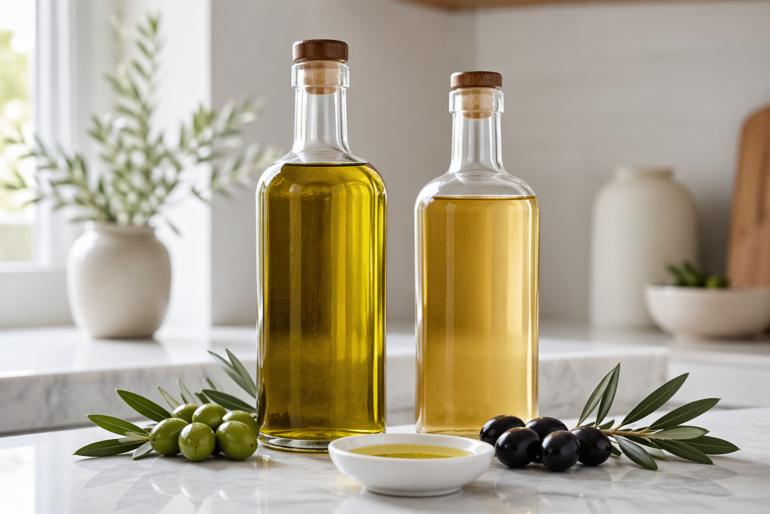
Walk into any grocery store and the olive oil shelf can feel oddly confusing. You see bottles labeled virgin, extra virgin, pure, light, cold extracted, first press, and suddenly something as simple as buying oil turns into a mini research project. If you have ever stood there wondering whether the more expensive bottle is actually worth it, you are not alone.
When people compare Virgin and Extra Virgin Olive Oil, they are usually trying to answer one practical question: which one belongs in their kitchen and gives them the best value? The honest answer is that both come from olives and both can have a place in cooking, but they are not the same in quality, flavor, aroma, and overall experience. International grading standards define extra virgin olive oil as the highest grade of virgin olive oil, with no sensory defects and very low free acidity, while virgin olive oil allows a broader range of flavor and acidity. In other words, one is the top-tier expression of olive oil, and the other is still natural olive oil, just not the finest version of it.
That difference matters because olive oil is not just a cooking fat. It plays a role in taste, freshness, and even nutrition. Olive oil, especially extra virgin, is closely tied to the Mediterranean dietary pattern, which has long been associated with better cardiovascular health and overall longevity. Research highlighted by Harvard and the FDA also connects olive oil and oleic acid intake with heart health benefits when used in place of fats higher in saturated fat.
So if your goal is to buy once and buy smart, here is the clear takeaway before we go deeper. If flavor, freshness, and nutritional value matter most, extra virgin is usually the better buy. If you are looking for a milder oil and a lower price, virgin can still work well. The best choice depends on how you cook, what you eat most often, and how much taste you want your oil to bring to the table.
What Is the Difference Between Virgin and Extra Virgin Olive Oil?
The easiest way to understand Virgin and Extra Virgin Olive Oil is to start with how they are made. Both are produced from olives without chemical refining. That means they are mechanically extracted, not heavily processed in the way many lower-grade oils are. The difference comes down to quality standards, chemistry, and sensory performance.
Extra virgin olive oil has to meet stricter requirements. Under International Olive Council standards, it must have free acidity of no more than 0.8 grams per 100 grams and must be free from sensory defects. It should show fruitiness and smell and taste fresh. Virgin olive oil can have more acidity, up to 2.0 grams per 100 grams under USDA grade descriptions for virgin olive oil, and may have mild sensory imperfections while still being suitable for consumption.
That sounds technical, but the real-life meaning is simple. Extra virgin is the cleaner, fresher, more carefully handled oil. Virgin is still olive oil in a natural sense, but it can be flatter, softer, or less vibrant.
Quick Comparison Table
| Feature | Extra Virgin Olive Oil | Virgin Olive Oil |
|---|---|---|
| Processing | Mechanically extracted, unrefined | Mechanically extracted, unrefined |
| Grade | Highest virgin grade | Lower virgin grade |
| Free acidity | Up to 0.8% | Up to 2.0% |
| Sensory defects | None allowed | Small defects may be present |
| Flavor | More vivid, fruity, peppery, grassy | Milder, less complex |
| Best use | Finishing, dressings, dipping, everyday cooking | General cooking when mild flavor is preferred |
| Price | Usually higher | Usually lower |
This is why the conversation around Virgin and Extra Virgin Olive Oil is not really about whether one is “real” and the other is not. They are both real olive oil. The better question is which grade gives you the flavor, quality, and value you actually want.
Why Extra Virgin Usually Gets More Attention
Extra virgin olive oil tends to get the spotlight because it preserves more of what people love about olives in the first place. The aroma is more alive. The taste can be grassy, peppery, nutty, buttery, fruity, or slightly bitter in a pleasant way. That bitterness and peppery kick are often signs of phenolic compounds, which are part of what makes high-quality extra virgin olive oil special. The International Olive Council has formal methods for measuring phenolic compounds in olive oils, reflecting their importance in quality analysis.
It also gets attention for health reasons. Extra virgin olive oil is rich in monounsaturated fats, especially oleic acid, and contains antioxidant compounds that refined oils often lose during heavier processing. Cleveland Clinic notes that extra virgin olive oil stands out for its antioxidants and heart-healthy fat profile, and Harvard has linked higher olive oil consumption with lower risk of premature death in long-term research.
That does not mean virgin olive oil is bad. It just means that when you choose extra virgin, you are typically paying for higher-quality fruit handling, better sensory quality, and more of the natural compounds that make olive oil distinctive.
What Virgin Olive Oil Offers Instead
Virgin olive oil often gets overlooked because it sits in the shadow of extra virgin. Still, it can be a sensible purchase for some buyers.
If you prefer a softer taste and do not want the peppery finish that some extra virgin oils bring, virgin olive oil may feel easier to use. It can be less intense over eggs, mild fish, baked vegetables, or simple sautéed dishes where you want the oil to stay in the background instead of leading the flavor.
It can also be easier on your budget. If you use olive oil heavily every week and reserve your finest bottle for salads and finishing, a good virgin olive oil can make financial sense. The key is understanding that you are choosing a less premium expression, not necessarily making a wrong choice.
Which One Is Better for Health?
This is where many shoppers focus, and the answer is fairly straightforward. When comparing Virgin and Extra Virgin Olive Oil, extra virgin usually comes out ahead from a nutrition standpoint.
Both types are built around monounsaturated fat, which is one reason olive oil has such a strong health reputation. The FDA has stated there is credible evidence supporting a qualified health claim that oils rich in oleic acid, including olive oil, may reduce the risk of coronary heart disease when they replace fats and oils higher in saturated fat and do not increase total calorie intake.
But extra virgin goes further because it is less processed and typically retains more antioxidants and polyphenols. Those compounds are part of why extra virgin olive oil is so closely associated with anti-inflammatory and cardiovascular benefits in both clinical and population research. Harvard’s Nutrition Source and Cleveland Clinic both emphasize extra virgin as the stronger nutritional choice within the olive oil category.
So if your main reason for buying olive oil is wellness, extra virgin is usually the better answer.
Which One Is Better for Cooking?
This is one of the biggest myths around olive oil. Many people still believe extra virgin olive oil should never be heated, but that is too simplistic.
Smoke point matters, but it is not the whole story. The North American Olive Oil Association notes that smoke point alone is not the best measure of an oil’s cooking performance and that olive oil is chemically stable for common kitchen uses. Typical extra virgin olive oil smoke points fall around 350 to 410 degrees Fahrenheit, while more refined olive oils can go higher. That means extra virgin olive oil is generally fine for sautéing, roasting, and everyday stovetop cooking.
Here is a practical way to think about it:
Best Uses for Extra Virgin Olive Oil
- Salad dressings
- Dipping bread
- Drizzling over soups, grain bowls, pasta, and roasted vegetables
- Low to medium-heat sautéing
- Roasting where flavor matters
Best Uses for Virgin Olive Oil
- Everyday cooking when you want olive character but less intensity
- Sautéed vegetables
- Pan cooking
- Marinades
- Budget-conscious kitchen use
If you are doing very high-heat cooking all the time, such as repeated deep frying, you may prefer a more refined oil for cost and neutral flavor reasons. But for most home kitchens, extra virgin olive oil is not too delicate to cook with. In fact, many cooks use it daily without issue.
Taste Is Where the Real Decision Happens
A lot of buying decisions come down to health claims, but flavor is usually what makes people loyal to a certain bottle.
Extra virgin olive oil tastes more alive. Depending on the olive variety and harvest timing, it may taste peppery, green, floral, almond-like, tomato-leaf fresh, or softly bitter. That complexity is a feature, not a flaw. Quality olive oil is supposed to have personality.
Virgin olive oil tends to be milder and less layered. Some people love that. If your meals are subtle and you do not want a pronounced olive taste in every bite, virgin can feel easier to work with.
So ask yourself one honest question: do you want your oil to be part of the flavor of the dish, or just the fat that helps cook it? If you want flavor, extra virgin wins. If you want a quieter background note, virgin may suit you better.
How to Buy the Right Bottle in the Store
This is where many shoppers waste money. A label can look premium and still tell you very little. Good buying habits matter more than pretty packaging.
Look for These Signs of a Better Bottle
- A clear grade statement such as “extra virgin olive oil”
- A harvest date, not just a best-by date
- Dark glass, tin, or packaging that protects the oil from light
- Specific origin information
- Fresh aroma and no waxy, stale, or crayon-like smell once opened
Harvest date matters because olive oil is a fresh product. The North American Olive Oil Association distinguishes harvest date from best-by date, and UC Davis has also advised shoppers to look for harvest date and quality seals when possible. The International Olive Council’s packaging guidance also stresses protection from light through dark or opaque packaging.
What to Be Careful With
- Fancy wording without a clear olive oil grade
- Clear bottles sitting under strong store lighting
- Labels that say little about origin
- Bottles that are already old based on harvest timing
- Extremely cheap “premium” oil that sounds too good to be true
The reality is that quality inconsistency in the olive oil market has been documented before. UC Davis Olive Center reports found that some oils sold as extra virgin did not consistently meet international extra virgin standards. That does not mean every imported or supermarket bottle is poor, but it does mean buyers should pay attention.
Is the Price Difference Worth It?
Often, yes. But not always.
If you mostly use olive oil for dressing salads, finishing cooked dishes, dipping bread, or adding flavor to simple meals, spending more on extra virgin olive oil is usually worth it because you can actually taste what you paid for. In those cases, buying virgin instead may save a few dollars while giving up the very qualities that matter most.
On the other hand, if you go through a lot of oil and use it mainly for routine cooking, a reasonably priced virgin olive oil can be a practical everyday choice. Some households even keep two bottles: a better extra virgin for raw or finishing use and a more affordable bottle for frequent cooking.
That strategy makes sense because it lets you enjoy quality where it matters most without turning olive oil into a luxury purchase.
A Simple Buying Strategy for Real Kitchens
If you want the easiest answer to the Virgin and Extra Virgin Olive Oil question, this is it:
Buy Extra Virgin If:
- You care about taste and aroma
- You make dressings, dips, and finishing drizzles
- You want the strongest nutritional profile
- You do not mind paying more for better quality
Buy Virgin If:
- You want a milder flavor
- You cook with olive oil often and need to manage budget
- You are less focused on aroma and complexity
- You want a simpler everyday option
Buy Both If:
- You cook often
- You like having a premium bottle and a workhorse bottle
- You want flexibility in flavor and cost
For most people, this two-bottle approach is the sweet spot.
Common Questions Buyers Still Have
Does extra virgin always mean better?
Usually, yes, if the bottle is fresh and authentic. Extra virgin is the top grade within virgin olive oil standards, but a badly stored or old bottle can still disappoint.
Is virgin olive oil unhealthy?
No. It is still olive oil and still contains beneficial fats. It simply tends to offer less of the flavor and antioxidant richness that make extra virgin stand out.
Can I fry with extra virgin olive oil?
For everyday home cooking, yes. Extra virgin olive oil is generally suitable for sautéing and many common cooking methods. The old idea that it should never touch heat is overstated.
Should I refrigerate olive oil?
Usually no. A cool, dark cupboard away from heat and light is better for daily storage. Light, heat, and oxygen are the main enemies of freshness.
Final Verdict on Virgin and Extra Virgin Olive Oil
If you want the short answer, buy extra virgin olive oil unless you have a specific reason not to.
When people compare Virgin and Extra Virgin Olive Oil, they are often hoping the cheaper option will be basically the same. In practice, it usually is not. Extra virgin olive oil gives you better flavor, stricter quality standards, and a stronger nutritional profile. Virgin olive oil is still a valid choice, but it is more of a compromise bottle. It works, but it rarely shines in the same way.
So the smarter buy for most kitchens is extra virgin olive oil, especially if you use olive oil raw, care about taste, or want the most from your ingredients. Virgin olive oil makes sense when you want a softer flavor or need to stretch your grocery budget, but if you can only choose one bottle for general home use, extra virgin is the one most people will be happier with over time.
In the end, buying olive oil should feel less like decoding a mystery and more like matching the bottle to your cooking habits. Once you know the difference, the shelf becomes much easier to read. And if you want to understand the broader history and production of olive oil, it helps to see how much quality can vary long before the bottle reaches your cart.