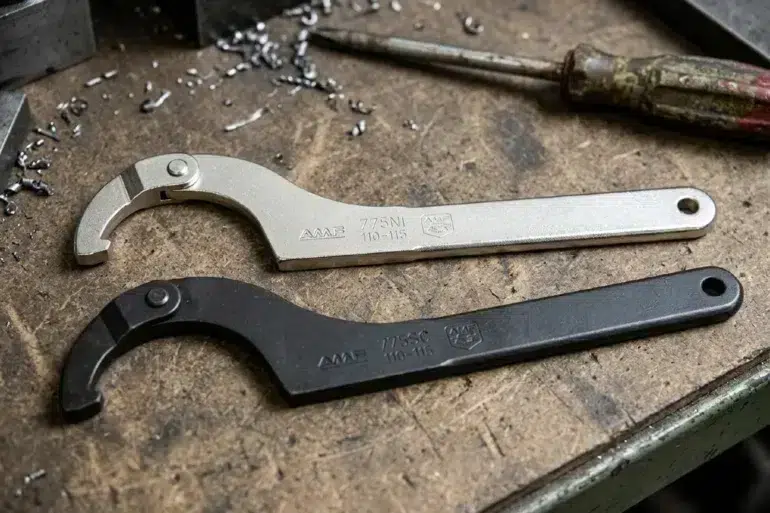
In the realm of industrial tools, the C Spanner holds a unique position due to its specialised design and utility. C Spanners are specifically crafted to facilitate the handling of round nuts or rod fittings, playing a crucial role in maintenance and assembly tasks across various industries.
What is a C Spanner?
A C Spanner, also known as a hook spanner or hook wrench, is a hand tool used for fastening and loosening nuts and bolts, especially those that do not have conventional tool interfaces such as hex heads. The design of a C Spanner includes a hook-shaped end which allows it to grip the outer circumference of such specialised fittings securely.
Applications of C Spanners
The versatility of a C Spanner makes it an indispensable tool in numerous industrial settings. These tools are extensively used in mechanical applications where threaded cylindrical parts are prevalent. They are vital in industries such as plumbing, automotive repairs, and manufacturing machinery maintenance.
Plumbing Industry
In plumbing, C Spanners are used to install and remove parts without causing damage to the surfaces. Their ability to adjust into different sizes makes them ideal for various pipes and connectors, ensuring tight fixes that prevent leaks.
Automotive Sector
In the automotive field, C Spanners assist in adjusting or disassembling components such as gearboxes or suspensions where conventional spanners might not fit. This capability makes them essential for mechanics requiring precision and efficiency.
Features that Define a C Spanner
C Spanners are designed with precision to ensure efficiency in their tasked roles. Typically made from durable materials such as steel, these spanners boast high tensile strength and longevity. Their hook design and ergonomic handles provide users with firm grips and ease of operation, reducing the risk of slippage.
Material Composition
The choice of material for C Spanners is crucial, as it determines the tool’s durability and resilience in harsh working conditions. Steel or alloyed steel is often preferred due to its robustness and ability to withstand significant torque without bending.
Design Attributes
When selecting a C Spanner, features such as the handle length and hook type are paramount. Longer handles provide better leverage, essential for stubborn or rusted fittings. Additionally, the opening size of the hook must align with the fitting diameter for optimal performance.
The Benefits of Using C Spanners
One of the primary advantages of using a C Spanner is its ability to provide secure fastening and unfastening without damaging components. This advantage is critical when dealing with delicate machinery or high-cost equipment where component integrity must be maintained.
Cost Efficiency
Using tools like the C Spanner contributes to cost efficiency by minimising the risk of damage to parts, thus reducing replacement needs and associated labour costs.
Enhanced Safety
Safety in the workplace is of paramount importance, and tools such as C Spanners help achieve this by offering controlled handling and minimal risk of accidents compared to makeshift devices or unsuitable tools.
Choosing the Right C Spanner
Businesses and tradespeople selecting C Spanners must consider factors such as application needs, material types, and the spanner’s design specifics. Additionally, seeking high-quality options from reputable suppliers ensures reliability and durability.
Quality Considerations
Investing in quality tools often translates to better performance and longevity, thus it is advisable to choose products from manufacturers known for their commitment to quality and innovation.
Supplier Reputation
Opting for a reliable supplier such as Maxiloc guarantees access to a comprehensive range of industrial tools, including C Spanners, backed by professional support and expertise.
Conclusion
In conclusion, the C Spanner is a vital tool in numerous settings, enabling efficient maintenance and assembly tasks. Its specialised design enhances both precision and safety, making it an invaluable asset in industries requiring meticulous attention to mechanical detail.