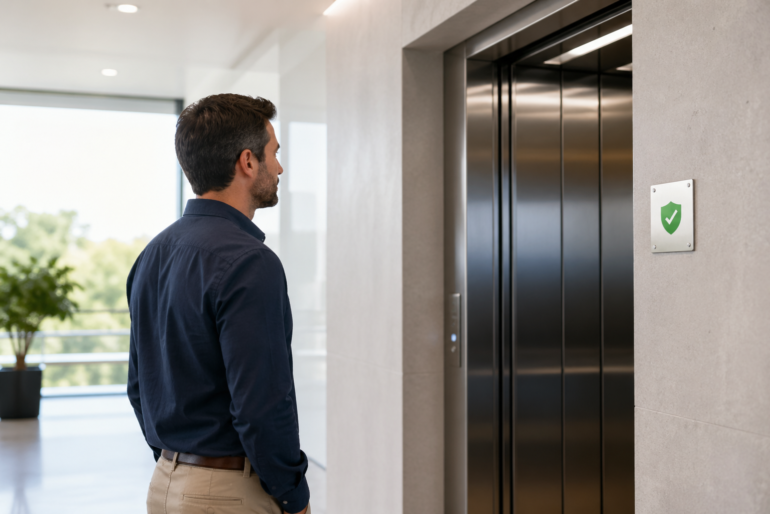
A lift is one of those things most people use without thinking. You press the button, wait for the doors to open, step inside, and expect everything to work. But in public buildings, offices, apartments, hospitals, malls, and hotels, there is one small detail that matters more than many people realize: This Sign Shows When a Lift Is Safe to Use.
That sign is usually connected to a lift inspection certificate, safety notice, operating permit, or compliance label. It tells passengers, building owners, and maintenance teams that the lift has been checked, tested, and approved for normal use. It may look simple, but it carries a serious message about public safety.
What Does “This Sign Shows When a Lift Is Safe to Use” Mean?
When people say This Sign Shows When a Lift Is Safe to Use, they are usually talking about a posted safety certificate, inspection record, or lift operation notice displayed inside or near the elevator.
In many buildings, this sign confirms that the lift has passed a required safety inspection. It may include details such as the inspection date, next inspection due date, lift identification number, responsible authority, maintenance company, and approval status.
A safe-to-use lift sign does not mean the lift can never develop a problem. Mechanical systems can fail at any time. But it does mean the lift has recently met the required checks for safe operation.
In practical terms, the sign helps answer a simple question before someone steps inside: has this lift been officially inspected and cleared for use?
Why Lift Safety Signs Matter in Buildings
Lift safety signs are not there for decoration. They are part of a wider building safety system.
Modern lifts are complex machines. They use electrical controls, doors, brakes, guide rails, cables, sensors, emergency alarms, and safety locks. If one part is ignored for too long, the risk can grow quietly.
The ASME A17.1/CSA B44 safety code is widely used in North America and covers design, construction, installation, operation, inspection, testing, maintenance, alteration, and repair of elevators and escalators.
That is why a visible sign matters. It gives building users a quick way to know whether the lift is under proper inspection and maintenance control.
For building managers, the sign is also a reminder that lift safety is not a one-time job. It is ongoing.
The Main Sign That Shows a Lift Is Safe
The most common sign is an elevator inspection certificate or permit.
This certificate is often placed inside the lift car, near the control panel, or in a visible area near the lift entrance. In some buildings, it may be displayed in a frame. In others, it may appear as a sticker, laminated notice, or digital compliance label.
A proper lift safety sign may show:
| Detail on the Sign | Why It Matters |
|---|---|
| Inspection date | Shows when the lift was last checked |
| Expiry or due date | Shows when the next inspection is required |
| Lift number | Identifies the exact elevator |
| Building address | Confirms the sign belongs to that location |
| Inspector or authority name | Shows who approved it |
| Maintenance company | Identifies who services the lift |
| Pass or approved status | Confirms the lift is cleared for use |
When you see these details, you are not just looking at paperwork. You are looking at evidence that the lift has gone through a safety process.
This Sign Shows When a Lift Is Safe to Use After Inspection
One of the clearest meanings of This Sign Shows When a Lift Is Safe to Use is that the lift has passed inspection.
An inspection usually checks important safety features such as:
- Door opening and closing function
- Emergency alarm system
- Lighting inside the lift
- Brake system
- Leveling accuracy between lift floor and building floor
- Load capacity notice
- Control buttons
- Emergency communication
- Machine room or control equipment
- Warning signs and safety labels
OSHA states that elevators and escalators in certain workplace settings must be thoroughly inspected at intervals not exceeding one year, with records of the latest annual elevator inspections posted in elevators.
That is a strong reason why passengers should pay attention to the posted inspection notice. It is not just a formality. It is a record that the lift has been checked according to a recognized safety process.
What a Valid Lift Safety Certificate Usually Looks Like
A valid lift certificate should look official, clear, and current. It should not be torn, hidden, expired, unreadable, or loosely attached without proper information.
A good certificate normally includes a recent inspection date and a future due date. The approval should be easy to understand. If the certificate says the lift is approved for use until a certain date, passengers can quickly see whether it is still valid.
Some certificates may include a QR code. This may allow building staff, inspectors, or users to verify the certificate digitally. In modern buildings, digital verification is becoming more common because it reduces the chance of fake or outdated notices.
Still, the key idea remains the same: This Sign Shows When a Lift Is Safe to Use only if the sign is current, readable, and connected to a real inspection.
When the Sign Does Not Mean the Lift Is Safe
A lift sign can be useful, but it should not be trusted blindly.
There are situations where a sign may be present, but the lift should still not be used. For example, if the lift is making loud grinding noises, stopping unevenly, shaking, or opening its doors incorrectly, passengers should avoid it and report the issue.
You should also be careful if the certificate is expired or missing. An expired inspection notice does not automatically mean the lift is about to fail, but it does mean the building owner or manager needs to confirm its safety status.
Avoid using a lift if you notice:
- A strong burning smell
- Flickering lights inside the lift
- Doors closing too fast or not closing properly
- Jerky movement
- The lift stopping above or below floor level
- Water near the lift entrance
- A sign saying “Out of Service”
- No working alarm or emergency phone
- Strange noises during movement
- Overcrowding beyond the load limit
A posted certificate is important, but your own awareness also matters.
Common Lift Safety Signs You May See
Not every lift safety sign looks the same. Different buildings and locations may use different wording.
Some common signs include:
Inspection Certificate
This is the main document showing that the lift has been inspected. It often includes dates, approval status, and inspector details.
Load Capacity Sign
This tells users how many people or how much weight the lift can carry. Ignoring this sign can put stress on the system.
Out of Service Sign
This means the lift should not be used. Even if the doors open, passengers should not enter.
Fire Warning Sign
Many lifts display a notice telling people not to use the lift during a fire. In emergencies, stairs are usually safer unless a building has a specially designed evacuation lift.
Maintenance in Progress Sign
This means technicians may be working on the lift. Passengers should wait or use another route.
Emergency Instruction Sign
This explains what to do if the lift stops. It may mention the alarm button, intercom, emergency phone, or building security contact.
Together, these signs help people make safe decisions.
Why Buildings Must Display Lift Safety Information
In many places, lift owners are expected to keep inspection and maintenance records available. Some rules require certificates or records to be posted where users or inspectors can see them.
The purpose is simple: transparency.
A building with a lift has a responsibility to protect the people who use it. That includes residents, workers, visitors, delivery staff, elderly people, children, and people with disabilities.
ASME describes its elevator and escalator safety code as covering requirements for design, construction, installation, operation, inspection, testing, maintenance, alteration, and repair.
This shows that lift safety is not only about the machine itself. It includes the full life cycle of the equipment, from installation to daily use and long-term maintenance.
How Building Owners Should Manage Lift Safety Signs
Building owners and facility managers should treat lift safety signs as part of daily building management.
A certificate should never be hidden in an office drawer while passengers use the lift every day. It should be visible, updated, and protected from damage.
Good building management includes:
- Checking that the lift inspection certificate is displayed
- Replacing damaged or unreadable notices
- Confirming inspection dates before expiry
- Keeping maintenance records organized
- Reporting faults quickly
- Locking or marking lifts that are unsafe
- Training staff to respond to complaints
- Making sure emergency contact details work
A lift may look clean and modern, but safety depends on records, inspections, and maintenance discipline.
How Often Should a Lift Be Inspected?
Inspection frequency depends on local law, building type, lift usage, and safety authority requirements.
In busy public buildings, lifts may need more frequent checks than lifts in small private buildings. Hospitals, airports, shopping malls, and office towers usually carry heavy passenger traffic. That means more wear on doors, buttons, sensors, and operating systems.
OSHA’s marine terminal standard says elevators and escalators must be thoroughly inspected at intervals not exceeding one year, with additional monthly inspections for satisfactory operation by designated persons.
Even where different local rules apply, the principle is similar: lifts should be checked regularly, not only after something goes wrong.
What Passengers Should Check Before Using a Lift
Most passengers do not have time to inspect a lift in detail. But a few seconds of attention can make a difference.
Before entering, look for the inspection sign. Check whether the date appears current. Look at the lift doors and listen for unusual noise.
Once inside, check whether the lift feels stable. Make sure the doors close normally. If the lift is crowded, wait for the next one.
Here is a simple passenger checklist:
| What to Check | Safe Sign | Warning Sign |
|---|---|---|
| Certificate | Current and readable | Missing or expired |
| Doors | Open and close smoothly | Stuck, noisy, or fast-closing |
| Movement | Smooth ride | Shaking or sudden stops |
| Floor leveling | Stops level with floor | Gap or uneven stop |
| Alarm button | Clearly marked | Broken or missing |
| Load limit | People follow limit | Overcrowded lift |
Small observations can help prevent risky situations.
What to Do If the Lift Sign Is Missing
If the inspection sign is missing, do not panic, but do take it seriously.
In some buildings, the certificate may be stored nearby rather than inside the lift. However, if no safety information is visible and the lift condition feels questionable, it is better to report it.
You can contact:
- Building reception
- Facility management
- Security desk
- Property manager
- Landlord
- Local building safety authority
- Maintenance company, if listed nearby
If you are in an office or apartment building, ask when the lift was last inspected. A responsible manager should be able to provide a clear answer.
The phrase This Sign Shows When a Lift Is Safe to Use matters most when the sign is visible and easy for ordinary users to understand.
Real-World Example: Apartment Building Lift Safety
Imagine an apartment building where residents use the lift every day. One morning, a resident notices the lift is stopping slightly below the floor level. The inspection certificate is still visible, but the lift feels different than usual.
The resident reports the issue to management. The manager contacts the maintenance company. Technicians inspect the lift and find a leveling problem. The lift is temporarily taken out of service until repairs are completed.
In this case, the certificate showed that the lift had passed a previous inspection, but the new fault still needed attention. That is exactly how lift safety should work. Signs, inspections, user awareness, and maintenance all support each other.
Real-World Example: Office Building Compliance
Now think about a busy office tower. Hundreds of employees use the lifts every morning. The facility team checks inspection dates monthly and schedules service before certificates expire.
A visitor sees the inspection certificate inside the lift. It is current and clearly displayed. The lift runs smoothly, has working lights, and includes emergency instructions.
This gives users confidence. More importantly, it shows that the building team is not waiting for problems to happen. They are managing safety ahead of time.
The Role of Maintenance Companies
Lift maintenance companies play a major role in keeping elevators safe. They inspect mechanical parts, test controls, repair faults, and advise building owners when a lift should be taken out of service.
Certification companies also help verify safety and performance. SGS notes that lift and elevator certification services help building operators obtain certification needed to assure the safety, performance, and integrity of lifts.
A good maintenance company does not only fix breakdowns. It helps prevent them.
This includes checking door operators, brakes, control systems, emergency alarms, and safety devices. It also means keeping proper records so that certificates and signs match the real condition of the lift.
What “Safe to Use” Really Means
Safe to use does not mean risk-free forever.
It means the lift has met inspection and operational requirements at the time of approval. It also means the lift is expected to operate normally if passengers follow safety instructions.
A safe lift should:
- Carry passengers within the posted weight limit
- Stop level with each floor
- Open and close doors correctly
- Respond to controls properly
- Have working emergency communication
- Show clear safety instructions
- Be maintained by qualified technicians
- Have current inspection records
That is why This Sign Shows When a Lift Is Safe to Use should be read as part of a bigger safety picture.
Why Passengers Ignore Lift Signs
Many people ignore lift signs because they are used to seeing them everywhere. Signs become background noise.
But that habit can be risky. A lift safety certificate is not like a decorative poster. It gives important information about inspection status and building responsibility.
Passengers often notice a problem only when something feels wrong. By then, the lift may already be in use. Paying attention before entering is a smarter habit.
A quick glance at the safety sign takes less than five seconds. It can help you spot an expired certificate, an out-of-service notice, or a warning label before you step inside.
Lift Safety for Elderly People and Children
Lift safety signs are especially important for elderly people, children, and people with mobility needs.
Older adults may depend on lifts because stairs are difficult. Children may press buttons, stand too close to doors, or move quickly without noticing hazards. A clear safety sign helps caregivers, parents, and building staff make better decisions.
In hospitals, schools, and residential buildings, lift signs should be easy to read. Small print, faded stickers, or confusing wording can reduce safety.
A good sign should be simple, visible, and placed where people naturally look.
Lift Safety During Emergencies
During a fire, earthquake, flood, or power issue, lift use may become dangerous.
Many buildings display signs saying not to use lifts during a fire. This is because lifts can stop working, doors may open on unsafe floors, or smoke may enter lift shafts.
Some modern buildings have special evacuation lifts designed for emergency use, but ordinary passengers should follow posted instructions and building staff guidance.
If a sign says not to use the lift during an emergency, take it seriously.
No meeting, appointment, or delivery is worth the risk.
How to Read a Lift Inspection Sign Correctly
Reading the sign is simple once you know what to look for.
Start with the date. If the inspection date is very old or the expiry date has passed, report it.
Next, check whether the lift number on the certificate matches the lift you are using. Large buildings may have several lifts, and each one should have its own inspection record.
Then look for the authority or inspector name. A proper certificate should clearly identify who issued or approved it.
Finally, check for any restriction. Some lifts may be approved only for certain use, such as goods, service staff, or limited capacity.
Common Mistakes Building Managers Make
Even well-managed buildings can make mistakes.
Some managers renew inspections but forget to update the displayed certificate. Others place the certificate in a location passengers cannot easily see. Sometimes the sign becomes faded, scratched, or covered by other notices.
The biggest mistake is treating the sign as paperwork instead of a public safety tool.
Building teams should avoid:
- Letting certificates expire
- Displaying unclear photocopies
- Covering safety notices with ads
- Ignoring passenger complaints
- Using lifts during maintenance
- Failing to update emergency contacts
- Allowing overcrowding during busy hours
A lift safety sign works only when it is accurate and respected.
Are Digital Lift Signs Reliable?
Digital lift signs can be reliable if they are connected to verified inspection records.
Some modern systems use QR codes or digital panels to show inspection status. This can make updates faster and reduce paper damage. However, digital signs must still be accurate, accessible, and easy to understand.
A digital certificate should not confuse users. It should clearly show whether the lift is approved for use and when the next inspection is due.
Technology helps, but responsibility still belongs to the building owner, inspector, and maintenance team.
What If a Lift Has a Current Sign but Feels Unsafe?
Trust your senses.
If the sign is current but the lift feels unsafe, do not use it. A current certificate does not cancel out obvious warning signs.
A lift can develop a fault after inspection. Heavy use, electrical issues, door faults, or water damage can happen between scheduled checks.
If something feels wrong, report it immediately. Give clear details, such as:
- Which lift it was
- What floor you were on
- What sound or movement you noticed
- Whether doors behaved strangely
- Whether anyone was trapped or delayed
- What time the issue happened
Good reports help technicians find problems faster.
Lift Signs and Legal Responsibility
Lift safety signs can also matter legally.
If an accident happens, inspection records may be reviewed. Authorities may ask whether the lift was properly maintained, whether certificates were current, and whether warning signs were displayed.
This is why responsible building owners should never treat inspection signs lightly. A missing or outdated sign can raise serious questions about maintenance and compliance.
Public safety is the main concern, but legal and financial consequences can also be significant.
Simple Tips for Safer Lift Use
Passengers can make lifts safer by following basic habits.
Do not force the doors open. Do not jump inside the lift. Do not overload it. Do not use it if there is smoke, fire, or flooding. Do not let children play near lift doors.
If the lift stops between floors, stay calm. Use the alarm or emergency communication system. Do not try to climb out unless trained emergency responders tell you what to do.
Most lift incidents become more dangerous when people panic or try to escape without help.
Why the Sign Builds Trust
A visible safety sign builds trust between the building and its users.
When people see a current certificate, they feel reassured that someone is responsible for the lift. In commercial buildings, this can affect customer confidence. In apartments, it can affect resident satisfaction. In hospitals, it can affect patient and visitor comfort.
Trust comes from small details. A clean lift, working lights, smooth doors, readable instructions, and a current safety certificate all send the same message: this building takes safety seriously.
The Future of Lift Safety Signs
Lift safety signs are likely to become more digital and more transparent.
In the future, passengers may scan a code and see inspection history, maintenance status, and emergency contacts. Building managers may receive automatic alerts before certificates expire. Sensors may detect early warning signs before a breakdown happens.
Still, the basic idea will not change.
People need a clear way to know whether a lift is safe for normal use. That is why This Sign Shows When a Lift Is Safe to Use will remain an important safety message in buildings.
Conclusion
A lift safety sign may look like a small notice, but it carries real importance. It tells passengers that the lift has been inspected, approved, and is being monitored under a safety process.
This Sign Shows When a Lift Is Safe to Use by giving people quick information about inspection status, certificate dates, and approval details. But passengers should also stay alert. If a lift feels unsafe, sounds unusual, stops unevenly, or has an expired certificate, it should be reported.
Safe lift use depends on three things working together: proper inspection, responsible maintenance, and smart passenger behavior. A posted sign is the visible part of that system. The next time you step into a lift, take one quick look. That small habit can help protect you and everyone else in the building.
A well-maintained elevator system is not just about convenience. It is part of building safety, public trust, and everyday accessibility. You can learn more about the general history and function of an elevator system from Wikipedia.
FAQs
What sign shows when a lift is safe to use?
The inspection certificate, safety permit, or approval notice usually shows when a lift is safe to use. It should include the inspection date, expiry date, lift number, and approval details.
Is it safe to use a lift without an inspection certificate?
If no certificate or safety notice is visible, report it to building management. The lift may still have records elsewhere, but passengers should be able to confirm its safety status easily.
What should I do if the lift certificate is expired?
Do not ignore it. Report the expired certificate to the building manager, landlord, security team, or local authority. Use another lift or stairs if the lift also shows signs of poor operation.
Can a lift be unsafe even with a current certificate?
Yes. A lift can develop faults after inspection. If it shakes, smells like burning, stops unevenly, or has door problems, avoid using it and report the issue.
Where is the lift safety sign usually located?
It is commonly placed inside the lift car, near the control panel, or close to the lift entrance. In some buildings, it may be displayed in the lobby or facility office.