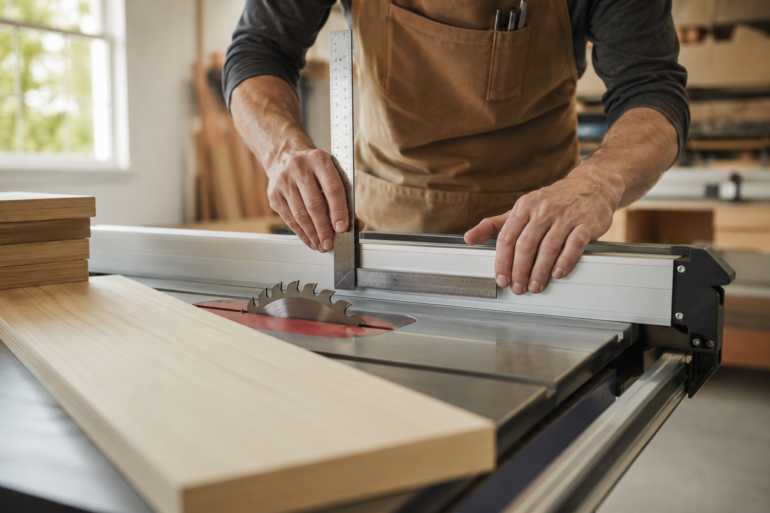
Buying a Table Saw is one of those workshop decisions that can either make your projects smoother or make every cut feel like a fight. A good saw gives you straight rip cuts, repeatable accuracy, cleaner edges, and more confidence when working with plywood, hardwood, trim, shelving, cabinets, or DIY furniture.
But here is the tricky part. Many buyers focus only on motor power or price, then later realize the fence is loose, the table is too small, the blade quality is poor, or the saw does not feel stable enough for real work.
This article walks you through practical buying tips that actually matter when choosing a saw for clean and accurate wood cuts.
Why a Table Saw Matters in Woodworking
A Table Saw is built for making straight, controlled cuts through wood and sheet materials. It is especially useful for rip cuts, which means cutting along the grain, and for repeatable cuts where every piece needs to match the last one.
For a homeowner, it can help with shelves, cabinet panels, flooring pieces, workbench parts, and small furniture projects. For a serious woodworker, it becomes the center of the shop.
The biggest advantage is control. Instead of pushing a handheld saw across the wood, you guide the wood across a fixed blade. That setup gives you better consistency, especially when the fence and blade are properly aligned.
Safety also matters. The U.S. Consumer Product Safety Commission reported an estimated 26,500 emergency department-treated table saw blade-contact injuries in 2017, with fingers involved in most cases. That is why buying a saw should never be only about speed or power. Safety features, stability, and smart setup are just as important.
Start With the Type of Table Saw You Really Need
Before comparing brands or prices, decide what kind of work you will actually do. A small DIY user does not need the same machine as a cabinet shop.
Benchtop Table Saw
A benchtop model is compact, lighter, and easier to move. It is a popular choice for homeowners, renters, and people working in garages or small sheds.
It works well for basic home improvement jobs, small furniture builds, trim work, and occasional plywood cutting. The tradeoff is that the table surface is usually smaller, and the fence may not feel as solid as larger models.
Choose this type if you need portability more than heavy-duty cutting power.
Jobsite Table Saw
A jobsite saw is still portable, but it is stronger and usually comes with a folding stand or rolling base. Contractors and serious DIY users often prefer this style because it balances mobility and performance.
A good jobsite saw can handle framing lumber, plywood, deck boards, and repeated cuts better than a lightweight benchtop unit. Look for a solid fence, smooth height adjustment, and a stable stand.
This is often the sweet spot for many home woodworkers.
Contractor Table Saw
A contractor saw is larger and more stable. It usually offers better cutting support, more accurate adjustments, and stronger build quality.
This type is useful if you have a dedicated workspace and plan to cut thicker hardwood, large panels, or project parts regularly. It is not as portable, but it feels more controlled during longer cuts.
Cabinet Table Saw
A cabinet saw is the premium choice. It is heavy, powerful, accurate, and built for serious woodworking.
The motor is usually stronger, the base is enclosed, dust collection is better, and the table stays more stable under pressure. It is excellent for cabinet making, professional furniture work, and daily use.
For most casual buyers, it is more machine than they need. But for a full-time workshop, it can be worth the investment.
Match the Motor Power to Your Projects
Motor power affects how smoothly the saw cuts, especially through thick boards or dense hardwood.
Many portable saws use 15-amp motors, which are common for home and jobsite use. They can cut plywood, pine, MDF, and many hardwoods when paired with the right blade.
Larger shop saws may use more powerful motors, often requiring 220-volt power. These are better for thick hardwood, long ripping sessions, and production work.
A common mistake is thinking more power automatically means better accuracy. It does not. A powerful saw with a poor fence can still give you bad cuts. Power helps the blade move through wood, but alignment, table flatness, blade quality, and fence stability are what create clean results.
Check Fence Quality Before Anything Else
If there is one feature that deserves extra attention, it is the fence. The fence guides your wood during rip cuts, so it must lock straight and stay parallel to the blade.
A weak fence can shift slightly during cutting. That tiny movement can cause crooked edges, burning, rough cuts, or even kickback.
When comparing saws, look for these fence qualities:
| Fence Feature | Why It Matters |
|---|---|
| Locks firmly | Prevents movement during cuts |
| Stays parallel to blade | Improves accuracy and safety |
| Slides smoothly | Makes setup faster |
| Easy measurement scale | Helps repeat cuts |
| Solid front and rear support | Reduces flex on longer boards |
A fence should not feel flimsy. When locked, it should stay put without needing extra pressure from your hand.
Look for a Flat and Stable Table Surface
The table surface supports the wood as it passes through the blade. If the surface is uneven, too small, or unstable, clean cutting becomes harder.
A larger table gives better support for plywood and longer boards. A flat table helps the material move smoothly without tipping or twisting.
Cast iron tables are common on heavier shop saws because they are stable and durable. Aluminum tables are more common on portable models because they keep weight down.
Neither is automatically wrong. What matters is whether the table feels solid for the kind of work you plan to do.
If you mostly cut small boards, a compact surface may be fine. If you often cut full sheets of plywood, you will need more support, either from a larger table, extension wings, or an outfeed setup.
Pay Attention to Rip Capacity
Rip capacity tells you how wide a board or panel you can cut between the blade and the fence. This is especially important when working with plywood, shelving, cabinets, and large panels.
A small saw may have enough power but limited rip capacity. That can become frustrating if you need to cut wider pieces.
For basic DIY work, moderate rip capacity is usually enough. For cabinet panels or full plywood sheets, look for a saw with a larger right-side rip capacity.
Do not buy only for today’s smallest project. Think about the kind of work you may want to do in the next year or two.
Blade Quality Makes a Huge Difference
Many new saws come with a basic blade. It may cut, but it may not give the clean finish you want.
The blade affects smoothness, tear-out, speed, burning, and overall cut quality. Even a very good saw can perform poorly with the wrong blade.
Here are common blade choices:
| Blade Type | Best Use |
|---|---|
| Rip blade | Fast cuts along wood grain |
| Crosscut blade | Cleaner cuts across the grain |
| Combination blade | General-purpose woodworking |
| Fine-tooth plywood blade | Cleaner cuts on sheet goods |
| Dado blade | Grooves and joinery, if the saw supports it |
For many home users, a good 40-tooth or 50-tooth combination blade is a smart starting point. It handles many projects well without constant blade changes.
For clean plywood cuts, a higher tooth count helps reduce tear-out. For thick hardwood ripping, a dedicated rip blade may cut faster and with less strain on the motor.
Table Saw Safety Features You Should Not Ignore
A Table Saw should come with important safety parts, and those parts should be easy enough to use that you will not be tempted to remove them.
Look for:
- Blade guard
- Riving knife
- Anti-kickback pawls
- Push stick
- Large power switch
- Easy emergency shutoff
- Stable stand or base
- Clear instructions for setup and alignment
The riving knife is especially important because it helps keep the cut wood from closing behind the blade. That reduces the chance of kickback.
OSHA’s machine guarding guidance recommends standing to the side of the blade and guiding wood parallel to the rip fence to reduce kickback risk. It also warns against crosscutting long boards on table saws because that can create unsafe pressure near the blade.
A safer saw is not just about having safety parts in the box. Those parts should be simple to install, adjust, remove when necessary, and put back again.
Understand Kickback Before You Buy
Kickback happens when the wood catches the blade and shoots back toward the operator. It can happen quickly, and it is one of the most dangerous table saw problems.
A good saw helps reduce kickback through proper alignment, a reliable fence, a riving knife, and anti-kickback features. But the buyer also needs to look at how easy the machine is to set up correctly.
A saw that is difficult to adjust may stay misaligned. A fence that does not lock straight can push wood into the back of the blade. A dull or wrong blade can also increase cutting pressure.
Clean cuts and safe cuts usually come from the same things: sharp blade, straight fence, flat table, steady feed pressure, and good support.
Dust Collection Is More Important Than It Seems
Sawdust is not just a mess. It affects visibility, cleanup, motor life, and workshop air quality.
Some portable saws have basic dust ports. Larger saws may have enclosed bases and better dust collection. If you work in a garage, basement, or small shop, this feature matters.
Look for a dust port that fits common shop vac hoses or dust collection systems. Also check whether the blade area is designed to direct dust downward instead of throwing it everywhere.
Cleaner cuts are easier when you can see your line, your fence, and your material clearly.
Check the Miter Gauge and Slots
The miter gauge helps with angled cuts and crosscuts. On many budget saws, the included miter gauge is not great. It may feel loose, lightweight, or inaccurate.
Still, the miter slots themselves matter. Standard-size miter slots give you more options for upgrades, sleds, jigs, and accessories.
If you plan to do accurate crosscuts, picture frames, small furniture parts, or repeat angles, do not ignore this feature. A better miter setup can save time and reduce frustration.
For serious accuracy, many woodworkers eventually build or buy a crosscut sled. But the saw needs good slots to support that kind of upgrade.
Do Not Overlook Blade Height and Bevel Controls
Blade height adjustment should feel smooth. Bevel adjustment should lock securely.
If controls feel rough, loose, or awkward, you may struggle to make repeatable cuts. This matters when cutting angles, dados, rabbets, or matching parts.
Check whether the saw clearly shows angle markings. Also see if it is easy to return the blade to 90 degrees. A saw that drifts out of square can ruin project pieces before you notice the problem.
Accuracy is not only about the first cut. It is about repeating the same cut over and over without fighting the machine.
Portability vs Stability: Choose Carefully
Many buyers want a saw that is both light and rock-solid. In real life, there is usually a tradeoff.
A lightweight saw is easier to move, carry, and store. But it may vibrate more and offer less support for big boards.
A heavier saw feels more stable, but it may be harder to move around the garage or jobsite.
Ask yourself where the saw will live:
- Will it stay in one workshop?
- Will you roll it out only on weekends?
- Will you carry it to job sites?
- Will you store it in a corner after every use?
- Will you cut full plywood sheets or mostly small boards?
If you need movement, choose a strong folding stand with wide legs and locking wheels. If you have a permanent workspace, choose stability over portability.
Buy for Accuracy, Not Just Price
A cheap saw may look attractive, especially if you are just starting. But low price can become expensive if the fence slips, the table is too small, or the motor struggles with common materials.
That does not mean beginners need the most expensive model. It means the right saw should feel reliable for the work you actually plan to do.
Here is a practical buying mindset:
| Buyer Type | Best Focus |
|---|---|
| Casual DIY user | Safety, compact size, simple setup |
| Home woodworker | Fence quality, rip capacity, blade options |
| Remodeler | Portability, stand quality, motor strength |
| Cabinet maker | Accuracy, stability, dust collection |
| Small shop owner | Durability, power, repeatability |
The best Table Saw is the one that helps you work safely, accurately, and comfortably without paying for features you will never use.
Think About the Materials You Cut Most Often
Different materials behave differently on a saw.
Plywood can splinter if the blade is wrong. Hardwood can burn if the blade is dull or the feed speed is too slow. MDF creates fine dust and needs good dust collection. Wet or warped lumber can be risky because it may twist or bind during the cut.
If you mostly build cabinets, prioritize rip capacity, fence quality, and clean plywood cutting. If you build outdoor projects, look for power and stability. If you make small crafts, accuracy and control may matter more than motor size.
Your material list should guide your purchase more than advertising claims.
Real-World Scenario: The Garage DIY Buyer
Imagine a homeowner who wants to build garage shelves, a workbench, and a few simple furniture pieces.
A heavy cabinet saw would be too much. A tiny benchtop saw might feel limiting when cutting plywood. A jobsite model with a rolling stand, decent rip capacity, strong fence, and good dust port would likely make more sense.
Now imagine someone making custom cabinets every week. That person needs more stability, smoother adjustments, better dust collection, and stronger long-term accuracy. A contractor or cabinet model would be a better fit.
The lesson is simple. Buy for your real projects, not for the biggest number on the box.
Check Accessory Compatibility
A good saw should grow with your skills. Accessories can improve accuracy, safety, and convenience.
Useful accessories include:
- Push blocks
- Featherboards
- Crosscut sleds
- Zero-clearance inserts
- Better miter gauges
- Outfeed supports
- Dado blade sets
- Dust collection adapters
Before buying, check whether the saw supports common accessories. Some compact saws have unusual slot sizes or limited dado capacity, which can reduce upgrade options.
This matters if you plan to keep the saw for years.
Read the Manual Before the First Cut
This sounds boring, but it is important. Each saw has its own setup process, safety instructions, blade limits, and alignment steps.
The National Institute for Occupational Safety and Health provides woodworking machinery safety checklist material based on OSHA requirements, covering table saws and related saws. This reinforces how much setup, guarding, and safe operation matter around woodworking machines.
Before making serious cuts, check:
- Blade alignment
- Fence alignment
- Guard installation
- Riving knife position
- Blade tightness
- Table insert fit
- Power switch location
- Dust connection
- Stand stability
A few minutes of setup can prevent hours of frustration.
Common Buying Mistakes to Avoid
Many first-time buyers repeat the same mistakes.
They buy the cheapest saw without checking the fence. They assume the included blade is enough for clean cuts. They ignore dust collection. They choose portability but later need more stability. Or they buy a powerful saw but never check alignment.
Another common mistake is removing safety parts because they feel inconvenient. If the guard or riving knife is difficult to use, that is a buying issue. Choose a saw with safety features that fit naturally into your workflow.
A well-designed saw should make safe operation feel normal.
Quick Buying Checklist
Before you purchase, ask these questions:
- Does the fence lock straight and firm?
- Is the table surface flat enough for accurate cuts?
- Does the rip capacity match your projects?
- Is the motor strong enough for your usual materials?
- Are the safety features easy to use?
- Does it include a riving knife?
- Is the stand stable?
- Can it connect to dust collection?
- Are replacement blades and accessories easy to find?
- Does the saw fit your workspace?
This checklist keeps you focused on real performance instead of shiny marketing details.
FAQs About Buying a Table Saw
What is the best Table Saw for beginners?
The best choice for most beginners is a stable benchtop or jobsite model with a reliable fence, riving knife, blade guard, push stick, and clear adjustment controls. It should be easy to set up and not too large for the workspace.
How much rip capacity do I need?
For small boards and basic DIY work, moderate rip capacity is usually fine. For plywood, cabinets, shelving, and larger panels, choose a saw with wider rip capacity and good side support.
Does blade size matter?
Most common models use a 10-inch blade, though some compact saws use smaller blades. A 10-inch blade gives more cutting depth and more blade options, but smaller saws can still work well for lighter projects.
Can a portable saw make accurate cuts?
Yes, a portable saw can make accurate cuts if the fence is solid, the blade is sharp, the saw is aligned, and the material is properly supported. Portability does not automatically mean poor accuracy.
Should I replace the blade that comes with the saw?
In many cases, yes. Stock blades are often basic. Upgrading to a quality combination blade, rip blade, or fine-tooth plywood blade can noticeably improve cut quality.
Conclusion
A Table Saw can become the most useful tool in your workshop, but only if you buy the right one for your projects. Clean and accurate wood cuts come from more than motor power. They come from a stable table, a straight fence, the right blade, safe setup, and a saw that matches the way you actually work.
For most home users, a well-built jobsite model offers a strong balance of power, portability, safety, and accuracy. For serious woodworking, a heavier contractor or cabinet saw may be the better long-term investment.
Before choosing, think about your workspace, your materials, your project size, and your comfort level. Woodworking tools are not only about cutting wood. They are about control, patience, and better results. Even simple power tools can produce professional-looking work when they are chosen carefully and used with respect.