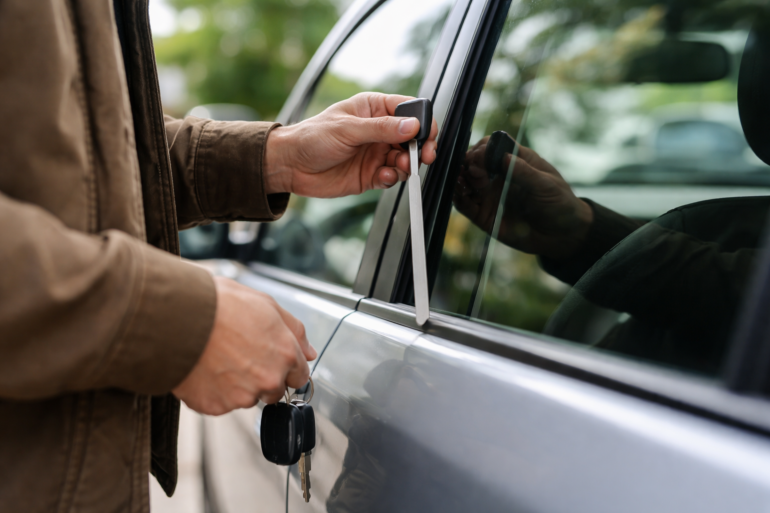
If you have ever locked your keys in the car, you have probably heard someone mention a Slim Jim Tool. The name sounds simple, almost old school, but the topic around it is not nearly as simple as it used to be. A Slim Jim Tool is commonly associated with opening a locked vehicle door by slipping a thin strip of metal inside the door and manipulating the internal linkage. That basic idea is real, but the modern reality is much more complicated. Older vehicles were often more vulnerable to this method, while newer vehicles are built with different lock systems, electronic components, and internal barriers that make the process riskier and far less reliable.
This is also where the conversation shifts from curiosity to caution. People search for Slim Jim Tool for different reasons. Some want to understand how it works. Some are locked out and hope for a fast fix. Others are trying to understand whether owning or using one is legal. Those are fair questions, but the answers depend on context, training, and local law. In some states, a slim jim can be treated as a motor vehicle theft tool when intent and surrounding facts point in that direction. Washington state law, for example, explicitly includes a “slim jim” in its motor vehicle theft tool statute.
So while the tool has a long history in vehicle lockout culture, it now sits in a gray area where practical use, property damage, and legal risk overlap. That is why this article looks at the Slim Jim Tool from all angles, not as a stunt or shortcut, but as a real subject with real consequences.
What Is a Slim Jim Tool?
A Slim Jim Tool is a thin strip of metal, often made of spring steel, designed to slide between a car window and the weather stripping so it can reach the rods and levers inside the door. Instead of picking the lock itself, the tool tries to manipulate the internal linkage that controls locking and unlocking. In simple terms, it works around the lock rather than through it.
That design made the tool far more useful on older cars with simpler mechanical lock systems. Back when door panels had fewer electronic parts and fewer protective barriers, a trained person could sometimes use a Slim Jim Tool to unlock a door without breaking a window or drilling a lock. The reason the tool became so famous is exactly the same reason it became controversial. It could be used for legitimate lockout work, but it could also be misused.
The name itself became a kind of catchall phrase. Even today, many people say “slim jim” when they mean any car entry tool. That can be misleading. Professional automotive locksmiths often use a wider range of tools and safer methods tailored to specific vehicles rather than relying on one old universal trick. ALOA, a major locksmith association, emphasizes professional training, credentials, and the value of qualified locksmiths for security-related work.
Why People Still Search for Slim Jim Tool
The reason this topic never fully disappears is search intent. People usually land on Slim Jim Tool for one of three reasons.
First, they are locked out and want the fastest possible answer. That is understandable. AAA responds to tens of millions of roadside assistance calls each year, and vehicle lockouts are a regular part of that service mix. One AAA source notes that in 2019 alone, the organization received more than 32 million calls for roadside assistance, showing just how common everyday car trouble can be.
Second, they are trying to understand an old automotive term. Many drivers have heard about the Slim Jim Tool from movies, police shows, forums, or word of mouth, and they want to know whether it still works on modern cars.
Third, they are curious about legality. That is where the tool becomes more than a piece of metal. Once a tool is associated with forced vehicle entry, possession and use can raise questions that go beyond convenience. A person who thinks they are carrying a simple emergency tool may not realize that law enforcement or prosecutors could interpret the situation very differently if the facts look suspicious.
How a Slim Jim Tool Works in Theory
The classic Slim Jim Tool is inserted between the window glass and the outer weather seal. The user tries to reach the vertical rods or linkage arms inside the door and move them in a way that triggers the unlock mechanism. That is the theory, and on certain older cars it could work if the user knew the door layout well enough.
What makes this method tricky is that the inside of a car door is not an empty cavity. It contains rods, wiring, clips, insulation, fasteners, and, in many vehicles, side-impact protection structures and electronic hardware. A person working blind can easily snag the wrong component. That is one reason a Slim Jim Tool is often described as something that requires skill, vehicle knowledge, and a lot of caution.
It also helps explain why the technique has a reputation for causing trouble in untrained hands. If the wrong rod is pulled, the linkage can disconnect. If the weather stripping is bent or torn, water and wind noise can become a problem later. If the user scratches tinted glass or damages the seal, a cheap lockout turns into a repair bill.
Why a Slim Jim Tool Is Riskier on Modern Vehicles
This is the part many articles gloss over. The old image of using a Slim Jim Tool on any locked car is outdated. Modern vehicles are built differently, and that changes everything. Family Handyman notes that slim jims usually do not work on modern cars because many have side-impact protection bars, more complex electronic systems, and internal designs that block access to the relevant linkages. FMVSS 114 also reflects the broader federal push toward theft-reduction and safer vehicle security systems.
In practical terms, newer cars are less predictable and less forgiving. Even when the tool reaches inside the door, the mechanism may not respond the way older cars did. Some vehicles use shielded linkages, cable-based assemblies, or electronic controls that make a Slim Jim Tool ineffective. Others include internal barriers meant to stop exactly this kind of bypass attempt.
That is why a lot of professionals prefer other non-destructive entry techniques, vehicle-specific procedures, or manufacturer-informed methods rather than reaching for an old-school strip of metal. ALOA’s consumer resources and training programs also reinforce the idea that locksmith work is specialized, not casual improvisation.
Common Risks of Using a Slim Jim Tool
The biggest problem with a Slim Jim Tool is not just whether it can open a door. It is what can go wrong while trying.
One risk is damage to lock rods and clips. If the internal linkage is bent, disconnected, or stressed, the door lock may stop working correctly even when the right key is used later. This kind of internal damage can be frustrating because the door may partly work, then fail again days later. LockWiki and other reference material on the tool have long noted that unskilled use can detach lock rods and leave the lock inoperable.
Another risk is damage to the window channel or weather stripping. That may sound minor, but it can lead to rattles, leaks, and sealing problems that are expensive to fix properly.
There is also the risk of misjudging the vehicle itself. A Slim Jim Tool was mainly associated with older mechanical systems. A person attempting the same technique on a modern sedan, SUV, or luxury vehicle may be guessing in the dark, and guessing around a car door’s internal hardware is rarely a good idea. Family Handyman’s reporting on modern locks points in the same direction: what worked decades ago often does not translate well to newer vehicles.
A related myth involves airbags. Stories have circulated for years claiming that a Slim Jim Tool can trigger a side airbag during use. NHTSA materials cited by HowStuffWorks reported that alleged incidents could not be verified, and manufacturers told NHTSA that this kind of deployment was not supported by the evidence they reviewed. That does not make blind entry attempts smart. It simply means the popular airbag story should not be repeated as settled fact.
Legal Concerns Around Slim Jim Tool Possession and Use
This is where things get serious. A Slim Jim Tool is not automatically illegal everywhere, but legality is often tied to intent, context, and state law. That means the same object can look very different depending on who has it, where it is found, and why it appears to be in use.
Washington’s statute on making or possessing motor vehicle theft tools specifically lists a “slim jim” among tools associated with motor vehicle theft when the surrounding facts and intent support that conclusion. That is not a vague implication. It is explicit statutory language. Alaska also has laws addressing possession of motor vehicle theft tools with criminal intent, reflecting the broader legal reality that vehicle-entry tools can move from neutral object to evidence item very quickly.
That does not mean every locksmith, tow operator, mechanic, or roadside professional is in legal trouble for handling entry tools. Context matters. Licensed professionals, documented service calls, training, and legitimate business use matter. ALOA’s certification structure shows how seriously the locksmith field takes professional standards, including automotive specialization.
For ordinary drivers, though, the takeaway is simple. Carrying or using a Slim Jim Tool can create legal exposure if police believe the facts suggest attempted theft, unlawful entry, or possession of burglary or vehicle-theft tools. Even if no charges follow, the encounter itself can become stressful, expensive, and hard to explain.
When a Slim Jim Tool Crosses the Line
People often think legality begins and ends with whether they own the car. Real life is messier than that.
If you use a Slim Jim Tool on your own older vehicle in a private emergency, the legal risk is obviously different from using one near someone else’s car in a parking lot at night. But even on your own vehicle, damage is still your problem, and some situations can look suspicious to bystanders or responding officers.
There is also a difference between curiosity and competence. Watching a clip online does not turn someone into a trained automotive locksmith. That gap matters because the Slim Jim Tool is not just about opening a lock. It is about reading the door’s internal geometry without seeing it, knowing what not to touch, and understanding when the tool is wrong for the vehicle.
In other words, the line is crossed not only by criminal intent, but sometimes by reckless use, poor judgment, or acting outside your knowledge.
Better Alternatives to Using a Slim Jim Tool
For most drivers, the smarter move is not to gamble on a Slim Jim Tool at all. Professional lockout services are far more common than many people realize. AAA provides 24/7 vehicle lockout service, and ALOA directs consumers to qualified locksmiths with relevant training and credentials.
These options usually make more sense for three reasons. They reduce the chance of damage. They reduce the chance of a legal misunderstanding. And they are often faster than struggling with a tool that may not even work on the vehicle in front of you.
A practical lockout response often looks like this:
- Verify whether you have roadside coverage through AAA, your insurer, or the vehicle manufacturer.
- Call a qualified locksmith if roadside service is unavailable or delayed.
- Avoid forcing the door, prying the frame, or improvising with random metal strips.
- Keep proof of ownership and identification ready in case a locksmith or roadside technician asks for it.
Those are ordinary steps, but they solve the real-world problem without turning a lockout into a repair or legal issue.
Real-World Example: Why Old Tricks Can Cost More Than Help
Imagine someone locks their keys inside a ten-year-old sedan outside a grocery store. They remember hearing about the Slim Jim Tool and buy one online, thinking it will save the day. They slip it into the door, feel resistance, tug on what seems like the right rod, and finally get the lock to move. Success, at least for a minute.
The next morning, the same door will not unlock smoothly from the inside. A week later, the weather stripping starts whistling at highway speed. Now the “cheap fix” has turned into a service visit.
This kind of scenario is believable because the tool’s risk is not dramatic in a movie sense. It is ordinary damage, hidden damage, and unplanned cost. That is exactly why the Slim Jim Tool has lost ground in the modern lockout world. The downside is often bigger than the original problem.
Final Thoughts on Slim Jim Tool Risks and Responsibility
The Slim Jim Tool is one of those automotive terms that survived long after the world around it changed. Yes, it is a real tool. Yes, it has legitimate roots in vehicle entry work. But that does not make it a smart first choice for today’s drivers. Modern cars are more complex, the chance of damage is real, and the legal context can be much more serious than people assume.
For most readers, the best takeaway is not how to use a Slim Jim Tool, but when not to use one. If you are locked out, professional help is usually the safer route. If you are researching the term, it helps to understand that a lock pick with a long history can still be the wrong answer in a modern situation. A Slim Jim Tool may sound simple, but the risks, costs, and legal concerns around it are anything but simple.
FAQ
Is a Slim Jim Tool legal to own?
A Slim Jim Tool is not treated the same way in every jurisdiction. Some states explicitly include slim jims in statutes covering motor vehicle theft tools when intent and surrounding facts support criminal use, so legality depends heavily on context and local law.
Does a Slim Jim Tool work on modern cars?
Usually not reliably. Many modern vehicles have internal barriers, electronic systems, and side-impact structures that make the traditional method difficult or ineffective.
Can a Slim Jim Tool damage a car?
Yes. It can damage internal lock rods, clips, seals, and other door components, especially when used by someone without vehicle-specific knowledge.
Is calling a locksmith better than using a Slim Jim Tool?
In most real lockout situations, yes. Qualified locksmiths and roadside services are better equipped to open vehicles with less risk of damage and less legal confusion.