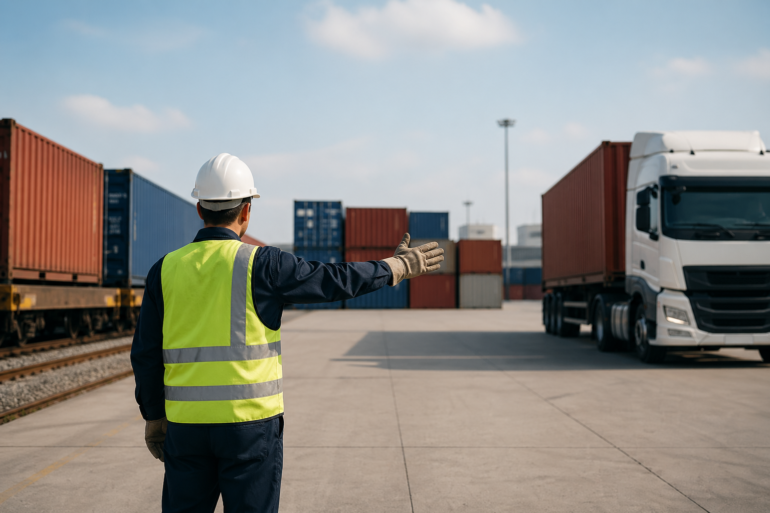
A Private Freight Terminal can make a huge difference in how fast goods move from one point to another. For businesses that depend on bulk cargo, containers, raw materials, finished products, or time-sensitive shipments, delays at public terminals can quickly become expensive. A private terminal gives companies more control over loading, unloading, storage, scheduling, and onward transportation.
In simple words, it works like a dedicated cargo hub built to handle freight more efficiently. Instead of relying only on crowded public facilities, a business or logistics operator can use its own terminal space to move goods faster, reduce waiting time, and improve supply chain planning.
Freight movement is not just about trucks, trains, ships, or warehouses. It is about timing. When one link in the chain slows down, the entire operation feels the pressure. That is why private cargo facilities are becoming more important in modern logistics.
What Is a Private Freight Terminal?
A Private Freight Terminal is a dedicated facility used for handling, storing, transferring, loading, and unloading freight. It may be owned or operated by a private company, industrial group, logistics provider, rail operator, port-linked business, or manufacturer.
These terminals are often connected to road, rail, port, or inland logistics networks. Their main purpose is to make cargo movement smoother and more predictable.
A private terminal may handle:
- Containers
- Bulk cargo
- Steel, cement, coal, grain, or minerals
- Automotive parts
- Consumer goods
- Industrial machinery
- Export and import shipments
- Refrigerated or temperature-sensitive cargo
Unlike a general public freight terminal, a private terminal is usually designed around the specific needs of one company, one industrial cluster, or a selected group of freight users. This makes operations more focused and less congested.
Why Faster Cargo Movement Matters
In logistics, speed is not only about moving fast on the road or rail track. It is also about removing wasted time before and after transportation.
A shipment can lose hours or even days because of:
- Long truck queues
- Slow documentation
- Limited loading bays
- Poor coordination between carriers
- Lack of storage space
- Delayed rail siding access
- Manual cargo handling
- Congestion at public terminals
A Private Freight Terminal helps reduce many of these problems by bringing cargo handling closer to the business operation. When goods do not need to wait in a long public queue, they can move into the next stage faster.
The World Bank’s Logistics Performance Index highlights that trade logistics performance depends on areas such as infrastructure, customs, logistics competence, tracking, and timeliness. Better infrastructure and stronger coordination are directly linked with faster and more reliable shipment movement.
How a Private Freight Terminal Supports Faster Cargo Movement
The real strength of a Private Freight Terminal is control. Businesses can plan cargo movement according to their own production, inventory, and delivery schedules.
Here is how it helps speed up freight operations.
Dedicated Loading and Unloading Areas
Public terminals often serve many companies at the same time. That can create delays, especially during peak hours, seasonal demand, or port congestion.
A Private Freight Terminal gives operators dedicated space for loading and unloading. This reduces waiting time for trucks, wagons, and containers.
When cargo handling equipment, labor, and dock space are available on schedule, freight moves faster. The process becomes more predictable because the terminal is not competing with too many outside users.
For example, a cement company with its own freight terminal can receive raw materials by rail, unload them directly into storage, and dispatch finished goods by truck without depending fully on a crowded public yard.
Better Rail and Road Connectivity
Many private terminals are built near highways, rail lines, ports, or industrial zones. This location planning is important because freight speed depends heavily on how easily cargo can switch from one mode to another.
A well-designed Private Freight Terminal may include:
- Rail sidings
- Truck access roads
- Container yards
- Weighbridges
- Warehousing space
- Bulk handling systems
- Customs or inspection areas
- Digital gate entry systems
Rail-linked terminals are especially useful for heavy freight. According to the Association of American Railroads, freight rail can move one ton of freight nearly 500 miles on one gallon of fuel on average, making it one of the most efficient ways to move large volumes over land.
This does not mean rail replaces trucks completely. In many cases, the best result comes from using rail for long-distance movement and trucks for local delivery.
Less Congestion at Public Freight Hubs
Congestion is one of the biggest enemies of cargo speed. When too many trucks, containers, and rail wagons gather at the same public terminal, delays become normal.
A Private Freight Terminal helps distribute freight activity across more locations. Instead of sending every shipment to the same public cargo point, companies can move goods through dedicated private facilities.
This can reduce pressure on ports, railway yards, and city freight corridors. It also helps businesses avoid peak-time bottlenecks.
A private cargo terminal can be especially valuable for industrial regions where many factories depend on the same freight infrastructure. If one large company builds a dedicated terminal, it may reduce load on shared facilities and improve freight flow for the wider area.
Faster Documentation and Gate Processing
Cargo delays often happen before the shipment even starts moving. Gate checks, paperwork, driver verification, weighing, cargo inspection, and entry approval can take time.
A modern Private Freight Terminal can speed up these steps through digital systems.
Common improvements include:
- Online truck appointment systems
- Digital gate passes
- Automated weighbridge records
- Barcode or RFID cargo tracking
- Electronic proof of delivery
- Integrated warehouse management systems
- Real-time vehicle monitoring
These tools reduce manual work and help staff process more shipments in less time.
For businesses, this means fewer idle trucks, lower labor pressure, and better visibility over cargo movement.
Stronger Inventory Control
A freight terminal is not only a place where goods arrive and leave. It can also work as a buffer between production, storage, and transportation.
A Private Freight Terminal allows businesses to hold cargo close to their operations. This is useful when production is faster than transport availability, or when incoming raw materials need organized storage before use.
For example, a steel manufacturer may receive raw materials in bulk by rail. Instead of unloading everything into a distant public warehouse, the company can store cargo at its private terminal and move it into production as needed.
This reduces unnecessary handling and helps avoid stockouts.
Better inventory control also supports faster customer delivery because goods are already positioned near the right transport routes.
Better Scheduling for Trucks and Trains
Public freight terminals usually follow shared schedules. A company may have to wait for available space, rail slots, cranes, labor, or truck entry windows.
A Private Freight Terminal makes scheduling more flexible. Operators can align terminal activity with their own shipment needs.
This means:
- Trucks can be assigned specific arrival windows
- Rail wagons can be loaded according to production cycles
- Cargo can be staged before dispatch
- Staff can prepare equipment before freight arrives
- Emergency shipments can be prioritized faster
When scheduling improves, cargo spends less time sitting idle.
Reduced Cargo Handling
Every extra handling step increases the chance of delay, damage, loss, or confusion. A private terminal can reduce unnecessary transfers by connecting production, storage, and transport in one controlled area.
For example, goods may move directly from factory storage to rail wagons or from incoming containers to a nearby warehouse.
This is especially useful for fragile, high-value, heavy, or time-sensitive cargo. Fewer touchpoints often mean faster movement and better cargo security.
Private Freight Terminal vs Public Freight Terminal
Both private and public terminals are important. The right choice depends on freight volume, business size, location, cargo type, and budget.
| Feature | Private Freight Terminal | Public Freight Terminal |
|---|---|---|
| Access | Limited or controlled access | Open to many users |
| Speed | Often faster for dedicated users | Can be slower during congestion |
| Control | High operational control | Less control over schedules |
| Cost | Higher setup cost | Lower upfront cost |
| Customization | Built around specific cargo needs | General-purpose operations |
| Security | Stronger cargo control | Shared environment |
| Best For | High-volume or regular freight users | Occasional or smaller shippers |
A public terminal may be enough for companies with irregular shipments. But for businesses moving large volumes regularly, a Private Freight Terminal can offer better speed, reliability, and long-term efficiency.
Real-World Example: Industrial Cargo Movement
Imagine a large food processing company that imports grain and exports packaged products.
Without a private terminal, the company may rely on public warehouses and third-party cargo yards. Trucks may wait in line. Rail wagons may not be available when needed. Documentation may move slowly between separate operators.
Now imagine the company has its own Private Freight Terminal near its factory.
Grain arrives by rail and is unloaded directly into storage silos. Packaging materials arrive by truck and are checked at a private gate. Finished goods move from the warehouse to outbound vehicles using scheduled loading bays.
The result is smoother movement, less waiting, and better control over delivery timelines.
This kind of setup does not only save time. It also helps reduce hidden costs such as fuel waste, driver waiting charges, missed delivery windows, and inventory disruption.
Key Benefits of a Private Freight Terminal
A Private Freight Terminal supports faster cargo movement, but speed is only one benefit. It also improves the overall logistics system.
1. Lower Waiting Time
Dedicated infrastructure means trucks and rail wagons spend less time waiting for access. This directly improves turnaround time.
When vehicles move in and out faster, companies can handle more shipments with the same fleet.
2. Better Cost Control
Delays cost money. Businesses may pay for detention, demurrage, storage, overtime labor, or missed delivery penalties.
A private terminal can reduce these expenses by making freight activity more predictable.
The Federal Railroad Administration has also reported that rail can be significantly more fuel-efficient than trucks on many competitive corridors, depending on route and cargo conditions.
For high-volume cargo, this efficiency can support lower long-distance transportation costs when rail access is available.
3. Improved Cargo Security
A Private Freight Terminal usually has controlled entry, surveillance, trained staff, and cargo-specific handling processes.
This reduces the risk of theft, misplacement, unauthorized access, or cargo tampering.
For businesses handling high-value goods, chemicals, food products, machinery, or export cargo, security can be just as important as speed.
4. Better Supply Chain Visibility
Modern private terminals often use digital tracking systems. This gives managers real-time information about cargo arrival, loading status, stock levels, vehicle movement, and dispatch timing.
Visibility helps teams make faster decisions. If a truck is late, a rail wagon is delayed, or a customer order changes, managers can adjust the plan quickly.
5. Support for Multimodal Transport
A strong logistics network often uses more than one transport mode. Cargo may travel by ship, rail, truck, and sometimes air before reaching the customer.
A Private Freight Terminal can act as a connection point between these modes.
For example:
- Rail brings bulk cargo from a port
- Trucks distribute goods to regional customers
- Warehouses prepare orders for final delivery
- Containers are transferred between storage and transport
This makes the freight network more flexible.
6. Faster Export and Import Handling
For companies involved in international trade, time lost at terminals can affect customer relationships and contract deadlines.
A private terminal near a port, rail corridor, or industrial zone can make export and import handling smoother. Cargo can be prepared, inspected, stored, and dispatched with fewer delays.
The World Bank notes that logistics performance includes shipment timeliness and quality of infrastructure, which are both important for competitive trade.
Who Needs a Private Freight Terminal?
Not every business needs one. A Private Freight Terminal usually makes sense when freight volume is high, recurring, or operationally complex.
It is useful for:
- Manufacturers
- Mining companies
- Cement plants
- Steel producers
- Agriculture exporters
- Retail distribution networks
- E-commerce fulfillment operators
- Port-linked logistics companies
- Automotive supply chains
- Energy and infrastructure firms
A smaller business may not need to own a full terminal. However, it may still benefit from using a privately operated logistics hub or shared private cargo facility.
Important Features of a Good Private Freight Terminal
A private terminal must be designed carefully. Speed depends on layout, equipment, location, and management.
Strategic Location
Location is one of the biggest factors. A terminal should be close to major roads, rail lines, ports, production sites, or customer markets.
A poorly located terminal can create more problems than it solves.
Efficient Yard Layout
The yard should allow trucks, forklifts, cranes, wagons, and containers to move without confusion. A bad layout creates internal congestion.
Good design includes clear entry and exit points, safe turning areas, marked cargo zones, and separate lanes for loaded and empty vehicles.
Right Handling Equipment
The terminal should have equipment that matches the cargo type.
This may include:
- Cranes
- Conveyors
- Forklifts
- Reach stackers
- Loading arms
- Hoppers
- Storage silos
- Pallet handling systems
Using the wrong equipment slows everything down.
Digital Management Systems
Technology is now a major part of freight speed. A modern Private Freight Terminal should use digital tools for tracking, scheduling, documentation, and reporting.
Even simple systems can make a major difference if they reduce manual errors and improve communication.
Safety and Compliance
Fast cargo movement should never come at the cost of safety. Good terminals follow proper safety rules for workers, vehicles, equipment, and cargo.
This includes fire safety, hazardous cargo rules, traffic control, worker training, and environmental compliance.
Challenges of Building a Private Freight Terminal
A Private Freight Terminal can be powerful, but it also comes with challenges.
The biggest challenge is cost. Land, equipment, rail connections, road access, permits, staff, and technology can require major investment.
Other challenges include:
- Regulatory approvals
- Environmental clearance
- Land acquisition
- Skilled labor needs
- Maintenance costs
- Coordination with rail or road authorities
- Cargo volume uncertainty
That is why businesses must calculate long-term freight demand before investing. If cargo volume is too low, the terminal may not deliver enough return.
How Businesses Can Make a Private Freight Terminal More Efficient
A private terminal works best when it is managed with clear systems.
Here are practical ways to improve performance.
Use Appointment-Based Truck Entry
Instead of allowing all trucks to arrive at random times, companies can use time slots. This reduces gate congestion and makes labor planning easier.
Track Turnaround Time
Measure how long each truck or wagon spends inside the terminal. If the time increases, managers can find the reason and fix it.
Separate Cargo Flows
Inbound and outbound cargo should not block each other. Separate lanes, storage areas, and loading points help reduce confusion.
Train Staff Regularly
A terminal is only as efficient as the people running it. Staff should understand cargo handling, safety rules, digital systems, and emergency procedures.
Use Data for Planning
Managers should study shipment patterns, peak hours, equipment usage, and delays. Data helps improve layout, staffing, and scheduling.
Keep Equipment Maintained
One broken crane, weighbridge, or loading machine can slow down the entire terminal. Preventive maintenance protects speed and reliability.
Common Questions About Private Freight Terminals
Is a Private Freight Terminal only for large companies?
Mostly, yes, because large companies usually have the volume needed to justify the cost. However, smaller businesses may benefit from privately operated shared terminals where multiple users access the same facility under managed conditions.
Does a private terminal reduce shipping costs?
It can reduce costs when freight volume is consistent. Savings may come from lower waiting time, better scheduling, reduced cargo handling, improved rail use, and fewer delays.
Can a private terminal connect with both rail and road?
Yes. Many terminals are designed for multimodal freight movement. A strong terminal often connects rail for long-distance cargo and trucks for local or regional delivery.
Is a private terminal better than a warehouse?
They serve different purposes. A warehouse mainly stores goods. A Private Freight Terminal handles freight movement, loading, unloading, transfer, storage, and transport coordination. Some facilities include both terminal and warehouse functions.
What types of cargo move best through private terminals?
Bulk cargo, containers, industrial goods, raw materials, export shipments, and high-volume recurring freight are usually the best fit.
Why Private Freight Terminals Matter for the Future of Logistics
Global supply chains are under pressure to become faster, cleaner, and more reliable. Businesses want fewer delays, better visibility, and stronger control over cargo movement.
A Private Freight Terminal supports that goal by bringing freight operations closer to the source of production or demand. It reduces dependency on crowded public facilities and creates a more organized flow of goods.
As more businesses combine rail, road, warehousing, and digital tracking, private terminals may become a key part of modern logistics planning. They also support the wider idea of intermodal freight, where cargo moves across different transport modes without unnecessary handling.
Conclusion
A Private Freight Terminal supports faster cargo movement by reducing waiting time, improving loading and unloading, strengthening rail and road connectivity, and giving businesses more control over their supply chain. It is not just a storage or transport facility. It is a complete freight coordination point.
For companies that move large volumes of goods, the benefits can be significant. Better scheduling, stronger security, fewer delays, and improved cargo visibility can all lead to faster deliveries and lower operational stress.
The best results come when a Private Freight Terminal is built in the right location, equipped with the right tools, and managed with clear data-driven systems. In a world where customers expect speed and reliability, dedicated freight infrastructure can give businesses a real competitive advantage.