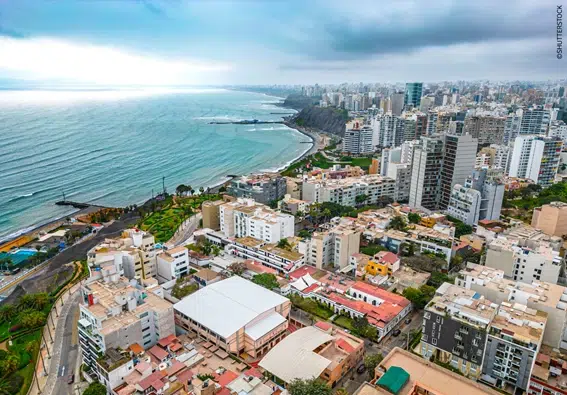
Between malecones, galleries, memorable cuisine, and neighborhoods, Lima unfolds itself as an urban experience where the Pacific accompanies every moment of the journey.
Lima brings together a wealth of sensations in a single journey. Peru’s capital is set on the Pacific and connects high-end hotels, oceanfront terraces, museums, galleries, a vibrant design scene, and a renowned cuisine, always with the sea on the horizon as a backdrop. Culture, gastronomy, history, and nightlife come together as parts of a single experience, spread across coastal neighborhoods, cultural spaces and routes that flow naturally. This blend of urban energy and the open sea makes the city especially appealing in South America.
The journey often begins along the coastal strip, where the malecones along the cliffside allow to walk or cycle past gardens, viewpoints, and parks overlooking the uninterrupted Pacific. Throughout the day, this stretch by the sea presents a series of changing scenes. The morning might begin with a bike ride, continue with a leisurely walk-through green space, and then lead to a paragliding flight offering a different view of the city. Later, as the light changes, the same coastal edge invites you to slow down, linger in the park, and wait calmly for the sunset. The sea remains a constant presence throughout the day, turning every movement into part of the experience.
Within this coastal experience, certain areas introduce different nuances that enrich the journey. In districts such as Miraflores, the atmosphere is more contemporary, with seafront shopping centers, restaurants with sweeping views, and hotels that blend seamlessly into the urban rhythm. Further south, in Barranco, the pace shifts and the city take on a more bohemian and creative feel. Artistic boutiques, museums, murals, bars serving Peruvian cocktails, and streets sloping down toward the sea with a distinctly photogenic character come into view. This transition expands the experience without breaking its continuity, as everything remains connected by the constant presence of the Pacific.
Lima also offers the opportunity to experience different moments of its history within a single journey. Set within the urban landscape, Huaca Pucllana and its on-site museum provide a glimpse into pre-Hispanic Lima, while the Historic Center reveals the city’s viceregal past through the Main Square, the Cathedral, and the San Francisco catacombs, which still shape its rhythm today. In this way, the sea, history, and contemporary life come together naturally throughout the journey.
Lima’s cuisine is another key highlight of this urban experience. The city has earned a prominent place among the world’s leading gastronomic scenes, and what is particularly interesting is how this reputation is expressed across very different settings. Great dining can be found in sophisticated seaside restaurants, in cebicherías with a strong local identity, in markets, in huariques, or in chifas that are part of everyday tradition.
This cuisine reflects the country’s diversity. On the Lima table, marine flavors, Creole traditions, African heritage, Chinese influences, and combinations that reveal centuries of culinary blending all come together. Dishes such as Cebiche, tiradito, parihuela, anticuchos, aji de gallina, and lomo saltado shape a journey where each meal adds a distinct layer to the city experience.
Beyond the table, the city offers a more hands-on way to experience its cuisine. Cooking classes led by local chefs, spaces where Peruvian ingredients become a shared experience, and activities that invite visitors to prepare iconic dishes first-hand are all part of the offering. Pisco tastings and cocktail sessions also appear, where the journey is expressed through aromas, blends, and flavors that linger long after the stay. These moments add participation and lasting memories to the itinerary.
When night falls, the city keeps its rhythm. Cultural and leisure activities are especially concentrated in the coastal areas, where theaters, bars, cinemas, concerts, galleries, and other spaces extend the experience into the evening. A walk along the malecon at sunset can continue with dinner, a cultural visit, or a night of live music. This ease of moving between parks, art, gastronomy, and nightlife ensures that the day unfolds seamlessly.
In this way, the Peruvian capital reveals itself as a city where the sea is part of everyday experience, and where heritage, contemporary culture, and hospitality coexist naturally.
Seen in this way, Lima reveals itself as a contemporary capital that brings together the sea, design, cuisine, history, and cultural life in a single journey. Its coastal areas offer complementary nuances, from urban elegance to a more bohemian creativity, while the city as a whole maintains a sense of continuity, comfort, and a well-balanced rhythm. Facing the Pacific, the Peruvian capital offers a particularly compelling way of discovering the country, with days unfolding between malecones, galleries, memorable dining experiences, and lively nights. This combination leaves a lasting impression, as if the city finds, by the sea, its most complete way of being remembered.