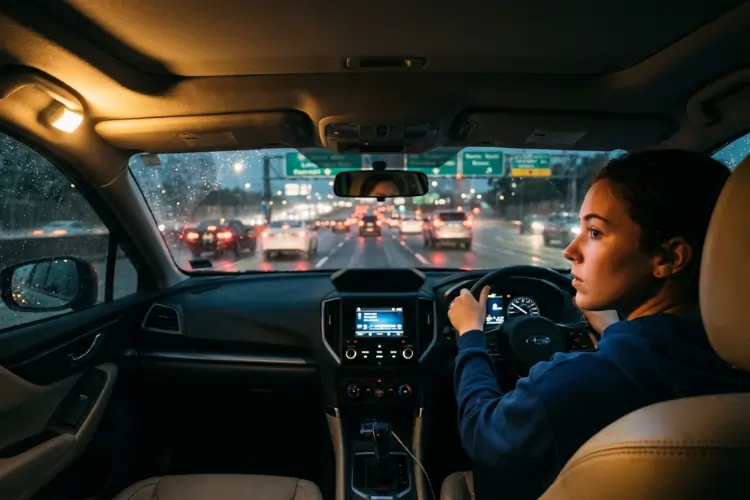
If you’ve grown up hearing ‘Turn that light off, it’s illegal!’, you’re not alone. Many drivers still believe that driving with your interior lights on is illegal. Not just unsafe, but legally not allowed. Makes you wonder what is actually true. Some driving myths are passed down over time. Driving with interior lights on being illegal is just one of those myths. There’s no law against driving with your interior lights switched on. And yet, people still believe doing it can lead to fines. Ever wondered why? Because, despite being fairly legal, having interior lights on while driving is still risky sometimes. So, what exactly is the truth, and what should you do if you feel like switching on the lights in your vehicle while on the road? Let’s find out.
What the Law Says
So, there’s no specific law in Australia that makes driving with interior lights on illegal. So, technically, you cannot be fined simply for switching it on while driving. However, that doesn’t mean it’s always safe or acceptable. The main purpose of road laws and traffic rules is to keep the roads safe. And for that, the drivers need to be alert, aware, and drive safely at all times. So, if something inside your vehicle affects your ability to drive safely or becomes a risk for you or other drivers, it can still lead to penalties under general road safety laws.
When Can It Become a Problem?
Despite being legal, having interior lights on while driving can sometimes cause issues. Here’s when it becomes a problem you should worry about:
Driver Distraction
When the interior light is bright, it can draw your attention away from the road. It can also create reflections on the windscreen, making it harder to focus on traffic or notice potential hazards ahead. If this starts to affect your driving, the traffic police might consider it a distraction and fine you for it.
Reduced Visibility at Night
When you’re driving at night, you need balanced lighting. Very low light may reduce your visibility, but too much light or very bright light may do the same. Since your visibility is already limited at night, having your interior light on may make it harder for your eyes to adjust to the darker road conditions outside. Due to this, you might find it harder to see pedestrians, road signs, or unexpected hazards.
Impact on Other Drivers
Sometimes, when the interior light is very bright, it can also be visible from outside the vehicle. Having such a bright light coming from an oncoming vehicle can distract other drivers and increase the risk of collision, especially in low-light conditions. And if your vehicle becomes a distraction to others, it could be considered unsafe driving behaviour under traffic laws.
Possible Consequences
While there is no specific offence for having your interior light on, drivers can still face penalties if it contributes to unsafe driving. It is deemed unsafe if your driving is affected or if you are creating a risk for others. Some consequences of such unsafe driving situations could include:
- Fines
- Demerit points
- Warnings from police
What Do Driving Instructors Recommend?
Even small distractions can have a big impact, especially at night or in busy traffic conditions. And that’s why most Sydney driving school instructors teach their students to minimise distractions while driving. Their driving lessons also emphasise the importance of being in full control of your vehicle at all times. Programs like the Safer Drivers Course also focus on teaching learners to be aware and avoid anything that takes their focus away from the road, including interior lights.
Best Practice for Drivers
To stay safe and avoid any issues, it’s best to use your interior light only when necessary. Here are some tips and best practices for using interior lights:
- Use it briefly to locate something in the car
- Switch it off before continuing to drive
- Avoid leaving it on during night driving
It’s not very complicated. Just remember a simple rule: if it affects your visibility and focus, turn it off.
Final Thoughts
Safe driving is not just about following specific rules. It’s about making smart decisions that reduce risk. Driving with your interior light on is not illegal in Australia. But if it affects your ability to drive safely or distracts others, it can still lead to penalties. That’s why you should avoid using it, or if you do, use it wisely.
Whether you’re taking a driving lesson with a trusted Sydney driving school like Onroad Driving School or building experience on the road over time, staying focused and minimising distractions is one of the most important habits you can develop.