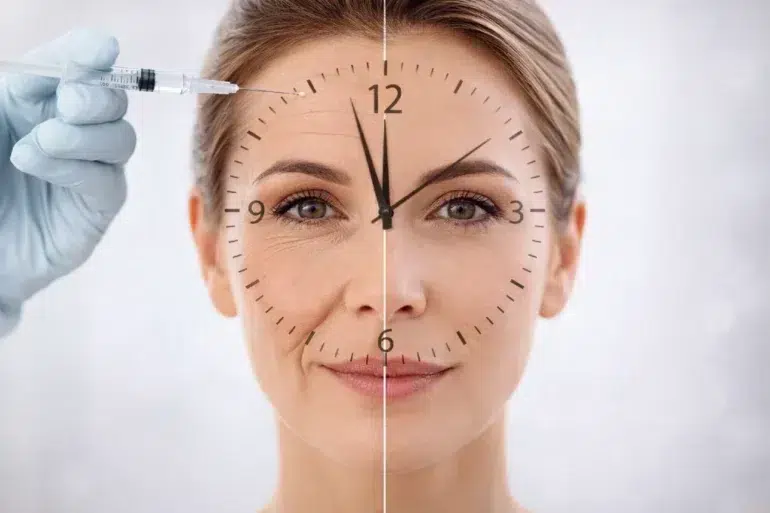
If you are wondering How Long Does Botox Last, the honest answer is that most people see results hold for about three to four months, with some fading a bit sooner and others stretching a little longer. On the forehead and upper face, that timeline is typical because Botox works by relaxing targeted muscles that create expression lines. The effect is temporary, and it gradually softens as nerve signaling returns. Official Botox Cosmetic information says results for forehead lines, frown lines, and crow’s feet can last up to four months, with early changes sometimes showing in one to two days and full results by about 30 days.
That said, the forehead is one of those areas where “average” does not tell the whole story. Some people still look quite smooth at month four. Others notice movement coming back around week eight to ten, especially if they have strong frontalis muscles, very expressive brows, or a lighter dosing plan designed to preserve movement. So when readers ask How Long Does Botox Last on the face and forehead, the better answer is this: it depends on your anatomy, your injector’s technique, the dose used, and how your muscles respond after treatment. The good news is that there is a predictable pattern, and once you know it, Botox feels much less mysterious.
Botox remains one of the most popular non surgical cosmetic treatments for a reason. The International Society of Aesthetic Plastic Surgery reported 7.8 million botulinum toxin procedures worldwide in 2024, making it the most common non surgical procedure performed by plastic surgeons. That level of demand does not happen by accident. People like it because treatment is quick, downtime is minimal, and results are noticeable without surgery.
How Long Does Botox Last in the Forehead and Upper Face?
For the forehead and upper face, Botox usually lasts around three to four months. That includes the horizontal forehead lines, the frown lines between the brows, and often the crow’s feet if those are treated at the same visit. The official Botox Cosmetic site states that results in these areas can last up to four months, and treatments should be spaced at least 90 days apart.
In real life, many people notice the timeline unfolding like this:
- Days 1 to 3: subtle early changes may begin
- Days 7 to 14: movement starts looking more controlled
- Around day 30: full cosmetic effect is usually visible
- Months 2 to 3: peak smoothing often continues
- Months 3 to 4: movement gradually returns
- After month 4: many people are thinking about a repeat appointment
That pattern lines up well with both official manufacturer guidance and broader clinical references describing Botox as a temporary treatment that lasts for several months.
Forehead Botox vs Full Face Botox
When someone asks How Long Does Botox Last on the face, they are often lumping several areas together. That makes sense, but different areas can behave a little differently.
The most commonly treated cosmetic areas include:
- Forehead creases
- Frown lines between the brows
- Crow’s feet near the eyes
The American Society of Plastic Surgeons lists these as common treatment zones, and Cleveland Clinic notes that Botox cosmetic injections are used across multiple facial areas. In practical terms, if all three areas are treated together, patients usually experience a similar general duration window, but the way the result fades can differ. Crow’s feet may still look improved while the forehead starts showing movement again, or vice versa, depending on the dose and your natural muscle pattern.
Why the Forehead Can Fade Faster Than You Expect
The forehead seems simple, but it is actually one of the trickier areas to treat well. The frontalis muscle lifts the brows, so injectors usually balance forehead treatment with the muscles between the brows to reduce the risk of an unnatural look or brow drop. The FDA prescribing information for forehead lines specifically describes treatment in conjunction with glabellar lines and notes a recommended total of 20 units for forehead lines plus 20 units for glabellar lines, for 40 units total.
That matters because a forehead that is underdosed to preserve expression may wear off sooner. A forehead that is treated very lightly for a “soft” result often regains movement faster than a more complete correction. On the other hand, stronger dosing is not automatically better. Good injectors are trying to balance longevity, safety, brow position, and natural movement. The forehead is not a place where copying someone else’s unit count makes much sense.
Another reason the forehead can seem to fade quickly is that people watch it closely. Tiny returning movements are easier to notice there than in some other facial areas. A person may still look smoother than baseline, but because they can lift their brows a little more, they assume all the Botox is gone. In many cases, it is not gone. It is simply tapering.
What Affects How Long Botox Lasts?
A few factors make a real difference in how long results last on the face and forehead.
1. Muscle strength
Stronger, more active facial muscles tend to burn through the visible effect faster. This is one reason some men, younger patients with very active expressions, or people who constantly raise their brows may feel their results fade sooner.
2. Dose and treatment plan
Botox is not one size fits all. If the goal is a very natural look with plenty of movement, the injector may use a lighter plan. That can look beautiful, but it may not last as long as a fuller correction. The FDA labeling for forehead line treatment also shows that official dosing is structured and area specific, not random.
3. Injection technique
Placement matters just as much as dose. Poor placement can shorten the cosmetic payoff or create an uneven result. That is why choosing an experienced, qualified injector is one of the best ways to improve both outcome and longevity.
4. Treatment history
Some clinicians observe that first time patients may feel results wear off a little faster, while repeat treatments can seem more consistent over time. The American Society of Plastic Surgeons has noted that some patients see Botox last in the two to four month range, while others may reach four to six months, and first timers sometimes feel it does not last quite as long initially.
5. Product and area treated
People often say “Botox” as a catchall term, but there are multiple neuromodulators on the market. They are not always interchangeable in onset or duration. Even with the same product, upper face areas can behave a little differently based on muscle pattern and dose. That is one reason you should judge your own results over a few sessions instead of assuming every injector or every brand will feel identical.
A Realistic Month by Month Botox Timeline
Here is what many patients can realistically expect after forehead and facial Botox.
| Time After Treatment | What You May Notice |
|---|---|
| 24 to 72 hours | Early softening may begin |
| 1 to 2 weeks | Lines look smoother and movement is reduced |
| Around 1 month | Full settled result is usually visible |
| 2 to 3 months | Results still look strong for many patients |
| 3 to 4 months | Gradual return of motion becomes noticeable |
| 4+ months | Many patients plan their next appointment |
The official Botox Cosmetic site says you may begin to see results in one to two days, with full results in 30 days, and effects lasting up to four months. Cleveland Clinic also notes that the effect is temporary and can last for several months.
How to Make Botox Last Longer
You cannot turn a temporary neuromodulator into a permanent one, but you can make the most of your results.
Here are the habits that actually help:
- Go to a qualified injector who understands facial anatomy
- Follow aftercare directions from your provider
- Keep your appointments consistent rather than waiting until everything fully wears off
- Protect your skin from sun exposure
- Use good skincare, especially sunscreen and a retinoid if appropriate for your skin
- Avoid chasing bargain injections that sacrifice technique for price
The biggest factor is provider quality. The forehead is especially technique sensitive. The FDA label notes brow ptosis as a known risk in forehead treatment and gives specific placement guidance intended to reduce that risk. Better technique usually means better balance, smoother results, and often a more satisfying duration.
It also helps to set the right expectations. Botox does not erase every etched line forever. If lines are deeply present at rest, Botox can soften the muscle activity that makes them worse, but the skin itself may still need time, skincare, or in some cases another treatment approach to look its best. That is one reason some patients feel their Botox “did not last,” when what really happened is that static lines became visible again as the muscle effect faded.
Common Mistakes That Make Botox Seem Shorter Lasting
Sometimes Botox does not actually wear off too fast. It just seems that way because of avoidable mistakes.
Waiting too long for follow up
If you wait until your movement is fully back and your lines look exactly like baseline, every appointment can feel like starting from scratch. Regular timing, as advised by your injector, tends to create a more predictable maintenance rhythm.
Judging the result too early
The full result is usually not visible on day two or three. Official guidance says full effect may take up to 30 days. If you evaluate too soon, you may assume the treatment is weak when it has not fully settled yet.
Expecting fillers and Botox to behave the same way
They do not. Botox relaxes muscles. Fillers add volume. The American Society of Plastic Surgeons notes that Botox typically lasts about two to four months, while many fillers last considerably longer. Comparing the two can create unrealistic expectations.
Is It Normal for First Time Botox to Wear Off Faster?
Yes, it can be. Not everyone experiences this, but it is common enough that injectors mention it often. The early sessions are partly a learning process. Your injector sees how your muscles respond, how much movement you want to keep, and whether a touch up or future dose adjustment would improve the result. The ASPS has noted that first timers may feel Botox does not last as long initially, while later treatments can feel longer lasting or more predictable.
This is one reason the first appointment should not be treated like the final blueprint for every future visit. Good cosmetic work is usually refined over time.
Safety and Side Effects to Know About
Botox is widely used, but it is still a prescription medication and should be treated that way. For forehead lines, the FDA labeling lists headache and brow ptosis among the more common adverse reactions, with headache reported in 9% of treated subjects and brow ptosis in 2% in clinical studies of forehead line treatment with glabellar lines. Eyelid ptosis was also reported at 2% in those studies. The label also notes that adverse reactions generally occur within the first week after injection and are usually temporary.
That does not mean Botox is unsafe for most appropriate candidates. It means technique and patient selection matter. An experienced injector will review your medical history, examine your brow position and facial balance, and explain risks clearly before treatment.
When Should You Get Botox Again?
For many people, the sweet spot is every three to four months. Official Botox Cosmetic guidance says treatments should be spaced at least 90 days apart. That is a useful baseline because it helps patients avoid overtreating while still maintaining consistent results.
A simple rule of thumb is this: do not book based only on the calendar, and do not wait until you are completely back to baseline if your goal is maintenance. Instead, pay attention to returning muscle movement, line recurrence, and how your face looks at rest. Those clues are more helpful than copying someone else’s schedule.
The Bottom Line on How Long Does Botox Last
So, How Long Does Botox Last on the face and forehead? For most people, expect about three to four months, with full results showing up by around day 30 and a gradual fade after that. Some people lose the effect earlier, some keep it a bit longer, and the forehead can be especially sensitive to dosing and technique.
The smartest way to think about Botox is not as a one time fix, but as a maintenance treatment that works best when it is personalized. A great result depends on anatomy, injector skill, realistic expectations, and a treatment plan that fits your face rather than a generic number of units copied from the internet. In the last few years, as demand for botulinum toxin procedures has continued to grow, that personalized approach has become even more important for patients who want natural movement and reliable longevity.
If your goal is a smoother forehead without looking frozen, Botox can absolutely deliver that. Just go into it knowing that “temporary” is part of the deal. For most readers, that means enjoying smoother skin for a few months, then deciding whether the look is worth maintaining. For many people, it is.