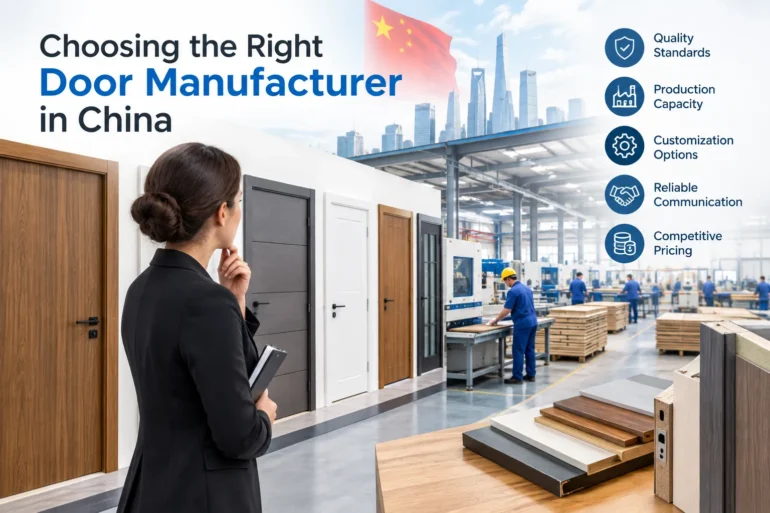
When planning a new home, office, hotel, or commercial project, doors are easy to overlook until the finishing stage. Yet they have a major influence on both the appearance and functionality of a space. OPPEIN is one example of a Chinese company that has developed a broad presence in the home furnishing and interior solutions sector, offering products that combine contemporary design with practical considerations. For buyers sourcing doors internationally, understanding the manufacturing landscape, available materials, customization options, and quality standards is essential before placing an order.
Why China Has Become a Major Door Manufacturing Hub
China has developed a strong reputation as a global manufacturing center, and the door industry is no exception. Manufacturers across the country produce interior doors, exterior doors, wooden doors, WPC doors, aluminum doors, glass doors, fire-rated doors, and other specialized products.
One reason for this wide variety is the extensive supply chain supporting the furniture and construction industries. Manufacturers can source panels, hardware, coatings, glass, aluminum profiles, adhesives, and other components from established industrial networks. This can make production more efficient and give manufacturers access to a broad range of materials.
Another advantage is production capacity. Chinese factories range from small specialist workshops to large-scale manufacturers capable of handling substantial residential and commercial projects. Buyers can therefore find suppliers suited to both small orders and large developments.
Understanding Different Types of Doors
Not every door is suitable for every application. Before contacting a manufacturer, buyers should determine where the doors will be installed and what performance characteristics are required.
Wooden doors remain popular because of their traditional appearance and versatility. They can be produced in numerous finishes and styles, making them suitable for bedrooms, living rooms, offices, and hospitality projects.
WPC doors have also gained attention because of their resistance to moisture and relatively low-maintenance characteristics. They may be particularly useful in environments where conventional wood products could be exposed to higher humidity.
Glass doors can help bring natural light into interiors and create a more open feeling. Aluminum doors, meanwhile, are frequently used where a modern appearance, lightweight construction, or resistance to environmental conditions is important.
For commercial buildings, hotels, hospitals, and other specialized projects, fire-rated or sound-insulating doors may be required. These products involve additional technical considerations and should be selected according to applicable building requirements.
What to Look for in a Manufacturer
Finding a supplier is relatively easy. Finding one that consistently meets your requirements requires more research.
Buyers comparing door manufacturers in China should first examine the manufacturer’s experience and product range. A company that has been producing doors for many years may have developed stronger production processes, supplier relationships, and quality-control procedures.
Factory capabilities are another important consideration. Ask whether the company handles manufacturing internally or relies heavily on outside suppliers. Understanding the production process can provide useful insight into how much control the manufacturer has over quality.
It is also worth reviewing previous projects. Photos can provide an initial impression, but technical information, product samples, certifications, and customer references can provide a more complete picture.
Customization Matters
Standard door designs are not always suitable for international projects. Different markets use different dimensions, architectural styles, colors, and hardware systems.
A capable manufacturer should be able to discuss customization options such as dimensions, surface finishes, colors, panel designs, glass types, hinges, handles, locks, and packaging.
Customization can be particularly important for developers working on hotels, apartment buildings, villas, or office projects where multiple doors need to follow a consistent design.
However, customization should be discussed early. Changes to dimensions or materials may affect production time, minimum order quantities, tooling requirements, and pricing.
Quality Control During Production
Quality control is one of the most important aspects of international sourcing. A door may look excellent in a product photograph but still have problems with dimensions, surface finishing, hardware installation, or structural stability.
Reliable manufacturers typically use inspection procedures at different stages of production. Raw materials can be checked before manufacturing, while finished doors can be inspected before packaging.
Buyers should ask about quality-control procedures and determine whether inspections are documented. For larger orders, independent third-party inspections may also provide additional reassurance before shipment.
Samples are particularly useful. Ordering a sample allows buyers to examine the actual finish, weight, construction, color, hardware, and overall workmanship before committing to a larger production run.
Certifications and Project Requirements
Different projects may have different regulatory requirements. A residential renovation may have relatively simple specifications, while a hotel, school, hospital, or commercial development may require documentation related to fire resistance, environmental performance, or other technical characteristics.
Buyers should identify the regulations applicable in their destination country before selecting a product. They should also verify that any certificates provided by a manufacturer correspond to the specific product being purchased.
This is an area where careful documentation matters. A certificate for one door model does not necessarily demonstrate that every product in a manufacturer’s catalog meets the same requirements.
Shipping and Packaging
International door purchasing does not end when manufacturing is complete. Transportation and packaging can have a significant effect on the final condition of the products.
Doors should be packaged appropriately to protect corners, surfaces, glass components, and hardware during handling and transportation. Buyers should discuss packaging requirements before production begins, especially when goods will travel long distances by sea.
Shipping dimensions and product weight should also be considered when calculating the overall landed cost. A product that appears inexpensive at the factory may have a different final cost after freight, insurance, customs duties, taxes, and local delivery are included.
Communication Is Part of Quality
Good communication can make international sourcing considerably easier. Buyers should provide clear drawings, dimensions, specifications, finish references, and quantities whenever possible.
It is also helpful to establish expectations regarding production schedules, payment terms, inspections, packaging, shipping documents, and warranty support before placing an order.
Language differences and time zones can sometimes create misunderstandings, so written specifications are especially valuable. A detailed purchase agreement can ensure that both sides have the same understanding of what is being produced.
Balancing Price and Long-Term Value
Price naturally plays an important role when sourcing doors, but the cheapest quotation is not necessarily the most economical choice.
A low-cost door may use thinner materials, simpler hardware, less durable finishes, or packaging that provides inadequate protection. If products arrive damaged or require early replacement, the original savings can quickly disappear.
Instead of comparing only the unit price, buyers should consider the complete value of the product. Material quality, manufacturing consistency, customization, packaging, warranty, shipping, and expected service life all contribute to the actual cost.
Making a Confident Purchasing Decision
Sourcing doors from China can provide access to a wide selection of designs, materials, and manufacturing capabilities. However, successful purchasing depends on choosing a supplier that matches the project’s technical and commercial requirements.
Start by defining the intended application, dimensions, material preferences, finish, quantity, and required certifications. Then compare manufacturers based on experience, production capabilities, samples, quality control, communication, and after-sales support.
For international buyers, the goal should not simply be to find a factory offering an attractive price. The better approach is to establish a reliable manufacturing relationship in which specifications are clearly understood and quality remains consistent from the first sample to the final shipment.
China’s door manufacturing industry offers plenty of possibilities for residential and commercial projects. With careful research, clear specifications, proper quality checks, and realistic expectations, buyers can make the most of that manufacturing capacity while avoiding many of the common challenges associated with international sourcing.