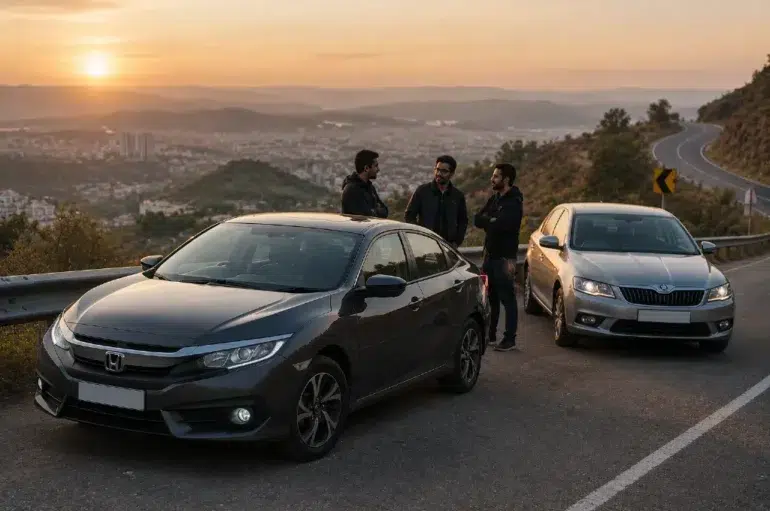
There’s a particular kind of car buyer who cares less about flashy features and more about how a car feels at 120 km/h on an open highway. For this buyer, the sedan never went out of style.
While SUV sales have climbed sharply across India in recent years, a dedicated segment of enthusiasts continues to seek out sedans built with engineering precision. The Volkswagen Vento, for instance, remains a favourite in this circle. That preference tells us something worth exploring. What makes a sedan truly enduring when everyone else is buying SUVs?
What “well-built” actually means in engineering terms
The phrase gets thrown around loosely. Let’s break it down.
Build quality in sedans comes down to three measurable factors: body rigidity, panel gap consistency, and NVH (noise, vibration, harshness) insulation. Nothing else really matters until you get these right.
Body rigidity is how the chassis resists flex during cornering or over broken surfaces. German-engineered sedans typically use higher grades of high-strength steel in their monocoque construction. This translates directly into how confident the car feels mid-corner. Most buyers won’t realise why until they drive something with a flexy chassis back-to-back. Buyers searching for a used Volkswagen Vento often cite its solid build quality, planted ride, and European driving dynamics as reasons they keep coming back to the nameplate.
Panel gaps separate the pros from the pretenders. These spaces between body panels are a reliable proxy for manufacturing precision – tighter, more uniform gaps indicate stricter tolerance standards at the factory. You can feel the build quality before you even start the engine.
NVH insulation is what separates a refined cabin from a noisy one. It’s where manufacturers save money first when cutting costs. Thicker glass, additional sound-deadening material in the firewall, and better rubber seals around doors all contribute to the experience. You don’t appreciate this until you’ve done a 6-hour highway run in a poorly insulated cabin.
| Build Quality Factor | What Enthusiasts Check | Why It Matters |
| Body rigidity | Chassis flex on rough roads | Cornering confidence, safety |
| Panel gap consistency | Uniform gaps across panels | Manufacturing precision indicator |
| NVH insulation | Cabin noise at 100+ km/h | Long-drive comfort, refinement |
| Suspension tuning | Body roll, bump absorption | Driving engagement vs comfort balance |
The driving dynamics that SUVs struggle to replicate
A sedan sits lower. That simple fact changes everything.
The lower centre of gravity means less body roll through corners, more direct steering response, and a feeling of connection between driver and road that tall-bodied vehicles find hard to match. Physics doesn’t care about marketing campaigns – a lower, lighter car will always turn in sharper and feel more planted at speed.
Sedans are also lighter than SUVs built on the same platform. This creates a cascade of benefits that most people never consider. Less weight means the engine doesn’t work as hard during overtakes, the brakes need less force to scrub speed, and tyres last longer because they’re carrying a smaller load. For buyers who track fuel costs carefully, the weight advantage shows up at the pump too.
Why pre-owned sedans offer better value than new SUVs
A three to four-year-old sedan from a reputed manufacturer often costs less than a new sub-compact SUV while delivering a larger engine, better materials, and superior ride quality. The math makes no sense unless you understand how depreciation really works.
Depreciation favours the used sedan buyer here. Because market demand has shifted toward SUVs, sedans depreciate faster in their first two years. After that initial drop, values tend to stabilise. This creates a sweet spot for informed buyers who don’t need the latest model year badge.
For those researching Volkswagen second hand car prices in India, this pattern is especially visible. Older model years sit at price points that would only fetch a base-variant compact SUV if bought new, yet the driving experience, cabin space, and highway stability remain in a different league altogether.
The enthusiast community keeping sedans relevant
Online forums, owner groups on social media, and weekend drive clubs across India keep the sedan culture alive. Not through nostalgia, but through shared knowledge.
These communities share detailed ownership reports, document real-world fuel efficiency across different driving conditions, and collectively negotiate better service rates from independent workshops. This peer knowledge network helps new buyers make informed decisions in ways that traditional reviews can’t match. Someone considering a particular model year can find actual owner feedback on common issues, parts pricing, and long-term reliability rather than relying solely on professional reviews written during launch week.
The enthusiast community also creates a secondary market for performance parts, aftermarket support, and specialised knowledge that keeps older sedans viable as long-term ownership propositions. Sedans built with genuine engineering intent continue to find appreciative owners.