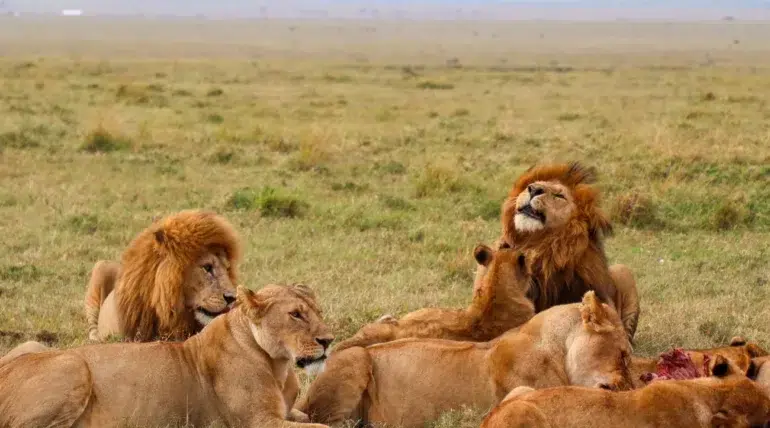
Here’s a question that lands in nearly every East Africa travel forum, every safari planning call, and every conversation between first-timers and seasoned bush veterans alike: Tanzania or Kenya? Both countries share the same iconic ecosystem. Both will leave you genuinely speechless. And honestly? Both will ruin you for ordinary holidays forever.
According to Go2Africa’s State of Safari 2025 report, 82% of travelers already have a destination in mind before they even start researching, up from 65% just two years ago. So chances are you’re not here to weigh options from zero. You’re here to confirm what your gut is already telling you. This guide does exactly that.
Quick Comparison: Tanzania vs Kenya Safari at a Glance
Before the deep dive, here’s a snapshot of where each destination shines.
| Category | Tanzania | Kenya |
| Best For | Migration, wilderness depth | Big cats, conservancies |
| Top Parks | Serengeti, Ngorongoro, Ruaha | Masai Mara, Amboseli, Samburu |
| Migration Window | Jan–March (calving), June–July | July–October (river crossings) |
| Safari Style | National parks, vast wilderness | Private conservancies, guided |
| Beach Extension | Zanzibar | Diani, Lamu |
| Starting Cost | ~$650/person/day | ~$750/person/day |
| Best For Families | Moderate | Excellent |
Now let’s get into the details that actually shape your decision.
Why These Two Countries Dominate the African Safari Conversation
Both destinations punch hard in the wildlife category. But what makes each one truly special, the soul of it, really, is where they part ways completely.
What Sets a Tanzania Safari Apart
Scale. That’s the word that keeps coming up when travelers return from a tanzania safari. The Serengeti alone spans nearly 15,000 square kilometers of open, uninterrupted savannah. Standing in the middle of it feels genuinely ancient, like the land hasn’t changed in a thousand years.
Planning your northern circuit itinerary across Tarangire, Ngorongoro, and the central Serengeti gives you that rare feeling of true wilderness immersion.
Head further south into Ruaha or Nyerere (formerly Selous), and the crowds disappear almost entirely. Predator sightings here are exceptional, and a growing number of eco-luxury lodges have made sustainability part of the experience, not just a marketing line.
What Gives Kenya Its Edge
Kenya basically invented the private conservancy model, and the ripple effects are still felt across the entire safari industry. Places like Mara North, Naboisho, and Olare Motorogi, all community-owned land bordering the Masai Mara, strictly cap vehicle numbers. The result? Wildlife encounters that feel personal, unhurried, and genuinely rare.
Venture north into Samburu or Laikipia, and you’re suddenly in entirely different terrain. The “Samburu Special Five” which includes Grevy’s zebra, reticulated giraffe, Beisa oryx, Somali ostrich, and gerenuk, exists nowhere else on a standard safari itinerary. That alone is worth building a trip around.
Wildlife Encounters: Where Each Country Delivers
This is, ultimately, why you’re booking the flight.
Tanzania’s Wildlife Highlights
Ngorongoro Crater is widely regarded as the single most reliable spot in East Africa for black rhino sightings; its contained geography keeps populations protected and trackable. Tarangire during dry season is something else entirely: enormous elephant herds, sometimes numbering in the hundreds, converge around the Tarangire River in ways that genuinely stop you mid-breath.
The Serengeti supports roughly 3,000 lions, the largest lion population on the continent. Leopard and cheetah sightings in the Seronera Valley are consistent enough that first-timers regularly walk away with big cat ticks on all three species.
Kenya’s Signature Sightings
The Masai Mara’s wide-open grasslands are made for cheetah hunts. You watch the whole thing unfold, the stalk, the sprint, the takedown, with unobstructed sightlines that simply don’t exist in denser bush. Along the Mara and Talek Rivers, leopards drape themselves across riverine trees with casual indifference to vehicles below.
Amboseli? It does one thing better than anywhere on earth, framing massive, ancient-tusked elephants against a snow-covered Kilimanjaro backdrop. Photographers lose their minds there, and rightly so.
The Great Migration: Getting the Timing Right
Nothing in African wildlife tourism compares to the scale of the wildebeest migration. But timing your visit correctly is everything.
When Tanzania Owns the Migration Story
January through March is calving season in Tanzania’s southern Serengeti and Ndutu region. Hundreds of thousands of wildebeest calves are born within weeks of each other, an event that draws predators in staggering concentrations. By June, herds push west toward the Grumeti River, where crocodile crossings unfold without the August crowds that flood the Mara.
When Kenya Takes the Headline Moment
July through October. That’s when the herds cross into Kenya’s Masai Mara and face the Mara River, steep banks, massive Nile crocodiles, and a chaotic, breathtaking plunge that produces the images most people associate with the migration globally. Book at minimum six months ahead for July and August. Seriously. Camps fill fast.
Understanding Safari Costs: What You Should Expect to Spend
Safari pricing has climbed considerably. Average spend per person moved from roughly US$6,500 in 2023 to US$8,625 in 2025, according to tourismupdate.com, driven by premium demand and limited capacity at top-tier camps. Entry-level shared-camp safaris in both countries start around $300–$500 per person per day. Mid-range sits comfortably at $650–$1,200. Ultra-luxury lodges in exclusive conservancies or Tanzania’s remote south regularly exceed $2,500 per person per night.
Kenya runs slightly higher overall, largely due to conservancy access fees. Tanzania’s southern circuit offers genuinely strong value, lower park fees, thinner crowds, and extraordinary wildlife.
Conservation and Community: The Bigger Picture
Where your money flows matters. Conservancy models in Kenya route revenue directly to Maasai landowners, it’s community investment, not charity. Responsible Tanzania operators increasingly partner with lodges built around local employment, waste reduction, and anti-poaching commitments.
Ask your operator direct questions. Which communities benefit? How many local guides are on staff? What percentage of revenue stays in-country? The answers will tell you quickly who actually walks the sustainability talk.
Who Should Book Which Trip?
Choose a Tanzania safari if you want unmatched wilderness scale, the full migration arc across multiple seasons, minimal vehicle congestion, and experiences built for photographers, repeat visitors, or travelers who find deep remoteness genuinely restorative.
Choose Kenya if you’re traveling with kids, visiting for the first time, or craving flexible conservancy activities, night drives, walking safaris, Maasai village visits, alongside relentless predator action. Infrastructure is stronger, and logistics run more smoothly.
Want both? A 10–12 day combo, three nights in the Masai Mara, a border crossing, then four to five nights split across the Serengeti and Ngorongoro, is genuinely one of the best itineraries in East Africa. Bush flights keep it efficient.
Frequently Asked Questions
Which country is safer?
Both maintain strong tourism infrastructure. Kenya offers better road networks and medical access; Tanzania rewards those comfortable with more remote, quieter environments.
Which is better for the migration?
Kenya delivers the iconic river crossings (July–October); Tanzania offers calving season drama and broader migration coverage throughout the year. It genuinely depends on your timing and priorities.
What are Africa’s top safari destinations overall?
Kruger in South Africa and Botswana’s Okavango Delta are perennial leaders. Zambia, Zimbabwe, and Namibia offer exceptional experiences for travelers ready to step slightly off the well-worn path.