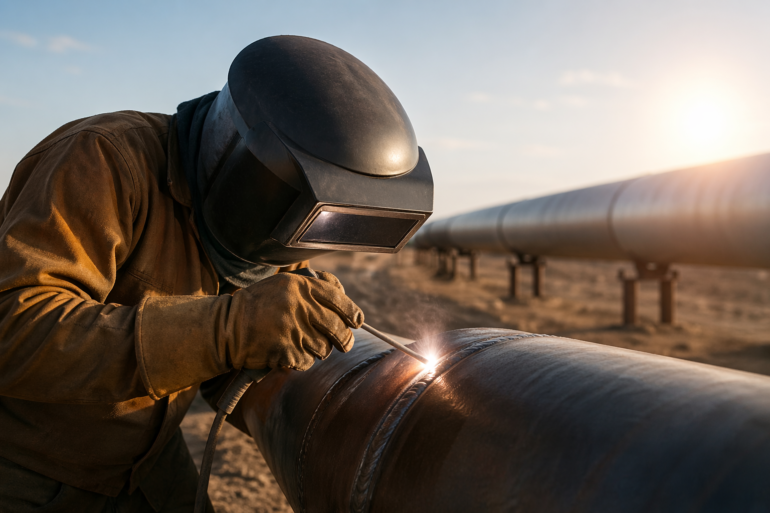
If you spend any time around pipeline crews, structural jobs, or field welding setups, you will hear the term Pancake Welding Hood come up again and again. It is not just a style preference or a regional habit. For many welders, especially pipe welders and those who work outside, this hood solves real problems that standard welding helmets do not always handle as well.
The main reason welders choose a Pancake Welding Hood is simple. It helps block sunlight, reduces side glare, improves visibility in bright outdoor conditions, and gives a lightweight, practical feel that many field welders trust during long shifts. It is a purpose-driven piece of gear, and once you understand how it works, it becomes clear why it has such a loyal following.
A pancake hood looks different from a conventional helmet for a reason. Its design is built around outdoor realities like low sun, wind, awkward pipe positions, and the need for a compact hood that does not feel bulky when you are moving all day. Add in the role of Pancake Welding Hood Straps, lens setup, and hand dominance, and you begin to see why welders can be very particular about which one they wear.
What Is a Pancake Welding Hood?
A pancake welding hood is a side shield style welding hood, often made with a rigid front and a large circular or oval side panel that helps block sunlight from the welder’s viewing side. It is commonly used in pipe welding and outdoor welding where bright natural light can interfere with puddle visibility.
Unlike a standard flip-front helmet that covers the full face in a broader shell, a pancake hood is more compact and directional. It is usually built for either left-handed or right-handed welders because the side shield needs to sit on the correct side of the face to block incoming light effectively.
That design matters more than many beginners realize. According to OSHA, workers exposed to injurious light radiation during welding must use appropriate eye and face protection, including proper filter lenses and suitable protective equipment. OSHA also notes that welding exposes workers to radiant energy, sparks, and hot metal, which makes proper face and eye protection essential.
Why Pipe Welders Prefer a Pancake Welding Hood
Pipe welding often involves difficult positions, tight spaces, and outdoor conditions that are far from ideal. In those situations, comfort and visibility can make a real difference in weld quality.
Here are the biggest reasons pipe welders tend to favor this style of hood:
- Better sunlight control
The side shield helps block harsh light from the welder’s open side, which can make the weld puddle easier to see outdoors. - Lightweight feel
Many pancake hoods feel lighter and less bulky than a traditional helmet, especially during long field days. - Lower profile design
The compact shape can be easier to work with around pipe, racks, and awkward angles. - Strong familiarity in the trade
In pipeline and rig environments, pancake hoods have been widely used for years, so many welders learn on them early and stick with what works. - Reliable passive setup
A lot of pancake hoods use a fixed lens arrangement, which appeals to welders who want simplicity and consistency rather than electronics.
That does not mean every welder should automatically switch to one. It means the hood is highly suited to a certain kind of work, especially field welding where the environment is working against visibility.
Why Outdoor Welders Choose It Over Standard Helmets
Outdoor welding is different from shop welding. In a shop, lighting is more controlled. Wind is reduced. Shadows are easier to manage. Outside, the sun can hit from the side, reflect off metal, and wash out your view.
That is where the Pancake Welding Hood stands out.
A standard helmet may still protect your face and eyes, but many welders say it can feel less effective at blocking bright side light during outdoor tasks. The pancake hood’s signature side cup design is built for that specific issue. It creates a shaded viewing zone that helps the welder keep a clearer visual on the arc and puddle.
This matters because vision during welding is not just about comfort. It affects bead control, tie-ins, consistency, and overall weld quality. If glare reduces contrast, the welder may struggle to read the puddle properly, especially on pipe where precision is critical.
OSHA’s welding eye protection guidance emphasizes that workers need filter lenses with the correct shade number and proper protective equipment to guard against radiant energy. The goal is not merely to block visible brightness, but to protect against ultraviolet and infrared hazards as well.
The Design Features That Make a Pancake Hood Different
A pancake hood is not just smaller. It is engineered differently from the ground up.
1. Side shield construction
The most noticeable feature is the large side plate or cup. This is what helps block side light, which is one of the biggest problems in outdoor welding.
2. Fixed viewing area
Many pancake hoods use a passive lens setup with a fixed shade lens. Some welders like this because it is simple, dependable, and easy to maintain.
3. Hand-specific build
These hoods are often made for left-handed or right-handed users. Choosing the wrong version reduces the sunlight-blocking advantage.
4. Compact front profile
The hood is usually tighter to the face and less bulky overall, which some welders find easier to manage in field positions.
5. Headgear and strap system
A lot of the comfort comes down to the fit. This is where Pancake Welding Hood Straps become important. Good straps help keep the hood stable, reduce shifting while moving, and improve comfort across long work sessions.
Pancake Welding Hood Straps and Why They Matter
It is easy to focus only on the hood shell and lens, but straps play a bigger role than many people think. Poorly fitted straps can make even a good hood annoying to wear. A solid strap setup helps distribute weight, keeps the hood aligned, and prevents constant adjustment.
A good strap system should do three things well:
- Hold the hood securely without excessive pressure
- Keep the viewing lens aligned with your natural working position
- Stay comfortable when worn for long hours
When welders talk about fit, they are often really talking about the combined effect of shell shape, padding, and Pancake Welding Hood Straps. If the straps are too loose, the hood shifts when you bend or reposition. If they are too tight, pressure points can build up fast.
For outdoor crews working full days, a proper strap setup is not a small detail. It is part of whether the hood feels workable or frustrating.
Is a Pancake Welding Hood Safer Than a Standard Welding Helmet?
This is the wrong question in one sense, because safety depends on whether the equipment is being used correctly, whether it has the right lens setup, and whether it is appropriate for the task. A pancake hood is not automatically safer just because welders like it.
The better question is whether it provides the right kind of protection for the work environment.
According to OSHA regulations, workers must use appropriate eye and face protection when exposed to hazards such as flying particles, molten metal, and potentially injurious light radiation. OSHA also points to standards for protective equipment performance and selection.
ANSI and ISEA materials also note that the ANSI/ISEA Z87.1 standard defines performance criteria for occupational eye and face protection, and recent revisions continue to set the benchmark for how protective eyewear and face protection are evaluated.
So the safest option is the one that:
- Fits correctly
- Uses the proper lens shade for the process
- Is in good condition
- Matches the actual working environment
- Is worn consistently and correctly
For many outdoor pipe welders, a pancake hood checks those boxes well. For other jobs, a standard helmet may be the better choice.
Pros and Cons of Using a Pancake Welding Hood
A balanced article should be honest about both sides. This hood has clear strengths, but it is not perfect for everyone.
Pros
- Excellent side light control outdoors
- Lightweight and often less fatiguing
- Popular in pipeline and field welding
- Simple passive lens setups can be reliable
- Low profile for awkward positions
- Strong community trust among experienced welders
Cons
- Often hand-specific, so you must choose correctly
- Not every welder likes the feel compared with a full helmet
- Some beginners need time to adapt
- Lens area and coverage style may not suit every task
- Fit depends heavily on shell shape and strap adjustment
The practical takeaway is that a pancake hood is highly specialized. That specialization is exactly why many professionals love it.
Real-World Scenario: Field Work vs Shop Work
Imagine two welders doing similar welds in very different settings.
The first welder is in a fabrication shop with stable lighting, controlled positioning, and a bench setup. A modern standard helmet with a comfortable headgear system may work perfectly.
The second welder is outside on a bright day, moving around pipe, dealing with sunlight from the side, uneven footing, and long hours in changing weather. That welder may find a Pancake Welding Hood far easier to use because it solves the sunlight and visibility problem better.
This is why search intent around this topic usually centers on one question: why do working welders actually choose it? The answer is not fashion. It is function.
How to Choose the Right Pancake Welding Hood
If you are buying one for the first time, focus on the practical details.
Pick the correct hand orientation
This is essential. A pancake hood is generally designed to shield light from a specific side. If you get the wrong orientation, you lose a major benefit.
Check lens compatibility
Make sure the lens system works for your welding process and preferred shade range. OSHA notes the importance of proper filter lenses and appropriate shade numbers during welding operations.
Evaluate the strap setup
Do not overlook Pancake Welding Hood Straps. A poor strap system can ruin comfort even if the shell itself is solid.
Think about your work environment
If you mostly weld indoors, you may not get the full benefit of the side-light-blocking design. If you weld outdoors often, the hood may make far more sense.
Inspect build quality
Look for a sturdy shell, clean lens fit, stable strap anchors, and a comfortable seal around the face.
Common Mistakes First-Time Buyers Make
New users often assume that if a hood is popular, it will automatically suit them. That is not always true.
The most common mistakes include:
| Mistake | Why It Causes Problems |
|---|---|
| Buying the wrong hand orientation | Side light blocking becomes less effective |
| Ignoring strap quality | Comfort and stability suffer quickly |
| Focusing only on looks | The hood needs to match your actual work |
| Using the wrong lens shade | Visibility and eye protection can both suffer |
| Expecting instant comfort | Some adjustment period is normal |
A more careful approach usually leads to a better purchase and a better welding experience.
Maintenance Tips for Longer Use
A pancake hood is not a complicated tool, but it still needs basic care.
- Wipe lenses regularly so visibility stays clear
- Check the shell for cracks or damage
- Replace worn straps before they fail on the job
- Store it where heat and crushing will not deform the hood
- Recheck fit after replacing any strap components
This matters because even the best hood becomes less effective if it is damaged or poorly maintained. Wikipedia’s overview of welding helmets also notes that cracks and wear can compromise protection, which is a reminder that inspection matters no matter what style you wear.
Health and Safety Context Welders Should Not Ignore
The hood is only one piece of welding safety. It protects your eyes and face, but it does not eliminate other hazards around welding work.
NIOSH has repeatedly highlighted the health risks associated with welding fumes and gases, and in a recent report stated that welding fume exposure should be controlled to the lowest feasible concentration because composition varies and can create adverse health effects.
That means even if your Pancake Welding Hood is perfect, you still need to think about:
- Ventilation
- Respiratory protection when needed
- Gloves and protective clothing
- Worksite positioning
- Spark and heat exposure
In other words, a good hood is essential, but it is only part of a complete welding safety setup.
Frequently Asked Questions
Do pipe welders really prefer pancake welding hoods?
Yes, many do, especially in field and pipeline work. The design helps with side light control, outdoor visibility, and lightweight comfort, which are all practical advantages in that environment.
Are pancake welding hoods only for outdoor work?
No, but they are especially valued outdoors. Indoors, the benefits may be less dramatic depending on the lighting conditions and type of welding you do.
Why are Pancake Welding Hood Straps important?
Because they affect comfort, balance, and lens alignment. A poor strap system can cause shifting, pressure points, and fatigue during long work sessions.
Can beginners use a pancake welding hood?
Yes, but there may be an adjustment period. Some new welders find standard helmets more familiar at first, while others adapt quickly and prefer the pancake style once they start outdoor work.
Is a pancake hood better than an auto-darkening helmet?
Not universally. It depends on the job, the welder’s preference, and the work environment. Outdoor pipe welders often value the pancake hood’s simplicity and sunlight control, while others prefer the convenience of auto-darkening systems.
Final Thoughts
The Pancake Welding Hood remains popular for a reason. It helps solve real problems that outdoor and pipe welders face every day, especially glare, side sunlight, comfort, and mobility. It is not just a niche tool with a loyal fan base. It is a working solution shaped by the realities of field welding.
If your work regularly puts you outside, around pipe, or in positions where visibility becomes a battle, this hood style can make a noticeable difference. The key is choosing the correct orientation, paying attention to lens setup, and not overlooking the value of properly fitted Pancake Welding Hood Straps.
A welder who understands the jobsite usually understands the gear. That is why the pancake hood keeps showing up wherever serious field welding happens. If you want a broader background on the history and function of a welding helmet, it helps put this hood style into context without changing the basic truth that performance on the job is what matters most.
Conclusion
A Pancake Welding Hood is popular because it gives welders a practical edge where it matters most. For pipe work and outdoor welding, it offers better control over glare, a lightweight feel, and a design that many professionals trust after years in the field. When combined with the right lens, correct fit, and dependable Pancake Welding Hood Straps, it becomes more than a preference. It becomes a tool that supports comfort, consistency, and safer work habits.