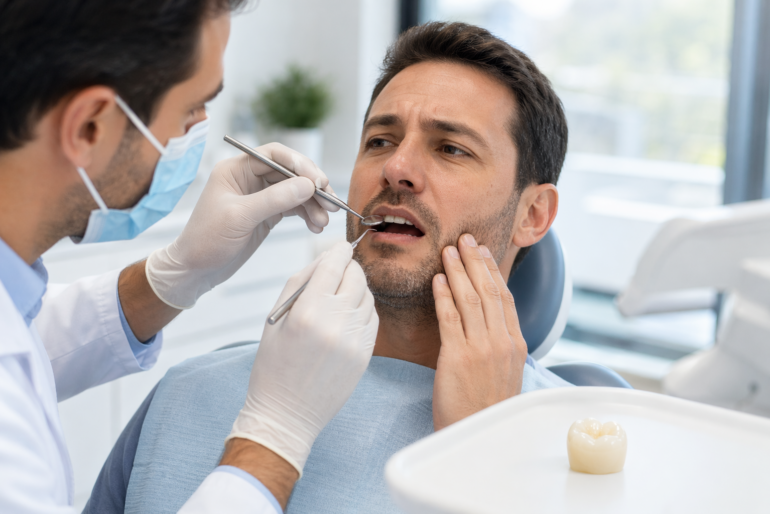
A Chipped Tooth Crown can feel minor at first, especially if there is no sharp pain, but it is still something you should take seriously. A dental crown is designed to protect and restore a tooth, so when part of that crown chips, cracks, or loosens, the tooth underneath may become more vulnerable to irritation, decay, or further damage. Dentists and major health systems generally advise getting it checked rather than waiting to see whether it settles on its own.
In some cases, the problem is mostly cosmetic. In others, a chipped crown can expose rough edges, affect your bite, trap bacteria, or signal that the crown is failing. That is why the right first step is not a home repair kit or internet hack. The right first step is protecting the area, avoiding more damage, and arranging a dental visit as soon as you can.
If you are dealing with a Chipped Tooth Crown right now, the good news is that many cases can be repaired or managed effectively. The treatment depends on how large the chip is, whether the underlying tooth is damaged, whether the crown is loose, and whether there is pain, infection, or a crack reaching deeper into the tooth.
What a dental crown actually does
A dental crown is often called a cap because it covers the visible part of a tooth. Dentists use crowns to restore teeth that are broken, heavily filled, weakened, or treated with a root canal. Crowns can also improve shape and appearance, but their bigger role is protection and function.
That matters because when a crown chips, the issue is not always just the crown material itself. Sometimes the damage is limited to porcelain or ceramic on the outside. Sometimes the cement bond has weakened. And sometimes the real problem is the tooth underneath, especially if decay, grinding, or a bite imbalance caused too much stress over time.
Common causes of a Chipped Tooth Crown
A Chipped Tooth Crown usually does not happen for just one random reason. There is often a pattern behind it.
1. Biting something hard
Hard candy, ice, popcorn kernels, bones, and similar foods are classic troublemakers. Even a strong crown can chip if it takes a sharp, concentrated force in the wrong spot. This is especially true if the crown already has microscopic wear or the tooth underneath is weakened.
2. Teeth grinding or clenching
Grinding, also called bruxism, puts repeated pressure on crowns and natural teeth. Over time, that force can wear down crown material, create fractures, or make a small defect turn into a larger chip. Cleveland Clinic notes that grinding is also a common factor in cracked or fractured teeth in general.
3. Age and wear
Crowns are durable, but they do not last forever. Daily chewing, temperature changes, and years of use can gradually weaken the material or bond. A crown that has functioned well for many years may finally chip because of normal wear combined with one bad bite.
4. Poor bite alignment
If your bite hits unevenly, one crown may absorb more force than it should. That repeated pressure can lead to chipping, loosening, or discomfort when chewing. Dentists often check bite contact carefully when repairing or replacing a damaged crown for this reason. This is an inference based on how crowns function and how cracked teeth are assessed for force related damage.
5. Decay under the crown
People are often surprised by this, but a crown can fail because the tooth underneath starts developing decay at the margins. If the supporting tooth structure weakens, the crown may chip, loosen, or come off. Dentists commonly use exams and X rays to look for decay when there is pain, sensitivity, or restoration failure.
6. Trauma or accidental impact
A fall, sports injury, or sudden hit to the mouth can chip a crown just like it can chip a natural tooth. Even if the visible damage looks small, trauma can affect the crown, the tooth, or both.
Signs your chipped crown needs prompt dental care
Not every crown chip is a true emergency, but some warning signs mean you should not put it off.
Watch for these:
- Pain when biting down
- Sensitivity to hot or cold
- A sharp edge cutting your tongue or cheek
- Swelling in the gum nearby
- A loose or wobbly crown
- A crown that broke off in a larger piece
- Bleeding after trauma
- Trouble chewing on that side
- A bad taste or odor around the crown, which may suggest leakage or decay under it
These symptoms can point to deeper damage, a cracked tooth, nerve irritation, or infection. A cracked tooth may cause pain, swelling, and temperature sensitivity, while badly broken teeth need quicker assessment.
What to do first if you have a Chipped Tooth Crown
This is where many people panic. The smartest response is calm, simple, and protective.
Step 1: Rinse your mouth gently
Use warm water to clean the area and remove debris. If the chip happened while eating, this helps you see what actually changed and may also reduce irritation. NHS guidance for chipped or broken teeth recommends making a dental appointment rather than ignoring it.
Step 2: Save any broken piece if you can find it
If part of the crown or tooth broke off, keep it. In some situations, the dentist may want to inspect it, even if it cannot be reused. NHS advice for broken tooth fragments recommends storing a large broken piece in milk or saliva while getting dental help.
Step 3: Do not chew on that side
This is one of the most useful things you can do immediately. A chipped crown may still feel stable, but chewing on it can turn a manageable problem into a bigger fracture or expose the tooth underneath to more stress.
Step 4: Cover a sharp edge if necessary
If the chipped area is cutting your cheek or tongue, temporary dental wax from a pharmacy can help protect the soft tissue until your appointment. Do not use random glue or household adhesives. Using non dental materials in your mouth can make the situation worse and can interfere with proper treatment. This is standard dental safety reasoning based on emergency care advice to protect, not self bond, damaged dental structures.
Step 5: Use cold compresses for swelling
If the chip happened after trauma and your face feels sore or swollen, a cold compress on the outside of the cheek can help. Cleveland Clinic specifically recommends a cold compress near a broken or chipped tooth to reduce pain and swelling.
Step 6: Call a dentist
A non urgent appointment may be enough for a small chip with no pain, but same day or urgent care is better if the crown is loose, the tooth hurts, the break is large, or you had an injury. NHS guidance clearly separates mild chips from badly broken teeth that need faster help.
When it is an emergency
A Chipped Tooth Crown becomes more urgent when it is linked to trauma, severe pain, heavy bleeding, facial swelling, or a crown that came off and left a very exposed tooth. Infection signs also raise the urgency, especially swelling, throbbing pain, pus, fever, or worsening tenderness. Mayo Clinic notes that dental infections may require drainage, root canal treatment, extraction, or antibiotics in some cases, depending on spread and severity.
If you cannot close your bite normally, or if the crown damage happened during an accident that may have injured other teeth, do not assume it is only cosmetic. Get evaluated promptly.
How dentists diagnose a chipped crown
At the dental office, the exam is usually more detailed than patients expect. Your dentist may:
- Look at the crown from multiple angles
- Check whether the crown is still bonded properly
- Test the bite to see whether pressure is uneven
- Ask about pain, cold sensitivity, and chewing discomfort
- Take X rays if they suspect decay, fracture, or nerve involvement
Mayo Clinic notes that dental assessment commonly includes pain history, inspection, probing, and X rays when decay or deeper structural problems are suspected.
This step matters because treatment should match the real problem. A chip in porcelain is not the same as a failing crown margin, and that is not the same as a cracked tooth under the crown.
Repair options for a Chipped Tooth Crown
Here is the part most readers care about. Can it be fixed?
The honest answer is yes, sometimes. But not every chipped crown should be repaired. Some need replacement.
Option 1: Smoothing or polishing a minor rough edge
If the chip is very small and only creates a rough area, the dentist may be able to smooth or polish it. This is more likely when the crown is still stable, the damage is superficial, and the appearance is acceptable after adjustment. NHS notes that a tooth that is just chipped may sometimes be smoothed down, and similar conservative thinking can apply to very minor crown edge defects depending on the case.
Option 2: Composite bonding repair
For some porcelain or ceramic chips, a dentist may use composite resin to patch the damaged section. This can work well for smaller visible chips, especially in less force heavy situations. It is often faster and less expensive than a full replacement, but it may not last as long as a brand new crown if the bite load is high. This is a common restorative approach inferred from chipped tooth repair methods and crown restoration practice.
Option 3: Crown re cementation
Sometimes what looks like a chip is really a loosened or partially dislodged crown. If the crown is still intact enough and the tooth underneath is sound, the dentist may clean the area and re cement the crown. This only works when the fit is still good and there is no major structural damage or active decay beneath it.
Option 4: Full crown replacement
If the chip is large, the crown is structurally compromised, the bite is affected, or the underlying tooth has decay or fracture, replacing the crown is often the safest path. This is especially true when the damaged crown cannot protect the tooth well anymore. Crowns are intended to restore broken teeth and protect weakened tooth structure, so once a crown stops doing that reliably, replacement becomes the better long term option.
Option 5: Root canal treatment plus a new crown
If the tooth under the chipped crown has deep damage, nerve symptoms, or infection, your dentist may recommend root canal treatment before placing a new crown. Mayo Clinic notes that a root canal is used to save a badly damaged or infected tooth, and a crown is typically placed afterward for protection.
Option 6: Extraction in severe cases
This is the outcome nobody wants, but it can happen if the tooth is too damaged to save or infection is advanced. Mayo Clinic notes that extraction may be necessary when a tooth cannot be saved. In practice, dentists usually try to preserve the tooth first when there is a realistic path to do so.
Repair vs replacement: how dentists decide
A practical way to think about it is this:
| Situation | More likely treatment |
|---|---|
| Tiny superficial chip, no pain, crown stable | Smoothing or minor repair |
| Small visible porcelain chip, tooth stable | Composite repair may be possible |
| Crown loose but otherwise usable | Re cementation if fit and tooth are sound |
| Large fracture, bite affected, repeated failure | Full crown replacement |
| Pain, deep crack, infection, nerve symptoms | Root canal with new crown or other major treatment |
That decision comes down to three things: the crown, the tooth underneath, and the forces going through your bite.
What not to do at home
This section matters more than people realize because well meaning mistakes often turn a fixable problem into a more complicated one.
Do not:
- Glue the crown with super glue or craft adhesive
- Keep chewing on the damaged side
- Ignore pain that is getting worse
- Assume no pain means no problem
- Try filing the crown yourself
- Delay care for weeks if the crown feels loose
A chipped crown can still protect the tooth for a short time, but once that protection is compromised, bacteria, bite pressure, and temperature sensitivity can start doing damage quietly.
A real world scenario
Imagine someone bites down on an olive pit at dinner and notices a small piece from a back molar crown has broken off. There is no major pain, just a rough edge and mild sensitivity to cold water. In that situation, the person should rinse the mouth, avoid chewing on that side, save any fragment if found, and schedule a dental visit promptly. That kind of case may be repairable if the underlying tooth is intact.
Now compare that with someone who wakes up after grinding their teeth and notices the crown feels cracked, chewing hurts, and the gum around it looks swollen. That second scenario raises more concern about bite stress, a deeper fracture, or infection. A quick exam matters much more there.
How to reduce the risk of crown damage in the future
Once you have had one Chipped Tooth Crown, prevention becomes a very smart conversation to have with your dentist.
Helpful habits include:
- Avoid chewing ice, hard candy, and popcorn kernels
- Wear a night guard if you grind your teeth
- Do not use teeth to open packaging
- Keep regular dental checkups so bite changes and decay around crown margins can be caught early
- Ask your dentist if your crown material is right for the location of the tooth
- Get a bite adjustment if one tooth seems to hit first or harder than the others
Routine care matters because crowns still depend on the health of the supporting tooth and gums. Cleveland Clinic notes that crowns should not be painful long term, and persistent discomfort is a reason to get checked.
Can a chipped crown heal on its own?
No. The crown material will not regrow or repair itself. A small chip may stay stable for a while, but it does not truly heal. The best case is that it remains minor until a dentist smooths, repairs, or replaces it. The worst case is that it spreads or exposes a bigger issue underneath.
That is why waiting only makes sense in a very short practical sense, such as waiting a day or two for an appointment when symptoms are mild. It does not make sense as a long term plan.
Can you eat with a chipped crown?
You can sometimes eat carefully if the chip is tiny and painless, but soft foods are safer until you are seen. Avoid sticky, crunchy, or very hard foods. Avoid chewing directly on that side. If the crown is loose or the tooth is sensitive, the answer is really no, not normally. It is better to protect the tooth than test your luck. This advice follows directly from emergency broken tooth care principles and restorative dentistry practice.
Does a chipped crown always mean a new crown?
Not always. Small chips may be polished or repaired. But a new crown is often the better choice when the damage is large, the crown no longer fits well, the bite is compromised, or the tooth underneath shows decay or deeper damage.
How long can you wait?
For a small chip without pain, a prompt routine dental visit is usually reasonable. For significant pain, swelling, trauma, a loose crown, or a large fracture, you should try to get urgent dental advice. NHS and Cleveland Clinic both make it clear that more serious breaks and symptoms should not be delayed.
Final thoughts on a Chipped Tooth Crown
A Chipped Tooth Crown is one of those dental problems that can look smaller than it really is. Sometimes it is a quick polish and you move on. Sometimes it is the first sign that the crown is failing, the bite is off, or the tooth underneath needs treatment.
The safest approach is simple. Protect the area, do not chew on it, save any broken piece, and let a dentist assess it. That gives you the best chance of preserving the tooth, avoiding infection, and choosing the least invasive repair that still holds up over time. If you want to understand more about the structure of a dental crown, it helps to know how much work that small restoration is doing every single day.
In other words, do not panic, but do not ignore it either. Acting early is usually what keeps a Chipped Tooth Crown from becoming a larger and more expensive problem.