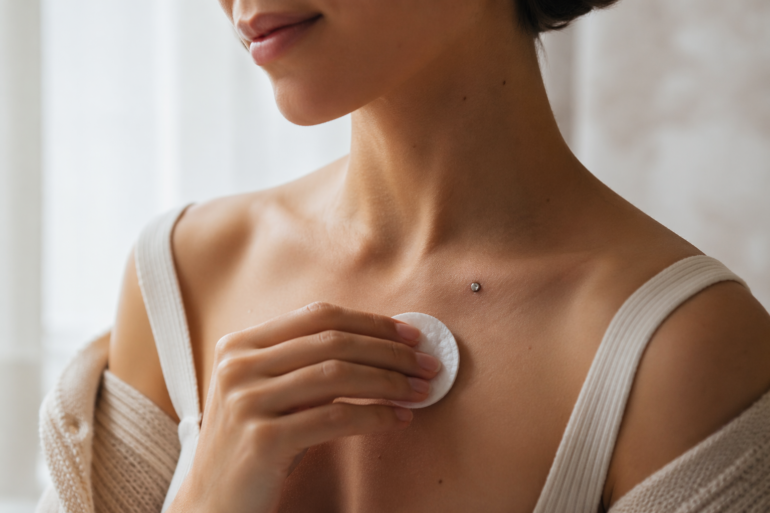
Body Piercing Microdermal has become one of the most eye catching styles in modern body jewelry because it creates the look of a single gem or flat top sitting directly on the skin. Unlike a traditional piercing that has an entry point and an exit point, a microdermal is anchored beneath the skin with only one visible top. That is exactly why so many people love the look, but it is also why Body Piercing Microdermal needs thoughtful placement, good jewelry, and consistent aftercare from day one. According to the Association of Professional Piercers, proper placement, correct jewelry, and careful healing practices all play a major role in reducing complications.
If you are thinking about getting Body Piercing Microdermal, the two biggest questions are usually simple. Where should it go, and how do you take care of it so it heals well? Both matter more than people think. A beautiful placement can fail if it sits in a high friction area, and even a well placed anchor can become irritated if it gets bumped, snagged, or cleaned the wrong way. Medical sources also note that piercings can develop infection, irritation, allergic reactions, or scar related issues such as keloids, which is why planning ahead matters.
This article breaks down how Body Piercing Microdermal works, which body areas tend to heal better, what aftercare actually helps, and what warning signs you should never ignore.
What Is Body Piercing Microdermal?
Body Piercing Microdermal refers to a single point piercing that uses a small anchor placed under the skin and a decorative top that sits above it. In body modification terms, it is often described as a microdermal implant or dermal anchor. It is different from many traditional piercings because there is no second opening on the other side. That unique design is what gives it the clean, floating-jewelry look people often want.
Most Body Piercing Microdermal pieces include two parts. The first is the anchor that sits under the skin. The second is the threaded top that you can see and, once healed, sometimes change. The procedure is typically done with specialized tools by an experienced professional, and the quality of the initial jewelry matters a lot. The Association of Professional Piercers recommends implant certified materials such as compliant titanium for initial piercings because they are more suitable for long term contact with the body and are a better choice for people concerned about nickel sensitivity.
That material choice is not just a luxury detail. It directly affects comfort, irritation risk, and healing quality. If someone starts with poor quality jewelry, the body may react with swelling, persistent tenderness, or dermatitis that looks very similar to infection.
Why Placement Matters So Much
With Body Piercing Microdermal, placement can determine whether the piercing feels easy to live with or becomes a constant source of frustration. A microdermal needs relatively stable tissue and enough flat surface area to sit properly. If it is placed on skin that bends a lot, rubs against clothing, or takes frequent impact, irritation becomes much more likely.
This is one reason experienced piercers tend to be selective. The prettiest idea is not always the smartest one. Some spots photograph beautifully but live poorly in real life. Think about how often the area moves when you sleep, work out, get dressed, carry a bag, or use a seatbelt. All of that daily friction adds up.
A useful rule is simple. The best Body Piercing Microdermal placement is usually in an area that is relatively flat, not constantly compressed, and less likely to snag on fabric, towels, or hair.
Best Placement Options for Body Piercing Microdermal
Upper Chest and Collarbone Area
The upper chest is one of the most popular choices for Body Piercing Microdermal because it can look elegant and noticeable without interfering too much with movement. Many people like a single gem near the collarbone or a symmetrical pair across the upper chest.
That said, collarbone placement can be tricky if the jewelry sits where straps, necklaces, or rough fabric constantly rub. Some body modification references also warn against placing microdermals too close to joints or highly mobile areas. So while this region can work well, it needs careful evaluation based on your anatomy and your daily routine.
This placement often suits people who want something visible but still easy to style with different outfits. If you wear tight necklines, sports bras, or crossbody bags all the time, that should be part of the conversation before you commit.
Sternum Area
The sternum area is another favorite for Body Piercing Microdermal because it creates a centered, decorative look. It can be striking with a subtle flat disc or more dramatic with a gem top.
The advantage here is aesthetics. The challenge is pressure. Sleeping on your stomach, chest workouts, and fitted clothing can all make healing harder. Even if the piercing looks calm for a few weeks, repeated irritation can trigger swelling or migration later.
For people who mostly wear loose tops and do not put much pressure on the center chest, sternum placement can be a strong option. For people with active routines or uniform clothing that rubs that area every day, it can be harder to manage.
Back of the Neck
A Body Piercing Microdermal at the back of the neck can look minimal and stylish, especially with updos or shorter hairstyles. It gives a clean, modern look that a lot of people love.
But this area also gets snagged more often than people expect. Hair, combs, shirt collars, hoodies, towels, and pillow friction can all interfere with healing. If you constantly wear collared clothing or have thick hair that tangles easily, this placement may require more patience than expected.
Face and Cheekbone Area
Some people choose Body Piercing Microdermal for the cheekbone or near the outer eye area to create a bold fashion statement. It can be visually striking, but it is definitely not the easiest option for daily life.
Facial movement, skincare products, makeup, accidental touching, and cleansing routines all create extra variables. It is not impossible, but it is less forgiving. This is one of those placements where good habits matter even more than usual.
Hip Area
Hip placements have been popular in body jewelry for years, and microdermals are often chosen there because they can create a similar decorative effect with less visual bulk than some surface piercings. The problem is obvious once you think about how people move. Waistbands, underwear, jeans, leggings, sleeping positions, and gym activity can all stress the area. Body modification references note that hip related surface placements can be long healing and are prone to friction issues.
A hip Body Piercing Microdermal can look great in photos and styled outfits, but it is not always the easiest long term placement for someone with an active life.
Lower Back
Lower back microdermals can be visually appealing, especially for people who want something decorative but not always visible. Still, this is another place where pressure is a concern. Chairs, car seats, tight waistbands, and sleep position can all create repeated irritation.
Areas That Usually Cause More Trouble
Some placements sound interesting but tend to be harder to heal. Hands, wrists, feet, and areas close to joints are often considered poor choices because the skin moves too much and the jewelry catches easily. Body modification references specifically note that microdermals should not be implanted in hands, feet, wrists, collarbones, or areas near joints if the anatomy is not flat and stable enough.
That does not mean every body is the same. It does mean that Body Piercing Microdermal should be chosen with practical healing in mind, not just appearance.
How to Choose the Right Placement for Your Lifestyle
The smartest way to choose Body Piercing Microdermal placement is to think beyond the mirror. Ask yourself what that area goes through in a normal week.
Do you sleep on it?
Does a seatbelt cross it?
Will your bra strap, waistband, backpack, or gym clothing hit it every day?
Do you work in a job where it could be pulled, pressed, or exposed to dust and sweat?
A placement that suits your routine is often better than the most dramatic placement on a trend board. The best results usually come when anatomy, jewelry, and lifestyle all line up.
What Healing Really Looks Like
Many people expect Body Piercing Microdermal to look perfect almost immediately, but healing is rarely that neat. Some redness, swelling, tenderness, and light crusting can be normal at first. That does not automatically mean something is wrong. Mayo Clinic notes that redness, pain, swelling, and drainage that looks like pus can be signs of infection, while the Cleveland Clinic also notes that worsening redness, inflammation, discharge, warmth, or pain can signal a problem rather than normal healing.
The tricky part is learning the difference between ordinary healing and true trouble. Normal healing tends to improve gradually. Complications usually get worse, return after improving, or stay stuck without getting better.
Healing times vary. Microdermals can take months to fully settle, especially in high movement areas. That is one more reason why placement matters so much.
Body Piercing Microdermal Aftercare That Actually Helps
The best aftercare is simple, gentle, and consistent. People often create problems by overcleaning, touching the piercing too much, or using harsh products that dry and irritate the skin.
The Association of Professional Piercers recommends washing hands before touching the piercing, leaving it alone except for cleaning, and avoiding twisting or rotating jewelry during healing.
Here is what good Body Piercing Microdermal aftercare usually looks like:
- Clean it with a sterile saline solution or a product your professional piercer recommends.
- Wash your hands before any contact.
- Keep the area dry after cleaning.
- Avoid twisting, spinning, or testing the jewelry.
- Protect it from snags during clothing changes and sleep.
- Avoid unnecessary pressure from straps, waistbands, and tight fabrics.
- Stay away from harsh antiseptics unless a medical professional tells you otherwise.
The Cleveland Clinic notes that saltwater style cleaning is commonly used in piercing care, and the APP advises minimizing trauma during healing.
What Not to Do During Healing
This part matters just as much as cleaning. Many irritated microdermals are not infected. They are simply overhandled.
Do not play with the jewelry.
Do not keep checking whether it is tight.
Do not change the top too early.
Do not scrub away every bit of crust aggressively.
Do not let friends touch it.
Do not use random home remedies from social media.
Body Piercing Microdermal can look small, but it still creates a wound that needs time and stability. Overcleaning and overmanaging are common reasons a piercing stays angry.
Infection, Irritation, Allergy, or Rejection?
One reason Body Piercing Microdermal confuses people is that several problems can look similar at first.
Infection
Signs of infection can include increasing pain, spreading redness, warmth, swelling, foul smelling discharge, or pus like drainage. Mayo Clinic and Cleveland Clinic both describe redness, pain, swelling, warmth, and discharge as common warning signs that need attention, especially if symptoms are getting worse rather than better.
Irritation
Irritation is extremely common with Body Piercing Microdermal. It can come from pressure, friction, snagging, sleeping on it, makeup, shaving, sweat, or low quality jewelry. The site may look red and feel sore, but irritation often improves when the source of trauma is removed.
Allergy
Some people react to nickel or other problematic jewelry materials. Mayo Clinic notes that nickel allergy can cause rash, bumps, itching, skin changes, and fluid drainage. This is why implant grade titanium is often preferred for initial piercing jewelry.
Rejection or Migration
Body Piercing Microdermal can also migrate or reject, meaning the body gradually pushes it closer to the surface. When that happens, the jewelry may sit at a different angle, the skin may thin over the anchor, or the area may stay chronically irritated. This is more common when placement is poor, the jewelry is bumped often, or the tissue never gets a real chance to settle.
The Role of Jewelry Quality
Cheap jewelry often ends up being expensive in the long run because it can lead to irritation, delayed healing, and replacement costs. For Body Piercing Microdermal, the initial jewelry should be chosen carefully and fitted correctly. The Association of Professional Piercers recommends implant certified materials such as ASTM F 136 compliant titanium or other accepted implant quality options for initial piercings.
Fit also matters. Jewelry that sits too high, catches too easily, or puts extra pressure on the site can make healing much harder. A skilled piercer looks at both the material and the way the piece sits in your skin.
Real World Example: Good Placement Versus Bad Placement
Imagine two people getting Body Piercing Microdermal on the same day.
The first chooses an upper chest spot that does not rub against clothing, follows aftercare closely, and avoids sleeping on that side for the first few weeks. Their piercing has some normal redness early on, then gradually settles.
The second chooses a hip placement under a tight waistband, keeps touching the top to check it, and works out in high friction clothing almost immediately. Even with the same jewelry, their healing experience is far more likely to be rough.
That is why microdermal success is rarely about luck alone. It is usually about anatomy, placement, jewelry quality, and behavior during healing.
When to See a Professional or Doctor
You should contact your piercer if the site seems increasingly irritated, starts sitting at a strange angle, or keeps getting caught and inflamed. You should seek medical attention if you notice severe swelling, spreading redness, warmth, worsening pain, fever, bad smelling discharge, or thick pus. Mayo Clinic and the American Academy of Dermatology both advise getting medical help when signs of infection do not improve or continue to worsen.
If you are prone to thick or raised scars, that is worth discussing before you get Body Piercing Microdermal. The AAD notes that piercings can trigger keloids in people who are susceptible. Keloids may take months to appear, so long term monitoring matters too.
Final Thoughts on Body Piercing Microdermal
Body Piercing Microdermal can look beautiful, refined, and surprisingly versatile when it is placed well and cared for properly. The best placement is not always the boldest or trendiest one. It is the one that fits your anatomy, your daily routine, and your willingness to protect it while it heals.
If you want the best outcome, choose a reputable professional, start with high quality implant grade jewelry, and take aftercare seriously without overdoing it. Good healing is usually calm, patient, and consistent. Rushing, touching, and ignoring friction are what cause many of the problems people later blame on the piercing itself.
In the end, Body Piercing Microdermal is one of those styles where smart choices matter more than dramatic ones. A well placed anchor with proper care will almost always age better than a risky placement chosen only for the photo. For broader context on modern body modification, it also helps to understand where microdermals fit within the wider piercing world.
Frequently Asked Questions
Is Body Piercing Microdermal more painful than a regular piercing?
Pain varies by placement and personal tolerance, but many people describe it as brief and manageable. Areas with more movement or thinner tissue may feel more intense during healing than during the procedure itself.
What is the best placement for Body Piercing Microdermal?
There is no single best spot for everyone, but upper chest and certain sternum placements are often popular because they can be both visible and relatively stable. The best choice depends on how much friction, movement, and pressure that area gets in your daily life.
How do I know if my Body Piercing Microdermal is infected?
Increasing redness, swelling, warmth, worsening pain, foul smelling discharge, or pus are common warning signs. If symptoms are severe or not improving, get medical care.
Can I change the top myself?
Not during early healing. Changing it too soon can irritate the piercing, disturb the anchor, and increase the risk of complications.
Can Body Piercing Microdermal leave a scar?
Yes. Like other piercings, it can leave a small scar, and people prone to keloids may develop thicker scar tissue.
Conclusion
Body Piercing Microdermal works best when style and practicality meet in the middle. Choose a placement that your body can realistically heal, protect it from friction, and stick to gentle aftercare. If you do that, Body Piercing Microdermal has a much better chance of healing cleanly and looking the way you imagined.