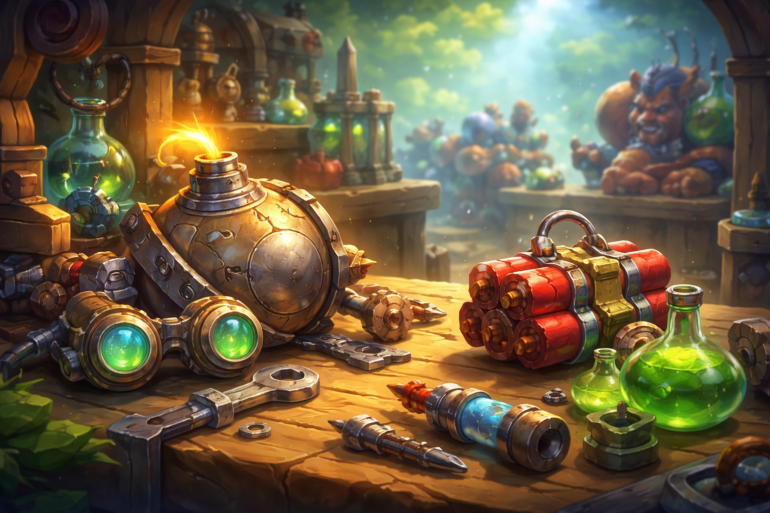
If you want a profession in Classic that feels useful the entire time you level, this WoW Classic Engineering Guide is a strong place to start. Engineering is one of those professions that does more than fill your crafting window. It gives you bombs, utility tools, goggles, target dummies, and quirky gadgets that can genuinely change how you play in PvE, PvP, and solo questing. In WoW Classic, Engineering is widely valued because so many of its crafted items offer direct combat or utility benefits rather than simple market value.
What makes fast leveling important is simple. Engineering can be expensive if you buy every material from the Auction House, and it can feel slow if you craft the wrong recipes at the wrong time. The fastest route is not always about the cheapest item on paper. It is about picking crafts that stay orange or yellow long enough to keep your skill moving without wasting extra bars, stone, cloth, and blasting powder. That is the real focus of this WoW Classic Engineering Guide.
Engineering also pairs naturally with Mining because most classic Engineering recipes rely heavily on metal bars and stone. If you gather your own Copper, Bronze, Iron, Mithril, and Thorium materials, you cut a huge amount of gold cost out of the process. That pairing is recommended across classic profession references for a reason.
Why Engineering Is Worth Leveling in WoW Classic
A lot of professions in Classic are solid. Engineering feels different because it gives immediate gameplay value. Bombs and grenades help with damage and crowd control. Target Dummies can save bad pulls. Goggles can be strong leveling pieces at points when helm options are limited. Utility devices like teleporters and specialized trinkets make the profession memorable even beyond raw efficiency.
That is why this WoW Classic Engineering Guide is not just about reaching 300 as quickly as possible. It is also about choosing a path that leaves you with useful crafted items along the way. If you are leveling a Warrior, Rogue, Hunter, or really any class that benefits from extra control and utility, Engineering has a practical payoff instead of being just another profession grind.
The Smartest Way to Follow This WoW Classic Engineering Guide
Before you start crafting, decide how you want to source materials. There are two realistic routes.
The first route is Engineering plus Mining. This is slower in the early stages because you are splitting time between gathering and crafting, but it is much cheaper. The second route is pure speed through the Auction House. That is faster in real time but almost always more expensive, especially on servers where Copper Bars, Mithril Bars, and Thorium materials are heavily contested. Profession leveling references consistently recommend pairing Mining with Engineering if your goal is cost control.
It also helps to train profession ranks as soon as you qualify. Classic Engineering proficiency can progress up to 300 skill, and specialization options open once you reach the classic threshold for them. Official Blizzard Classic profession material notes that Engineering can specialize into Gnomish or Goblin at 200 skill, and multiple classic references also tie that choice to level requirements in Classic-era play.
WoW Classic Engineering Guide 1 to 300 Leveling Path
Below is a fast, practical route built around widely used Classic-era progression advice. Exact server prices can change what is cheapest, but this path is reliable because it follows recipes commonly used in established Classic leveling references.
1 to 30: Rough Blasting Powder
Your early game is about turning rough stone into easy skill points. Rough Blasting Powder is one of the cleanest opening crafts because it feeds into later Engineering recipes too. Make enough to reach 30 skill.
This part is usually painless if you gathered while leveling Mining. If not, rough stone is still often one of the easier materials to buy in batches.
30 to 50: Handful of Copper Bolts
Copper becomes the foundation of your next steps. Handful of Copper Bolts is a classic fast-level craft because you will use bolts again in later recipes, so you are not just throwing materials away for skill points.
That is one of the best habits in any WoW Classic Engineering Guide. Whenever possible, craft ingredients that feed into the next tier instead of making dead-end items.
50 to 51: Arclight Spanner
Make one Arclight Spanner here. You need it for Engineering anyway, so this is a required craft rather than a filler recipe.
It only gives a single point, but it is part of the proper setup and keeps your progression clean.
51 to 65: Copper Tube
Copper Tube is a dependable bridge recipe in this range. It helps push past the very early stage without forcing you into awkward crafts that need uncommon parts.
This is also the point where material management starts to matter. If copper is expensive on your server, you want to compare whether buying bars or smelting ore is cheaper.
65 to 75: Coarse Blasting Powder
Once you move into Coarse Stone territory, Coarse Blasting Powder becomes the natural skill-up path. Like the rough version, it is useful because it supports later explosive recipes.
This is where Engineering starts to feel more like engineering and less like simple bar conversion.
75 to 95: Silver Contact
Silver Contact is a common mid-early bridge. It is not glamorous, but it is efficient if you have silver available at a fair price. On some servers, this range can be one of the first places where cost spikes slightly if silver is scarce, so keep an eye on Auction House trends.
Fast skill leveling is not just about recipe order. It is also about not overpaying for a bottleneck material when a nearby alternative craft can keep you moving.
95 to 105: Bronze Tube
Bronze Tube keeps your WoW Classic Engineering Guide progression smooth and sets you up for better mid-tier recipes. You will already be working with Bronze Bars around this point, so the transition makes sense.
This section is usually where players start feeling the profession pick up momentum.
105 to 120: Small Bronze Bomb
Now the profession becomes more fun. Small Bronze Bomb is both a useful crafted item and a practical way to earn skill points. That combination is part of what makes Engineering so appealing in Classic.
You are no longer crafting only components. You are building tools you may actually use while questing or in dungeons.
120 to 125: Bronze Framework
Bronze Framework is another classic progression item. Like bolts and blasting powder, it matters because it supports later crafts.
A strong Engineering route always keeps component crafts in balance with final products. That way, your bank ends up with parts you can still use.
125 to 145: Heavy Blasting Powder
Heavy Stone becomes the next important gathering target, and Heavy Blasting Powder turns it into easy profession progress. This stage is usually straightforward if Mining is your gathering partner.
If you are buying materials, this is a good time to avoid impulse purchases. Heavy Stone can fluctuate more than players expect because blacksmiths and engineers both use it.
145 to 150: Whirring Bronze Gizmo
This is a standard short bridge that pushes you toward Expert and the next meaningful tier of Engineering.
It also fits the broader pattern of this WoW Classic Engineering Guide. Many of the best leveling choices are not flashy crafts. They are the simple pieces that keep your materials flowing efficiently.
150 to 175: Bronze Tube or Iron Strut Range
This stretch can vary a little depending on material costs, but many classic leveling references move you through a mix of transitional iron-based or tube-based crafts here. The main goal is to avoid sinking too much into low-value items that gray out quickly.
Once Iron Bars become part of your material rotation, you should already be thinking ahead to the bigger cost wall that comes with Mithril.
175 to 195: Solid Blasting Powder and Utility Crafts
Solid Blasting Powder is one of the cleanest ways to push through this section because solid stone is an essential Engineering material, and the powder continues to feed useful recipes.
At this stage, Engineering starts offering more satisfying utility output, and the profession begins to justify the grind more clearly.
195 to 200: Mithril Tube or Transitional Crafts
The goal here is simple. Reach 200 efficiently without crafting items that burn expensive mats for poor returns. Mithril Tube is often part of that answer, depending on your server economy and material stock.
Hitting 200 matters because it unlocks the point where specialization decisions come into play in Classic Engineering.
200 to 216: Unstable Triggers
This is one of the better-known stretches in the profession. Unstable Triggers are widely used in Classic Engineering routes because they help carry you into more advanced bomb recipes and later high-level crafts. Blizzard forum guidance for classic Engineering leveling specifically references Unstable Triggers in the 200-plus stretch.
216 to 235: Mithril Casing
Mithril Casing is another staple recipe in fast leveling routes. It is practical, reliable, and part of the backbone of late-mid Classic Engineering crafting. You are now deep in the portion of Engineering where Mithril controls your budget.
235 to 245: Hi-Explosive Bombs
This is one of the fun stretches because your skill-ups come from a genuinely recognizable Engineering item. Hi-Explosive Bomb is a classic example of why the profession is loved. It brings both profession progress and actual gameplay value. Blizzard’s classic forum leveling notes also include Hi-Explosive Bombs in the 200 to 300 journey.
245 to 260: Dense Blasting Powder
Dense Stone becomes the material to watch, and Dense Blasting Powder turns that resource into a clean push upward. This stage is usually one of the more stable parts of late leveling if you came prepared with stone stacks.
260 to 285: Thorium Widgets
Thorium Widgets are a standard late-game profession bridge because they convert Thorium Bars into a useful crafted component without wasting the tier. Classic-era leveling references and Blizzard forum guidance both point to Thorium Widgets in this part of the route.
285 to 300: Thorium Tube or Thorium Shells
To finish the climb, many players use Thorium Tube or Thorium Shells depending on recipe availability and server costs. Thorium Tube is often the simpler option. Thorium Shells can be useful, but the schematic itself may be more awkward or expensive depending on your realm economy.
That final stretch is where preparation pays off. If you arrive with Thorium already banked, the last fifteen points feel much less painful.
Best Material Strategy for Fast Skill Leveling
The fastest Engineering player is not always the one who crafts first. It is the one who prepares first.
Here is the smartest approach:
- Gather stone aggressively while leveling Mining because every blasting powder tier matters.
- Save bronze, iron, mithril, and thorium in advance instead of buying them one stack at a time.
- Craft components in planned batches so you do not overmake low-level parts.
- Check vendor-bought components before traveling, because missing one cheap part can stall a session.
- Avoid panic-buying rare mats during peak play hours when prices rise.
A good WoW Classic Engineering Guide should tell you this clearly. Gold loss usually happens from impatience, not from the profession itself.
Gnomish vs Goblin: Which Specialization Should You Pick?
Once you reach 200 Engineering skill in Classic, you can move toward choosing Gnomish or Goblin Engineering. Blizzard’s Classic profession material states that specialization becomes available at 200 skill, and Classic-era references describe unique questlines and crafted item requirements tied to the two paths.
Goblin Engineering is usually the pick people associate with explosives and destructive flair. Gnomish Engineering has a reputation for strange utility devices, unusual gadgets, and inventive trinkets. Neither choice is universally better for every player. The better choice depends on whether you care more about explosive tools, novelty utility, or access to specific crafted gadgets and teleport options.
If your goal is pure flavor and utility fun, Gnomish can be appealing. If you like the explosive identity of Engineering, Goblin often feels more on-brand. A lot of experienced players simply choose based on the specific items they want most rather than broad theorycraft.
Common Mistakes That Slow Engineering Leveling
One mistake is crafting too many final items too early instead of first making the components those items require. Another is buying materials in small emergency batches, which usually costs more than planning one full session.
A third mistake is ignoring Mining while saying you want fast progress on a budget. If you are not farming your own bars and stone, your gold cost rises fast. Classic profession references repeatedly point to Mining as the natural pairing for this reason.
The last big mistake is holding the wrong expectation. Engineering is not usually the best profession for straightforward Auction House profit. Its value is heavily tied to utility, PvP strength, niche crafted gear, and memorable tools rather than simple resale economics.
Real Gameplay Value After You Hit 300
The best part of following a proper WoW Classic Engineering Guide is that the profession keeps paying you back after the leveling grind is over.
You get access to a toolkit that feels distinctly Classic. Bombs give you control and burst. Dummies can rescue ugly pulls. Goggles can fill gearing gaps. Specialty devices and teleporters add convenience and personality. Engineering remains one of the few professions in WoW Classic that players still talk about in terms of combat impact instead of just crafting economy.
That is why fast skill leveling matters. Reaching the useful part sooner means you spend more time benefiting from the profession and less time staring at your recipe book.
Conclusion
This WoW Classic Engineering Guide comes down to a simple rule. Level with a plan, not with random crafts. Use Mining if you want to keep costs under control, prioritize recipes that feed later components, and push steadily through the big material tiers of Copper, Bronze, Iron, Mithril, and Thorium. If you do that, Engineering becomes one of the most satisfying professions in the game instead of one of the most expensive mistakes.
For most players, the fastest route is also the smartest one: prepare materials early, craft in batches, and hit 200 with enough momentum to move smoothly into the specialization phase. That is the real strength of a strong WoW Classic Engineering Guide. It saves time, saves gold, and gets you to the gadgets that make Classic feel like Classic.
In the broader history of World of Warcraft, few professions have kept the same identity as clearly as Engineering. In Classic, it still stands out because it is practical, chaotic, useful, and fun in equal measure.