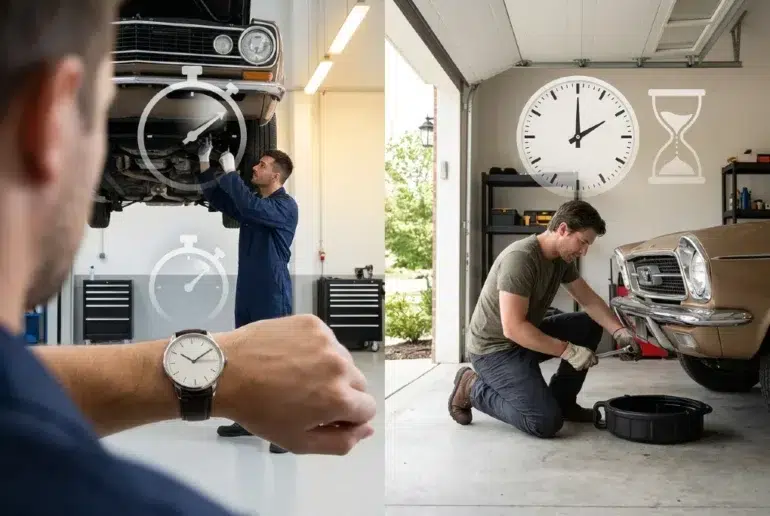
If you have ever looked at your dashboard sticker, glanced at the clock, and wondered How Long Does an Oil Change Take, the honest answer is: it depends on where you go, what you drive, and whether you do it yourself. In a quick lube shop, the actual service can be surprisingly fast. In a dealership or full service garage, the total visit often stretches longer than drivers expect. And if you handle it at home, the time can range from a smooth 30 minute job to a messy afternoon project.
That gap between advertised speed and real world wait time is what confuses most people. Some chains promote oil changes in around 15 minutes, and that can be true for the service itself in ideal conditions. Jiffy Lube says its Signature Service oil change is done in 15 minutes or less, while its locations page says oil change service typically takes around 15 minutes. Valvoline Instant Oil Change positions itself as a quick, drive through option, though actual wait times vary by location and traffic.
So, what should you really plan for? In most cases, a quick lube stop takes about 20 to 40 minutes door to door, a dealership visit can take 45 minutes to 90 minutes or more, and a DIY oil change usually takes 30 minutes to an hour if you already have the right tools and know the process. The rest of this article breaks down those real wait times, what causes delays, and how to decide whether shop service or DIY makes more sense for your schedule.
The short answer: how long does an oil change take?
For most drivers, How Long Does an Oil Change Take comes down to three common scenarios:
- Quick lube shop: about 15 to 20 minutes for the service, often 20 to 40 minutes total with check in and line wait
- Dealership or full service repair shop: usually 30 to 45 minutes for the job, often 45 to 90 minutes total
- DIY at home: around 30 to 60 minutes if you are prepared, longer if it is your first time
That range is much more realistic than the flashy ads many people see online. The actual oil and filter change is not a long mechanical process. What adds time are things like waiting for a bay, vehicle inspections, upsells, resetting the oil life monitor, dealing with skid plates, or cleaning up afterward.
Why oil change times vary so much
The reason people get wildly different answers to How Long Does an Oil Change Take is simple: not every oil change is the same.
A compact sedan with easy filter access can be finished quickly. A truck with a large skid plate, a cartridge style filter housing, or a hard to reach drain plug usually takes longer. Shops also build extra checks into the visit, which can be useful, but they add minutes.
Here are the biggest factors that change the timing:
1. Type of shop
Quick lube chains are built for speed. Their entire business model is based on streamlined preventive maintenance, so they work faster than dealerships or general repair garages. Jiffy Lube explicitly markets oil changes in about 15 minutes, and Valvoline emphasizes drive through convenience.
Dealerships tend to move slower because:
- They often have a larger service intake process
- Vehicles may be routed through multiple staff members
- Multi point inspections are common
- Advisors may bundle other recommended maintenance
2. Wait time before the car even enters the bay
This is the hidden variable most people forget. The oil change itself might take 15 minutes, but that does not mean you will be back on the road in 15 minutes. If two cars are ahead of you, your “quick” visit can easily turn into 35 to 50 minutes.
3. Vehicle design
Some engines are easy. Others are awkward. A few things that slow the job down:
- Splash shields or skid plates
- Tight filter placement
- Large oil capacity
- Cartridge filter housings
- Luxury vehicles with stricter service procedures
4. Type of oil and filter
The oil itself usually does not add much time, but using the correct spec matters. Consumer Reports notes that many modern cars have oil life monitoring systems and that modern oil requirements are more specific than they used to be.
5. Extra services
A “simple oil change” often turns into:
- Tire pressure check
- Fluid top off
- Air filter inspection
- Wiper check
- Battery check
- Courtesy inspection
Helpful? Often, yes. Fast? Not always.
Real wait times at oil change shops
If your main concern is How Long Does an Oil Change Take at a professional shop, here is the most realistic breakdown.
Quick lube chains: fastest option for most drivers
Quick lube centers are usually the fastest choice. In ideal conditions, the service itself can be done in around 15 minutes. Jiffy Lube states that its Signature Service Quick Oil Change gets customers back on the road fast and says the service is completed in 15 minutes or less. Its locations page also says oil change service typically takes around 15 minutes.
Real world expectation:
Plan for 20 to 40 minutes total
That includes:
- pulling in
- waiting your turn
- confirming oil type
- replacing oil and filter
- topping fluids
- resetting service reminders
- paying and leaving
At some Valvoline locations, live queue indicators even show waits like 0 to 10 minutes or 20 plus minutes before service starts, which is a good reminder that location traffic matters just as much as technician speed.
Dealerships: slower, but sometimes more thorough
Dealerships are rarely the fastest place for an oil change. They are often handling scheduled service appointments, recall work, inspections, and warranty jobs all at once.
Real world expectation:
Plan for 45 to 90 minutes total
Some visits are faster, especially with an appointment and a light service lane. But many drivers lose time during:
- service write up
- advisor consultation
- technician assignment
- inspection reports
- checkout
That slower pace does not always mean bad service. In some cases, it means a more complete check of the vehicle. If your car is newer, under warranty, or requires a very specific oil standard, that can be worth it.
Independent repair shops: somewhere in the middle
Independent garages vary more than any other category. A small, well run local shop might get you in and out in 30 minutes. Another might keep your car for two hours because oil changes are squeezed between larger jobs.
Real world expectation:
Plan for 30 to 60 minutes total, but ask ahead
If you want the best of both worlds, this can be a smart option. A good independent shop may offer better personal service than a chain and faster turnaround than a dealership.
DIY oil change times: faster than you think, slower than ads
A lot of people ask How Long Does an Oil Change Take at home because they assume DIY automatically saves time. Sometimes it does. Sometimes it absolutely does not.
If you have:
- the correct oil
- the right filter
- a drain pan
- ramps or jack stands
- gloves and rags
- a place to recycle used oil
then the actual job can take 30 to 45 minutes.
If it is your first time, expect 45 to 90 minutes. The learning curve is real. You will spend time locating the drain plug, figuring out how tight the old filter is, cleaning spills, and making sure you refill with the correct amount.
A realistic DIY timeline
Here is how a home oil change often breaks down:
| DIY Step | Typical Time |
|---|---|
| Gather tools and supplies | 5 to 10 minutes |
| Lift or position the car safely | 5 to 10 minutes |
| Drain old oil | 10 to 15 minutes |
| Replace filter and reinstall plug | 5 to 10 minutes |
| Add new oil and check level | 5 to 10 minutes |
| Clean up and recycle old oil | 10 to 15 minutes |
That is why a home oil change often lands around 30 to 60 minutes total.
Shop vs DIY: which one is actually faster?
If you are strictly measuring clock time, a quick lube shop usually wins. If you can pull in with no line, the professionals are hard to beat.
But if the shop is busy, the math changes. Waiting 25 minutes before your car even enters the bay can erase the speed advantage. In that case, doing it yourself in your driveway may actually be quicker, especially if you already have supplies on hand.
Here is a simple comparison:
| Option | Actual Service Time | Total Real World Time |
|---|---|---|
| Quick lube shop | 10 to 20 minutes | 20 to 40 minutes |
| Dealership | 20 to 45 minutes | 45 to 90 minutes |
| Independent shop | 20 to 40 minutes | 30 to 60 minutes |
| DIY at home | 20 to 40 minutes | 30 to 60 minutes |
The takeaway is simple: the service itself is rarely the problem. The total visit is what eats your day.
What slows an oil change down?
When readers search How Long Does an Oil Change Take, they usually want a clean number. Real life does not work like that. These are the most common reasons an oil change takes longer than expected.
Busy hours
Weekend mornings and lunch hours are usually the worst times to show up without a plan. If speed matters, weekday mornings often give you the shortest total visit.
Hard to remove oil filters
A stuck filter can add serious frustration, especially for DIYers. If the previous installer overtightened it, your quick job can turn into a wrestling match.
Underbody panels
Many modern vehicles use plastic shields under the engine. These improve aerodynamics and protect components, but they add steps to routine maintenance.
Oil drain time
Warm oil drains faster than cold oil. If the engine is cold, the draining portion can take longer.
Upsell conversations
This is a big one at some service centers. You came in for oil, and suddenly you are discussing air filters, cabin filters, fuel treatments, and wiper blades. Some recommendations are useful. Some are premature. Either way, it adds time.
How often do you need an oil change?
This question matters because some people still assume the old 3,000 mile rule applies to every car. It usually does not.
AAA says most vehicles today can go 5,000 to 7,500 miles between oil changes depending on oil type and driving conditions, and drivers should defer to the owner’s manual. Consumer Reports also notes that many modern vehicles use oil life monitoring systems to signal when service is needed.
That means the better question is not just How Long Does an Oil Change Take, but also When do you actually need one?
You may need oil service sooner if you:
- drive short trips constantly
- tow or haul heavy loads
- drive in very hot or very cold conditions
- sit in stop and go traffic often
- drive on dusty roads
Is DIY cheaper enough to justify the time?
Usually, yes. AAA says an oil change can cost roughly $20 to $100 depending on where it is done and what oil is used, while changing your own oil averages about $40.
That means DIY can save money, but the amount depends on your vehicle. If your car takes full synthetic oil and a premium filter, your home cost can climb. If a quick lube shop is running a coupon, the savings may be smaller than you expect.
DIY makes the most sense when:
- you already own the tools
- you trust yourself to use the correct oil spec
- you have a convenient recycling option
- you do not mind cleanup
A shop makes more sense when:
- your apartment or HOA limits vehicle maintenance
- you do not have a safe place to lift the car
- your vehicle is awkward to service
- your time is worth more than the savings
Common mistakes that make oil changes take longer
Whether you visit a shop or work in your garage, a few mistakes drag the process out.
At the shop
- showing up during peak hours
- not knowing your vehicle’s oil spec
- skipping appointments when the shop offers them
- agreeing to every inspection item before reviewing it
At home
- buying the wrong oil viscosity
- forgetting a new crush washer or drain plug gasket
- not having a filter wrench
- underfilling or overfilling the engine
- spilling used oil and scrambling to clean it up
Preparation is what makes the difference between a 30 minute oil change and a one hour headache.
Practical tips to make an oil change faster
If you want to spend less time on this chore, these strategies help.
For shop visits
- Go early on a weekday if possible
- Check live wait times when available
- Keep your last service records handy
- Know your oil type before you arrive
- Decline non urgent add ons politely if you are short on time
For DIY
- Warm the engine for a few minutes first
- Lay out every tool before you start
- Use gloves and absorbent rags
- Keep a funnel nearby
- Pre buy the filter and correct oil spec
- Have a recycling plan before draining anything
The last point matters more than people think. The EPA says used motor oil should be recycled or reused properly, and used oil filters should also be drained and recycled when accepted by collection centers. The agency notes that recycling used oil provides environmental benefits and keeps waste out of water systems.
So, how long does an oil change take for you?
By now, the answer to How Long Does an Oil Change Take should feel a lot clearer.
If you want the fastest professional option, a quick lube center is usually your best bet, with real world total time often landing around 20 to 40 minutes. If you go to a dealership, plan for closer to an hour, and sometimes more. If you change your own oil, expect 30 to 60 minutes once you know what you are doing.
In other words, the oil change itself is usually quick. The waiting, prep, and cleanup are what stretch the clock.
Conclusion
So, How Long Does an Oil Change Take in real life? For most people, it is not the 10 minute fantasy and it is not an all day ordeal either. A quick lube stop is usually the fastest route, a dealership visit is often slower but sometimes more thorough, and DIY falls somewhere in the middle depending on your setup and experience.
The smartest move is to stop focusing only on the advertised service time and start thinking about total time. That means traffic at the shop, your vehicle’s design, the oil required, and whether you are prepared to handle the job cleanly at home. Once you account for those variables, planning an oil change becomes much easier and much less annoying.
And while you are thinking about maintenance, it helps to understand how motor oil works in the first place. Knowing what the oil actually does for your engine makes it easier to see why a timely change matters, even if the job itself only takes part of your morning.
FAQs
How long does an oil change take at a quick lube shop?
In ideal conditions, the service itself may take around 15 minutes, but total time is usually closer to 20 to 40 minutes once you include waiting and checkout.
How long does an oil change take at a dealership?
A dealership oil change often takes 45 to 90 minutes total, depending on appointment flow, inspections, and how busy the service lane is.
How long does an oil change take if I do it myself?
Most DIY oil changes take 30 to 60 minutes. First timers may need longer.
Is a 15 minute oil change realistic?
Yes, but usually for the service itself under ideal conditions. Total visit time can still be longer because of line wait, vehicle checks, and payment.
How often should I change my oil?
AAA says many vehicles today fall in the 5,000 to 7,500 mile range, but your owner’s manual and oil life monitor should guide the final schedule.
Is DIY worth it just to save time?
Not always. DIY can save money, but it is only faster when you already have the right tools, supplies, and a place to recycle used oil properly.