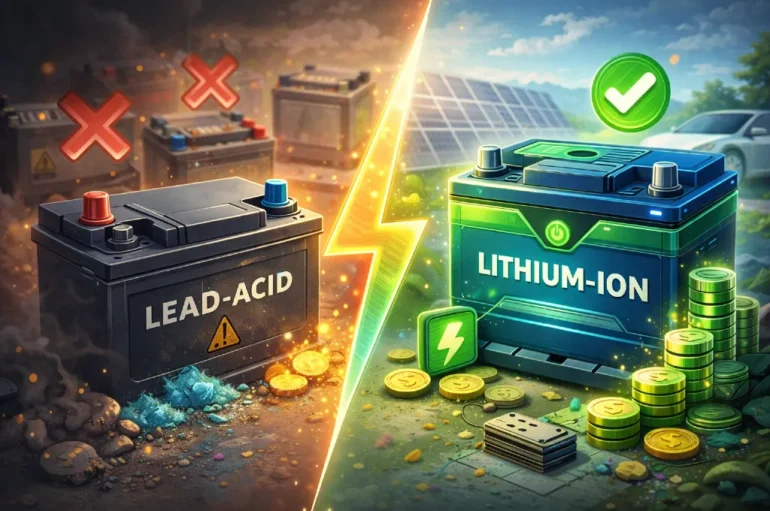
When solar power first hit the market, lead-acid batteries were the standard choice for storing excess energy in these systems. However, over the years, solar technology has evolved, and so have solar batteries. Lithium-based batteries have now largely ousted lead-acid as the preferred battery type in these systems. There are many reasons why lithium batteries are superior to lead-acid batteries.
Energy Density and Usable Capacity
One big disadvantage of lead-acid batteries is their low energy density, which is how much power they can store per square inch of their size. This means they require a lot more physical space to store the same amount of energy as lithium-based batteries. Lead-acid batteries also typically only allow you to use about 50% of their stored energy (called their depth of discharge, or DoD), which means that for every kilowatt stored, you actually only get half a kilowatt of usable power. By comparison, lithium batteries can provide 80% to 100% DoD. Combined with their higher energy density, this means lithium-based batteries deliver much more power in a much smaller package.
Lifecycle and Longevity
Lead-acid batteries have a relatively short cycle life, especially in solar applications that constantly charge and discharge them. Even well-maintained lead-acid batteries only last about three to five years in these systems. Lithium batteries, however, routinely last 10 years or more and can handle thousands more charge cycles than lead-acid batteries. This longer lifespan means less frequent replacements and lower long-term ownership costs.
Efficiency and Performance
Charging efficiency is another area where lead-acid batteries have fallen behind the new kid on the block. They typically operate at lower round-trip efficiency, meaning more of the energy produced by solar panels is lost during storage and use. Lithium-based batteries are much more efficient, often achieving efficiency ratings above 90%.
Maintenance Complexity
Many lead-acid battery types require regular maintenance, such as checking electrolyte levels, equalizing charges, and ventilating to address gassing. These maintenance needs make your system more complicated and difficult to maintain. Lithium batteries, on the other hand, are usually maintenance-free and sealed to prevent gassing, so they’re easier and safer to integrate into solar power systems.
As you can see, lithium-based batteries significantly outpace lead-acid batteries across almost every category. Though a lead-acid battery will certainly cost you less upfront, in the long run, you’ll wind up getting a battery that performs poorly for only a few years. Ultimately, it’s best to invest in a lithium-based Victron energy battery to get long-term, high-efficiency performance from your solar battery bank.