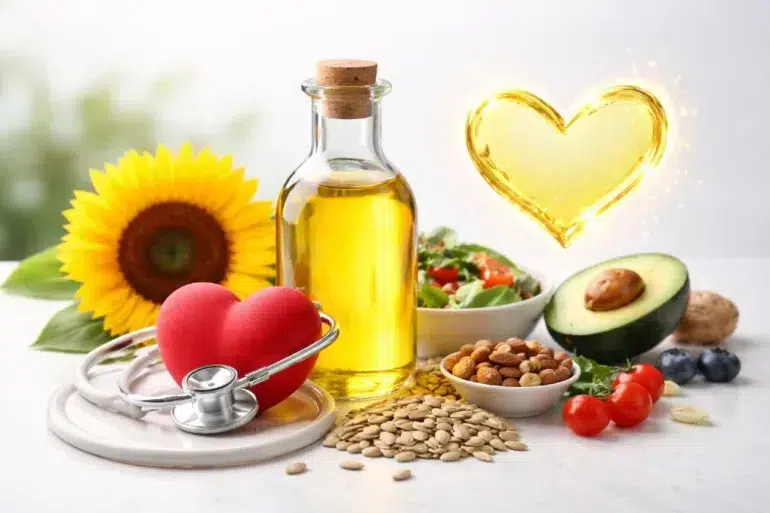
If you have been paying closer attention to ingredient labels lately, you have probably noticed High Oleic Sunflower Oil showing up in everything from salad dressings to snack foods to home cooking staples. That is not a random food trend. This oil has earned attention because it offers a practical mix of heart friendly fats, cooking stability, and everyday versatility. For people trying to eat better without making their meals feel restrictive, High Oleic Sunflower Oil can be a smart upgrade.
What makes it stand out is its fat profile. Unlike many solid fats and some highly saturated oils, this oil is rich in oleic acid, a monounsaturated fat linked with better cholesterol management when it replaces saturated fat in the diet. The FDA has stated that there is credible evidence supporting a qualified health claim that oleic acid in edible oils, including sunflower oil, may reduce the risk of coronary heart disease when used instead of fats and oils higher in saturated fat. The American Heart Association and Harvard Nutrition Source also emphasize that replacing saturated fats with unsaturated fats can help lower cardiovascular risk.
That does not mean any oil is automatically healthy in unlimited amounts. It means the type of fat you choose matters, especially when it replaces butter, shortening, or other fats higher in saturated fat. Used thoughtfully, High Oleic Sunflower Oil can support heart health, fit into balanced daily nutrition, and make healthier cooking easier to stick with long term.
What Is High Oleic Sunflower Oil?
High Oleic Sunflower Oil is made from specially cultivated sunflower varieties that produce oil with a much higher amount of oleic acid than traditional sunflower oil. Oleic acid is the same monounsaturated fat commonly associated with olive oil. That difference matters because monounsaturated fats are generally considered more favorable for heart health than diets heavy in saturated fat.
In USDA-linked nutrition data for high oleic sunflower oil, one tablespoon provides about 124 calories and 14 grams of fat, with roughly 11.6 grams of oleic acid, about 1.4 grams of saturated fat, and 5.8 milligrams of vitamin E. That means most of its fat content comes from monounsaturated fat rather than saturated fat.
This composition gives the oil three advantages that matter to real people:
- A heart friendlier fat profile than many solid cooking fats
- Better oxidative stability for cooking than oils higher in polyunsaturated fats
- A neutral taste that works in everyday meals without changing flavor too much
That last point is often underrated. A healthy oil only helps if people actually use it consistently. Since High Oleic Sunflower Oil has a clean, mild taste, it works well in roasted vegetables, homemade dressings, sautéed meals, and even baked goods.
Why the Fat Profile Matters for Heart Health
Heart health conversations often get reduced to “fat is bad” or “oil is unhealthy,” but nutrition science is more nuanced than that. What matters most is the kind of fat you are eating and what it replaces in your overall diet.
The American Heart Association recommends limiting saturated fat and replacing it with unsaturated fats where possible. Their current advice notes that unsaturated fats from plant oils can help lower LDL cholesterol, often called “bad” cholesterol, as well as triglycerides and overall heart disease risk. Harvard’s Nutrition Source makes a similar point, stressing that the quality of fat is more important than simply cutting fat overall.
Oleic acid and cardiovascular support
The strongest reason High Oleic Sunflower Oil is associated with heart health is its high oleic acid content. The FDA’s qualified health claim on oleic acid states that consuming about 20 grams per day of oils containing at least 70 percent oleic acid may reduce the risk of coronary heart disease, provided they replace fats and oils higher in saturated fat and do not increase total calorie intake.
That is an important distinction. The benefit comes from substitution, not addition.
For example, if someone replaces:
- butter on vegetables with a drizzle of High Oleic Sunflower Oil
- shortening in a homemade muffin recipe with a liquid plant oil
- creamy, saturated-fat-heavy dressings with a vinaigrette made using this oil
they are shifting the diet toward a more favorable fat pattern. Over time, that can support better cholesterol management and a more heart conscious eating style.
How High Oleic Sunflower Oil Fits Into Daily Nutrition
One reason High Oleic Sunflower Oil appeals to dietitians, cooks, and food manufacturers alike is that it is easy to use in ordinary meals. It does not require a specialized diet plan. It simply fits into breakfast, lunch, dinner, and snacks without much friction.
Daily nutrition is rarely improved by one miracle ingredient. It improves when healthier choices become practical enough to repeat. This oil helps with that because it can replace less favorable fats in common meals while still delivering the texture and cooking performance people expect.
1. It supports better fat quality in the diet
The first nutritional advantage is straightforward. Many people still eat more saturated fat than recommended. The American Heart Association advises limiting saturated fat to less than 6 percent of daily calories for those who need to lower cholesterol. On a 2,000 calorie diet, that is about 13 grams per day.
A tablespoon of High Oleic Sunflower Oil contains much less saturated fat than butter or many solid fats, making it easier to shift meals in a healthier direction without eliminating fat altogether. Since fat also helps with flavor, satiety, and absorption of fat soluble nutrients, choosing a better type of fat is often more sustainable than trying to avoid fat entirely.
2. It provides vitamin E
According to the NIH Office of Dietary Supplements, vitamin E is a fat soluble nutrient with antioxidant activity, and vegetable oils are among the best food sources. The USDA-linked nutrition data for high oleic sunflower oil shows about 5.8 milligrams of vitamin E per tablespoon, which is a meaningful contribution toward the adult daily requirement of 15 milligrams.
Vitamin E will not turn a poor diet into a healthy one, but it does add nutritional value, especially when the oil is used in place of less nutrient-dense fats.
3. It helps make healthy foods more enjoyable
This is where nutrition meets real life. People are more likely to keep eating vegetables, beans, whole grains, and lean proteins when meals taste good. High Oleic Sunflower Oil adds moisture, improves texture, and carries flavor without overpowering food.
A roasted vegetable bowl, grilled chicken salad, or grain-based lunch can feel dry and forgettable without some added fat. A modest amount of a stable plant oil can make nutrient-rich meals more satisfying and easier to repeat week after week.
High Oleic Sunflower Oil vs Regular Sunflower Oil
This is one of the most common questions readers ask, and it is a fair one.
Traditional sunflower oil is usually higher in polyunsaturated fats, especially linoleic acid. High Oleic Sunflower Oil is bred to contain much more oleic acid, which changes both its nutritional profile and its cooking behavior. In general, oils higher in oleic acid tend to be more stable and resistant to oxidation than oils rich in polyunsaturated fats. That is one reason they are widely used in packaged foods and commercial cooking applications. The FDA’s oleic acid review and the nutrient profile data both support the idea that high oleic oils are compositionally distinct from standard versions.
Here is a simple comparison:
| Feature | High Oleic Sunflower Oil | Regular Sunflower Oil |
|---|---|---|
| Main fat type | Mostly monounsaturated fat | More polyunsaturated fat |
| Oleic acid level | High | Lower |
| Cooking stability | Typically better | Lower than high oleic varieties |
| Flavor | Mild and neutral | Mild and neutral |
| Heart-focused use | Strong option when replacing saturated fat | Can still fit a healthy diet, but fat profile differs |
Both can have a place in a balanced diet, but High Oleic Sunflower Oil is often the better choice when the goal is combining neutral flavor, stability, and a monounsaturated fat profile.
Best Ways to Use High Oleic Sunflower Oil in Everyday Meals
You do not need to redesign your kitchen around this oil. It works best when swapped into the foods you already make.
Smart everyday uses
- Use it for sautéing vegetables, chicken, fish, or tofu
- Mix it into homemade salad dressings with lemon juice, vinegar, and herbs
- Brush it onto vegetables before roasting
- Use it in marinades instead of heavier creamy bases
- Add it to baked goods that call for liquid oil
- Stir it into grain bowls or bean dishes for better texture and satiety
Easy meal examples
Breakfast: Veggie omelet cooked with a small amount of High Oleic Sunflower Oil, plus fruit and whole grain toast.
Lunch: Chickpea salad with cucumbers, tomatoes, parsley, and a dressing made from this oil and lemon juice.
Dinner: Salmon, brown rice, and roasted broccoli tossed lightly in High Oleic Sunflower Oil before baking.
Snack: Homemade air-popped popcorn finished with a tiny drizzle of oil and spices instead of butter.
These are not “diet foods.” They are normal meals made slightly smarter.
Can High Oleic Sunflower Oil Help Lower Cholesterol?
It can support a cholesterol friendly eating pattern, but it is not a stand-alone treatment.
The American Heart Association clearly states that replacing foods high in unhealthy fats with unsaturated fats can lower heart disease risk. Their materials also note that unsaturated fats can lower LDL cholesterol and triglycerides. That means High Oleic Sunflower Oil may help when it replaces fats higher in saturated fat, especially in a diet that also includes fiber rich foods, regular activity, and limited ultra processed high-sodium choices.
What it cannot do is cancel out an otherwise poor eating pattern.
A practical way to think about it is this:
- Helpful: replacing butter, shortening, or palm-heavy spreads with High Oleic Sunflower Oil
- Less helpful: adding extra oil to an already calorie-dense diet
- Most effective: using it as one part of a broader heart healthy routine
If you have high LDL cholesterol, diabetes, or cardiovascular disease, oil choice matters, but your full pattern of eating matters more.
Is High Oleic Sunflower Oil Good for Weight Management?
This is where people often get confused. Since all oils are calorie dense, some assume they are automatically bad for weight loss or weight maintenance. That is too simplistic.
One tablespoon of High Oleic Sunflower Oil has about 124 calories, so portion control still matters. But foods with some healthy fat often feel more satisfying than fat free meals that leave you hungry an hour later. That can support better appetite control when the oil is used reasonably and as part of balanced meals. The USDA nutrient profile confirms the calorie density, while broader dietary guidance from Harvard and the AHA supports the idea that healthy fats can fit well into nutritious eating patterns.
A sensible portion strategy looks like this:
- Measure instead of free-pouring
- Use 1 to 2 teaspoons when cooking a single serving
- Build meals around vegetables, lean protein, legumes, and whole grains first
- Treat the oil as a supporting ingredient, not the whole meal
Common Mistakes People Make With High Oleic Sunflower Oil
Even good ingredients can be misused. A few habits can make the difference between a health conscious choice and a misleading one.
Using it as a health halo
Just because a product contains High Oleic Sunflower Oil does not automatically make the whole food healthy. Chips, crackers, and snack bars can still be high in sodium, refined starch, or added calories.
Ignoring portion size
Heart healthy fats are still fats. They are useful, but not unlimited.
Overlooking the rest of the diet
This oil works best in an eating pattern that includes:
- fruits and vegetables
- beans and lentils
- nuts and seeds
- whole grains
- lean protein sources
- lower intake of saturated and trans fats
Reusing degraded oil
The American Heart Association notes that oils degrade once they reach their smoke point and advises discarding oil that smells bad. Good cooking habits matter as much as good ingredients.
Frequently Asked Questions
Is High Oleic Sunflower Oil better than butter for heart health?
In most heart health contexts, yes. Butter is much higher in saturated fat, while High Oleic Sunflower Oil is rich in monounsaturated fat. Replacing saturated fats with unsaturated fats is consistent with American Heart Association guidance.
Can I use High Oleic Sunflower Oil every day?
Yes, in reasonable amounts. It can be part of a healthy daily eating pattern when it is used in place of less favorable fats and within your calorie needs.
Is High Oleic Sunflower Oil highly processed?
Like most refined cooking oils, it undergoes processing for extraction and stability. That does not automatically make it unhealthy. What matters more is the overall fatty acid profile, how it is used, and whether it replaces fats higher in saturated fat.
Does High Oleic Sunflower Oil contain vitamin E?
Yes. USDA-linked nutrient data shows about 5.8 milligrams of vitamin E per tablespoon, and NIH notes that vegetable oils are among the best dietary sources of vitamin E.
The Bottom Line on Heart Health and Daily Nutrition
High Oleic Sunflower Oil is not a miracle food, but it is a genuinely useful one. It gives you a practical way to replace more saturated fats with a monounsaturated-rich oil that fits real meals, supports better cholesterol-conscious cooking habits, and contributes vitamin E along the way. That combination is exactly why it has become popular in both home kitchens and food manufacturing.
For readers who want a realistic upgrade instead of another extreme diet rule, High Oleic Sunflower Oil makes sense. Use it to roast vegetables, sauté proteins, build lighter dressings, and swap out heavier fats where possible. That kind of consistent, manageable choice is often what improves nutrition over time.
It also helps to remember that heart health is built by patterns, not single ingredients. Better oil choice matters, but it works best alongside fiber rich meals, regular physical activity, good sleep, and a sensible calorie intake. If you want to understand the broader role of fats in lipid metabolism, it is helpful to see how dietary fats interact with the body as part of a larger system.
When viewed in that bigger picture, High Oleic Sunflower Oil earns its place not because it is trendy, but because it is practical, balanced, and easy to use well.