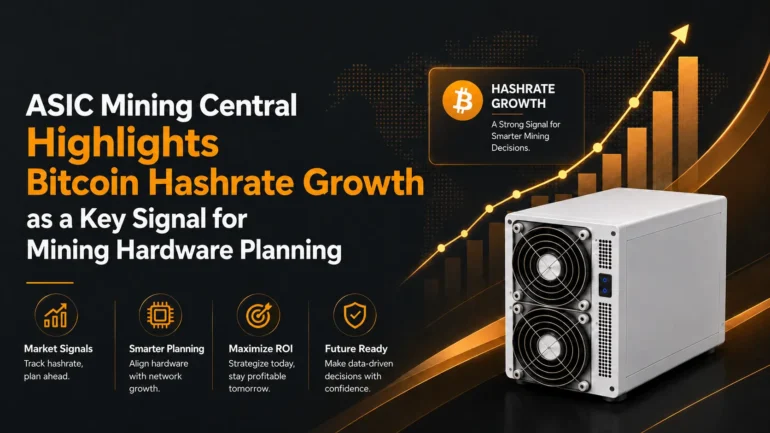
Bitcoin Hashrate Growth is now one of the key indicators to plan for mining hardware. When more and more machines join the Bitcoin network as the overall computing power grows, and mining competition is stronger, hardware purchasers need to make better decisions prior to purchasing an ASIC mining machine.
For mining professionals, Hashrate growth isn’t an isolated number in terms of technicality. It indicates how busy the mining system is, as well as how competitive the market is, and why reliable hardware is becoming more important each year. Buyers who know the trends in hashrate can make better decisions about upgrades, evaluate machines with greater care, and create more durable long-term mining strategies.
What Bitcoin Hashrate Growth Means
Bitcoin hashrate is the total amount of computing power used by miners to protect the Bitcoin network and to process transactions. When the hashrate is high, it generally means more mining machines are operating throughout the Bitcoin network. This could happen as mining farms grow and new ASIC miner models hit the scene, or old machines are replaced by higher-powered hardware.
A higher hash rate is usually considered to be a positive sign for the mining industry. It indicates that miners continue to invest in infrastructure, hardware, and long-term operations. However, this also indicates that there is a rise in competition. With increased competition, the machine selection becomes more crucial.
This is the reason why mining hardware design now is more than just evaluating the cost of a device. Buyers must research the hashrate of the machine, its power usage efficiency, cooling technique, and the long-term operating costs before purchasing.
Why Hashrate Growth Matters for Hardware Buyers
As Bitcoin hashrate grows, the mining difficulty typically increases over time. That means that miners require stronger and more efficient machines in order to remain competitive. A previous ASIC miner might still be able to work; however, it might not be able to provide the same performance when its power consumption is excessive compared to the latest models.
For the buyer, this means the need for more planning. The Bitcoin mining machine should be chosen based on performance, efficiency, cost, and operating conditions. A machine that has a high hashrate might appear attractive; however, if it uses excessive power, it might not be the ideal long-term option.
This is the reason why modern buyers of mining equipment take a closer look at the details prior to investing. They are looking for machines that can adapt to changing conditions in the network and keep the operating expenses under control.
ASIC Miner Efficiency Is Now a Core Planning Factor
Efficiency is now one of the most important factors when it comes to selecting mining hardware. Because ASIC mining equipment is continuously running and consumes power, it directly impacts the operating expenses. A small change in efficiency could be significant in the long run, particularly in mining farms that have multiple machines.
An efficient ASIC miner will provide higher efficiency per unit of power. This can help miners control expenses for energy, decrease the amount of power they use, and plan for longer-lasting machine life.
For buyers in high-electricity-cost regions, efficiency can be the difference between a useful machine and an expensive one. For those who live in less-cost power areas,s efficient machines can still improve the efficiency of scaling and lessen the burden on infrastructure.
This is why the growth of hashrate and efficiency are both closely linked. As the network gets stronger, the efficient machines will be more effective for long-term planning.
Hardware Upgrades Are Becoming More Strategic
Upgrades to mining hardware are more planned and focused on data. The buyers are not just upgrading because the new model is out. They’re evaluating the network’s hashrate, difficulty rates, and power rates, capacity to cool, and expected performance of the machine before making a choice.
A well-planned upgrade plan could consist of replacing older machines or adding new models that are more efficient, or enhancing cooling systems to provide better uptime. In many instances, the most effective upgrade isn’t just the most robust Bitcoin mining machine; it is compatible with the complete operating configuration of the buyer.
For instance, mining farms with a small power capacity could benefit more from efficient equipment as opposed to machines that only have greater hashrate. Smaller buyers may want a smaller ASIC mining machine that’s easy to cool and maintain.
This type of planning can help users avoid costly hardware purchases and create more reliable operations.
Cooling Technology Supports Better Mining Performance
As ASIC mining models get more efficient, cooling becomes an essential aspect of the hardware’s planning. Mining machines generate heat when in continuous operation, and inadequate cooling can cause instability as well as increase downtime and reduce the life of machines.
Air-cooled miners are still popular for various setups since they are simpler to set up. However, immersion-cooled and hydro-cooled machines are getting more attention from large mining facilities that require more efficient thermal control.
A robust cooling system will help machines in mining maintain a steady hash rate, decrease the risk of overheating, and enhance operating efficiency. This is the reason why cooling needs to be considered prior to purchasing the machine, not just when the machine is installed.
A strong Bitcoin miner is only able to perform optimally if the environment is able to support it.
ASIC Mining Central Highlights the Value of Research-Based Planning
As the options for mining hardware increase, buyers require clearer data to make comparisons between machines and better understand the market’s trends. ASIC Mining Central emphasizes Bitcoin hashrate increase as a crucial indicator,r as it aids miners in understanding the need to examine the strategy of their hardware, compare ASIC mining efficiency, and plan for the changing circumstances on the network.
Planning based on research helps buyers avoid making emotional or uninformed choices. Instead of selecting hardware through headline hashrate or price, miners are able to compare actual specifications and compare machines to their cooling costs, electricity installation, and long-term objectives.
This strategy is especially beneficial in a marketplace in which new equipment, various cooling systems, or changing network conditions could affect the hardware’s value.
What Buyers Should Compare Before Choosing an ASIC Miner
Before purchasing the ASIC miner, buyers must examine a number of important aspects together. This includes:
- Consumption of HashratePower
- Efficiency
- Method of cooling
- Algorithm Support
- Machine condition
- Noise level
- Cost of electricity
- Operating environment
- Expected start time
- Maintenance requirements
- Hardware value over the long term
These aspects help buyers get a better idea of whether the machine is appropriate for their specific mining needs. A machine that has a high hashrate, but with low efficiency, might not be the best choice for all buyers. A machine with a moderate hashrate and higher power usage might provide more value depending on the price of electricity.
The ideal hardware choice is based on the complete operating configuration and not just one particular specification.
Smaller Miners Can Also Benefit From Hashrate Planning
Hashrate planning isn’t only for mining farms on a large scale. Miners of smaller sizes also need to be aware of how the growth of networks impacts hardware decisions. Smaller miners or a home-based user may be limited in capacity, space, or cooling capacity. Making the wrong choice can result in problems with noise, heat, or electrical use.
For smaller installations or setups, an unbiased ASIC miner might be more appropriate than the most powerful choice. The buyers should choose machines that are compatible with their power source, ventilation, and their long-term budget.
Through tracking trends in hashrates and comparing the efficiency of machines, smaller miners are able to make more pragmatic decisions and avoid equipment that isn’t compatible with their surroundings.
Long-Term Hardware Value Matters More in a Growing Network
As Bitcoin hashrate rises, the long-term value of hardware is becoming more crucial. Buyers require machines that remain viable as the mining competition alters. This is why they should look beyond the price of purchase.
The cost of total ownership comprises power and cooling maintenance, downtime risk, and the expected life of the machine. A machine that is less expensive may not be the best choice if it requires more power or needs more maintenance.
A more robust hardware strategy looks at both the short-term costs and long-term performance. This allows miners to select machines that are able to sustain stable operation regardless of market fluctuations.
Positive Outlook for Smarter Mining Hardware Planning
The increasing Bitcoin hashrate is an indication that the mining industry is growing. It indicates that there is a constant investment in infrastructure, hardware, and longer-term operations in mining. For those who purchase, this expansion gives them the chance to think more strategically and select machines that offer greater performance, stability, and value.
The future of mining hardware design will be dependent on smarter comparison, improved cooling systems, effective ASIC mining models, as well as greater understanding of operating costs.
As Bitcoin mining is becoming more competitive, your success will be less dependent on just having machines, but more on selecting the best machines to work in the right conditions. Hashrate increase is forcing customers to make strategic choices, and that is creating an increasingly professional and well-planned marketplace for hardware used in mining.