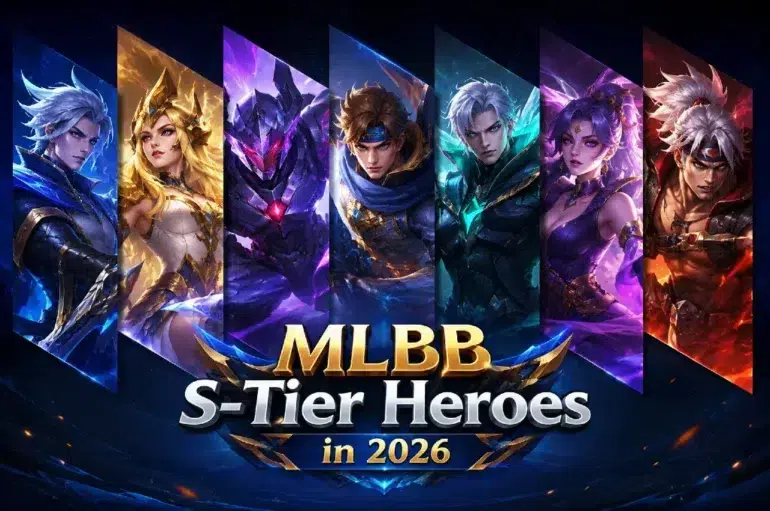
In Mobile Legends: Bang Bang, choosing a strong hero is not only about picking the character with the flashiest burst combo or the highest highlight potential. A reliable ranked hero needs to bring consistent value to the team through lane control, objective pressure, utility, protection, engage, scaling damage, or the ability to punish exposed enemies. That is why a practical MLBB S-tier heroes ranking 2026 should focus on long-term ranked usefulness rather than short-lived trends.
The best hero for one player may not be the best hero for another. A mechanically confident jungler may prefer pick-off heroes, while a newer Gold Lane player may perform better with a straightforward scaling marksman. A support main may create more match-winning value with sustain or anti-control utility than with another damage-focused pick. The goal is to choose heroes that fit your role, your comfort level, and your team composition.
What Makes an S-Tier Hero Reliable?
A reliable S-tier hero should contribute even when the match is not perfect. Some heroes win through lane pressure, some through team-fight control, and others through late-game scaling. Strong heroes also help solve draft problems. If your team lacks frontline control, a tank or fighter with disruption may be more valuable than another damage dealer. If the enemy has a dangerous carry, a lockdown hero can change the entire rhythm of the game.
This is why role clarity matters. A hero should have a clear job. Gord zones enemies and controls mid-lane space. Gloo creates frontline disruption. Hanabi scales into safer late-game team fights. Diggie protects against crowd control. Kaja threatens priority targets. Floryn and Estes provide sustain. Leomord and Silvanna offer skirmish pressure and initiation. Each hero has a reason to be picked, but that reason must match what your team needs.
Beginner-Friendly Heroes to Practice First
For many players, the best starting choices are not always the most mechanically intense heroes. Gord, Hanabi, Floryn, Estes, Belerick, and Saber are easier to understand because their core game plans are clear. Gord teaches spacing and skill placement. Hanabi teaches farming, positioning, and late-game patience. Floryn and Estes teach support awareness and when to protect teammates during extended fights.
Belerick is useful for learning frontline timing because his value comes from standing in the correct place and punishing repeated basic attacks. Saber is simple in concept but still teaches target selection, because diving the wrong enemy or entering without follow-up can waste his strongest moment. These heroes give players a structured way to improve without demanding advanced mechanics from the first match.
Best Picks by Role
Mid Lane players can look at Gord, Zetian, and Zhuxin as different types of magic pressure. Gord is best for long-range poke and zoning around objectives. Zetian works when a team needs more stable magic damage, while Zhuxin is useful for area control and team-fight presence. The right mid pick depends on whether your team needs range, control, or sustained pressure.
For Gold Lane, Hanabi and Miya are practical choices because their value grows with positioning and farm. Hanabi is better when you need safer team-fight control, while Miya is easier for players who prefer basic-attack scaling. Both require patience in the early game and protection from assassins before they can fully carry late-game fights.
EXP Lane and frontline players have several options. Gloo disrupts enemy movement, Belerick punishes basic-attack-heavy teams, Hilda pressures early, Minsitthar limits mobility, Freya thrives in duels, and Paquito rewards mechanical confidence. These heroes are not interchangeable; they solve different problems. Choose them based on the enemy draft and your own comfort with their timing.
Roam and Support players can choose from Diggie, Floryn, Estes, Kaja, and Sora depending on team need. Diggie is valuable against heavy crowd control. Floryn and Estes are stronger in fights where sustain matters. Kaja is better when your team needs a direct answer to one dangerous enemy carry. Sora fits utility-focused team play and tempo support.
Jungle and pick-off players may prefer Harley, Helcurt, Saber, Suyou, or Guinevere. These heroes can punish isolated targets, but they often require cleaner timing than lane-based picks. Entering too early can waste their main value, while entering too late can leave teammates without pressure. If you are still learning jungle tempo, practice these heroes in normal games before relying on them in ranked matches.
How to Pick for Solo Rank
Solo rank rewards heroes that create value without perfect coordination. Gord can control space from a safe distance. Hilda can disturb enemy comfort early. Saber can remove exposed carries. Kaja can turn one target into an objective opportunity. Hanabi and Miya can work well if you understand safe farming, while Floryn, Diggie, or Estes can stabilise teams that already have enough damage.
The biggest mistake is picking a hero only because it appears high on a list. A ranking is a guide, not a fixed draft rule. Before locking in, ask three questions: does this hero fit my lane, does my team need this role, and can I play this hero well under pressure? A slightly lower-ranked hero you understand can be more useful than a high-ranked hero you cannot execute.
Practice, Skins, and Resource Planning
Many MLBB players also connect hero choice with skins, events, and account progression. While skins do not replace mechanical practice, they often encourage players to spend more time on a hero they enjoy. If you are preparing for events, new skins, or account upgrades, planning your MLBB diamonds top up around the heroes you actually use is smarter than spending randomly on characters you rarely play.
A good rule is to build around your main role first. Mid players should prioritise mages they can consistently use. Gold Lane players should invest time in marksmen with clear scaling patterns. Roam players should master utility heroes that fit different team compositions. By connecting practice choices with resource planning, you avoid wasting time and currency on heroes that do not improve your ranked results.
Conclusion
The best S-tier hero in MLBB is not always the hero with the highest burst damage or the most exciting combo. It is the hero that fits your role, supports your team composition, and delivers consistent ranked value. Start with practical picks such as Gord, Hanabi, Diggie, Floryn, Kaja, Gloo, Leomord, and Silvanna, then expand into more demanding heroes once your timing and map awareness improve.
For 2026 ranked play, the smartest approach is to choose heroes by purpose. Pick frontline when your team lacks control, pick utility when damage is already covered, pick scaling when you can survive early, and pick assassins only when you can execute cleanly.