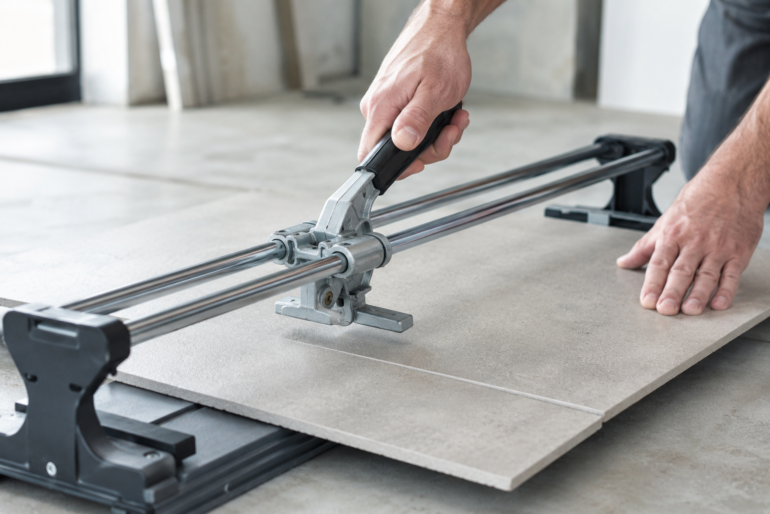
If you have ever tried cutting tile with a cheap manual cutter, you already know the frustration. The score line looks fine, the tile snaps badly, and suddenly one expensive porcelain piece is wasted. That is where a Sigma Tile Cutter often enters the conversation. It is known among many tile installers for accurate scoring, smooth breaking, and a build that feels made for serious tile work rather than occasional guessing.
But is it the right choice for clean tile cuts?
The honest answer is: yes, for many people, especially if you work with ceramic, porcelain, or large-format tiles and want repeatable results. Still, it depends on your project size, tile type, budget, and how often you plan to use it.
A tile cutter is not just a tool. On a real job, it can decide how clean your edges look, how much material you waste, and how confident you feel when cutting expensive tiles.
What Is a Sigma Tile Cutter?
A Sigma Tile Cutter is a manual tile cutting tool designed to score and snap tiles with precision. Instead of using electricity or water like a wet saw, it uses a scoring wheel to mark the tile surface, then applies controlled pressure to break the tile along that score line.
Sigma is an Italian brand known for professional tile tools. The company describes its manual tile cutters as being designed for precision and ease of use on ceramic and porcelain stoneware, with patented Made in Italy technology for flooring contractors.
That is one reason the brand gets attention from contractors, remodelers, bathroom installers, kitchen renovation teams, and serious DIY users.
The main appeal is simple: clean cuts without a dusty, noisy, complicated setup.
You place the tile on the cutter, align your measurement, score the surface, apply pressure, and snap. When the tool is set up correctly and the tile is suitable for manual cutting, the result can be surprisingly clean.
Why Clean Tile Cuts Matter So Much
Clean tile cuts are not just about appearance. They affect the entire finish of a room.
A chipped tile edge near a wall may be hidden by trim, but around a shower niche, kitchen backsplash, floor border, or exposed corner, rough cuts can make the work look rushed. Even small chips can stand out when light hits glossy tile.
Clean cutting also reduces waste. If you are working with premium porcelain, patterned tile, or imported ceramic, every broken piece costs money. A better tile cutter can help reduce those bad breaks when used properly.
There is also the matter of speed. A clean manual cutter can save time because you do not need to walk back and forth to a wet saw for every straight cut. On large flooring jobs, that time adds up fast.
How a Sigma Tile Cutter Works
A manual tile cutter may look simple, but the cutting process is actually very specific.
First, the scoring wheel scratches the glazed or finished surface of the tile. This does not cut all the way through. It creates a controlled weak line.
Then the breaking foot applies pressure on both sides of that line. If the score is clean and the pressure is even, the tile snaps along the mark.
A Sigma Tile Cutter is designed to make this scoring and snapping process more stable. Many models include strong guide bars, measurement systems, angle adjustment, and scoring wheels built for firm contact with the tile surface.
Some Sigma Series 4 models, for example, include a robust aluminum structure, a metric bar that swivels from 45 degrees to 0 degrees to 45 degrees, and quick angle positioning features.
That matters because tile cutting is not only about force. It is about control.
Too much pressure while scoring can damage the glaze. Too little pressure can create a weak score that does not break cleanly. A quality cutter helps keep the movement smooth and the pressure more predictable.
Sigma Tile Cutter Features That Help With Accuracy
Most people do not buy a premium manual cutter just because of the name. They buy it because small details make work easier.
Here are the features that often make a Sigma Tile Cutter stand out.
Strong Frame Construction
A weak tile cutter can flex during scoring or breaking. That movement may look minor, but it can ruin accuracy.
Sigma cutters are commonly built with aluminum structures that aim to balance strength and portability. A firm frame keeps the tile supported while you score and snap.
This is especially important with long tiles, thick porcelain, and textured surfaces. If the tile moves, the score line can drift.
Smooth Scoring Action
The scoring wheel is one of the most important parts of any tile cutter. A smooth scoring movement helps create a clean, continuous line.
A broken, uneven, or scratchy score can lead to a jagged snap. That is why professional users often care about the feel of the handle and scoring wheel as much as the size of the cutter.
Some Sigma push models are described as using ergonomic handles and visible scoring wheels for precise cutting on larger or thicker tile formats.
Accurate Measuring Bar
Measuring is where many tile mistakes begin.
A cutter with a clear measuring system helps reduce repeated marking, checking, and adjusting. Some Sigma models include swiveling measurement bars for straight and angled cuts, which can be useful for diagonal layouts, corner pieces, and patterned floors.
If you are cutting many tiles to the same size, this feature can save time and reduce mistakes.
Angle Cutting Support
Not every tile cut is straight.
Bathrooms, kitchens, hallways, and stair areas often need angled pieces. A cutter that supports common angles can make this easier, especially when tiles must fit around corners or follow a design pattern.
For example, Sigma Series 4 features include metric bars that pivot close to the cutting line and can swivel in both directions.
Dust-Free Cutting
One major advantage of a manual cutter is that it does not produce the same dust and slurry as some powered cutting methods.
Sigma’s own tool site notes that tile cutters can allow fast and accurate cuts while keeping the work area free from dust.
That can be a big benefit for indoor renovation work, especially when cutting near finished rooms.
Sigma Tile Cutter vs Wet Saw
A common question is whether a manual cutter can replace a wet saw.
The answer depends on the type of cut.
A Sigma Tile Cutter is excellent for many straight cuts. It can be fast, clean, quiet, and easy to use once you understand the scoring technique. It is especially useful for repeated floor and wall tile cuts.
A wet saw is better for curved cuts, notches, L-shaped cuts, stone, glass, and some very hard or brittle materials. It is also useful when you need extremely smooth exposed edges.
Here is a simple comparison:
| Feature | Sigma Tile Cutter | Wet Saw |
|---|---|---|
| Best for | Straight cuts on ceramic and porcelain | Complex cuts, stone, glass, notches |
| Dust and mess | Low dust, no water slurry | Wet mess, more cleanup |
| Speed | Very fast for repeated straight cuts | Slower setup, useful for specialty cuts |
| Noise | Quiet | Louder |
| Power needed | No electricity required | Requires power |
| Learning curve | Moderate | Moderate |
| Portability | Easier to carry | Usually heavier |
For many tile jobs, both tools have a place. The manual cutter handles the majority of straight cuts, while the wet saw handles special cuts.
Is a Sigma Tile Cutter Good for Porcelain Tile?
Yes, many Sigma models are designed for ceramic and porcelain tiles, but the result depends on the tile’s thickness, surface texture, and format.
Porcelain can be harder and denser than regular ceramic tile. That means it may require a steady score, the right scoring wheel, and firm breaking pressure. Some porcelain tiles snap beautifully. Others, especially heavily textured or very thick pieces, can be more challenging.
If you are cutting porcelain, pay attention to three things:
Use the right cutter size.
Do not rush the score.
Test on a spare piece before making important cuts.
The quality of the tile also matters. Some tiles have internal tension or uneven density, which can cause unexpected breaks even with a good cutter.
Is a Sigma Tile Cutter Good for DIY Users?
A Sigma Tile Cutter can be a smart tool for DIY users, but it may be more cutter than some small projects require.
If you are tiling one tiny backsplash with basic ceramic subway tiles, a more affordable cutter may be enough. But if you are doing a bathroom floor, shower walls, large porcelain tiles, or multiple renovation projects, Sigma becomes much easier to justify.
DIY users usually appreciate three things:
It cuts without electricity.
It creates less mess than wet cutting.
It helps make straight cuts look more professional.
The main challenge is technique. A premium tool cannot fix rushed measuring or poor scoring pressure. But once you practice on a few spare tiles, the process becomes much more natural.
Who Should Consider Buying One?
A Sigma Tile Cutter makes the most sense for people who want cleaner results and expect to cut more than a handful of tiles.
It is a strong fit for:
Homeowners doing serious bathroom or kitchen renovations
DIY remodelers working with porcelain or larger tiles
Professional tile installers
Contractors who need fast straight cuts on site
Flooring specialists
People who dislike messy wet saw setup for every cut
It may not be necessary for someone doing one very small project with inexpensive ceramic tile. In that case, renting or borrowing a cutter might be more practical.
But for repeat work, a higher-quality manual cutter can quickly feel like money well spent.
Real-World Example: Bathroom Renovation
Imagine a homeowner renovating a small bathroom with 12 x 24 inch porcelain tiles. The job includes floor tile, shower wall tile, and cuts around edges.
Using a low-cost cutter, the homeowner may struggle with long straight cuts. Some tiles snap unevenly. A few edges chip. The person spends extra time hiding bad cuts along walls and buying replacement tiles.
With a solid manual cutter, the process can become smoother. The tiles are easier to align. The score line is more consistent. Straight cuts are faster, and fewer tiles are wasted.
This does not mean every cut will be perfect. But the tool gives the user a better chance of making clean, repeatable cuts.
In tile work, that consistency matters.
Common Mistakes People Make With Manual Tile Cutters
Even a premium cutter can perform poorly if used the wrong way.
Here are common mistakes to avoid.
Pressing Too Hard While Scoring
Many beginners think more pressure means a better cut. That is not always true.
Too much pressure can crush the glaze, cause chips, or create a rough score. The goal is a clean, continuous score line, not a deep trench.
Scoring More Than Once
Repeated scoring can damage the tile surface and confuse the break line.
Most manual cutters are designed for one clean pass. Start smoothly, keep steady pressure, and finish the score in one movement.
Cutting Without Support
Large-format tiles need proper support. If part of the tile hangs off the cutter or shifts during scoring, the break can go wrong.
Use a stable surface and support both sides of larger tiles.
Ignoring the Tile Surface
Textured, ribbed, or uneven tiles may need extra care. The scoring wheel must stay in contact with the surface.
For textured porcelain, a cutter with a strong scoring system can help, but testing is still important.
Forgetting to Check the Wheel
A worn scoring wheel can make even a good cutter feel bad. If the wheel is damaged, dirty, or dull, your cuts may suffer.
Replace worn parts when needed.
How to Get Cleaner Cuts With a Sigma Tile Cutter
Good tools work best with good habits.
Start by marking carefully. Even if the cutter has a measuring guide, confirm your first few cuts with a tape measure.
Place the tile flat against the fence. Make sure it does not rock or move.
Score once, from one end to the other, using steady pressure. Do not stop halfway if you can avoid it.
Snap with controlled pressure. Do not slam the handle down.
For glossy tile, wipe the surface first. Dust or grit can interfere with the scoring wheel.
For large tiles, support the extra length so the tile stays level.
For diagonal cuts, double-check the angle before scoring. A small angle error can become very visible after installation.
Finally, practice on scraps. A few test cuts can save you from ruining good tile.
Sigma Tile Cutter Models and Size Choice
One of the most important buying decisions is size.
Do not choose a cutter only based on the tile size printed on the box. Think about the actual cuts you need to make.
For example, a 24-inch tile may need diagonal cutting. Diagonal capacity is different from straight cutting capacity. Large-format tiles also need more support.
A compact cutter may be easier to carry, but it will limit future projects. A larger cutter gives more flexibility, but it costs more and takes up more space.
Before buying, consider:
Largest tile size you plan to cut
Whether you need diagonal cuts
Tile thickness
Porcelain vs ceramic use
Storage space
Jobsite portability
Frequency of use
A contractor may choose a larger professional model because it handles more situations. A homeowner may prefer a mid-size model that fits common bathroom and kitchen projects.
Is It Worth the Price?
A Sigma Tile Cutter usually costs more than many entry-level manual tile cutters. That makes people wonder if it is worth paying extra.
For occasional light use, maybe not. A budget cutter can handle simple ceramic tile if the project is small.
For serious tile work, the value becomes clearer. Cleaner cuts reduce wasted tile. Faster cutting saves time. Better measurement tools reduce frustration. Strong construction also means the cutter may last through many projects.
Think about the cost of mistakes. If you are installing expensive porcelain and ruining several tiles per room, a better cutter can pay for itself faster than expected.
The tool is also easier to appreciate when working under pressure. On a real job, clean repeatable cuts are not a luxury. They help keep the project moving.
Manual Tile Cutter Safety Tips
Manual cutters are safer than many power tools, but they still require care.
Tile edges can be sharp after snapping. Wear gloves when handling cut pieces.
Eye protection is smart, especially when breaking brittle tile.
Keep fingers away from the breaking area.
Carry large tiles carefully, because broken tile corners can cut skin.
Do not force a tile that clearly does not want to snap. Recheck the score line and support.
Clean the cutter regularly so small tile chips do not interfere with movement.
Safety is not only about injury. It also protects your work. A clean, stable setup leads to better cuts.
Maintenance Tips for Better Long-Term Performance
A tile cutter does not need complicated maintenance, but small habits help.
Wipe dust and tile fragments off the rails after use.
Check the scoring wheel for wear.
Keep moving parts clean.
Store the cutter in a dry place.
Do not throw heavy tools on top of it.
Inspect the measuring bar and fence for alignment.
If something feels loose, fix it before starting a new job.
A manual cutter depends on alignment and smooth movement. If those two things are maintained, the tool stays useful for a long time.
Sigma Tile Cutter for Contractors
For contractors, the value is not only clean cuts. It is workflow.
A reliable manual cutter can sit near the work area, letting installers cut and place tile quickly. This reduces trips to a wet saw and keeps the installation moving.
On jobs with repeated straight cuts, that speed matters. It can also reduce cleanup since there is no water tray, slurry, or electrical cord to manage for every cut.
Professional users may also appreciate parts availability. Sigma’s tool site mentions replaceable factory parts for worn or damaged tools.
That is important because pros do not want to replace an entire cutter when one part wears out.
Sigma Tile Cutter for Home Renovation Projects
For home renovation, the biggest benefit is confidence.
Tile work can feel intimidating because every mistake is visible. A good cutter helps make the process less stressful. You can measure, score, snap, and install without turning every straight cut into a major event.
This is especially helpful for:
Bathroom floors
Kitchen backsplashes
Laundry room tile
Entryway tile
Shower walls
Fireplace tile surrounds
Accent walls
A manual cutter also works well in homes where dust control matters. If you are remodeling while living in the house, less mess is always welcome.
What to Check Before Buying
Before buying a Sigma Tile Cutter, do not focus only on brand reputation. Match the cutter to your actual project.
Check the maximum straight cut length.
Check diagonal cutting capacity.
Confirm it works with your tile thickness.
Look at the scoring wheel size and replacement options.
Consider push vs pull cutting style.
Think about storage and transport.
Read model-specific details carefully.
A cutter that is too small will frustrate you. A cutter that is too large may be unnecessary for light DIY work.
The best choice is the one that fits your tile, your hands, and your project.
Frequently Asked Questions
Can a Sigma Tile Cutter cut porcelain?
Yes, many Sigma manual cutters are designed for porcelain and ceramic tile. The result depends on the tile thickness, surface texture, and correct scoring technique.
Is a manual tile cutter better than a wet saw?
For straight cuts, a manual cutter is often faster, cleaner, and quieter. For notches, curves, stone, glass, or complex shapes, a wet saw is usually better.
Why does tile break unevenly after scoring?
Uneven breaks can happen because of poor scoring pressure, tile movement, worn scoring wheels, low-quality tile, or lack of support under large pieces.
Is Sigma only for professionals?
No. Many DIY users can use Sigma cutters successfully. However, the price and performance often make the most sense for serious DIY projects or professional work.
Do I need practice before using it on expensive tile?
Yes. Always practice on spare pieces first. This helps you understand the scoring pressure and breaking action before cutting visible tiles.
Final Verdict: Is Sigma Tile Cutter the Right Choice?
A Sigma Tile Cutter is a strong choice if clean straight cuts matter to you. It is especially useful for porcelain, ceramic, and larger tile projects where accuracy, speed, and consistency make a real difference.
It may cost more than a basic cutter, but it also offers better control, stronger construction, and a smoother cutting experience. For a one-time small project, it might be more than you need. For serious home renovation or professional tile work, it can be a smart investment.
The key is to choose the right size and learn the technique. A good cutter will not replace careful measuring or steady hands, but it can make both much easier.
Tile work rewards patience. When your cuts are clean, the whole installation looks more professional. Whether you are upgrading a bathroom, laying a kitchen floor, or working on a client project, the right cutter can turn a stressful job into a cleaner, faster, and more satisfying one.
In the end, a Sigma Tile Cutter is not just about cutting tile. It is about cutting with confidence. And when you are working with expensive ceramic tiles, that confidence can save time, money, and a lot of frustration.