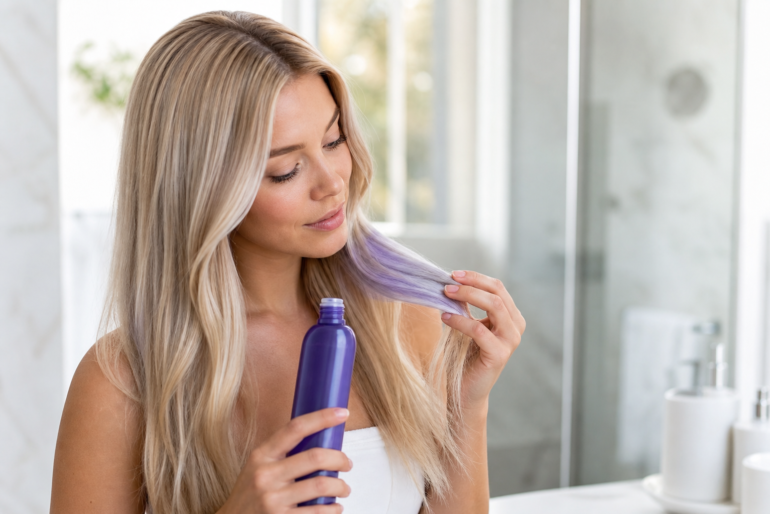
Purple Shampoo is one of those hair-care products that sounds simple until you actually need it. One week your blonde, silver, highlighted, or bleached hair looks fresh and cool-toned. Then suddenly, it starts looking yellow, warm, dull, or a little brassy under natural light.
That is where this violet-toned shampoo earns its place in a hair routine.
It is not magic, and it is not the same as a salon toner. But when used correctly, it can help keep blonde hair brighter between color appointments, soften yellow tones, and make lightened hair look cleaner and more polished.
What Is Purple Shampoo?
Purple Shampoo is a toning shampoo made with violet pigments. These pigments sit on the hair surface during washing and help reduce unwanted yellow or brassy tones in blonde, gray, silver, highlighted, and bleached hair.
The idea comes from basic color theory. Purple sits opposite yellow on the color wheel, so violet pigment can visually soften yellow warmth. Healthline explains that purple shampoo works by leaving a violet tint on the hair, which helps neutralize yellow or brassy undertones in blonde, white, gray, and silver hair.
Think of it as a maintenance product, not a full color correction treatment.
A salon toner can shift hair color more dramatically. Purple Shampoo is gentler and more temporary. It helps refresh the tone you already have, especially when your blonde starts looking too warm.
Why Blonde Hair Turns Brassy
Blonde hair can turn brassy for several reasons. Sometimes it happens because toner fades. Sometimes it comes from hard water, heat styling, sunlight, chlorine, or product buildup.
Bleached hair is more porous than untouched hair. That means it can absorb minerals, pollution, and styling residue more easily. Over time, those things can make blonde hair look yellow, orange, or dull.
Common causes of brassiness include:
- Toner fading after a salon visit
- Frequent heat styling
- Hard water minerals
- Chlorine from swimming pools
- Sun exposure
- Using the wrong shampoo
- Product buildup
- Natural warmth showing through bleached hair
If your hair was lightened from brown or dark blonde, warm undertones are especially common. Hair often lifts through orange and yellow stages before reaching pale blonde. When the cool toner fades, those warm tones begin to show again.
How Purple Shampoo Works on Blonde Hair
Purple Shampoo works by depositing a small amount of violet pigment while cleansing the hair. Medical News Today notes that it is designed to reduce yellow or brassy tones by adding violet pigment during washing.
This does not permanently change your hair color. Instead, it creates a temporary toning effect.
Here is the simple version:
- Yellow tones make blonde hair look warm or brassy.
- Purple pigment helps balance yellow.
- The result can look cooler, brighter, and cleaner.
- The effect fades gradually as you wash your hair.
That is why consistency matters. Using it once may help a little, but building the right routine is what keeps blonde hair looking fresh.
Who Should Use Purple Shampoo?
Purple Shampoo is best for people with light hair that looks yellow, warm, dull, or brassy.
It usually works well for:
- Blonde hair
- Bleached hair
- Platinum blonde hair
- Silver hair
- Gray hair
- White hair
- Blonde highlights
- Balayage with light pieces
- Ash blonde hair that turns warm
It is not usually the best choice for orange tones. If your hair looks more orange than yellow, blue shampoo may work better because blue sits opposite orange on the color wheel. Healthline also notes that blue-toned shampoo is often recommended for darker orange tones.
So, if your blonde looks yellow, choose purple. If it looks orange, blue may be the better match.
Purple Shampoo vs Regular Shampoo
Regular shampoo is mainly made to clean your scalp and hair. It removes oil, dirt, sweat, and styling product buildup.
Purple Shampoo does that too, but it also adds violet pigment. That pigment is what makes it different.
| Feature | Regular Shampoo | Purple Shampoo |
|---|---|---|
| Cleans hair | Yes | Yes |
| Removes oil and buildup | Yes | Yes |
| Adds violet pigment | No | Yes |
| Reduces yellow tones | No | Yes |
| Best for color maintenance | Not always | Yes |
| Can over-tone hair | No | Yes, if overused |
This is why you usually should not replace every wash with Purple Shampoo. It is better used as a toning step inside a balanced hair-care routine.
How Often Should You Use Purple Shampoo?
Most people should use Purple Shampoo once a week or every few washes. Very brassy hair may need it twice a week for a short time, but daily use is usually too much.
The right schedule depends on your hair color, porosity, and how quickly it turns warm.
A simple starting routine:
- Use once weekly for normal blonde maintenance.
- Use twice weekly if your hair gets yellow quickly.
- Use every other week if your hair is dry, silver, or very pale.
- Stop for a while if your hair starts looking gray, dull, or purple.
The American Academy of Dermatology advises washing hair based on how oily or dirty it gets, and says dry, textured, curly, or thick hair may need less frequent shampooing. That matters because bleached hair often feels drier, so toning should not come at the cost of moisture.
How to Use Purple Shampoo Correctly
Using Purple Shampoo is easy, but small mistakes can affect the result.
Start by wetting your hair fully. Apply the shampoo evenly, focusing on the areas that look most yellow or brassy. Gently massage it through your hair, but do not scrub aggressively.
Leave it on for the time recommended on the bottle. This may be one minute, three minutes, or longer depending on the formula. Stronger formulas can stain or over-tone if left on too long.
Then rinse well and follow with conditioner.
A safe beginner method:
- Use it on wet hair.
- Apply evenly from mid-lengths to ends.
- Massage lightly near the scalp.
- Leave it on for one to three minutes.
- Rinse thoroughly.
- Follow with a hydrating conditioner.
If your hair is very pale, porous, or damaged, start with less time. You can always increase later.
Should You Use Purple Shampoo on Dry Hair?
Some people apply Purple Shampoo to dry hair for stronger toning, but it can be risky.
Dry hair absorbs pigment unevenly, especially if it is porous or damaged. That can leave purple patches, dull gray areas, or uneven tone.
For most people, wet hair is safer. It spreads the product more evenly and gives you better control.
If you still want a stronger effect, try leaving it on wet hair slightly longer instead of applying it dry. That is usually less risky.
Common Purple Shampoo Mistakes
Purple Shampoo works well when used correctly, but it can also make hair look flat or dry if you overdo it.
The most common mistakes include:
- Using it every day
- Leaving it on too long
- Applying it unevenly
- Skipping conditioner
- Using it on orange hair and expecting blonde results
- Choosing a formula that is too strong
- Not rinsing thoroughly
- Using it when your hair already looks cool-toned
Overuse is the biggest problem. Too much violet pigment can make blonde hair look smoky, gray, lavender, or dull.
That does not mean the product damaged your hair color permanently. Usually, it fades after a few regular washes. But it can be frustrating when you wanted bright blonde and ended up with a muddy tone.
Can Purple Shampoo Damage Hair?
Purple Shampoo itself does not usually damage hair simply because it is purple. The concern is more about the formula, how often you use it, and the condition of your hair.
Some formulas can be drying, especially on bleached hair. Lightened hair already needs extra care because bleaching can weaken the hair structure and make it more fragile.
A review article on shampoos published through the National Library of Medicine notes that shampoo formulation matters, including pH and cleansing ingredients, because alkalinity can contribute to hair shaft swelling.
That is why it helps to choose a formula made for color-treated hair and follow with conditioner or a hair mask.
If your hair feels rough, tangled, brittle, or straw-like after using it, reduce how often you use it. You may also need more moisture, a bond-building treatment, or a gentler shampoo between toning washes.
Purple Shampoo for Blonde Highlights
Purple Shampoo can be very helpful for highlights because highlighted pieces often turn yellow before the rest of the hair.
If you have blonde highlights on brown hair, use the shampoo mostly on the lightened pieces. Try not to overwork it into darker areas unless they also look warm.
For highlighted hair, once a week is usually enough.
A real-world example:
Imagine you got soft beige highlights three weeks ago. At first, they looked creamy and expensive. After a few washes, the front pieces around your face start looking yellow. A small amount of Purple Shampoo once a week can help bring back that cooler, salon-fresh look without booking another appointment right away.
Purple Shampoo for Gray and Silver Hair
Gray and silver hair can also turn yellow. This can happen because of sun exposure, pollution, heat styling, smoke, minerals in water, or product buildup.
Purple Shampoo can help gray hair look brighter and cleaner. It can also make silver hair look more polished.
But gray and white hair can grab pigment quickly. If your hair is very light, leave the product on for less time at first.
A good routine for gray hair may be:
- Use Purple Shampoo every one to two weeks.
- Leave it on briefly.
- Follow with a softening conditioner.
- Use a clarifying shampoo occasionally if buildup is an issue.
The goal is brightness, not a purple cast.
Purple Shampoo for Bleached Hair
Bleached hair often benefits the most from Purple Shampoo, but it also needs the most care.
After bleaching, hair can feel dry, porous, and delicate. That means it may absorb violet pigment fast. One section may tone beautifully while another turns slightly lavender.
To avoid uneven results, apply carefully and comb through gently with your fingers. Do not pile your hair on top of your head and rub it around like a regular shampoo. That can create patchy toning.
Use a moisturizing conditioner afterward every time.
If your bleached hair is very damaged, focus first on repair and hydration. Toning helps color, but healthy hair reflects light better. Shine makes blonde look brighter too.
Purple Shampoo vs Blue Shampoo
Purple and blue shampoo are often confused, but they do different jobs.
Purple Shampoo is for yellow tones. Blue shampoo is for orange tones.
| Hair Concern | Better Choice |
|---|---|
| Pale blonde looks yellow | Purple Shampoo |
| Platinum blonde looks warm | Purple Shampoo |
| Gray hair looks yellow | Purple Shampoo |
| Brunette balayage looks orange | Blue shampoo |
| Dark blonde looks coppery | Blue shampoo or purple, depending on tone |
| Bleached hair looks yellow-orange | May need both or salon toning |
If your hair is both yellow and orange, a stylist may recommend a different toner. At-home shampoo can help maintenance, but it cannot always fix uneven bleach or strong warmth.
How Long Does Purple Shampoo Take to Work?
Some people see a difference after one wash. Others need two or three uses.
It depends on:
- How brassy the hair is
- How light the hair is
- How porous the hair is
- How strong the shampoo is
- How long you leave it on
- Whether buildup is blocking the pigment
If your hair is very yellow, one wash may soften the warmth but not remove it completely. If your hair is pale blonde, one wash may be enough to make a visible change.
Why Purple Shampoo Sometimes Does Not Work
If Purple Shampoo is not working, the problem may not be the shampoo.
Here are common reasons:
Your hair is orange, not yellow.
Purple pigment works best on yellow tones. Orange needs blue.
Your hair has buildup.
Minerals, oils, silicones, and styling products can stop pigment from grabbing evenly.
Your shampoo is too weak.
Some formulas are lightly pigmented. They are good for maintenance but not strong enough for visible brassiness.
Your hair needs salon toner.
If the warmth is deep or uneven, a shampoo may not be enough.
You are rinsing too quickly.
Some products need a few minutes to tone properly.
How to Choose the Best Purple Shampoo
The best Purple Shampoo is not always the darkest one. A very strong formula can work quickly, but it can also over-tone dry or pale hair.
Look for a formula based on your hair needs.
For dry blonde hair, choose something moisturizing.
For very yellow hair, choose a stronger pigment.
For gray or white hair, choose a gentle formula.
For frequent use, choose a softer toning shampoo.
For bleached hair, look for color-safe and strengthening ingredients.
Helpful ingredients may include:
- Glycerin for moisture
- Panthenol for softness
- Amino acids for hair feel
- Bond-supporting ingredients
- Gentle cleansing agents
- Conditioning oils or butters in small amounts
Avoid choosing only by color intensity. The formula matters too.
How to Build a Blonde Hair Routine Around Purple Shampoo
Purple Shampoo works best when it is part of a complete routine. Blonde hair needs toning, but it also needs moisture, protection, and gentle handling.
A simple weekly routine may look like this:
| Day | Hair-Care Step |
|---|---|
| Wash 1 | Color-safe shampoo and conditioner |
| Wash 2 | Purple Shampoo and hydrating conditioner |
| Weekly or biweekly | Deep conditioning mask |
| As needed | Heat protectant before styling |
| Monthly | Clarifying wash if buildup appears |
The American Academy of Dermatology recommends applying shampoo mainly to the scalp rather than the full hair length, because shampoo running through the hair is usually enough to clean the ends. This tip is especially useful for lightened hair because the ends are often the driest part.
Salon Toner vs Purple Shampoo
Purple Shampoo helps maintain tone. Salon toner creates or refreshes tone more strongly.
A toner is usually applied after bleaching to create a specific shade, such as icy blonde, beige blonde, pearl blonde, or ash blonde. Purple Shampoo helps keep that result from fading too fast.
Here is the difference:
| Product | Purpose | Result |
|---|---|---|
| Salon toner | Adjusts hair color after lightening | Stronger, more customized tone |
| Purple Shampoo | Maintains cool blonde at home | Softer, temporary toning |
| Regular shampoo | Cleans hair | No toning effect |
If your blonde has changed dramatically, book a salon toner. If it just looks slightly yellow, Purple Shampoo may be enough.
Can Brunettes Use Purple Shampoo?
Brunettes can use Purple Shampoo if they have blonde highlights, balayage, ombré, or lightened pieces.
But if the brunette hair itself looks orange or red, purple may not do much. Blue shampoo is usually better for orange brassiness in brunette hair.
For brown hair with blonde highlights, apply Purple Shampoo mainly where the blonde is. This keeps the light pieces fresh without wasting product on darker sections.
Can You Use Purple Shampoo After Coloring Hair?
In most cases, yes, but timing matters.
After a salon color appointment, ask your stylist when to start. Many people wait a few washes before using toning shampoo, especially if a fresh toner was applied.
Using it too soon may shift the tone more than you want. If your stylist gave you a cool blonde finish, you may not need Purple Shampoo immediately.
Once warmth starts to show, add it into your routine.
What to Do If Your Hair Turns Purple
Do not panic. Purple staining from shampoo is usually temporary.
Try washing your hair with a regular gentle shampoo. If the tone is still too violet, use a clarifying shampoo once, then condition well.
Avoid using harsh DIY fixes like dish soap or baking soda. They can make bleached hair feel rough and dry.
If the purple tone does not fade or your hair feels damaged, contact a stylist.
Tips for Better Results
Purple Shampoo gives better results when you use it with care.
Try these simple tips:
- Start with once a week.
- Leave it on for less time at first.
- Use gloves if the formula stains your hands.
- Apply evenly.
- Rinse very well.
- Always condition afterward.
- Use heat protectant when styling.
- Avoid over-toning already cool blonde hair.
- Use a clarifying shampoo occasionally if your hair looks dull.
Small habits make a big difference. Blonde hair is beautiful, but it needs maintenance.
Frequently Asked Questions About Purple Shampoo
Is Purple Shampoo only for blonde hair?
No. It is also useful for gray, white, silver, platinum, highlighted, and bleached hair. It works best when the unwanted tone is yellow.
Can I use Purple Shampoo every day?
Daily use is not usually recommended. It can make hair look dull, gray, or slightly purple, especially if your hair is porous.
How long should I leave it on?
Most people should start with one to three minutes. Follow the product directions, then adjust based on your results.
Does Purple Shampoo lighten hair?
No. It does not bleach or lift hair color. It only tones yellow warmth so the hair may appear brighter.
Can Purple Shampoo fix orange hair?
Not very well. Orange tones usually need blue shampoo or a salon toner.
Should I use conditioner after Purple Shampoo?
Yes. This is especially important for blonde or bleached hair, which often needs extra moisture.
Final Thoughts
Purple Shampoo is a smart, simple way to keep blonde hair looking bright, cool, and brass-free between salon visits. It helps soften yellow tones, refresh highlights, and make silver or gray hair look cleaner.
The key is balance. Use it enough to control warmth, but not so often that your hair turns dull or dry. Pair it with a moisturizing conditioner, protect your hair from heat, and pay attention to what your color is telling you.
When used with care, Purple Shampoo can make blonde hair look fresher for longer and help you enjoy that salon-bright tone without constant touch-ups. It is one of the easiest at-home tools for maintaining light hair, especially when your regular hair care routine starts feeling like it is missing something.