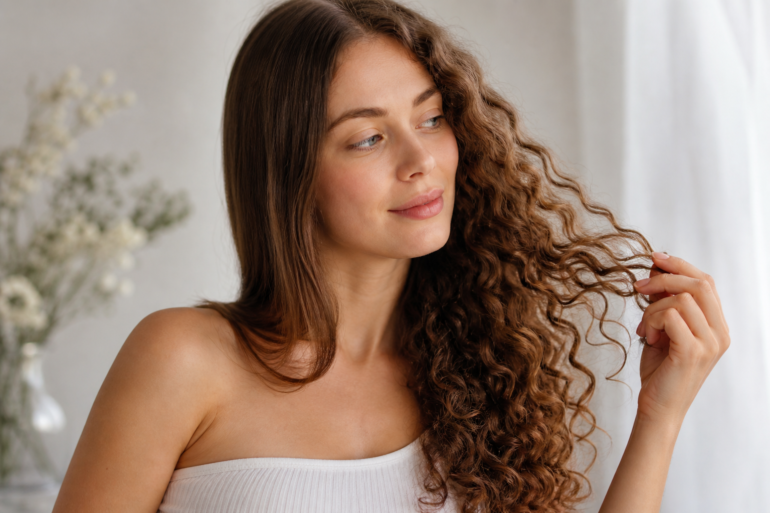
If your Hair Is Curly now but it used to be straight, wavy, softer, thicker, or easier to control, you are not imagining it. Hair texture can change over time, sometimes slowly and sometimes almost suddenly. One year your hair behaves one way, then a few months later it feels rougher, frizzier, curlier, flatter, or harder to style.
This can feel confusing, especially when you are using the same shampoo, the same brush, and the same routine. But hair is not a fixed thing. It grows from living follicles, reacts to hormones, changes with age, and responds to weather, health, stress, styling habits, and product buildup.
The good news is that texture changes are common. They do not always mean something is wrong. In many cases, your hair is simply responding to what is happening inside and around your body.
Why Hair Texture Changes Over Time
Hair texture comes from a mix of genetics, follicle shape, hair fiber structure, moisture balance, and daily hair care habits. Research on curly hair shows that curl pattern is influenced by the shape and behavior of the hair fiber, along with the follicle structure beneath the scalp. Curly hair also tends to need more moisture because natural oils from the scalp have a harder time traveling down bends and curves in the strand.
So, when your Hair Is Curly after years of being straighter, it may be because one or more of those factors has shifted. The change might be subtle at first. Maybe your ends start flipping out. Maybe the hair near your temples becomes wavy. Maybe the crown gets frizzy while the bottom layers stay smooth.
Over time, those small changes can turn into a completely different hair personality.
Hair Is Curly Because Follicle Shape Matters
Your hair grows from follicles, which are small tube-like structures in the skin. Cleveland Clinic describes a hair follicle as the structure that surrounds the root and strand of hair, and it notes that people are born with millions of follicles across the body and scalp.
The shape of those follicles plays a major role in how your hair grows. A rounder follicle often produces straighter hair, while an oval or curved follicle can create waves, curls, or coils. That does not mean your follicles completely change overnight, but their behavior can shift over time due to hormones, aging, scalp health, and changes in the hair growth cycle.
This is why one person may notice tighter curls after puberty, while another may see curls loosen after pregnancy, menopause, illness, or years of heat styling.
Hormones Can Change Your Curl Pattern
Hormones are one of the biggest reasons hair texture changes. Puberty, pregnancy, postpartum changes, menopause, thyroid changes, and some medications can all affect how hair grows.
During hormonal shifts, the scalp may produce more or less oil. Hair may become thicker, thinner, coarser, drier, or more fragile. Some people suddenly notice waves they never had before. Others lose curl definition and feel like their hair has become limp.
This is especially common during major life transitions. For example, someone with mostly straight hair as a teenager may develop stronger waves in their twenties. Another person may have defined curls for years, then notice looser, drier strands after hormonal changes later in life.
Cleveland Clinic notes that aging can bring changes in hair texture, including hair that feels more coarse, wiry, or difficult to style.
Aging Can Make Hair Feel Curlier, Coarser, or Drier
Aging does not only affect hair color. It can also affect the way hair feels and behaves. As the years pass, hair may become thinner, more brittle, rougher, or less predictable.
You may notice:
- More frizz around the hairline
- Less shine than before
- Curls that form in random sections
- Straighter pieces mixed with curly pieces
- A rougher feel after washing
- More dryness at the ends
- Less bounce or less volume
When Hair Is Curly and aging is part of the reason, moisture becomes even more important. Mature hair often needs gentler cleansing, richer conditioning, and less heat exposure.
This does not mean your hair is unhealthy. It simply means your old routine may no longer match your current texture.
Genetics Still Play the Biggest Role
Even when texture changes feel sudden, your genetics are still the foundation. You may have always had the possibility for waves or curls in your hair pattern, but they may not have shown strongly before.
Think of it like this: your hair has a natural “range.” Hormones, weather, health, and care habits can push it toward one side of that range. That is why your hair may look straighter when it is weighed down by heavy products, then suddenly look curlier after a haircut or a clarifying wash.
If your parents, siblings, or grandparents have curly or wavy hair, your own texture may shift toward that pattern at different points in life.
Damage Can Make Hair Look Like It Changed Texture
Sometimes texture change is not really new curl growth. It is damage.
Heat styling, bleaching, tight hairstyles, harsh brushing, over-washing, and chemical treatments can weaken the hair cuticle. When the cuticle is rough, hair may look puffier, frizzier, or uneven. The strands may bend in strange places, which can make straight hair appear wavy or make curly hair look messy instead of defined.
Common signs of damage include:
- Split ends
- Breakage near the crown
- Hair that tangles easily
- Frizz that does not respond to conditioner
- Ends that feel dry even after styling
- Curls that look stretched, limp, or uneven
The American Academy of Dermatology warns that styling habits can make hair look brittle, frizzy, lackluster, or even contribute to hair loss when the hair is repeatedly damaged.
So, if your Hair Is Curly in some areas but rough and frizzy in others, your hair may be showing a mix of natural texture and damage.
Product Buildup Can Hide Your Real Texture
Many people do not realize how much buildup affects curl pattern. Heavy creams, oils, gels, silicones, dry shampoo, hard water minerals, and leftover conditioner can sit on the hair shaft.
When buildup collects, hair may feel:
- Greasy at the roots
- Dry at the ends
- Flat on top
- Stringy after styling
- Sticky when wet
- Hard to curl or hard to straighten
Once buildup is removed, your natural pattern may come back stronger. This is why some people say, “My hair became curly after I changed my shampoo.” In reality, the curls may have already been there, but they were weighed down.
A gentle clarifying wash once in a while can help, but do not overdo it. Curly and textured hair can dry out quickly if cleansed too aggressively.
Weather and Humidity Can Wake Up Curls
Humidity has a powerful effect on hair. When the air is damp, hair absorbs water from the environment. This can make strands swell, lift, and bend. If your hair has any natural wave or curl, humidity can make it more obvious.
That is why your hair may look smoother in dry weather but curlier or frizzier on rainy days.
Dry winter air can create the opposite problem. It may pull moisture from the hair, leaving curls dull, rough, and static-prone. Indoor heating can make this worse.
If your Hair Is Curly only in certain seasons, your environment may be playing a big role. Your routine should change with the weather, not stay the same all year.
Diet, Stress, and Health Can Affect Hair Feel
Hair is not essential for survival, so the body does not always prioritize it when you are stressed, undernourished, ill, or recovering from a major physical change. While diet alone will not magically create curls, overall health can influence the quality of new hair growth.
Hair may feel different during or after:
- High stress periods
- Major weight changes
- Poor sleep
- Illness or fever
- Nutrient deficiencies
- Thyroid imbalance
- New medication use
- Postpartum recovery
If texture change comes with sudden shedding, scalp pain, bald patches, itching, burning, or dramatic thinning, it is worth speaking with a dermatologist or healthcare professional.
A small texture shift is usually normal. A sudden major change with other symptoms deserves attention.
Why Curly Hair Often Feels Drier
Curly hair is not automatically unhealthy, but it often feels drier than straight hair. The reason is simple: scalp oils move more easily down straight strands. With curls, the oil has to travel around bends and curves, so the ends may not receive enough natural moisture.
The American Academy of Dermatology recommends that curly hair should not be washed too often because frequent washing can leave it dry, frizzy, and harder to manage. It also recommends keeping curly hair moisturized and choosing products made for curly hair.
This is one reason many people struggle when their texture changes. A routine that worked for straight hair may not work once waves or curls appear.
How to Care for Hair That Has Become Curlier
When your Hair Is Curly now, your hair care routine needs a softer approach. You do not need to buy every product on the shelf. You just need to stop fighting the new pattern and start supporting it.
Use a Moisturizing Shampoo
Choose a gentle, moisturizing shampoo that cleans the scalp without stripping the hair. If your scalp gets oily, wash as needed. If your hair is dry, curly, thick, or textured, the American Academy of Dermatology says shampooing can often be done as needed, at least every two to three weeks for scalp and hair health.
That does not mean everyone should wait that long. If you sweat often, use heavy products, or have flakes, you may need to wash more frequently. The point is to watch your scalp and hair, not follow a random rule.
Condition More Than You Think You Need
Curly hair usually needs regular conditioning. Conditioner smooths the cuticle, reduces friction, and helps curls clump together.
Apply conditioner mainly from the mid-lengths to the ends. If your hair is very dry, use a deep conditioner once a week. If your hair is fine, use a lighter conditioner so your curls do not get weighed down.
Detangle Gently
Curly hair can break when brushed aggressively. Detangle with conditioner in your hair, using your fingers or a wide-tooth comb. Start at the ends and work upward.
Do not rip through knots from the roots. That creates breakage and makes frizz worse.
Use Less Heat
Heat can weaken the hair over time, especially if used without protection. If you blow-dry, use a diffuser and keep the heat moderate. If you straighten your hair often, take breaks and always use heat protectant.
When Hair Is Curly, repeated straightening can make some strands lose their bounce while others stay curly. This creates an uneven pattern that is harder to style.
Dry With Care
Regular towels can rough up the cuticle and create frizz. A microfiber towel or soft cotton T-shirt is gentler.
Do not rub your hair back and forth. Instead, gently squeeze out extra water. Let curls form while the hair is still damp.
Simple Routine for Newly Curly Hair
If your texture has changed and you do not know where to start, keep it simple.
Try this routine:
- Wash with a gentle moisturizing shampoo.
- Apply conditioner and detangle carefully.
- Rinse, leaving a little softness in the hair.
- Apply leave-in conditioner or curl cream to damp hair.
- Scrunch upward to help curls form.
- Let hair air dry or use a diffuser on low heat.
- Avoid touching curls while they dry.
This routine helps you see your real pattern without overwhelming your hair with too many products.
Real-Life Example: When Straight Hair Turns Wavy
Imagine someone named Sara. Her hair was straight through high school. In her late twenties, she noticed the hair around her face started bending. At first, she blamed humidity. Then the back of her hair started forming soft waves.
She kept brushing it dry, which made it puff up. She thought her hair was damaged. But when she switched to a moisturizing shampoo, used conditioner properly, and stopped brushing after drying, her waves looked intentional instead of messy.
Her hair did not suddenly become “bad.” It changed, and her routine needed to catch up.
Real-Life Example: When Curls Become Frizzy With Age
Now think about Maya. She always had curls, but after her forties, they became drier and less defined. Her old gel no longer worked. Her ends looked rough, and the crown was frizzy.
Instead of using more gel, she changed the base of her routine. She added a weekly deep conditioner, reduced heat styling, trimmed dry ends, and used a lighter curl cream under gel.
Within a few weeks, her curls looked softer. The texture did not go back to exactly what it was at age twenty, but it looked healthy again.
That is the goal. Not forcing your old hair back, but learning how your current hair wants to be treated.
Common Mistakes That Make Curly Hair Harder to Manage
When Hair Is Curly, a few habits can make it look worse than it really is.
Avoid these common mistakes:
- Washing too often with harsh shampoo
- Skipping conditioner
- Brushing curls when dry
- Using too much heavy oil
- Applying products only to the surface
- Touching hair while it dries
- Sleeping on rough cotton pillowcases
- Using high heat every week
- Ignoring scalp buildup
- Waiting too long between trims
Small changes matter. Sometimes the difference between frizz and definition is not a miracle product. It is simply applying the right product on wet hair and leaving it alone while it dries.
When Should You Be Concerned?
Most texture changes are normal. Still, some changes should not be ignored.
Talk to a professional if you notice:
- Sudden heavy shedding
- Bald spots
- Burning or painful scalp
- Severe itching or scaling
- Hair breaking close to the scalp
- Texture change after starting medication
- Major thinning in a short time
- Hair loss after illness, pregnancy, or major stress
A dermatologist can check whether the issue is related to hormones, scalp inflammation, nutritional deficiency, medication, or another health factor.
Can You Make Your Hair Go Back to Its Old Texture?
Sometimes, yes. Sometimes, no.
If your texture changed because of product buildup, heat damage, dryness, or poor routine, you may be able to improve the look and feel of your hair. Clarifying, conditioning, trimming damaged ends, and reducing heat can help your natural pattern return.
If the change is from genetics, hormones, or aging, your hair may not go back completely. But that does not mean you are stuck with unmanageable hair. You can still make it softer, shinier, and easier to style.
The best approach is to work with the texture you have now.
Best Products for Hair That Is Becoming Curlier
You do not need a complicated shelf full of products. Start with the basics.
Helpful product types include:
- Moisturizing shampoo
- Silicone-free or lightweight conditioner
- Leave-in conditioner
- Curl cream for softness
- Gel or mousse for hold
- Deep conditioner
- Heat protectant
- Clarifying shampoo for occasional buildup
Fine curls usually need lighter products. Thick curls may need richer creams. High-porosity hair may absorb product quickly and need layers of moisture. Low-porosity hair may need lighter formulas that do not sit on top.
The right product depends on your hair, not just the curl type chart.
Hair Is Curly and Still Changing: What That Means
Hair can keep changing through different life stages. It may become curlier, looser, thinner, thicker, drier, or more sensitive. That can be frustrating, especially when you finally think you understand your routine.
But changing hair is not a failure. It is normal biology.
Your scalp, follicles, hormones, and environment are always influencing the strands that grow out. The hair you had ten years ago is not the same hair growing today. That is why your routine should evolve too.
Conclusion
Hair Is Curly for many reasons, and when your texture changes over time, it is usually connected to a mix of genetics, follicle shape, hormones, aging, moisture balance, damage, and daily habits. Your hair may not be doing something strange. It may simply be showing a pattern that was always possible or responding to changes in your body and lifestyle.
The smartest move is to stop treating your current hair like your old hair. Use gentler cleansing, add more moisture, reduce heat, detangle carefully, and pay attention to what your scalp and strands are telling you.
When you understand why Hair Is Curly, it becomes much easier to care for it with confidence. Your changing texture does not have to feel like a problem. With the right routine, it can become the best version of your natural hair.
Healthy curls begin at the hair follicle, but they are shaped every day by how you wash, condition, dry, style, and protect your hair.
FAQs
Why did my hair suddenly become curly?
Your hair may suddenly look curly because of hormones, aging, humidity, product buildup, damage, or a change in your hair care routine. Sometimes curls were already present but hidden by heavy products, brushing, or heat styling.
Can hormones make straight hair curly?
Yes, hormonal changes can affect hair texture. Puberty, pregnancy, postpartum changes, menopause, thyroid issues, and some medications may influence how hair grows and feels.
Is curly hair more likely to be dry?
Yes, curly hair often feels drier because natural scalp oils have a harder time moving down curved strands. That is why moisture is important for curl definition and softness.
Can damaged hair look curly?
Damaged hair can look wavy, frizzy, or bent in uneven ways. This is not always true curl pattern. If the texture feels rough, breaks easily, or looks uneven, damage may be part of the issue.
How often should curly hair be washed?
Curly hair should be washed based on scalp needs, oil level, product use, and lifestyle. Many people with dry or textured hair do better with less frequent washing and more regular conditioning.