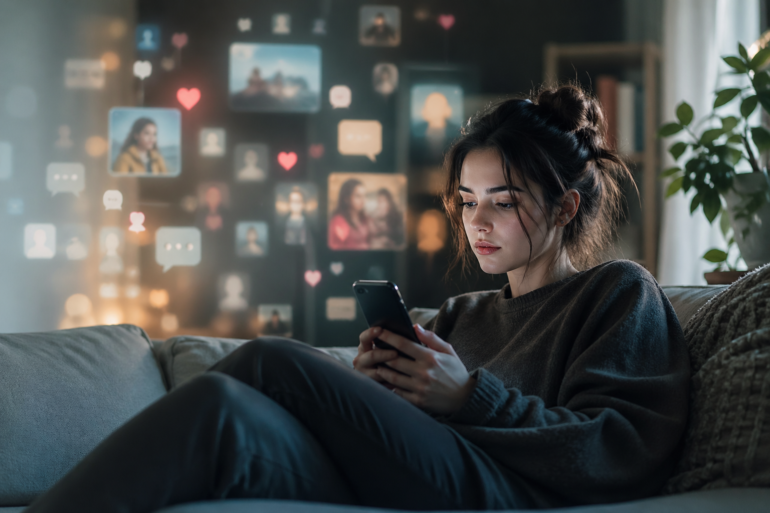
Social media looks loud from the outside. Everyone seems to be posting selfies, sharing opinions, replying to comments, reacting to stories, and jumping into every trend. But behind all that visible activity, there is another kind of user: the quiet observer. That is where Social Media Silent Scroller Traits become interesting.
A silent scroller is not necessarily shy, boring, or disconnected. In many cases, they are highly observant, emotionally careful, privacy-aware, and selective about what they share online. They may spend time on Instagram, TikTok, Facebook, X, Reddit, YouTube, or LinkedIn, but they rarely comment, post, argue, or reveal personal details.
This behavior is more common than many people realize. Social media has become a major part of everyday life, with DataReportal reporting 5.24 billion active social media user identities worldwide in early 2025. That huge number includes creators, commenters, casual viewers, brand followers, private users, and millions of people who mainly watch without participating publicly.
What Are Social Media Silent Scroller Traits?
Social Media Silent Scroller Traits are the habits, behaviors, and personality patterns commonly seen in people who consume social media content quietly without posting much themselves.
They may scroll for entertainment, learning, news, inspiration, curiosity, or emotional comfort. They notice what others share, understand online trends, and keep up with people, but they do not feel the need to make their own activity visible.
A silent scroller might:
- Watch stories but never reply
- Read comments without joining the discussion
- Save posts but not like them
- Follow trends without posting trend-based content
- Keep their profile simple or almost empty
- Avoid public arguments
- Prefer private messages over comments
- Observe people’s behavior closely
- Think carefully before reacting online
This does not mean they are inactive. They are active in a quieter way. Their attention is present, even if their profile does not show much.
Why Silent Scrollers Are More Common Than You Think
Many people assume social media is built only for posting, but most users do not interact with every piece of content they see. A person may scroll for 30 minutes and leave no visible sign except a view count, watch history, or algorithm signal.
Pew Research Center’s 2025 social media research shows that platform use remains deeply embedded in American adult life, with survey work focused on how U.S. adults use major platforms such as YouTube, Facebook, Instagram, TikTok, Reddit, WhatsApp, and others.
That matters because the more social media becomes part of daily routine, the more varied user behavior becomes. Not everyone wants to build a personal brand. Not everyone wants public attention. Some people simply want to observe, learn, laugh, compare, reflect, and move on.
Silent scrolling is especially common among people who feel overwhelmed by online noise. They may enjoy social platforms, but they do not want to become the content.
Social Media Silent Scroller Traits That Stand Out
The most noticeable Social Media Silent Scroller Traits are not always obvious at first. A silent scroller may look inactive, but their behavior often reveals a sharp understanding of people, content, and digital culture.
1. They Notice More Than They Say
Silent scrollers are usually strong observers. They notice changes in tone, patterns in posting, repeated behavior, and small details others miss.
They may remember who always posts at night, who deletes captions, who changes their bio often, or who suddenly stops sharing personal updates. This does not always come from judgment. Often, it comes from attention.
Because they are not busy crafting replies or chasing engagement, they have more mental space to watch how people behave online.
2. They Prefer Privacy Over Visibility
One of the strongest Social Media Silent Scroller Traits is privacy protection. These users often dislike exposing too much of their personal life.
They may ask themselves:
- Who needs to know this?
- Will I regret posting this later?
- Could this be misunderstood?
- Is this moment better kept private?
This cautious mindset is increasingly understandable. Social media posts can travel far beyond their original audience. Screenshots, reposts, old comments, and digital footprints can affect relationships, job opportunities, reputations, and personal safety.
Silent scrollers often understand that attention can be expensive.
3. They Are Emotionally Selective
Silent scrollers are not emotionless. They may laugh at memes, feel touched by stories, feel annoyed by opinions, or feel inspired by someone’s success. They simply do not express every reaction publicly.
Instead of commenting “so true” or “I disagree,” they may process the content privately. They might discuss it later with a close friend or keep the thought to themselves.
This emotional selectiveness can be healthy. It prevents unnecessary arguments and reduces the pressure to respond to everything.
4. They Avoid Online Drama
Many silent scrollers dislike public conflict. They may read heated comment sections, understand both sides, and still choose not to join.
This does not always mean they lack opinions. In fact, many silent scrollers have strong opinions. They just do not want to spend emotional energy debating strangers online.
Pew has studied how some people feel reluctant to post about political or social issues because of possible criticism, conflict, or misunderstanding. That reluctance helps explain why some users choose silence even when they care about a topic.
For silent scrollers, peace often matters more than proving a point.
5. They Use Social Media for Learning
Not every scroll is wasted time. Many quiet users follow educational pages, industry experts, creators, news accounts, fitness coaches, finance educators, book reviewers, travel creators, and hobby communities.
They may rarely post, but they are constantly collecting information.
A silent scroller might learn:
- New recipes
- Career tips
- Workout routines
- Home improvement ideas
- Study methods
- Tech updates
- Fashion inspiration
- Personal finance habits
- Travel planning ideas
This is one of the most underestimated Social Media Silent Scroller Traits. Quiet users can be very informed, even if they never publicly engage.
The Psychology Behind Silent Scrolling
Silent scrolling is not one single personality type. It can come from many different motivations.
Some people are introverted. Some are cautious. Some are anxious. Some are strategic. Some are tired. Some simply prefer consuming content over creating it.
They Want Control Over Their Image
Posting online means giving people something to interpret. A caption, photo, comment, or reaction can be read in ways the user never intended.
Silent scrollers often avoid that risk by limiting what they share.
They may think before posting because they understand that online identity is not only about who you are. It is also about how others frame what you share.
They Feel Social Pressure
Social media can create invisible pressure. People compare vacations, relationships, bodies, homes, careers, friendships, parenting, lifestyles, and achievements.
A silent scroller may enjoy watching content but feel hesitant to add their own life into that comparison cycle.
They may wonder:
“Is my post good enough?”
“Will people care?”
“Will this look attention-seeking?”
“Will someone judge me?”
Instead of dealing with that pressure, they stay quiet.
They Prefer Real-Life Connection
Some people are silent online because they are more expressive offline. They may not comment on your post, but they will talk warmly in person. They may not react to your story, but they remember what you shared.
This can confuse people who measure friendship through online interaction. But silent scrollers often separate digital attention from real connection.
To them, not liking a post does not mean not caring.
Common Signs of a Silent Scroller
Some silent scrollers are easy to spot, while others blend into your follower list. Here are common signs.
| Silent Scroller Sign | What It Usually Means |
|---|---|
| Rarely posts updates | Values privacy or does not enjoy public sharing |
| Watches stories quietly | Likes staying informed without starting conversation |
| Saves posts often | Uses social media for learning or inspiration |
| Avoids comment sections | Does not want drama or public debate |
| Has a minimal profile | Keeps identity controlled and simple |
| Responds privately | Prefers one-to-one communication |
| Follows many pages | Consumes information more than they create it |
| Deletes posts quickly | Feels unsure about visibility or judgment |
These signs do not apply to everyone in the same way. A person may be silent on Instagram but active on Reddit. Another may post professionally on LinkedIn but stay private on Facebook.
Social Media Silent Scroller Traits in Everyday Life
To make this more realistic, imagine three different users.
The Private Professional
A marketing assistant checks LinkedIn every day. She reads industry posts, saves career advice, follows company updates, and watches what competitors are doing. But she rarely comments.
She is not inactive. She is researching quietly.
Her silent scrolling helps her understand trends, improve her work, and avoid careless public opinions that could affect her career.
The Emotionally Tired User
A college student opens TikTok after a long day. He scrolls through funny videos, sports clips, motivational content, and friend updates. He likes some videos but avoids posting.
He is not trying to build an audience. He just wants a mental break.
For him, silent scrolling is a low-effort way to relax without performing for others.
The Careful Family Member
A parent uses Facebook to keep up with relatives, school groups, community news, and local events. She rarely comments because she does not want misunderstandings or family arguments.
She sees everything. She just chooses peace.
This kind of silent scroller is common in family-heavy networks, where one comment can create unnecessary tension.
Are Silent Scrollers Introverts?
Sometimes, but not always.
Introverts may enjoy silent scrolling because it lets them observe without direct interaction. However, extroverts can be silent scrollers too. A very social person in real life may still avoid posting online because they dislike digital attention.
The better question is not, “Are silent scrollers introverts?”
A better question is, “What does this person want from social media?”
Some want entertainment. Some want knowledge. Some want connection without exposure. Some want privacy. Some want to avoid conflict. Some simply do not enjoy posting.
The Positive Side of Being a Silent Scroller
Silent scrolling often gets judged unfairly. People may call it lurking, stalking, or being passive. But there are real benefits.
Better Emotional Boundaries
Silent scrollers often avoid the emotional roller coaster of public engagement. They do not constantly check likes, replies, shares, or reactions.
This can protect mental energy.
They may still be affected by comparison or negative content, but they are less tied to performance metrics.
Less Risk of Oversharing
Oversharing can create regret. A post made during anger, sadness, excitement, or boredom may not age well.
Silent scrollers naturally reduce that risk. They keep more of their personal life offline, which can make them feel safer and more grounded.
Stronger Observation Skills
Because silent scrollers watch patterns, they often understand digital behavior well.
They may spot fake confidence, performative kindness, relationship tension, brand manipulation, influencer marketing tactics, and trend cycles quickly.
This makes them careful consumers of content.
More Freedom From Validation
When someone does not post often, they are less likely to depend on public approval for every life moment.
They may enjoy a meal without photographing it. They may travel without posting every location. They may celebrate privately.
That kind of freedom can feel refreshing in a world where everything is shareable.
The Negative Side of Silent Scrolling
Silent scrolling is not always harmless. Like any digital habit, it depends on how and why it happens.
It Can Turn Into Comparison
A silent scroller may not post, but they can still compare their life to others. Watching endless success stories, beauty content, luxury lifestyles, perfect relationships, and career wins can create quiet insecurity.
This is especially true when users forget that social media is edited. People usually post highlights, not full reality.
It Can Increase Loneliness
If someone only watches others connect but never interacts, they may start feeling outside the room.
The Wikipedia description of a lurker notes that these users often observe without participating, and in some contexts, that lack of social contact may contribute to loneliness or apathy. This fits the wider idea that passive use can feel emotionally distant when it replaces real connection.
Silent scrolling becomes unhealthy when it makes a person feel invisible, excluded, or emotionally drained.
It Can Waste Time Without Satisfaction
Many silent scrollers open an app for five minutes and lose an hour. They may not even remember what they watched.
That is not a character flaw. It is how modern platforms are designed. Infinite feeds, autoplay videos, notifications, and algorithmic recommendations keep people moving from one piece of content to the next.
DataReportal’s global social media reporting shows how deeply social platforms are woven into daily internet behavior, with a large majority of internet users using social media monthly.
The habit becomes a problem when scrolling replaces sleep, work, study, exercise, hobbies, or real conversation.
Silent Scroller vs Active User: What Is the Difference?
The main difference is visibility.
An active user leaves public signals. They post, comment, share, reply, react, and participate in trends.
A silent scroller leaves fewer visible signals. They watch, read, save, search, and think.
Neither style is automatically better. Active users may build community, express creativity, and find opportunities. Silent scrollers may protect privacy, avoid drama, and learn quietly.
The healthiest social media style is the one that supports your real life instead of controlling it.
Why Brands and Creators Should Understand Silent Scrollers
Silent scrollers matter a lot in digital marketing, even if they rarely engage.
A post may have low comments but high influence. A user may not like a product video but still remember the brand. Someone may never comment on a creator’s content but still trust their recommendations.
This is why creators should not judge content only by public reactions. Silent viewers often make decisions quietly.
GWI has reported that social platforms play a growing role in brand discovery and product research, with major increases in users turning to platforms like TikTok to find brand and product information.
That means silent scrollers can still become:
- Readers
- Subscribers
- Buyers
- Returning visitors
- Private sharers
- Brand followers
- Loyal fans
They may not clap loudly, but they are still in the room.
How to Tell If You Are a Silent Scroller
You may have silent scroller habits if you often open social media without posting anything.
Here are a few signs:
- You watch stories but rarely reply
- You read comments before forming an opinion
- You save useful posts instead of liking them
- You know updates about people who do not know you saw them
- You avoid posting personal news
- You delete drafts before publishing
- You prefer private chats over public comments
- You feel drained by online arguments
- You use social media more for observation than expression
If this sounds familiar, it does not mean something is wrong with you. It means your relationship with social media is more private and selective.
When Silent Scrolling Is Healthy
Silent scrolling can be healthy when it has purpose and boundaries.
It is healthy when you use it to:
- Learn something useful
- Relax for a short time
- Stay updated
- Find inspiration
- Understand trends
- Protect privacy
- Avoid unnecessary conflict
It becomes healthier when you are aware of your mood. If scrolling leaves you calm, informed, or entertained, it may be serving you well. If it leaves you jealous, anxious, numb, or behind in life, it may need limits.
When Silent Scrolling Becomes a Problem
Silent scrolling becomes a problem when it turns into avoidance.
For example, you might be avoiding:
- Real conversations
- Work deadlines
- Emotional discomfort
- Personal goals
- Sleep
- Social anxiety
- Decision-making
- Creative expression
The issue is not silence itself. The issue is using silence as a hiding place from life.
If you constantly consume other people’s lives but stop living your own, the habit deserves attention.
Actionable Tips for Silent Scrollers
You do not need to become a loud online personality. You can stay private and still use social media in a healthier way.
Set a Reason Before Opening the App
Before opening Instagram, TikTok, Facebook, Reddit, or YouTube, ask:
“What am I here for?”
Entertainment is fine. Learning is fine. Checking updates is fine. But having a reason helps prevent endless scrolling.
Clean Your Feed
Your feed shapes your mood. Unfollow or mute accounts that make you feel small, angry, jealous, or constantly behind.
Follow accounts that make you feel informed, calm, creative, or motivated.
Save More, Compare Less
If a post inspires you, save it for action. A workout routine, recipe, business idea, book list, or travel tip becomes more useful when you actually use it.
Do not let inspiration become another form of self-pressure.
Interact Privately When It Matters
You do not have to comment publicly. A private message can be more meaningful.
If a friend shares good news, send a short message. If someone posts something thoughtful, let them know directly. Silent support is good, but expressed support can strengthen relationships.
Take Breaks From Passive Consumption
Try replacing one scrolling session with something active.
Read a few pages of a book. Take a walk. Clean a small area. Journal. Call someone. Stretch. Cook. Work on a personal project.
The goal is not to quit social media. The goal is to avoid becoming only a viewer of life.
Frequently Asked Questions About Social Media Silent Scroller Traits
What does it mean if someone is a silent scroller?
It means they use social media quietly without posting, commenting, or reacting very often. They may still watch stories, read posts, follow updates, save content, and understand online trends. Their activity is private rather than public.
Are silent scrollers shy?
Some are shy, but not all. Many silent scrollers are confident in real life. They may simply value privacy, dislike online drama, or prefer consuming content without making themselves visible.
Is silent scrolling bad?
Silent scrolling is not automatically bad. It can be relaxing, educational, and privacy-friendly. It becomes unhealthy when it causes comparison, loneliness, wasted time, or avoidance of real-life responsibilities.
Why do people watch stories but never reply?
Some people enjoy staying updated but do not want to start a conversation. Others may not know what to say, may feel awkward, or may prefer private emotional distance. Watching a story does not always mean they are judging or ignoring you.
Do silent scrollers still care about people?
Yes, often they do. Some silent scrollers care deeply but do not show it through likes and comments. They may remember your updates, ask you about them later, or support you privately.
Final Thoughts on Social Media Silent Scroller Traits
Social Media Silent Scroller Traits reveal much more than quiet online behavior. They show how people manage privacy, attention, emotion, comparison, and connection in a digital world that constantly asks everyone to perform.
Silent scrollers are not always antisocial. They are often thoughtful, careful, observant, and selective. They may understand people better than their empty comment history suggests.
Still, the habit needs balance. Watching from the background can protect your peace, but it should not replace real connection, personal growth, or your own voice. Social media should be a tool, not a place where life quietly passes by.
In the end, Social Media Silent Scroller Traits remind us that not every meaningful online user is visible. Some people are reading, learning, noticing, and feeling everything from behind the screen. Their silence is not empty. Sometimes, it says more than a post ever could.
The healthiest approach is to understand your own digital behavior and decide what role social media should play in your life. Whether you post often or mostly observe, your online behavior should support your well-being, relationships, and real-world goals.