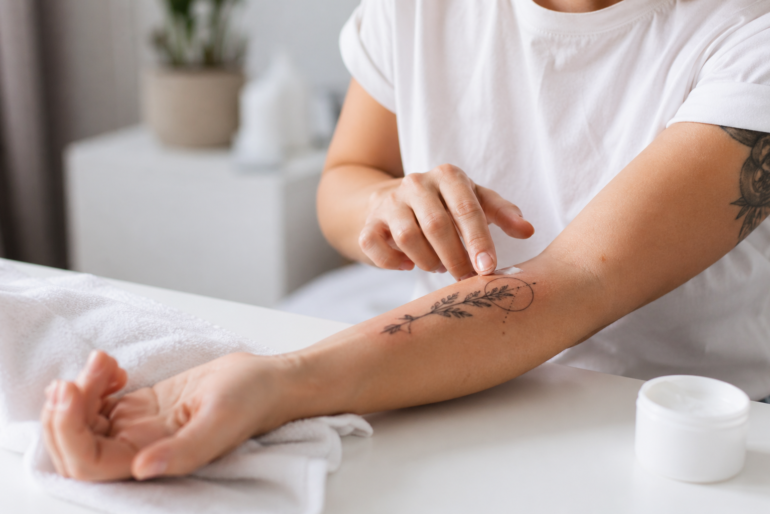
Tattoo Aftercare starts the moment your artist finishes the final line. Fresh ink may look complete when you leave the studio, but your skin is still healing underneath. A tattoo is more than artwork on the surface. It is a controlled skin wound, which means the way you clean, moisturize, protect, and treat it during the first few weeks can affect how sharp, bright, and healthy it looks later.
Good Tattoo Aftercare does not need to be complicated. In fact, the best routine is usually simple: keep it clean, avoid picking, moisturize lightly, stay out of direct sun, and pay attention to signs that something is not healing normally.
Why Tattoo Aftercare Matters
A fresh tattoo goes through a healing process because the needle has placed ink into the skin. Your body immediately begins repairing that area. During this stage, redness, soreness, mild swelling, peeling, itching, and light scabbing can be normal. The American Academy of Dermatology notes that clear fluid, flaking, and scabs may happen as the skin heals, but symptoms such as worsening redness, pus, or increasing pain can point to infection.
That is why Tattoo Aftercare is not just about keeping the artwork pretty. It is about protecting your skin while your body seals and repairs the tattooed area.
A clean, steady routine helps reduce the chance of:
- Infection
- Heavy scabbing
- Ink fading
- Patchy healing
- Skin irritation
- Long-term dullness
- Uncomfortable itching
Think of it like caring for a small injury that also happens to be permanent artwork. You want the skin to heal smoothly so the design keeps its detail.
The First Few Hours After Getting a Tattoo
Your artist will usually cover your tattoo before you leave the studio. This covering may be plastic wrap, a medical bandage, or a breathable adhesive film. The exact timing for removal depends on the material used and your artist’s instructions.
Do not remove the bandage early just because you want to admire the tattoo. That first covering protects the area from dust, bacteria, clothing friction, and accidental touching.
Most artists recommend leaving a standard wrap on for a few hours. If you have a second-skin style bandage, you may be told to keep it on longer. Follow your artist’s direction because different tattoo sizes, placements, and bandage types need different care.
Once it is time to remove the bandage, wash your hands first. This sounds basic, but it is one of the most important Tattoo Aftercare steps. Your hands touch phones, doors, money, keyboards, and many other surfaces throughout the day. Clean hands lower the chance of transferring germs to fresh ink.
How to Wash a New Tattoo
The first wash can feel a little strange. Your tattoo may be tender, shiny, or slightly sticky with plasma and extra ink. That is normal.
Use lukewarm water and a gentle, fragrance-free soap. Avoid hot water because it can irritate the skin and increase discomfort. Do not scrub with a washcloth, sponge, or towel. Use your clean fingers and move gently.
A simple washing routine looks like this:
- Wash your hands first.
- Rinse the tattoo with lukewarm water.
- Apply a small amount of mild soap.
- Gently clean away plasma, excess ink, or ointment.
- Rinse well so no soap remains.
- Pat dry with a clean paper towel.
- Let the skin air-dry for a few minutes before moisturizing.
Do not rub the tattoo dry. Rubbing can disturb healing skin and may pull at early scabs.
For the first few days, most people wash the tattoo two to three times a day. You may need to clean it again if you sweat heavily or if the area gets dirty. The goal is not to over-wash. Too much washing can dry the skin and make irritation worse.
Tattoo Aftercare Moisturizing: Less Is Better
Moisturizer helps prevent tightness and dryness, but using too much can cause problems. A thick layer of ointment can trap moisture, clog pores, and make the tattoo feel slimy.
Use a thin layer only. Your tattoo should look slightly hydrated, not shiny and wet.
Choose a fragrance-free lotion or an aftercare product recommended by your tattoo artist. Avoid heavily scented creams, harsh ingredients, alcohol-based products, and random home remedies.
A good rule is this: if your tattoo feels dry or tight, apply a small amount. If it feels greasy, sticky, or overly soft, you are probably using too much.
Tattoo Aftercare is about balance. Skin needs moisture, but it also needs air.
What a Normal Healing Timeline Looks Like
Every tattoo heals a little differently. Size, placement, shading, color saturation, skin type, immune response, and lifestyle all make a difference. Still, most fresh tattoos follow a similar pattern.
Days 1 to 3: Tender and Fresh
The tattoo may feel sore, warm, swollen, or sensitive. It may leak clear fluid mixed with extra ink. This is usually normal during the early healing stage.
Keep washing gently and moisturizing lightly. Avoid tight clothing that rubs the area.
Days 4 to 7: Peeling and Itching Begin
The tattoo may start to flake like a sunburn. It may itch more during this stage. Do not scratch it.
This is where many people make mistakes. They panic when the tattoo looks dull, cloudy, or flaky. That appearance is part of the healing process. The top layer of skin is shedding, and the tattoo underneath is still settling.
Week 2: Scabs and Flakes Fall Away
Light scabs and peeling skin usually begin to come off naturally. Let them fall on their own.
Picking can pull ink out and create patchy spots. It can also open the skin again and raise the risk of infection.
Weeks 3 to 4: Surface Healing Improves
The tattoo may look clearer and feel smoother. Still, deeper skin layers can continue healing after the surface looks normal.
Keep moisturizing when needed and avoid direct sunlight. Long-term skin care matters if you want the tattoo to stay vibrant.
What Not to Do During Tattoo Healing
Some Tattoo Aftercare mistakes happen because people try too hard. Others happen because they forget the tattoo is still a healing wound.
Avoid these habits while your tattoo heals:
- Do not scratch or pick peeling skin.
- Do not soak the tattoo in a bathtub.
- Do not swim in pools, lakes, oceans, or hot tubs.
- Do not expose it to direct sunlight.
- Do not use scented lotion or perfume on the area.
- Do not wear tight clothing over the tattoo.
- Do not apply thick layers of ointment.
- Do not shave over the tattoo until healed.
- Do not let pets lick or rub against it.
- Do not touch it with unwashed hands.
Swimming and soaking are especially risky because they can expose healing skin to bacteria and soften scabs before they are ready to fall away.
Showering With a Fresh Tattoo
Yes, you can shower with a new tattoo. You just need to be careful.
Keep showers short during the first several days. Use lukewarm water, not hot water. Let water run gently over the tattoo instead of blasting it with strong pressure.
Do not soak the area. Do not scrub it. Do not use exfoliating body wash. After showering, pat it dry with a clean paper towel or let it air-dry for a few minutes.
If your tattoo is on your arm, shoulder, leg, or back, be mindful of shampoo and conditioner running over it. These products can contain fragrance or ingredients that irritate fresh skin. Rinse the tattoo gently after washing your hair.
Tattoo Aftercare for Sleeping
Sleeping can be tricky during the first few nights, especially if the tattoo is on your back, ribs, arm, thigh, or shoulder.
Use clean sheets. If possible, avoid sleeping directly on the tattoo. Fresh ink can stick to fabric if it leaks during the night.
If your tattoo sticks to bedding or clothing, do not pull it away dry. Wet the fabric with lukewarm water and gently separate it. Pulling can tear healing skin.
Wear loose, clean clothing to bed. Avoid fuzzy fabrics that shed lint because tiny fibers can stick to the tattoo.
How to Handle Itching
Itching is one of the most annoying parts of healing. It usually means the skin is repairing itself, but that does not make it easy to ignore.
Do not scratch. Scratching can damage the healing layer and may affect the tattoo’s final appearance.
Instead, try:
- Applying a thin layer of fragrance-free moisturizer
- Lightly tapping around the tattoo, not directly scratching it
- Wearing loose clothing
- Keeping the area cool
- Drinking enough water to support skin hydration
If itching is severe, comes with a rash, or gets worse instead of better, it may be more than normal healing. Mayo Clinic notes that tattoo ink can cause allergic skin reactions, including itchy rashes, and these reactions may happen even years later.
Signs Your Tattoo May Be Infected
A little redness and soreness can be normal at first. But symptoms should gradually improve, not get worse.
Watch for warning signs such as:
- Redness spreading outward
- Increasing pain after the first few days
- Yellow or green pus
- Skin that feels very hot
- Bad smell
- Fever or chills
- Swelling that gets worse
- Red streaks around the tattoo
- Painful bumps or blisters
The FDA warns that infections can come from contaminated tattoo inks and that even sealed ink containers have been found to contain bacteria or other microorganisms.
If you notice signs of infection, contact a healthcare professional. Do not try to treat a serious infection with extra lotion, alcohol, hydrogen peroxide, or online home remedies. Cleveland Clinic notes that mild to moderate tattoo infections often recover with proper care, but healing can take time.
Allergic Reactions and Skin Sensitivity
Not every bad reaction is an infection. Some people react to ink pigments, aftercare products, adhesive bandages, or even the friction of clothing.
An allergic reaction may look like:
- Itchy rash
- Raised bumps
- Redness that does not settle
- Blisters
- Swelling
- Burning sensation
- Irritation around one color of ink
Red ink is often mentioned in medical resources as more likely to cause allergic reactions than some other colors. That does not mean everyone reacts to red ink, but it is something to be aware of if you have sensitive skin.
If a rash appears after using a new lotion or ointment, stop using that product and switch to a gentle, fragrance-free option. If the reaction is painful, spreading, blistering, or not improving, get medical advice.
Best Products for Tattoo Aftercare
You do not need a cabinet full of products. Simple is usually better.
Helpful aftercare items include:
- Fragrance-free liquid soap
- Clean paper towels
- Lightweight fragrance-free lotion
- Artist-recommended tattoo balm
- Loose cotton clothing
- Clean bedding
Avoid products with strong fragrance, glitter, exfoliating acids, retinoids, alcohol, or heavy petroleum layers unless your artist or healthcare provider specifically tells you to use them.
Some people love specialized tattoo balms. Others heal perfectly with a basic fragrance-free moisturizer. The product matters, but how you use it matters more.
A thin layer, clean hands, and consistency are more important than buying the most expensive aftercare cream.
Food, Hydration, and Skin Healing
Tattoo healing is mostly about external care, but your body still needs support from the inside.
Drink water. Eat balanced meals. Try to get enough sleep. Your skin repairs itself better when your body is not running on stress, dehydration, and poor nutrition.
Protein, vitamin C, zinc, and healthy fats all support normal skin repair. You do not need a special tattoo diet, but caring for your body can help the healing process feel smoother.
Alcohol can dehydrate you and may increase inflammation for some people. Heavy drinking right after getting tattooed is not a great idea, especially if your tattoo is large or your body already feels drained.
Tattoo Aftercare for Different Body Areas
Not all tattoo placements heal the same way. Some areas deal with more friction, movement, sweat, or sun exposure.
Arm and Forearm Tattoos
These are usually easier to care for because they are easy to see and wash. The main challenge is avoiding sun exposure and not resting the tattoo on dirty surfaces.
Hand and Finger Tattoos
Hands are harder to heal because they move constantly and get washed often. Ink may fade faster in these areas. Keep them clean, moisturize lightly, and avoid harsh soaps when possible.
Rib and Stomach Tattoos
These areas can be sensitive because clothing rubs against them. Wear loose shirts and avoid waistbands or tight bras pressing on the tattoo.
Leg and Thigh Tattoos
Avoid tight jeans, leggings, or workout clothes during early healing. Sweat and friction can irritate the tattoo.
Foot and Ankle Tattoos
Shoes and socks can create friction. If possible, wear loose footwear and keep the area clean. Foot tattoos may need extra patience because they are exposed to movement and pressure.
Working Out After a Tattoo
You do not always have to stop exercising completely, but you should be smart about it.
A large tattoo, heavy shading, or a tattoo in a high-movement area may need a few days of rest. Sweating heavily can irritate fresh skin. Gym equipment can also carry bacteria, and tight workout clothing can rub against the tattoo.
If you do work out:
- Choose light activity at first.
- Avoid exercises that stretch or rub the tattoo.
- Wear loose, clean clothing.
- Wash the tattoo gently after sweating.
- Skip swimming and hot tubs until fully healed.
A small forearm tattoo may handle light walking just fine. A large thigh tattoo may not enjoy squats the next morning. Listen to your body.
Sun Protection and Long-Term Tattoo Care
Sunlight is one of the biggest enemies of vibrant tattoos. UV exposure can fade ink over time and make lines look softer.
Do not put sunscreen on a fresh, unhealed tattoo unless your artist or healthcare provider tells you it is safe. During early healing, cover the tattoo with loose clothing and stay out of direct sunlight.
Once the tattoo is fully healed, sunscreen becomes one of the best long-term Tattoo Aftercare tools. Use broad-spectrum SPF and reapply when outdoors. This helps protect both your skin and your ink.
Keeping the skin moisturized also helps tattoos look better over time. Dry, rough skin can make a tattoo look dull even if the ink underneath is fine.
Real-World Scenario: Two People, Two Healing Results
Imagine two people getting similar tattoos on the same day.
The first person washes the tattoo gently, uses a small amount of fragrance-free lotion, wears loose clothing, avoids the sun, and lets the peeling happen naturally. Their tattoo looks cloudy for a few days, but after a few weeks, the lines settle and the color looks clean.
The second person keeps touching the tattoo, uses a scented body lotion, picks at flakes, sleeps on dirty sheets, and goes swimming after a few days. Their tattoo becomes irritated, scabs heavily, and heals with patchy areas.
The difference is not luck. It is aftercare.
Tattoo Aftercare does not guarantee perfection, but it gives your skin the best chance to heal well.
Common Tattoo Aftercare Questions
How long does a tattoo take to heal?
Most tattoos look mostly healed on the surface within two to four weeks. Deeper healing can take longer. Large, colorful, or heavily shaded tattoos may need more time.
Can I use petroleum jelly on a new tattoo?
Many artists do not recommend thick petroleum layers for routine aftercare because they can trap moisture and block airflow. Use the product your artist recommends, and keep any moisturizer layer thin.
When can I swim after getting a tattoo?
Wait until the tattoo is fully healed. For many people, that means at least two to four weeks. Do not swim while the tattoo is peeling, scabbing, shiny, sore, or still healing.
Is peeling normal?
Yes. Peeling is common and usually starts after a few days. Let flakes fall naturally. Do not pick them.
Why does my tattoo look dull while healing?
A healing tattoo can look cloudy, dry, or faded during the peeling stage. This is often temporary. Once the dead skin sheds and the area settles, the tattoo usually looks clearer.
When should I call a doctor?
Call a healthcare professional if you notice spreading redness, pus, fever, worsening pain, hot skin, red streaks, or swelling that does not improve. Do the same for severe rash, blistering, or allergic symptoms.
Final Thoughts on Tattoo Aftercare
Tattoo Aftercare is simple, but it requires patience. Clean the tattoo gently, moisturize lightly, avoid sun and soaking, wear loose clothing, and resist the urge to pick or scratch. Those small daily choices can make the difference between ink that heals smoothly and ink that needs touch-ups later.
Your tattoo is personal. It may represent a memory, a person, a belief, a style, or a fresh chapter in your life. Taking care of it is part of respecting that choice.
A tattoo has deep roots in human culture and tattoo history, but your fresh ink still depends on everyday skin care. Treat it kindly while it heals, and it will have a better chance of staying clean, sharp, and vibrant for years.