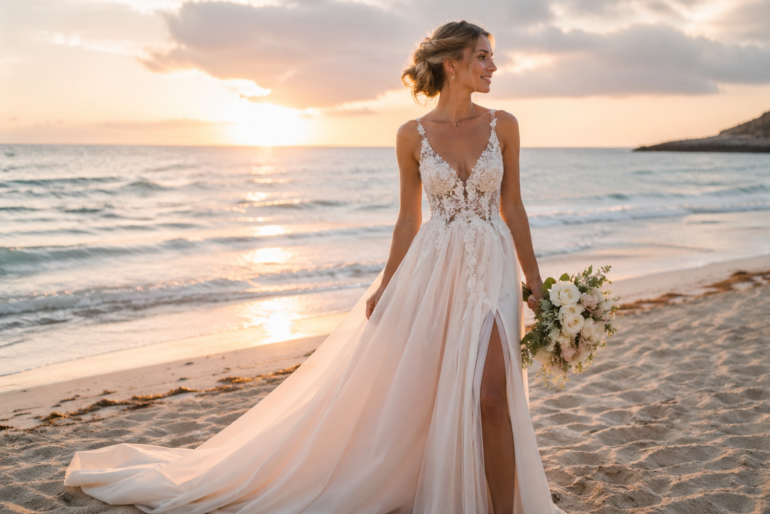
Choosing a Wedding Dress in the Beach setting is not the same as choosing a gown for a ballroom, church, or hotel venue. The beach changes everything. The sand, sunlight, breeze, humidity, and natural movement of the ocean all become part of the bridal look.
That is why seaside brides usually look for dresses that feel light, romantic, breathable, and easy to move in. A beach wedding dress should look beautiful in photos, but it should also feel comfortable when you are walking on sand, standing under the sun, or posing near the shoreline.
Beach weddings continue to be popular because they feel intimate, relaxed, and visually unforgettable. According to The Knot’s wedding data, destination weddings remain a meaningful choice for many couples, with 18% choosing a destination wedding in recent reporting. That makes the bridal dress even more important, because the gown has to match both the location and the experience.
Why a Wedding Dress in the Beach Needs Special Thought
A Wedding Dress in the Beach ceremony should work with nature, not fight against it. A heavy gown with thick layers may look stunning indoors, but it can feel difficult near the ocean.
Beach ceremonies often include wind, warm temperatures, uneven sand, and natural lighting. These details affect how the dress moves, how the fabric feels, and how comfortable the bride remains throughout the day.
A seaside bride should think about three things before falling in love with a gown:
The dress should feel light enough for the weather.
The silhouette should allow easy walking on sand.
The fabric should look graceful in movement and natural light.
A beach wedding is not about giving up elegance. It is about choosing a softer kind of elegance. The best beach bridal gowns feel effortless, but still special enough for one of the most important days of life.
Best Fabrics for a Beach Wedding Dress
Fabric is one of the most important choices when selecting a Wedding Dress in the Beach location. The wrong fabric can feel hot, stiff, or too formal for the setting.
Lightweight fabrics are usually the best choice because they move naturally with the breeze and feel more comfortable in warm weather. Bridal experts commonly recommend chiffon, organza, tulle, and unlined lace for coastal ceremonies because they are airy and easier to wear outdoors.
Chiffon
Chiffon is one of the most loved fabrics for beach brides. It is soft, light, and flowing, which makes it perfect for oceanfront ceremonies.
A chiffon gown creates a gentle, romantic movement when the wind blows. It works beautifully for A-line dresses, empire waist gowns, and simple sheath styles.
Chiffon is also a smart choice for warm climates because it does not feel too heavy. For brides who want a relaxed yet graceful look, chiffon is often the safest option.
Organza
Organza gives a little more structure than chiffon while still feeling light. It is a good choice for brides who want volume without the weight of satin or heavy ball gown layers.
A soft organza skirt can look dreamy in beach photos, especially during golden hour. It catches natural light beautifully and adds a slightly polished finish to the bridal look.
Organza works well for brides who want something elegant but not too formal. It can create shape while still feeling beach-appropriate.
Tulle
Tulle is soft, delicate, and romantic. It is often used in layered skirts, veils, and airy bridal designs.
For a Wedding Dress in the Beach, soft tulle is better than stiff tulle. Stiffer versions can feel too bulky or difficult to manage in wind.
A lightweight tulle gown can create a fairytale beach look without feeling too dramatic. It is especially lovely for sunset ceremonies, barefoot weddings, and boho bridal styles.
Lace
Lace can look stunning at the beach, especially when it is unlined, soft, or used as a delicate overlay. It gives texture without needing heavy embellishment.
Boho lace dresses are a favorite for seaside weddings because they feel romantic, natural, and slightly vintage. Floral lace, crochet-inspired lace, and subtle illusion lace all work well for coastal settings.
The key is to avoid lace that feels too thick or heavily beaded. A beach dress should breathe and move easily.
Wedding Dress in the Beach Styles That Look Effortless
The style of the gown should match the relaxed beauty of the coast. Some brides imagine a simple slip dress, while others want a flowing romantic gown. Both can work beautifully if the shape fits the location.
A-Line Beach Wedding Dresses
An A-line dress is one of the most flattering choices for many body types. It gently shapes the waist and flows away from the hips, making it comfortable for walking on sand.
For a beach ceremony, choose an A-line gown in chiffon, tulle, or organza. Avoid overly stiff underskirts or heavy crinolines because they can feel too formal and difficult outdoors.
A simple A-line gown gives the bride movement, comfort, and elegance in one look.
Sheath Wedding Dresses
A sheath gown follows the body more closely and creates a clean, modern silhouette. It is ideal for brides who want a simple, graceful look without extra volume.
This style works especially well for beach elopements, intimate ceremonies, and destination weddings. A sheath dress in crepe, chiffon, or soft lace can look timeless without feeling heavy.
Brides should make sure the dress is not too tight around the legs. Walking on sand requires more movement than walking down an indoor aisle.
Boho Beach Wedding Dresses
Boho gowns are perfect for seaside brides who love natural beauty, relaxed details, and romantic textures.
These dresses often include lace sleeves, open backs, flowy skirts, fringe details, or soft embroidery. They look beautiful with loose waves, barefoot sandals, flower crowns, and minimal jewelry.
A boho Wedding Dress in the Beach look feels personal and emotional. It does not try too hard, which is exactly why it works.
Slip Dresses
A slip dress is simple, sleek, and modern. It usually has thin straps, a clean neckline, and a smooth shape.
For a beach wedding, a slip dress can look incredibly elegant. It is light, easy to pack, and perfect for brides who want a minimal look.
Silk, satin, or lightweight crepe slip dresses work best when the ceremony is in mild weather. In hot climates, brides should choose breathable linings and avoid overly clingy fabric.
Tea-Length Dresses
A tea-length dress is a lovely option for casual beach ceremonies. It usually falls between the knee and ankle, making it easier to walk through sand.
This style feels playful, vintage, and practical. It is also a smart choice for brides who want to show off special shoes or go barefoot without worrying about dragging fabric.
Tea-length gowns are great for courthouse-to-beach weddings, small seaside ceremonies, and second wedding looks.
Necklines That Work Beautifully by the Ocean
The neckline can change the whole mood of a beach bridal look. Since beach weddings often feel softer and more relaxed, necklines should feel elegant without being too stiff.
A sweetheart neckline creates a romantic shape and works well with flowy skirts.
A V-neckline adds length and feels light, especially on chiffon or lace gowns.
A square neckline gives a modern, clean look that suits minimalist brides.
An off-shoulder neckline feels feminine and graceful, but it should fit securely if the beach is windy.
A halter neckline is practical and stylish for warm weather because it gives support while showing the shoulders.
For a Wedding Dress in the Beach, comfort matters as much as beauty. Brides should sit, walk, turn, and raise their arms during fittings to make sure the neckline feels secure.
Sleeves or No Sleeves for a Beach Bridal Gown?
Sleeves can look beautiful at the beach, but the fabric and climate matter.
Long lace sleeves can feel romantic for a coastal ceremony in spring or fall. They add detail without needing heavy accessories.
For summer weddings, detachable sleeves, flutter sleeves, or cap sleeves may be more comfortable. These give coverage without trapping too much heat.
Sleeveless gowns are popular for tropical locations because they feel fresh and easy. Thin straps, halter tops, and strapless designs all work well if the fit is secure.
If the beach is windy, brides should be careful with loose sleeve designs. Beautiful movement is good, but too much fabric can become distracting during the ceremony.
Train Length: What Works on Sand?
A long train can look breathtaking in photos, but it is not always practical on the beach. Sand, shells, water, and wind can make a dramatic train harder to manage.
For most seaside brides, a short train, sweep train, or chapel-length train works best. These options still feel bridal but are easier to handle.
A cathedral train can work for a formal beach wedding, but it needs planning. The bride may need help carrying it before the ceremony and cleaning it after photos.
For a relaxed Wedding Dress in the Beach look, many brides choose dresses with little to no train. This keeps the dress easy, natural, and comfortable.
Color Choices for Seaside Brides
White is classic, but it is not the only choice for a beach wedding dress. Soft shades often look beautiful against sand and ocean tones.
Ivory is warm and flattering in natural light.
Champagne gives a soft golden glow.
Blush adds a romantic touch.
Soft nude lining can make lace details stand out.
Light blue undertones can feel coastal and unique.
Bright white may look striking in photos, especially against deep blue water. However, warmer shades often blend more naturally with beach scenery.
The best color depends on the bride’s skin tone, wedding time, and photography style. A sunset ceremony may make champagne or ivory look especially beautiful.
Practical Tips Before Buying a Beach Wedding Dress
A beach gown should look beautiful, but it should also survive the real conditions of the day. Many brides focus only on the front view in the mirror, but beach weddings require more practical thinking.
Before buying your gown, ask yourself:
Can I walk comfortably on sand?
Will the dress feel too hot in direct sunlight?
Does the fabric wrinkle easily during travel?
Can the hem handle sand and moisture?
Will the dress stay secure in wind?
Is it easy to move, sit, and dance in?
Destination brides should also think about packing. Some fabrics travel better than others. Chiffon, soft lace, and tulle can be easier to steam than thick structured fabrics.
If the dress will be packed in luggage, ask the bridal salon about garment care. Some gowns need professional steaming after travel, especially if the wedding is far from home.
Beach Wedding Dress Accessories
Accessories should support the gown, not compete with the scenery. The ocean already gives the ceremony a beautiful backdrop, so simple details often work best.
Veils
A veil can look magical at the beach, but wind can make it tricky. Short veils, fingertip veils, and soft tulle veils are easier to manage than very long veils.
A long veil can still be stunning for photos, especially during a calm sunset shoot. Brides may choose to wear it for portraits and remove it for the ceremony.
Shoes
High heels are usually not practical on sand. Better options include:
Barefoot sandals
Flat bridal sandals
Wedges for firm beach paths
Espadrilles
Low block heels for deck ceremonies
If the ceremony includes a wooden aisle or platform, brides have more shoe choices. For soft sand, flat shoes or barefoot styling is usually best.
Jewelry
Beach bridal jewelry should feel light and intentional. Pearl earrings, delicate gold pieces, small crystal studs, or shell-inspired details can look beautiful.
Avoid heavy necklaces if the gown already has lace, beading, or a detailed neckline. The goal is balance.
Hair Accessories
Hair accessories can complete the seaside bridal look. Fresh flowers, pearl pins, soft clips, and delicate combs all work well.
For windy locations, secure styling matters. A loose updo, half-up hairstyle, or textured waves can look romantic while staying manageable.
How to Match the Dress With the Wedding Theme
The best Wedding Dress in the Beach choice should match the full wedding mood. A tropical resort ceremony may call for a different gown than a quiet coastal elopement.
For a luxury beach wedding, choose clean lines, elegant fabrics, and refined details.
For a boho ceremony, choose lace, flowy skirts, and natural accessories.
For a tropical wedding, choose breathable fabric, open backs, and relaxed silhouettes.
For a sunset elopement, choose a simple gown that photographs beautifully in golden light.
For a family beach celebration, choose a dress that allows movement and comfort throughout the day.
A dress should not feel separate from the setting. When everything works together, the bride looks natural, confident, and completely present.
Real-World Scenario: Choosing Between Two Beach Dresses
Imagine a bride planning a ceremony in Florida at 5 p.m. She tries on two gowns.
The first gown is a heavy satin ball gown with a long train. It looks dramatic in the boutique, but it feels warm and hard to walk in.
The second gown is a chiffon A-line dress with a soft lace bodice and a small train. It moves easily, feels lighter, and looks beautiful when she turns.
For a ballroom, the first gown might win. For the beach, the second gown is more practical and more connected to the setting.
This is the difference between choosing a dress you love in theory and choosing a dress you can truly enjoy wearing.
Common Mistakes Brides Make With Beach Wedding Dresses
Some mistakes are easy to avoid with a little planning.
Choosing a dress that is too heavy is one of the biggest issues. A gown may feel fine in an air-conditioned boutique but uncomfortable under the sun.
Another mistake is ignoring the wind. Lightweight fabric is good, but extremely loose layers may need careful styling.
Some brides also choose trains that are too long for the location. A dramatic train can collect sand quickly and become difficult to carry.
Waiting too long for alterations is another problem. Beach dresses often need precise hemming because the bride may wear flats or go barefoot.
A final mistake is forgetting the full day. The bride may stand, walk, hug guests, take photos, sit for dinner, and dance. The gown should support all of that.
Best Dress Details for Beach Photos
Beach wedding photos are naturally beautiful, but dress details can make them even better.
Flowy skirts look lovely in motion.
Open backs photograph beautifully during sunset portraits.
Soft lace adds texture in close-up shots.
Light veils create romantic movement.
Minimal gowns create a timeless editorial look.
Subtle beading can catch sunlight, but too much sparkle may feel too formal for the sand. Natural details usually photograph best.
A Wedding Dress in the Beach setting should look alive in photos. The dress should move, breathe, and reflect the feeling of the day.
Comfort Matters More Than Brides Expect
Many brides think comfort is secondary. On the beach, comfort becomes part of beauty.
When a bride feels too hot, restricted, or worried about her dress, it shows. When she feels comfortable, her posture softens, her smile looks real, and her photos feel more natural.
That does not mean choosing a plain dress. It means choosing a smart dress.
A comfortable bride can enjoy the ceremony instead of constantly adjusting her gown. She can walk freely, laugh naturally, and focus on the moment.
Wedding Dress in the Beach for Different Body Types
There is no single perfect beach wedding dress for every bride. The best gown is the one that supports your shape and makes you feel confident.
A-line gowns flatter many body types because they define the waist and flow gently.
Empire waist dresses can feel soft and comfortable, especially for warm weather.
Sheath dresses work well for brides who love a clean, modern look.
Fit-and-flare gowns can work at the beach if the fabric is not too heavy.
Wrap-style gowns can create a relaxed and feminine shape.
The most important thing is movement. During fittings, walk as if you are walking on sand. Take longer steps, turn around, and test how the dress feels from every angle.
What Brides Should Ask at the Bridal Boutique
A good bridal stylist can help you avoid practical problems. Bring details about your beach location before the appointment.
Ask these questions:
Is this fabric breathable for warm weather?
Will this gown wrinkle during travel?
Can the train be shortened or bustled easily?
What shoes work best with this hem?
Can this dress be packed safely for a destination wedding?
Does this fabric handle humidity well?
Is the lining lightweight?
These questions help the stylist guide you toward dresses that are beautiful and realistic.
Caring for the Dress Before and After the Beach Wedding
Beach weddings can expose a gown to sand, moisture, salt air, and sunscreen. Dress care matters before and after the ceremony.
Before the wedding, keep the dress stored in a breathable garment bag. Avoid plastic covers for long storage because they can trap moisture.
After travel, allow enough time for steaming. Many destination resorts offer steaming services, but it is better to confirm early.
After the wedding, have the gown cleaned as soon as possible. Sand and salt can settle into fabric, especially lace and hems.
If you plan to preserve the dress, professional cleaning is important. Even stains that look small can become harder to remove later.
FAQs About Beach Wedding Dresses
What is the best fabric for a beach wedding dress?
Chiffon, organza, soft tulle, and lightweight lace are among the best choices. They feel airy, move beautifully, and suit warm outdoor ceremonies.
Can I wear a long train on the beach?
Yes, but it needs planning. A sweep train or chapel train is easier to manage than a cathedral train. If you want a dramatic train, arrange help for walking and photos.
Should a beach wedding dress be simple?
It does not have to be simple, but it should feel practical. A dress can have lace, sleeves, or a train as long as it remains comfortable and easy to move in.
What shoes should I wear with a beach wedding dress?
Flat sandals, barefoot sandals, wedges, or espadrilles are usually better than stilettos. If there is a solid aisle, low block heels can also work.
Is satin good for a beach wedding?
Light satin can work in mild weather, but heavy satin may feel warm and formal. Brides planning tropical weddings usually prefer lighter fabrics.
Can I wear a veil at a beach wedding?
Yes, but choose carefully. A shorter veil is easier in wind, while a long veil can be saved for photos if the weather is calm.
Conclusion
A Wedding Dress in the Beach ceremony should feel elegant, comfortable, and connected to the natural beauty around it. The best gown is not always the most dramatic one. It is the one that lets the bride move freely, stay cool, and feel confident from the first step on the sand to the final photo by the water.
Light fabrics, relaxed silhouettes, secure necklines, and thoughtful accessories all make a difference. Whether you choose chiffon, lace, organza, or soft tulle, the goal is to create a bridal look that belongs beside the ocean.
A beach wedding is naturally emotional because it blends love, scenery, and meaningful wedding traditions into one unforgettable setting. When the dress matches that feeling, the whole day feels easier, more beautiful, and more personal.