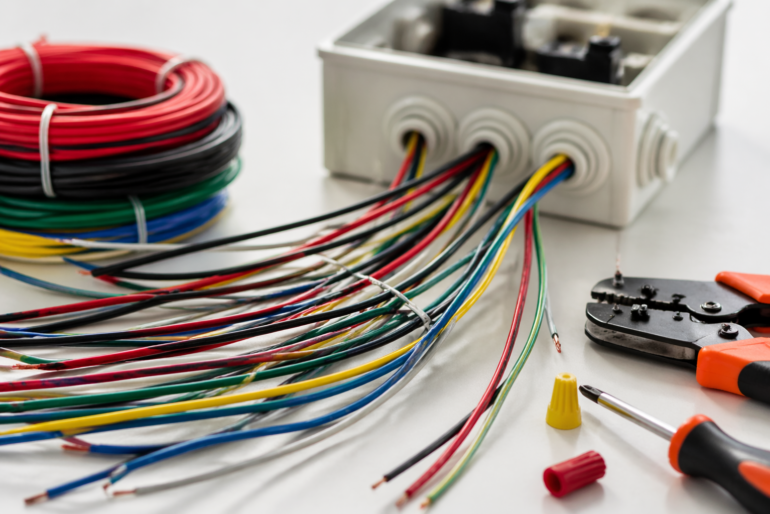
If you work with sensors, thermostats, alarm panels, hobby boards, doorbells, or other light-duty circuits, 22 AWG Wire sits in a very practical sweet spot. It is thin enough for tight spaces, flexible enough for many control and signal jobs, and common enough that you will see it across electronics benches, HVAC controls, security systems, and low-voltage residential installs. In simple terms, 22 AWG Wire is usually chosen when the job calls for modest current, reliable signal handling, and manageable cable size rather than heavy power delivery.
That matters because wire selection is rarely just about “will it fit.” The conductor size affects resistance, current handling, voltage drop, flexibility, and even how easy the wire is to terminate. A good choice can make an installation neat and dependable. A poor choice can create nuisance voltage loss, poor signal quality, heat buildup, or code issues when the cable is installed inside walls or air-handling spaces.
For electronics, wiring, and low-voltage housing projects, 22 AWG Wire is best understood as a specialized tool rather than a universal solution. It is often the right answer for communication, control, signaling, and short-run low-power work. It is usually the wrong answer for branch-circuit household power, long high-current runs, and large appliances. That distinction is what separates a clean install from a frustrating one.
What 22 AWG Wire Actually Means
American Wire Gauge, or AWG, is the U.S. sizing standard used to describe conductor diameter. In that system, a larger gauge number means a smaller conductor. So 22 AWG Wire is thinner than 18 AWG and much thinner than the 12 AWG or 14 AWG conductors commonly used in standard household branch wiring. Engineering reference tables place 22 AWG at roughly 0.644 to 0.65 mm in conductor diameter with a cross-sectional area of about 0.326 to 0.33 mm².
That small size is exactly why the wire is useful. It allows multiple conductors to fit inside one compact jacket, which is helpful for thermostat cables, alarm wiring, control wiring, low-voltage audio, compact signal harnesses, and electronics assemblies. It also makes routing easier in crowded enclosures, control panels, and device housings where every millimeter counts.
Another point people often miss is that the bare conductor size is only part of the story. Two products can both be labeled 22 AWG Wire, yet behave differently because of insulation thickness, conductor material, shielding, temperature rating, and whether the conductor is solid or stranded. In real projects, those details can matter just as much as the gauge itself.
Why 22 AWG Wire Is Popular in Electronics
Electronics work usually values compact size, predictable resistance, easy routing, and compatibility with terminals, headers, and screw-down blocks. That is why 22 AWG Wire is so common in internal equipment wiring, appliance wiring, control panels, instrumentation, and low-voltage digital or analog control circuits. Southwire lists 22 AWG products for internal electrical equipment wiring, while Belden product literature shows 22 AWG cable used for low-voltage analog signals, low-voltage digital control, line-level audio, and computer communication.
In practical terms, this means the wire often performs well in projects such as Arduino and microcontroller builds, relay modules, sensor harnesses, compact LED control lines, and low-current DC distribution inside equipment. It is also widely used where signal integrity and physical manageability matter more than raw amperage. That makes it especially attractive for hobby electronics and professional control assemblies alike.
Because the conductor is relatively small, it also helps reduce bulk in multi-conductor harnesses. If you have ever built a prototype that became messy simply because the wiring took up too much room, you already understand the appeal. In electronics, smaller harnesses usually mean cleaner cable management and easier troubleshooting later.
Where 22 AWG Wire Fits in Low-Voltage Housing Projects
Inside residential spaces, 22 AWG Wire frequently appears in systems that are not intended to power standard outlets or large loads. Manufacturers and cable catalogs commonly place 22 AWG products in remote-control, signaling, communication, alarm, access control, intercom, sound, and thermostat-style applications. Southwire’s low-voltage catalog specifically lists 22 AWG cable for power-limited circuits covered by NEC Article 725 and communication circuits under NEC Article 800, including security, audio, public address, intercom, alarm, and access-control uses.
That aligns with what homeowners and installers see every day. Doorbells, smart thermostat wiring, alarm sensors, basic control loops, low-voltage signaling, and some structured low-power device connections often rely on smaller-gauge conductors. The wire is not there to run a toaster, microwave, or room heater. It is there to move a control signal, support a low-power device, or connect components that do not demand large current.
This is also why the phrase “low-voltage housing projects” needs context. In a home, low voltage usually refers to communications, control, signaling, and power-limited circuits, not standard branch wiring. Once you move into conventional household power distribution, the wire size requirements change dramatically. For most in-wall residential power circuits, 22 AWG is far too small.
Common Uses of 22 AWG Wire
Here is where 22 AWG Wire usually makes sense:
| Application | Why 22 AWG Wire Works |
|---|---|
| Thermostat and HVAC control wiring | Compact multi-conductor layouts, low current, reliable signaling |
| Alarm and access control | Good for sensors, contacts, and low-power signaling loops |
| Electronics prototypes and device wiring | Easy routing, compact size, common terminal compatibility |
| Low-voltage audio and control circuits | Suitable for light-duty signal paths and control lines |
| Panel wiring and instrumentation | Useful where space is limited and loads are modest |
These examples are consistent with manufacturer application notes and low-voltage cable catalogs, which repeatedly position 22 AWG in signaling, control, security, audio, thermostat, and internal equipment roles rather than heavy power applications.
Solid vs. Stranded 22 AWG Wire
When choosing 22 AWG Wire, one of the first real decisions is whether you want solid or stranded conductors. Solid wire holds its shape better, which can be useful for fixed terminations, breadboards, and installations where the cable will stay mostly undisturbed. Stranded wire bends more easily and generally tolerates repeated movement better, which makes it attractive for device leads, hinged enclosures, portable assemblies, and vibration-prone applications.
That difference shows up physically too. Engineering ToolBox notes that stranded wire with the same AWG does not have the same overall diameter as solid wire, because the gaps between strands increase the outer size. That is one reason connectors, ferrules, and cable routing plans should match the actual product construction, not just the printed gauge.
A simple rule works well in real life. If the wire will stay inside a wall, cabinet, or panel with little motion, solid can be fine if the cable type and code listing fit the job. If the wire will flex during service or installation, stranded usually feels better and lasts longer in practice.
Current Capacity, Heat, and the Limits of 22 AWG Wire
One of the most misunderstood points about 22 AWG Wire is ampacity. People often search for a single current number, but current capacity depends heavily on installation conditions, insulation, conductor arrangement, ambient temperature, and whether the wire is in free air, inside a cable, or bundled with many other conductors. Engineering ToolBox and MISUMI both stress that current ratings are condition-dependent starting points, not universal limits.
That is why you should treat 22 AWG as a low-current conductor unless the product data sheet and application conditions clearly support more. Its relatively small cross-sectional area means resistance is higher than larger conductors, and that extra resistance creates more heat and more voltage drop as current rises or run length increases. In short runs for control and signal work, that is often fine. In long runs carrying meaningful current, it can become the exact reason a device underperforms.
For low-voltage systems, voltage drop is often the bigger issue than dramatic overheating. Ohm’s law shows that voltage drop increases with resistance and current. Engineering ToolBox notes that longer distance may require increasing wire diameter to limit voltage drop, and Cerrowire similarly advises selecting wire size based on run length and load so voltage drop stays under control.
That matters in housing projects more than many beginners expect. A thermostat line can usually tolerate the intended conductor size because it is designed around that application. A long 12V or 24V run to a low-voltage device may not be so forgiving. A small wire can technically “work,” yet still deliver less voltage than the equipment wants at startup or under load.
How to Choose the Right 22 AWG Wire for the Job
The smartest way to buy 22 AWG Wire is to stop thinking only in terms of gauge. The better question is: what exact environment and circuit am I wiring?
Start with the conductor type. For moving leads, flexible assemblies, and device pigtails, stranded wire is usually easier to work with. For fixed terminations and some structured cable installs, solid wire may be appropriate. Then check the insulation and jacket rating. A cable going inside a wall, riser, or plenum space may need specific listed ratings such as CL2, CL3, CMR, CMP, FPLR, or FPLP depending on the exact application and location. Southwire’s catalog shows how 22 AWG low-voltage cables are offered in different fire and installation ratings for different building environments.
Next, think about shielding. If the cable is carrying sensitive low-level signals in a noisy environment, a shielded 22 AWG product may perform better than an unshielded option. This is especially relevant near motors, power wiring, variable-frequency equipment, or long analog signal runs. Belden’s application pages specifically associate 22 AWG multi-pair products with analog signals, digital control, communication, and noisy industrial environments.
Finally, match the wire to the terminal hardware. Tiny terminal blocks, IDC terminations, sensor headers, screw terminals, and ferrules all have preferred conductor ranges. Good electrical performance means little if the termination is loose, overcompressed, or mechanically weak. In many projects, the connector decides the most practical wire choice just as much as the conductor itself.
Mistakes People Make with 22 AWG Wire
The first mistake is using 22 AWG Wire as if all low voltage is the same. A short signal connection, a thermostat cable, and a 24V power run to a device are not identical jobs. The current level, distance, and code environment all change what is appropriate.
The second mistake is ignoring voltage drop. Small wire over long distances can produce disappointing real-world results even when the circuit is technically energizing the load. If a camera, sensor, lock, or controller behaves inconsistently, conductor size and run length deserve attention early in the troubleshooting process.
The third mistake is installing the wrong cable rating inside a building. General-purpose, riser, plenum, thermostat, fire alarm, and communication cable listings are not interchangeable by default. The cable jacket marking matters, and so does the path it takes through the building.
The fourth mistake is assuming that because the wire is small, the safety stakes are small too. Power-limited circuits are generally safer than standard mains circuits, but they still need correct routing, terminations, protection, and code-aware installation. Poor workmanship can still create failure points, nuisance issues, or inspection problems.
Real-World Examples
A thermostat cable is one of the clearest examples of where 22 AWG Wire makes sense. Southwire’s thermostat cable line is built specifically for thermostat control applications, which is a reminder that certain low-voltage jobs are designed around this size from the start. In those systems, the conductor size, cable construction, and application are aligned.
A compact electronics enclosure is another strong fit. Internal wiring for boards, relays, sensors, and low-voltage controls benefits from a conductor that is easy to dress neatly. Southwire also lists 22 AWG lead wire for internal equipment, control panels, and appliances, showing how common this size is for contained device-level wiring rather than high-load field wiring.
By contrast, a long run feeding a relatively power-hungry low-voltage load may push 22 AWG beyond its comfort zone. In that situation, the project can fail not because the wire is “bad,” but because the job really needs a larger conductor to keep voltage drop under control. That is a design problem, not a wire problem.
FAQ
Is 22 AWG Wire good for electronics?
Yes, 22 AWG Wire is widely used in electronics, internal equipment wiring, low-voltage control, instrumentation, and signal applications because it balances compact size with practical handling.
Can 22 AWG Wire be used inside a house?
Yes, but usually for low-voltage, signaling, communication, thermostat, alarm, or other power-limited applications with the correct cable listing for the installation environment. It is not a substitute for normal household branch-circuit wiring.
Is 22 AWG Wire solid or stranded?
It can be either. The correct choice depends on whether the installation is fixed or flexed, and on the termination style and product design.
What is the biggest concern with 22 AWG Wire on longer runs?
Voltage drop is often the main concern. As wire resistance and run length increase, the delivered voltage at the load can fall enough to affect performance.
Conclusion
For the right job, 22 AWG Wire is efficient, clean, practical, and surprisingly versatile. It works especially well in electronics, low-current controls, thermostat systems, alarm loops, access-control circuits, and other low-voltage housing projects where compact routing and dependable signaling matter more than heavy current delivery. The key is using it where its size is an advantage rather than a limitation.
The smartest approach is simple: match the wire not just to the voltage, but to the current, distance, cable rating, environment, and terminal style. When those pieces line up, 22 AWG Wire becomes one of the most useful small-conductor options you can keep on hand. If you want a quick refresher on wire gauge, it helps to see how conductor size directly shapes resistance, flexibility, and real-world performance.