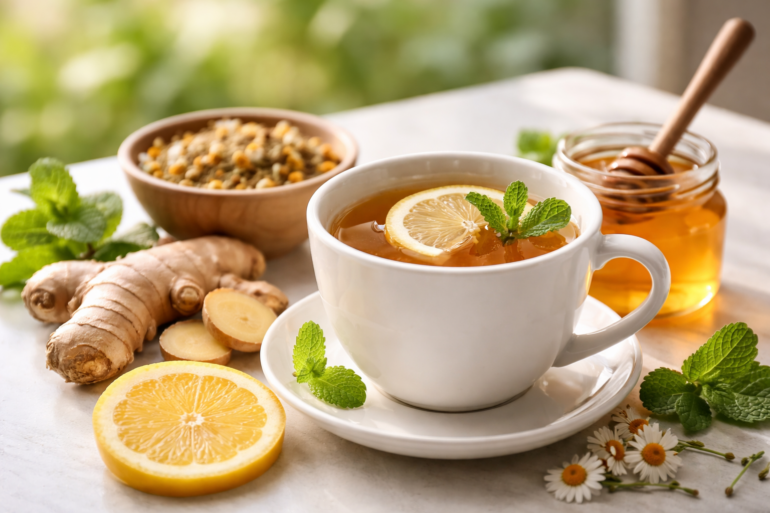
When your throat feels raw, scratchy, or painful, a warm cup can feel like relief in real time. The truth is that the Best Tea for Sore Throat is usually the one that helps you stay hydrated, feels gentle to swallow, and does not irritate already inflamed tissue. Warm liquids can be soothing, honey may help ease upper respiratory symptoms, and most sore throats get better on their own because they are caused by viruses rather than bacteria.
That said, not every cup works the same way. Some people do best with classic decaf black tea and honey. Others prefer ginger, chamomile, or peppermint because the aroma and warmth feel calming. The important thing is to think of tea as comfort care, not a cure. A good tea can make swallowing easier, keep your throat moist, and help you rest, but it does not replace medical evaluation if your symptoms are severe or unusual.
If you are looking for the Best Tea for Sore Throat, the smartest answer is not a single miracle blend. It is a short list of teas that are soothing, easy on the throat, and safe for your body and routine. Below, you will find the top options, what each one is best for, and how to choose the right cup for the symptoms you actually have.
What makes the best tea for sore throat actually helpful?
The Best Tea for Sore Throat usually checks four boxes. First, it is warm rather than very hot, because overly hot drinks can make irritation worse. Second, it helps you drink more fluid, which matters because dehydration can make throat discomfort feel worse. Third, it is easy to customize with honey or lemon if those feel soothing to you. Fourth, it does not bring side effects that make you feel worse, such as too much caffeine, reflux, or dryness.
This is also why the Best Tea for Sore Throat is not always the fanciest herbal product on the shelf. Sometimes the best option is simply a mild, noncaffeinated tea you can sip often. The goal is comfort, moisture, and rest. If a tea tastes harsh, feels too acidic, or leaves your throat more irritated, it is not the right pick for you no matter how popular it is online.
Best tea for sore throat: top soothing picks that really help
1. Chamomile tea
Chamomile is one of the most popular answers to the Best Tea for Sore Throat question because it is naturally mild and calming. Many people find it especially helpful at night, when throat pain feels more noticeable and sleep matters most. Its biggest advantage is not that it magically cures infection, but that it creates a gentle bedtime routine and encourages warm fluid intake without caffeine.
If your sore throat is paired with fatigue, mild stress, or a restless cough that keeps you awake, chamomile can be a smart first choice. Add a little honey if you want extra soothing texture. Keep the drink warm, not steaming. That small detail matters more than people think when your throat already feels inflamed.
2. Ginger tea
Ginger tea often makes the Best Tea for Sore Throat list for good reason. Ginger has well-studied anti-inflammatory activity in broader research, and while that does not prove a cup of ginger tea will cure throat pain, it helps explain why many people find it comforting when they have a cold, throat irritation, or congestion.
In real life, ginger tea is especially useful when a sore throat comes with that achy, chilled, stuffed-up feeling. The warmth is soothing, and the sharper flavor can feel clearing. Still, ginger is not ideal for everyone. Some people get heartburn or stomach discomfort from it, so the Best Tea for Sore Throat is only ginger tea if your body tolerates it well.
3. Green tea
Green tea is often recommended as the Best Tea for Sore Throat because it contains catechins, plant compounds that have antioxidant and anti-inflammatory properties in research. That sounds promising, but the practical benefit for most people is simpler: green tea can be soothing, familiar, and easy to sip when brewed lightly.
The main downside is caffeine. If you are sensitive to caffeine, dehydrated, or trying to sleep, green tea may not be the Best Tea for Sore Throat for that moment. A decaf option or a caffeine-free herbal tea may serve you better, especially later in the day.
4. Peppermint tea
Peppermint tea is another strong contender for the Best Tea for Sore Throat, especially if your throat discomfort comes with nasal stuffiness. The minty steam and aroma can feel cooling and opening, which is why people often reach for it during colds. The benefit is mostly symptomatic comfort, not a cure.
That said, peppermint is not perfect for everyone. If you already deal with acid reflux, a very minty tea can sometimes make things worse. In that case, the Best Tea for Sore Throat may be chamomile or plain warm water with honey instead. Comfort should be immediate, not something you have to fight through.
5. Licorice root tea
Licorice root tea gets mentioned often in discussions about the Best Tea for Sore Throat because it can feel coating and soothing. Some people like it when the throat feels dry and scratchy rather than sharply painful. But this is also the tea that needs the most caution. Licorice root can raise blood pressure and cause serious side effects in some people, especially with larger amounts or long-term use.
So, is licorice root the Best Tea for Sore Throat? Only for certain people, and only occasionally. If you have high blood pressure, heart problems, kidney disease, or take multiple medications, this is one to skip unless a healthcare professional says it is fine for you.
6. Decaf black tea with honey
This is the underrated option. For many people, the Best Tea for Sore Throat is not herbal at all. It is simply a smooth decaf black tea with a spoonful of honey. Warm tea without caffeine can soothe the throat, while honey has evidence for helping upper respiratory symptoms and is commonly recommended in warm drinks for symptom relief.
It is easy to make, easy to find, and usually easier on the stomach than stronger blends. If you want a dependable option that feels familiar and low-risk, this is one of the best places to start. Just remember that honey should not be given to children under age 1.
7. Turmeric tea
Turmeric tea gets attention whenever people talk about inflammation, and that is why it is often suggested as the Best Tea for Sore Throat by wellness-focused readers. In practice, turmeric can be worth trying if you already enjoy the taste and tolerate it well, especially in a warm blend with honey.
Still, turmeric tea is not essential. For many people, it tastes too earthy or irritating when the throat is already tender. If it does not go down smoothly, it is not the Best Tea for Sore Throat for you, and there is no reason to force it when gentler options exist.
A quick comparison of the best tea for sore throat choices
Here is the simplest way to think about the Best Tea for Sore Throat based on symptoms:
- For bedtime and a calm throat: chamomile tea
- For an achy cold and warming comfort: ginger tea
- For a light antioxidant tea you already enjoy: green tea
- For stuffiness and a cooling feel: peppermint tea
- For a coating, sweet herbal option: licorice root tea, with safety caution
- For an easy everyday choice: decaf black tea with honey
If you want the most practical answer, the Best Tea for Sore Throat for most adults is usually chamomile tea with honey, ginger tea with honey, or decaf black tea with honey. Those options balance comfort, availability, and ease of drinking without asking too much from your throat or stomach.
How to make tea for sore throat relief the right way
The way you make the tea matters almost as much as the type of tea. The Best Tea for Sore Throat should be warm, not scalding. NHS self-care advice specifically notes avoiding very hot drinks because they can irritate the throat. That means letting your cup cool slightly before the first sip can make a real difference.
A few simple habits improve the experience:
- Brew it mild rather than extra strong if your throat feels raw.
- Add honey if you want a smoother texture and extra soothing effect.
- Skip too much lemon if acid tends to bother your throat or stomach.
- Sip slowly instead of chugging.
- Keep drinking water through the day too, because tea should support hydration, not replace it entirely.
This is where the Best Tea for Sore Throat becomes less about the ingredient and more about the routine. A warm mug beside your bed, a humid room, rest, and steady fluids often help more than chasing trendy ingredients.
What to add to the best tea for sore throat
Honey is usually the best add-in. A systematic review found honey was better than usual care for improving symptoms of upper respiratory infections, especially cough frequency and severity. It is also commonly recommended by major clinical sources as something you can mix into warm liquids for relief.
Lemon can help some people because it brightens the flavor and makes a warm drink more appealing. But lemon is not a must. If acidity stings your throat, skip it. The Best Tea for Sore Throat should feel soothing from the first sip, not sharp or irritating.
You can also think about texture. A tea that feels a little smoother and softer often works better than one that is thin, bitter, or very astringent. This is why a mild chamomile or decaf black tea often beats a strongly brewed green tea when your throat is really sore.
What tea will not do
The Best Tea for Sore Throat can soothe symptoms, but it will not diagnose what is causing them. Most sore throats are caused by viruses and do not need antibiotics. But some sore throats are caused by strep throat, and that does need proper testing and treatment.
Tea also will not replace rest, fluids, and basic self-care. If you are running a fever, struggling to swallow, or getting worse instead of better, do not keep trying new teas while ignoring the bigger picture. A cup can help you feel better, but it should not delay care when warning signs are present.
When to see a doctor for a sore throat
A simple sore throat often improves within about a week, and many cases start to settle within a few days. But you should seek medical care if you have difficulty breathing, difficulty swallowing, dehydration, blood in saliva or phlegm, a rash, or symptoms that are not improving within a few days or are getting worse.
You should also think about strep throat if your sore throat is severe, sudden, or part of a pattern that feels different from an ordinary cold. CDC notes that viruses cause most sore throats, while only about 1 in 10 adults and 3 in 10 children with sore throat have strep throat. That is another reason the Best Tea for Sore Throat should be viewed as supportive care, not proof that you know the cause.
FAQ about the best tea for sore throat
Is hot tea or cold tea better for a sore throat?
Warm tea is usually the sweet spot for comfort. Very hot drinks can irritate the throat, while cool foods and drinks can also be soothing for some people. The best choice is the temperature that feels easiest to swallow.
Is green tea the best tea for sore throat?
Not always. Green tea has useful plant compounds, but the Best Tea for Sore Throat depends on your symptoms and your caffeine tolerance. For some people, chamomile or decaf black tea is a better fit.
Can I drink tea every day while I am sick?
Yes, in moderation, as long as it is not irritating your throat and you are also drinking enough water. Choose lower-caffeine or caffeine-free options if you are feeling run down or trying to sleep.
Is honey necessary in the best tea for sore throat?
No, but it is often helpful. Honey has evidence behind it for symptom relief in upper respiratory infections and is commonly used in warm drinks for cough and throat comfort. Never give honey to children under age 1.
Conclusion
The Best Tea for Sore Throat is usually a warm, soothing tea that helps you rest, swallow more comfortably, and stay hydrated without irritating your throat. For most people, the top choices are chamomile tea, ginger tea, peppermint tea, green tea, and simple decaf black tea with honey. If you want the safest all-around pick, start with chamomile or decaf black tea with honey, keep the temperature warm rather than very hot, and pay attention to how your throat actually feels after each sip.
If symptoms are mild, a thoughtful self-care routine often does more than people expect. Drink fluids, rest your voice, avoid smoke, and do not assume every sore throat needs antibiotics. If symptoms become severe, unusual, or persistent, get checked. For more background on herbal tea, it helps to remember that comfort and safety matter more than hype when choosing the Best Tea for Sore Throat