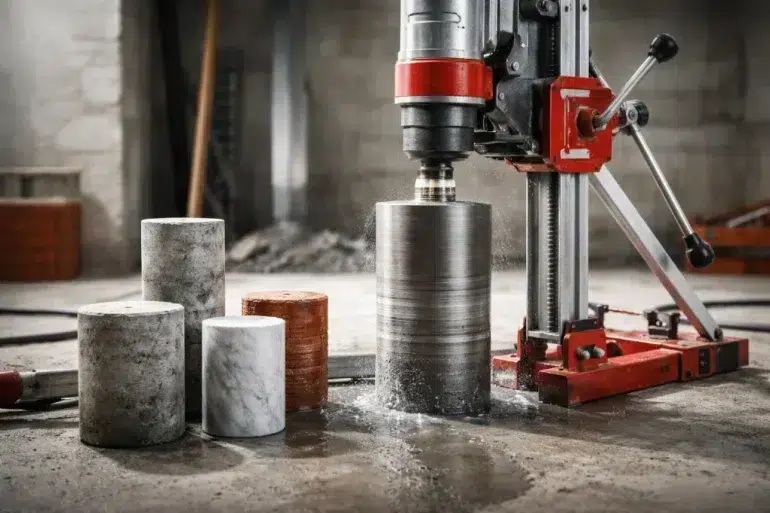
If you’ve ever needed a perfectly round, clean hole through tough material without cracking everything around it, you’re already thinking in the right direction. A Core Drilling Machine is built for that exact job. Instead of smashing its way through like a hammer drill, it cuts a smooth circular path using a hollow bit, usually diamond-tipped, and removes a solid “”core”” from the center, observes MTD Property Management, Inc. specialists.
That one difference changes everything. A Core Drilling Machine is quieter (most of the time), creates far less vibration, and delivers neat openings that look like they were planned from the start even if you’re working inside a finished building. It’s the tool contractors reach for when drilling needs to be accurate, controlled, and kind to surrounding structures.
In this article, you’ll learn where a Core Drilling Machine shines across concrete, brick, marble, tile, and more, how it’s used in real jobs, what to watch out for, and how to get results that look professional even if you’re still learning.
What a Core Drilling Machine actually does (and why it’s different)
A Core Drilling Machine creates cylindrical holes by rotating a core bit at high speed. The bit is hollow, so instead of producing a pile of rubble, it cuts a ring and leaves behind a core plug. That plug can be removed and examined, or simply discarded.
This method is popular because it’s:
- Precise: hole diameter is consistent and predictable
- Low vibration: less risk of cracking nearby concrete, tile, or stone
- Clean-edged: minimal chipping when the right technique is used
- Scalable: works for small holes and large service penetrations
Many setups also use water to cool the bit and control dust, which matters a lot when drilling masonry products that may release respirable crystalline silica.
Core Drilling Machine uses in concrete (the most common job)
Concrete is where a Core Drilling Machine earns its keep. Concrete drilling is rarely “just drilling” because you’re dealing with density, aggregate, possible steel reinforcement, and strict requirements for hole placement.
1) Plumbing penetrations and drain lines
One of the most common uses of a Core Drilling Machine is creating round openings for:
- water supply lines
- drain pipes
- floor traps
- sleeve installations through slabs and beams
Because the edges are clean, plumbers don’t need to chip and patch as much, and sleeves fit as intended.
2) Electrical and HVAC routing
When electricians or HVAC installers need to pass conduit, cable trays, refrigerant lines, or duct supports through concrete, a Core Drilling Machine helps create accurate holes that won’t weaken surrounding areas with impact damage.
Typical situations include:
- coring through walls for split AC lines
- drilling ceiling slabs for conduit drops
- creating openings for cable sleeves in data rooms
3) Anchor holes and retrofit installations
For certain retrofit jobs, a Core Drilling Machine can produce precise openings for anchors, posts, or threaded rods, especially when diameter requirements are strict. It’s also used when you need a clean opening before chemical anchoring or when drilling around delicate finishes.
4) Structural testing and concrete sampling
A Core Drilling Machine can extract samples used for strength testing or forensic inspection. Engineers may core a slab or column to verify compressive strength, investigate cracks, or check layering. In these cases, the “core” is the real product, not the hole.
Drilling reinforced concrete with a Core Drilling Machine
Reinforced concrete introduces rebar, and rebar changes your plan fast.
A Core Drilling Machine can cut through rebar with the right bit and steady feed pressure, but it’s not a “push harder and hope” moment. If you force it, you can glaze the diamonds, overheat the segment, or stall the motor.
Practical tips that make a difference:
- Use a quality diamond bit rated for reinforced concrete
- Keep water flow consistent when wet drilling
- Let the bit do the work, apply steady pressure
- If you hit rebar, slow the feed slightly and maintain rpm
A properly set Core Drilling Machine is one of the safer ways to drill reinforced concrete because it avoids the impact vibration that can cause microcracking around the hole.
Core Drilling Machine uses in brick and block walls
Brick and block look simple, but they can chip, crack, or crumble if the drilling method is too aggressive. A Core Drilling Machine is used here for clean openings such as:
- exhaust vent holes
- split AC sleeve holes
- plumbing pipe pass-throughs
- kitchen hood duct penetrations
For masonry walls, dry drilling is sometimes used in specific situations, but dust control becomes the big concern. In many job sites, wet methods are preferred because they reduce visible dust when operating rig-mounted core drilling equipment.
Getting cleaner results in brick
If the wall face matters, focus on the exit side. Blowouts happen when the bit breaks through aggressively at the end.
Try this:
- mark both sides if accessible
- reduce pressure near breakthrough
- if possible, finish from the opposite side for a perfect edge
A Core Drilling Machine gives the best results when you treat the last 5 percent of the cut like it matters as much as the first 95 percent.
Core Drilling Machine uses in marble, granite, and natural stone
Natural stone is beautiful and expensive, which is exactly why you want controlled cutting.
A Core Drilling Machine is commonly used for:
- sink faucet holes in stone countertops
- shower mixer and pipe penetrations
- railing anchor openings in stone stairs
- decorative openings in marble panels
Why stone demands the right approach
Stone can fracture if overheated or vibrated. That’s why wet coring is common: water cools the bit and reduces heat-related cracking. An uneven feed can also cause the bit to “grab” and chip edges.
If you’re working on marble or granite, a Core Drilling Machine setup with stable mounting and consistent water feed can be the difference between a clean hole and a costly replacement slab.
Core Drilling Machine uses in tile and finished surfaces
Tile drilling is the kind of task that looks easy until the first tile cracks.
A Core Drilling Machine (or a smaller coring drill in the same family) is often used to drill through:
- ceramic wall tiles
- porcelain tiles
- bathroom floors
- decorative stone tiles
Common uses include:
- shower valve openings
- pipe penetrations under sinks
- towel bar mounts with clean circular holes
Quick technique notes:
- Start slow and steady so the bit doesn’t skate
- Use a guide or template if possible
- Keep the surface cool (water helps)
- Reduce pressure near the end to avoid chipping
A Core Drilling Machine helps preserve finishes because it cuts rather than hammers.
Wet vs dry core drilling (and what you should choose)
This is where people often get confused. Both methods exist, and both have their place, but the consequences are different.
Wet core drilling
Wet drilling uses water to cool the bit and suppress dust. OSHA specifically points to wet cutting methods as effective at reducing silica dust for rig-mounted core saws and drills, provided water flow is sufficient and the equipment is maintained properly.
Wet drilling is usually best for:
- dense concrete
- reinforced concrete
- larger diameter holes
- stone and marble
- long drilling runs where heat buildup is a risk
Dry core drilling
Dry drilling can be useful when water would cause damage or is impractical, but dust management becomes crucial. Dry coring can generate fine dust that spreads fast, especially indoors, unless paired with proper vacuum and filtration.
Many guidance sources stress wet drilling as the go-to for dense materials and larger holes because it manages heat and dust better.
In practical terms, a Core Drilling Machine used with wet methods is often the more forgiving choice for quality and bit life.
Safety and compliance: dust, silica, noise, and control
Let’s talk about the stuff that actually matters on real job sites.
When drilling concrete, brick, stone, or tile, you can release respirable crystalline silica. In construction, the OSHA silica standard sets an action level of 25 µg/m³ and a permissible exposure limit of 50 µg/m³ as an 8-hour time-weighted average.
That’s not trivia. It affects how you plan the job.
Practical safety checklist for a Core Drilling Machine job
Use this as a quick pre-start routine:
- Confirm the surface is safe to drill (no hidden utilities)
- Choose wet drilling when possible to reduce dust
- Ensure stable mounting or proper bracing
- Use hearing protection when needed
- Keep hands clear and use the correct clutch settings
- Control slurry when wet drilling (contain, collect, clean)
If you’re working indoors, plan your cleanup. Wet coring creates slurry, and slurry can stain, clog drains, and make floors slippery if you treat it like “future me” problem.
Choosing the right bit for the material
A Core Drilling Machine is only as good as the bit you run on it. The wrong bit can burn, bind, or chip the work, and you’ll think the machine is weak when the problem is the cutting segment.
Here’s a quick, practical table you can use:
| Material | Recommended bit type | Wet or dry? | Notes |
|---|---|---|---|
| Reinforced concrete | Diamond core bit for rebar | Wet | Steady feed, don’t force |
| Plain concrete | General-purpose diamond core | Wet | Faster with stable mounting |
| Brick | Diamond core for masonry | Wet or dry | Reduce pressure near exit |
| Concrete block | Masonry core | Dry possible | Dust control required |
| Marble | Diamond core for stone | Wet | Prevent heat fractures |
| Granite | Premium diamond core | Wet | Slow, consistent feed |
| Tile (porcelain) | Diamond tile core | Wet preferred | Start slow to avoid skating |
When in doubt, match the bit to the hardest material you expect. If you’re drilling a concrete wall that might have rebar, assume rebar until proven otherwise.
Real-world scenarios where a Core Drilling Machine is the best option
Scenario 1: Adding a bathroom exhaust vent
You need a clean hole through brick for a vent sleeve. Hammer drilling can crack surrounding mortar or chip brick edges.
A Core Drilling Machine creates a neat circular penetration that fits the sleeve without extra chiseling. That means less patchwork and a better final look.
Scenario 2: Running a new AC line set through a concrete wall
An AC line set needs a stable, correctly sized hole. Too big and you’ll spend time sealing and finishing. Too small and the installation becomes a fight.
A Core Drilling Machine lets you drill the exact diameter needed and keeps vibration low, which is especially important in occupied buildings.
Scenario 3: Installing a sink tap in a marble countertop
One bad crack and the whole slab becomes a problem. A Core Drilling Machine setup with a stable guide and water feed helps create a clean opening without heat stress.
Tips that separate “it drilled” from “it looks professional”
If you want results that look intentional, focus on these:
- Measure and mark carefully: coring hides nothing, a crooked hole stays crooked
- Start square: if you begin angled, the bit can wander and chew the opening
- Let the diamonds cut: forcing the feed overheats and shortens bit life
- Control the breakthrough: the last seconds decide the edge quality
- Plan cleanup: slurry management is part of the job, not an optional extra
A Core Drilling Machine rewards patience. The smoother you run it, the cleaner your hole looks.
Common questions people ask before using a Core Drilling Machine
Can a Core Drilling Machine drill through rebar?
Yes, with the right diamond core bit and a steady feed. Keep water flowing during wet drilling and avoid pushing too aggressively when you hit steel.
Is a Core Drilling Machine better than a hammer drill?
For large, precise holes and low vibration, yes. Hammer drills are great for small anchor holes, but for clean penetrations in concrete, brick, and stone, a Core Drilling Machine is usually the cleaner solution.
What’s the biggest mistake beginners make?
Rushing the start and forcing the feed. If the bit skates, chatters, or overheats, the hole quality drops fast.
Do I always need wet drilling?
Not always, but wet drilling is widely used because it cools the bit and reduces dust. OSHA also highlights wet methods for rig-mounted core drilling as an effective dust reduction approach when done correctly.
Conclusion
A Core Drilling Machine is one of those tools that quietly upgrades the quality of a job. Whether you’re drilling concrete for plumbing, cutting brick for vents, or making delicate openings in marble and tile, it delivers clean, round holes with minimal vibration and better control. The key is matching the bit to the material, choosing wet drilling when appropriate, and treating setup and safety as part of the process, not a side task.
When you use a Core Drilling Machine the right way, the work looks planned, professional, and easy to finish. And on a real site, that saves time, reduces repair work, and keeps everyone happier.
In the final cleanup stage, pay attention to slurry and dust control, check the hole edges, and store your diamond tools properly so they’re ready for the next job.