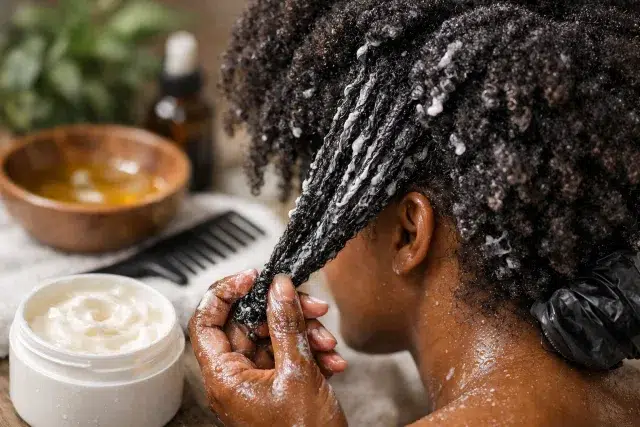
If you have 4B hair, you already know the deal: your curls can look plush and defined one day, then feel dry, tight, and weirdly rough the next. That’s not you doing something “wrong.” It’s simply how tightly coiled strands behave, especially when the cuticle is raised from friction, frequent detangling, heat, weather swings, or even just low humidity.
This is exactly why a Deep Conditioner 4B Hair routine is not optional for most people, it’s the difference between hair that cooperates and hair that fights you. A good deep conditioner doesn’t just make your hair feel soft for five minutes. It helps reduce friction, improves slip, makes detangling less stressful, and supports the hair fiber’s surface so you lose fewer strands to breakage over time. Cosmetic science reviews describe conditioning as largely about charge neutralization and lubrication of the hair surface to reduce fiber-to-fiber friction and improve manageability.
In this article, you’ll get 11 moisture boosting picks (organized by what 4B hair typically needs), plus a clear way to choose the right one for your porosity, a simple weekly schedule, and real-life fixes for common problems like “my hair feels coated” or “my curls are still dry right after deep conditioning.” And yes, we’ll keep it practical.
Quick definition: What is a deep conditioner?
A deep conditioner is a richer, more concentrated conditioning treatment designed to sit on the hair longer than a regular conditioner. The goal is to improve softness, slip, and manageability while supporting the hair’s surface so it tangles less and breaks less during grooming. Dermatology and hair-care guidance commonly emphasize gentle handling, minimizing damage, and using conditioning strategies to reduce breakage.
For 4B hair specifically, a Deep Conditioner 4B Hair product is usually most effective when it combines:
- Strong slip (detangling)
- Long-lasting softness (not just temporary “silicone shine”)
- Moisture support (humectants plus emollients)
- Enough structure support (often light protein, but not always)
Why 4B hair gets dry faster (and why deep conditioning feels different)
4B coils are tight, springy, and often dense. Natural scalp oils have a harder time traveling down the bends and curves, so mid-lengths and ends can be dry even if your scalp feels fine. Also, the more you manipulate the hair (detangling, twisting, refreshing, stretching), the more friction you create. That friction raises the cuticle, which increases roughness and tangling. Conditioning reduces friction through surface deposition and lubrication, which is a big reason hair feels smoother after a good treatment.
So when you choose a Deep Conditioner 4B Hair option, you’re really choosing how you want your wash day to go:
- Easier detangling or not
- Defined curls or frizz
- Moisture that lasts until day 4 or dryness by day 2
How to choose the right Deep Conditioner 4B Hair formula
Before the 11 picks, here’s the shortcut that saves money and frustration.
Step 1: Know your porosity (without overthinking it)
Low porosity hair often resists water and product at first, then builds up easily. It usually does better with:
- Lightweight emollients
- Warm water and gentle heat during deep conditioning
- Less heavy butter layering
Normal to high porosity hair absorbs water quickly but loses it fast. It often does better with:
- Richer masks
- More film-formers (some silicones or heavier oils can help)
- Consistent weekly treatments
Step 2: Match your main goal to ingredients
Here’s a simple table to connect goals to what you’ll often see on labels.
| Your 4B hair goal | Look for | Why it helps |
|---|---|---|
| Softer feel, better slip | Cetrimonium chloride, behentrimonium chloride, fatty alcohols | These conditioning agents reduce static and friction, helping detangling and smoothness. |
| Moisture support | Glycerin, panthenol, aloe, honey derivatives | Humectants help hair hold onto water when used correctly. |
| Strength balance | Hydrolyzed protein, amino acids, ceramides | Helps hair feel less mushy and improves resilience when used in moderation. |
| Longer lasting softness | Silicones (like amodimethicone), oils, butters | Helps seal and reduce moisture loss, especially in dry climates. |
Step 3: Decide protein or no protein
If your hair feels overly soft, limp, or “gummy” when wet, a little protein can bring balance. If your hair feels stiff, crunchy, or tangles more after “strengthening” products, you may need a more moisture-focused mask.
Now let’s get into the 11 picks.
Deep Conditioner 4B Hair: 11 moisture-boosting picks (by what they do best)
Instead of brand names (which change by country and stock), these are 11 pick types you can shop for in any market by checking the ingredient list and how your hair responds. Each pick includes what to look for, who it’s best for, and how to use it on 4B coils.
1) The “Slip First” detangling mask
This is your choice when detangling turns into a workout.
Look for: quaternary conditioning agents like cetrimonium chloride or behentrimonium chloride, plus fatty alcohols (cetyl, stearyl). Conditioning science commonly links these to surface lubrication and better combing.
Best for: tight tangles, single strand knots, dense 4B hair that mats easily
How to use: apply on soaking-wet hair, work in sections, finger detangle first, then wide-tooth comb.
2) The “Moisture + Seal” butter-rich mask
This is the mask that makes your hair feel plush, especially if you live in a dry area or your ends feel like straw.
Look for: shea butter, mango butter, avocado oil, olive oil, plus conditioning agents
Shea butter is widely used for moisturizing and softening benefits; some consumer health sources also discuss its moisturizing effect in topical formulations.
Best for: high porosity, dry ends, twist-outs that need more softness
How to use: don’t pile it onto your roots. Focus from mid-length to ends, then rinse thoroughly.
3) The lightweight “Low porosity friendly” mask
If heavy masks sit on your hair and leave it feeling coated, this is the move.
Look for: lighter oils (grapeseed, sunflower), fatty alcohols, panthenol, fewer heavy butters
Best for: low porosity 4B hair, quick buildup, hair that hates thick creams
How to use: use gentle heat (warm towel or shower cap) for 10–15 minutes.
4) The protein-light “Repair without stiffness” mask
This is for when your hair breaks easily but you don’t want that hard, crunchy feeling.
Look for: hydrolyzed proteins lower in the list, amino acids, or “strength” claims paired with moisturizing agents
Research on rinse-off conditioners and oils often evaluates tensile strength and protein loss, showing that formulations can affect damage markers in chemically stressed hair.
Best for: color-treated hair, frequent heat users, fragile ends
How to use: use once every 2–4 weeks, not weekly, unless your hair clearly loves it.
5) The “Elasticity reset” mask for overly soft hair
Sometimes 4B hair gets too moisturized and starts snapping when wet because it’s weak, not dry.
Look for: a slightly stronger protein presence, plus slip ingredients so it doesn’t tangle
Best for: hair that feels mushy when wet, curls that won’t hold a twist-out
How to use: shorten the time. Start with 5–10 minutes, then reassess next wash day.
6) The “Heat activated” mask (great when results feel inconsistent)
Heat helps many people get more consistent softness, especially with low porosity hair.
Look for: rich conditioning base, often marketed as “heat cap friendly”
Best for: low porosity, hair that feels unchanged after deep conditioning
How to use: 15–20 minutes under a heat cap or warm towel. Don’t cook your scalp.
7) The “Scalp calm” mask (when dryness comes with itch)
Yes, you can deep condition without irritating your scalp, but you need to be picky.
Look for: soothing ingredients like aloe, oat, panthenol, and avoid heavy fragrance if you’re sensitive
Best for: itchy scalp with dry lengths
How to use: apply mostly to hair, then lightly smooth the residue near the roots if your scalp tolerates it.
8) The “Anti frizz humidity helper” mask
If your hair gets fluffy the second you step outside, you want a smoother surface and better film-forming.
Look for: silicones like amodimethicone (or similar), polyquats, plus fatty alcohols
Conditioning literature explains that surface deposition and lubrication improve feel and reduce friction, which affects frizz and manageability.
Best for: humid climates, frizz-prone twist-outs
How to use: rinse well, then follow with a light leave-in and sealant if needed.
9) The “Pre shampoo softener” mask
This is underrated for 4B hair. Pre-poo deep conditioning reduces the harsh feeling some shampoos can cause.
Look for: oils + conditioners, or a mask you can apply on dry hair before washing
Best for: wash day dryness, frequent shampooing, hard water situations
How to use: apply to dry or slightly damp hair, wait 15–30 minutes, then shampoo and condition.
10) The “Quick mask” for busy wash days
Not every deep conditioning session needs to be a 45-minute event.
Look for: masks that work in 3–10 minutes, usually with strong slip agents
Best for: protective style maintenance, gym wash days
How to use: still section your hair. Rushing application is where results fall apart.
11) The “Bond support adjacent” mask (for chemically stressed hair)
If you bleach, color, relax, or heat-style often, you may need extra support beyond moisture.
Look for: products that claim repair, strengthening, and cuticle support, plus emollients
Studies that evaluate conditioners with certain oils and fatty acids often measure tensile strength and protein leakage in damaged hair models.
Best for: colored hair, repeated heat use
How to use: alternate with a moisture-heavy mask so hair stays soft, not stiff.
A simple weekly Deep Conditioner 4B Hair routine that actually works
If you want a routine you can repeat without thinking, use this weekly flow.
Weekly schedule (most 4B hair types)
- Cleanse with a gentle shampoo or clarifying shampoo if you have buildup.
- Apply Deep Conditioner 4B Hair treatment in 4–8 sections.
- Add mild heat if low porosity or if your results have been inconsistent.
- Rinse well, then use a leave-in.
- Seal lightly if your hair loses moisture fast (especially high porosity).
Stylist and dermatologist guidance for healthy hair often emphasizes gentle handling, avoiding damage, and using products and techniques that protect strands.
Timing guide (use this like a cheat sheet)
- Low porosity: 10–20 minutes with heat
- Normal porosity: 15–25 minutes, heat optional
- High porosity: 20–30 minutes, focus on mid-length to ends
Longer is not always better. Past a certain point, you’re mostly just letting product sit.
Common mistakes that make Deep Conditioner 4B Hair fail
These are the sneaky ones.
Mistake 1: Applying on barely wet hair
Deep conditioners usually spread best and perform best on fully wet hair. Water helps distribute the product and encourages smoother detangling.
Mistake 2: Using too much product
4B hair loves rich products, but overload can cause buildup and dullness, especially in low porosity hair. If your hair feels waxy after rinsing, reduce the amount and clarify next wash day.
Mistake 3: Never clarifying
If your hair always feels “coated,” the problem might not be the mask. It might be layers of product. A reset shampoo every few weeks helps your Deep Conditioner 4B Hair treatment actually touch your strands.
Mistake 4: Detangling aggressively
Conditioning helps reduce friction, but harsh detangling still snaps hair. A study analyzing grooming and breakage notes that lubricating agents can reduce combing forces and breakage risk, but technique still matters.
Real world scenarios (so you can recognize what your hair is telling you)
Scenario A: Hair feels soft in shower, then dry 2 hours later
Likely issue: moisture isn’t being sealed or you’re dealing with high porosity ends.
Fix: use a richer pick (butter-rich or anti-frizz helper) and seal lightly on damp hair.
Scenario B: Hair feels coated, heavy, and won’t absorb anything
Likely issue: buildup plus low porosity.
Fix: clarify, then use a lightweight low porosity friendly mask with heat.
Scenario C: Hair feels strong but stiff, curls look dull
Likely issue: too much protein or not enough emollients.
Fix: switch to a slip-first or butter-rich mask for 2–3 wash days.
FAQs
How often should I use Deep Conditioner 4B Hair treatments?
Most people with 4B hair do best with deep conditioning weekly. If you have heavy buildup or your hair gets weighed down, every 10–14 days can work better.
Should I deep condition before or after shampoo?
Both can work. After shampoo is the classic approach. Pre-shampoo deep conditioning is great when shampoo leaves your hair feeling rough or when detangling is easier before cleansing.
Do I need heat every time?
Not always. But if you have low porosity hair or your results feel inconsistent, gentle heat often improves softness and slip.
Can deep conditioning help with breakage?
Deep conditioning can support better manageability and reduce friction during grooming, which can reduce breakage risk when paired with gentle technique. Conditioning science links lubrication and surface effects with reduced friction and better combing behavior.
Conclusion
A Deep Conditioner 4B Hair routine is less about chasing a perfect product and more about matching your hair’s reality: porosity, dryness level, and how much manipulation you do each week. When you choose a mask based on slip, moisture support, and the right amount of strength, wash day gets easier, curls look more defined, and your ends stop feeling like they’re constantly in survival mode.
Start simple: pick one mask type that fits your biggest issue right now (detangling, dryness, frizz, or weakness), use it consistently for three wash days, and pay attention to what changes. If you do nothing else, remember this: less friction and better hydration retention are the foundation of softer coils, and understanding the hair cuticle matters more than trendy labels. In simple terms, the surface of your strand is the gatekeeper for softness and definition, and if you want to nerd out on it, that two-word phrase explains a lot.