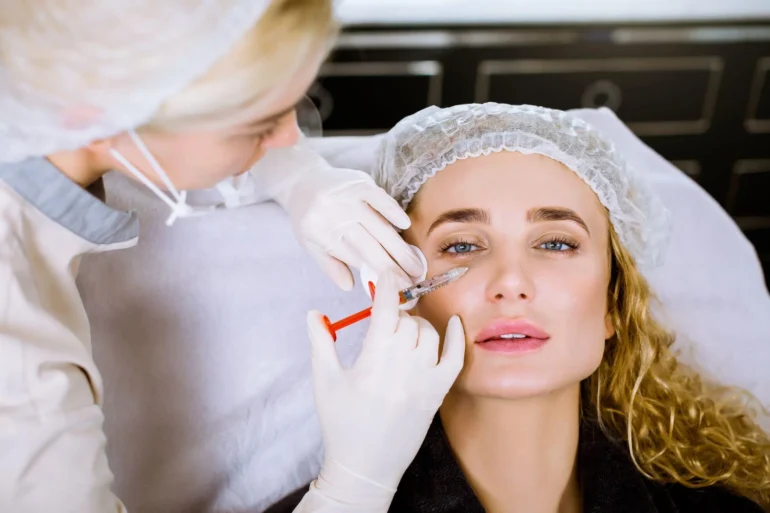
Most people researching under-eye treatments focus on the results—but rarely on what’s actually happening beneath the surface to get there. Juvelook is a collagen-stimulating injectable that pairs poly-D,L-lactic acid (PDLLA) with hyaluronic acid, and its effects unfold gradually over weeks and months. If you are curious about what your skin is doing after each session, this week-by-week breakdown gives you a clearer picture of the process and what to realistically expect.
What Makes Juvelook Different from Standard Fillers
Before diving into the timeline, it helps to understand what sets Juvelook apart. Unlike traditional hyaluronic acid fillers—which add volume by attracting water into the tissue—Juvelook works by stimulating your skin’s own collagen production. The PDLLA component acts as a biostimulator, gradually triggering fibroblast activity to rebuild skin thickness and texture from within.
For those searching for a Juvelook injection near me, it’s worth knowing that this treatment is particularly popular for the under-eye area, where aging causes the skin to thin, darken, and hollow out over time. Juvelook does not simply mask these changes—it works to reverse some of the underlying structural causes.
Week 1: The Initial Response
Right after injection, the hyaluronic acid component delivers an immediate, subtle volumizing effect. The under-eye area may look slightly more refreshed within the first 24 to 48 hours.
However, this early phase also comes with expected side effects:
- Swelling and puffiness around the injection sites, typically peaking within 24–72 hours
- Mild bruising, which affects roughly 20% of patients
- Tenderness or sensitivity as the numbing agent wears off
These reactions are normal and temporary. The PDLLA microspheres are settling into the tissue, beginning the early stages of a controlled inflammatory response—this is actually what kick-starts the collagen cascade. A skilled injector ensures the product is placed in the right tissue layer to support effective healing without unnecessary trauma.
Weeks 2–4: Swelling Subsides, Stimulation Begins
By the end of week two, swelling has largely resolved, and the filler begins to integrate more naturally with the surrounding tissue. Many patients notice that the initial puffiness has given way to a smoother, slightly more refreshed appearance.
Beneath the surface, something more significant is happening. The PDLLA microspheres are gradually being metabolized by the body, and as they break down, fibroblasts—the cells responsible for producing collagen—are being activated. This process is subtle and not yet visible to the naked eye, but it is the foundation of Juvelook’s long-term results.
By week four, the hyaluronic acid has settled completely. This is when the true baseline result of the treatment becomes visible, and most practitioners will use this point as a reference before recommending follow-up sessions.
Months 2–3: Collagen Remodeling Accelerates
This is where Juvelook’s biostimulating properties really begin to show. Between the second and third month, collagen synthesis accelerates as more PDLLA microspheres are absorbed. New collagen fibers are being laid down in the dermis, gradually improving:
- Skin thickness in the delicate under-eye area
- Texture and tone, with many patients noting reduced crepiness
- The appearance of dark circles, which are often worsened by skin thinning and vascular show-through
The results at this stage tend to be subtle but measurable. Patients familiar with Juvelook injections often describe this phase as the point at which others start noticing they look more rested, without being able to identify exactly why.
Months 4–6: Peak Results
Collagen stimulation typically reaches its peak somewhere between the fourth and sixth month post-treatment. By this stage, the skin in the treated area has undergone meaningful structural improvement. Volume, while not as dramatic as a traditional filler, is supported by genuine tissue regeneration rather than simply water retention.
The under-eye skin appears firmer, less translucent, and more even in tone. For patients who completed a series of two or three treatment sessions spaced 4–6 weeks apart, results at this stage tend to be noticeably more pronounced than after a single session.
This is also the ideal time to assess whether a maintenance session is needed to sustain or build upon the improvements already achieved.
Months 6–12 and Beyond: How Long Do Results Last?
Juvelook results typically last between 6 and 12 months, though outcomes vary depending on individual metabolism, skin condition, and the number of sessions completed. Because the treatment works by rebuilding collagen rather than relying purely on filler volume, the improvements can feel more natural and age gracefully as the product is gradually metabolized.
Unlike hyaluronic acid fillers, PDLLA-based injectables cannot be dissolved with hyaluronidase, which is why they should be approached with care and performed only by experienced medical professionals. For those actively looking for a Juvelook injection near me, choosing a reputable clinic with expertise in periorbital treatments is especially important given the sensitivity of the under-eye area.
How Juvelook Compares to Other Under-Eye Treatments
Juvelook occupies a specific niche in the aesthetic treatment landscape. It is not designed to replace traditional HA fillers as a volumizer—rather, it complements them by improving skin quality where volume correction alone isn’t enough.
Here’s a quick comparison:
- Hyaluronic acid fillers (e.g., Restylane, Juvederm): Immediate volumizing effect, reversible, results last 9–12 months
- Polynucleotide injections (e.g., Rejuran, Plinest): Focus on tissue healing and anti-inflammation, often paired with fillers
- Juvelook (PDLLA + HA): Combines immediate HA hydration with long-term collagen stimulation, improving skin thickness and texture over time
For patients with early-to-moderate signs of under-eye aging—particularly skin thinning and mild hollowing—Juvelook can deliver results that feel genuinely restorative rather than cosmetically patched.
Is Juvelook Right for You?
Juvelook works best for patients experiencing age-related skin thinning, changes in skin texture, or mild under-eye hollowing. It’s not the optimal choice for patients with significant volume loss, prominent eye bags, or loose skin, who may benefit more from traditional volumizing fillers or a combination approach.
A thorough consultation with a qualified medical professional is essential before any injectable treatment in the periorbital area. The under-eye skin is the thinnest on the face, and proper technique, product selection, and placement depth all directly affect both safety and results.
Take the Next Step Toward Refreshed Eyes
Understanding the biology behind Juvelook helps set realistic expectations—and explains why patience is part of the process. Results do not appear overnight, but the gradual collagen rebuilding is precisely what makes them look natural and last longer than many alternatives.
If you are ready to explore whether this treatment is right for you, the team at Zest Clinic offers expert under-eye assessments and a range of evidence-based injectable treatments. Book a consultation to discuss your concerns and get a personalized recommendation.