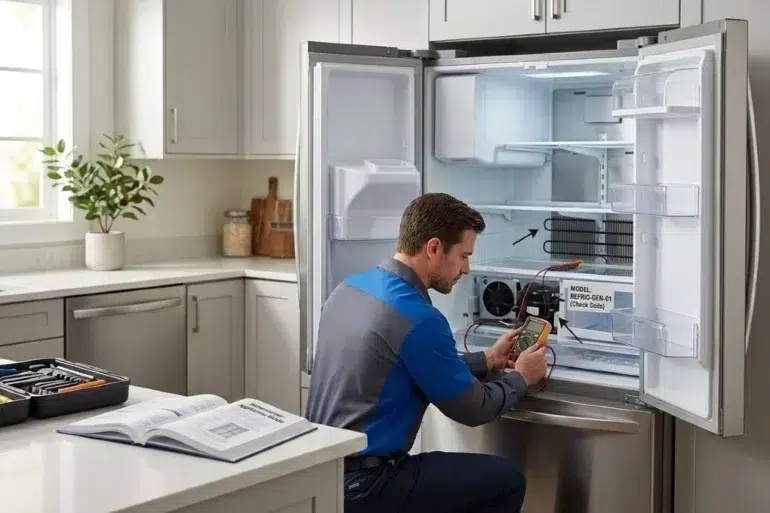
Most people do not think much about their refrigerator until something goes wrong. One day everything works perfectly. The next, food is no longer staying cold.
Whether you call it a fridge or a refrigerator, the appliance depends on many parts working together. When performance changes, guessing rarely helps. Similar symptoms can have different causes, which is why proper diagnostics matter before any fridge refrigerator repair begins.
Common Refrigerator Problems
Most faults develop gradually. Parts wear down, dirt builds up, and seals lose effectiveness. Catching problems early often prevents more expensive repairs later.
Cooling Issues
Poor cooling is one of the most common complaints. Food spoils faster and energy consumption increases. Dirty condenser coils, blocked airflow, faulty thermostats, worn fans, or compressor problems can all affect temperature.
Water Leaks
Water around the refrigerator usually points to a drainage problem. A clogged defrost drain, frozen tube, or damaged water line can allow moisture to collect beneath the appliance.
Unusual Sounds
Some noise is normal. Loud buzzing, clicking, grinding, or rattling sounds are not. These noises may indicate loose components, worn motors, ice buildup, or compressor trouble.
Frost Accumulation
Excess frost often signals a problem with the defrost system or damaged door seals. As ice builds up, airflow becomes restricted and cooling suffers.
Worn Door Gaskets
Door seals experience constant use. Over time they can crack, warp, or lose flexibility. Even small gaps allow warm air inside, forcing the refrigerator to work harder.
Broken Shelves and Drawers
Interior components can weaken after years of daily use. While they rarely affect cooling, damaged shelves and drawers reduce storage space and may create safety concerns.
Electronic Control Problems
Modern refrigerators rely on sensors and control boards. Faulty electronics or failing components can cause inaccurate temperatures, error codes, or inconsistent operation.
Repair or Replace?
When a refrigerator starts failing, many homeowners ask the same question. Is it worth fixing?
The answer depends on the unit’s age, condition, repair costs, and service history.
Repair is often the better option when:
- the appliance is otherwise in good condition;
- the problem affects only one component;
- cooling has been reliable until recently;
- replacement costs are significantly higher.
Repeated breakdowns or major efficiency losses may make replacement more practical.
In many cases, replacing a relay, thermostat, fan motor, or door gasket is enough to restore normal performance. A targeted repair can add years to the appliance’s lifespan.
How Routine Maintenance Helps
Refrigerators run continuously. A little attention goes a long way. Simple maintenance can reduce wear and help prevent unexpected failures.
Clean the Condenser Coils
Dust restricts airflow and forces the system to work harder. Regular cleaning improves efficiency and supports stable cooling.
Check Door Seals
Inspect gaskets for cracks or gaps. Small defects can quickly lead to higher energy use and uneven temperatures.
Pay Attention to Temperature Changes
Food that spoils sooner than usual can be an early warning sign. Small changes often appear before a serious breakdown.
Listen for New Noises
Mechanical problems rarely stay silent. Unfamiliar sounds often signal trouble long before the refrigerator stops working.
Address Problems Early
Delaying repairs can turn a minor issue into a much larger one. Prompt service helps prevent damage to other components.
The Value of Professional Repair
Effective refrigerator repair focuses on the root cause, not just the visible symptoms. Accurate diagnostics make a difference.
Experienced technicians typically inspect:
- cooling performance;
- airflow and circulation;
- electrical components;
- defrost functions;
- compressor operation;
- temperature stability.
Proper repairs can improve efficiency, maintain consistent temperatures, and extend the life of the appliance.
Professional service also prevents unnecessary part replacement. What seems like a major failure may be caused by a single worn component.
Restoring the system correctly can delay the cost of buying a new refrigerator and provide years of reliable operation.
A refrigerator works around the clock. Even minor issues should not be ignored.
Cooling problems, leaks, frost buildup, unusual noises, and electronic faults rarely disappear on their own. Timely fridge and refrigerator repair helps protect food, reduce energy waste, and extend the appliance’s lifespan.
In many situations, a well-executed repair is all that is needed to restore dependable performance and avoid replacing the unit too soon.