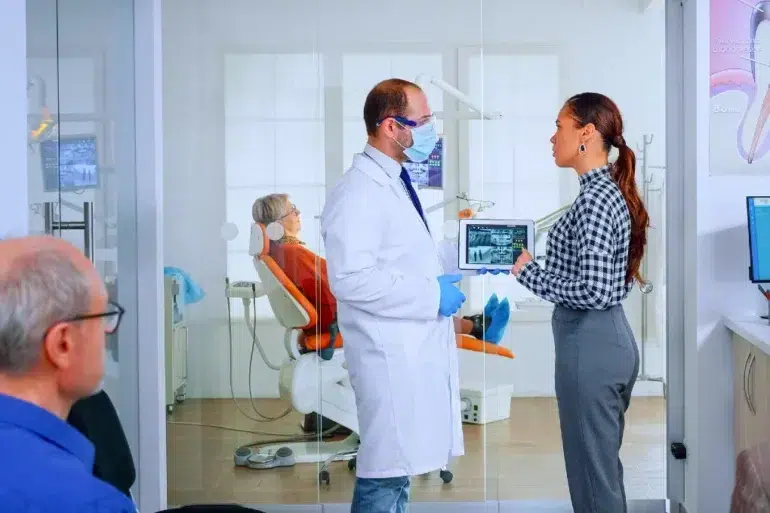
Most clinic owners first think about medical office fitouts when something starts annoying them. Not usually during a calm, strategic planning meeting. More often, it happens on a rushed Tuesday morning.
The receptionist is trying to answer calls while checking in three patients. A nurse is walking back and forth because supplies are stored in the wrong room again. Someone opens a door and it blocks half the hallway. Privacy disappears because two conversations are happening too close together. Little things. Except they are not little when they happen every single day.
That is usually when people realise medical office fitouts are not really about appearance first. They are about function. Flow. The invisible systems inside a practice that either make life easier or quietly drain everyone by 11 a.m.
And honestly, people notice faster than they think. Patients do. Staff definitely do.
Workflow Problems Rarely Look Dramatic
That is the tricky part. A bad layout usually does not arrive like some giant obvious disaster. It shows up as small friction. Constantly.
A printer in the wrong place. Storage too far from treatment rooms. Consultation rooms that somehow always feel crowded. Staff were repeating the same awkward movement patterns every day because the space was designed without real workflow in mind.
It feels normal because people adapt. Humans are good at adapting to inconvenience. Sometimes too good.
Medical office fitouts matter because they force a question people stop asking: why are we doing it this way at all? That question changes things.
Sometimes the answer is simple. Move this. Open that. Redesign one bottleneck. Sometimes it is bigger. But the problem usually starts small. Quietly.
Reception Sets the Tone for Everything After
Reception is one of those spaces people underestimate. It is not just a desk. It is where first impressions happen. Where nervous patients arrive. Where private conversations accidentally become public if the layout is wrong. Where staff either feel in control or instantly overwhelmed. Good medical office fit-outs pay attention here.
Enough space for movement. Clear patient flow. Seating that makes sense. A reception area where people are not awkwardly standing too close to someone discussing test results. That sounds basic. It is not always basic in practice.
I have seen clinics where patients genuinely looked confused about where to stand, where to sit, and whether they were even in the right place.
That uncertainty starts trust in the wrong direction. Medical office fitouts should remove that friction before it starts. Quiet confidence. That is the goal.
Staff Efficiency Is Not a Luxury
Sometimes clinic owners think efficiency sounds like a corporate buzzword. It is not. It is the nurse walking twenty unnecessary extra steps fifty times a day.
It is the GP waiting for files or equipment because storage planning made no practical sense. It is support staff trying to work around physical layout problems that should not exist. These things cost time. And patience.
Medical office fitouts help because they are built around how people actually work, not how a floor plan looked on paper six months earlier. That distinction matters.
Design should follow movement. Not just aesthetics. A beautiful clinic that frustrates staff all day is still a badly designed clinic. Harsh maybe. True, though.
Privacy Should Never Feel Optional
Patients notice privacy immediately. Or the lack of it. The awkward check-in where someone can hear your entire appointment reason. The consultation room where hallway noise leaks through the walls. The billing discussion is happening close enough for strangers to accidentally learn your business. Not ideal.
Medical office fitouts that prioritise privacy do something subtle but important: they create trust without needing to explain it. People feel safer. That feeling matters more in healthcare than almost anywhere else.
Especially in specialist clinics. Women’s health. Mental health. Fertility. Family medicine. Places where conversations are personal and often heavy. Privacy is not a design extra. It is part of care. Sometimes one of the most important parts.
Small Spaces Can Work Better Than Big Ones
There is this assumption that bigger always means better. Not necessarily. Some of the smoothest clinics I have seen were not large at all. They were just planned properly.
And some very spacious practices somehow felt cramped because the layout fought against everyone inside it. Medical office fitouts are often about smarter use, not just more square metres.
Storage where it helps. Rooms sized for actual purposes. Pathways that do not create collisions every ten minutes. Waiting areas that feel calm instead of overfilled.
Bad design wastes space. Good design creates it. Funny difference. Same building sometimes.
Compliance Matters, But Patients Feel Comfort First
Of course clinics need compliance. Accessibility standards. Infection control. Safe pathways. Equipment placement. Proper materials. All essential. Nobody argues with that.
But patients do not walk in admiring compliance. They feel comfort first. Does the place feel welcoming? Cold? Organised? Rushed? Chaotic? Calm?
Medical office fitouts work best when compliance and comfort are not treated like opposing ideas. Because they are not.
You can build something safe and still human. Actually, you should. People already arrive with anxiety. The environment should not add more. Seems obvious. Somehow often forgotten.
Renovating Without Shutting Down Is a Whole Different Game
This part gets stressful fast. Many practices need better medical office fitouts, but closing completely is not realistic. Patients still need care. Staff still need work. Appointments keep existing, unfortunately.
So renovations happen while life continues. Dust. Temporary walls. Apologies. Rearranged schedules. Everyone pretending the construction noise is fine. It is… a lot. This is where planning matters more than enthusiasm.
Experienced medical office fit-out teams understand healthcare operations, not just construction. They know which disruptions are manageable and which ones turn into operational disasters. That difference saves sanity. And probably coffee budgets too.
Technology Needs Space Too
Modern clinics run on more than rooms and furniture. Screens. Systems. Digital records. Diagnostic tools. Future equipment nobody needs yet but probably will in two years. Medical office fitouts should think ahead.
Because retrofitting technology later is usually expensive, annoying, and somehow always happens during the busiest month possible. Planning for growth feels boring during design stages.
Later, it feels brilliant. That is usually how future-proofing works. Quietly appreciated. Rarely celebrated enough.
Staff Morale Lives in the Space Too
People do not always connect physical environment with morale, but they should. Working in a space that constantly creates stress changes people. Slowly. Frustration becomes normal. Small irritations stack up. Energy drains faster. The opposite is true too.
A well-designed clinic makes the day smoother. Less scrambling. Less irritation. Less unnecessary chaos. Medical office fitouts influence culture more than people realise.
Not by motivational posters. By making daily work less exhausting. Honestly, that probably helps more.
Patients Feel It, Even If They Never Mention It
Most patients will never say, “Your medical office fitouts are excellent.” They will just feel the difference. The check-in felt easy. The waiting room felt calm. The consultation felt private. The whole place felt organised and trustworthy. Or it didn’t.
People remember how spaces make them feel, especially in healthcare where nerves are already high. That emotional layer matters. A lot.
Medical office fitouts from Juma Projects are not really about walls or cabinetry or choosing the right flooring shade for reception. Those things matter, yes, but only because they support something bigger. Confidence. Flow. Trust.
A clinic that works better for staff almost always works better for patients too. And most of the time, that improvement starts long before treatment begins. It starts with the space itself. Quietly doing its job.