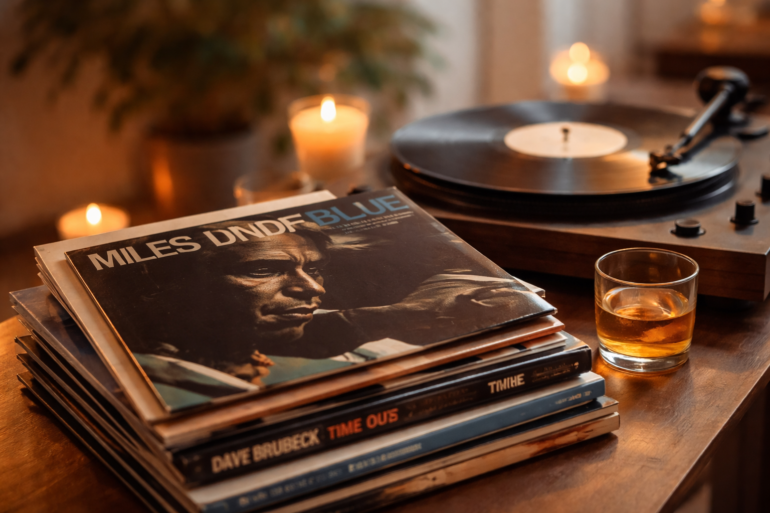
If you have ever wanted to get into jazz but did not know where to begin, you are not alone. The best jazz albums for beginners are not always the most technically dazzling or the most historically dense. The right starting point is usually an album that feels welcoming, memorable, and easy to return to after the first listen.
Jazz can seem intimidating from the outside because the genre is so wide. It includes swing, bebop, cool jazz, hard bop, vocal jazz, modal jazz, and bossa nova, each with its own mood and language. But once you start with the right records, jazz stops feeling like homework and starts feeling personal. That is why this list focuses on albums that offer strong melodies, clear moods, and performances that still feel alive today.
A good beginner album does more than sound impressive. It helps you hear what makes jazz special in the first place. You start noticing space, phrasing, improvisation, groove, and the way musicians respond to one another in real time. Some of the albums below are famous for good reason. Miles Davis’ Kind of Blue was selected for the National Recording Registry by the Library of Congress, which notes the registry’s role in preserving recordings of lasting cultural importance. Dave Brubeck’s Time Out was later inducted into the GRAMMY Hall of Fame, an honor reserved for recordings of enduring historical or qualitative significance.
What follows is not a museum tour. It is a practical listening path for real people who want a strong first impression tonight.
What Makes the Best Jazz Albums for Beginners So Easy to Love
The best jazz albums for beginners usually share a few important traits. They have melodies you can hold onto, emotional clarity, and enough structure to keep the music from feeling abstract. Even when the solos stretch out, the songs still feel grounded.
They also reward repeat listening. On the first spin, you might enjoy the vibe. On the second or third, you start catching details like a brushed snare, a quiet piano answer, or a saxophone phrase that changes the mood of the whole track. That slow reveal is one of the great pleasures of jazz.
For a beginner, accessibility matters more than reputation alone. Some classic jazz albums are brilliant but demanding. The records below are classics that meet the listener halfway.
1. Miles Davis, Kind of Blue
If there is one album that appears on almost every beginner jazz list, it is Kind of Blue. That is not because it is overpraised. It is because it genuinely works as a first step. The melodies are spacious, the tempo is never rushed, and the playing feels both sophisticated and immediately human.
What makes this record beginner-friendly is its sense of openness. Nothing feels crowded. You can hear the shape of each instrument, and the music gives you room to settle in. It is also a landmark recording. The Library of Congress includes it in the National Recording Registry, and its published essay describes the album as hugely influential in the history of jazz.
Start with “So What” if you want the cleanest entry point. It has one of the most recognizable openings in jazz history, and the track invites attention without demanding prior knowledge.
2. Dave Brubeck Quartet, Time Out
For many listeners, Time Out is the album that proves jazz can be both smart and immediately catchy. The rhythm is one reason. Dave Brubeck played with unusual time signatures, but the music never sounds academic. It swings, breathes, and stays memorable.
“Take Five” is the obvious entry track, and it is famous for a reason. The groove is hypnotic, the melody is easy to remember, and the performance has enough personality to hook a first-time listener fast. GRAMMY sources note that both “Take Five” and Time Out were honored by the Recording Academy, with Time Out inducted into the GRAMMY Hall of Fame.
This is a great pick if you like structure, rhythm, and records that feel a little cerebral without becoming cold.
3. John Coltrane, Blue Train
Not every beginner starts with soft, airy jazz. Some want energy, motion, and a little edge. Blue Train is perfect for that kind of listener. It has force, but it is still easy to follow.
John Coltrane would go on to make more spiritually intense and harmonically demanding music, but Blue Train gives you the excitement of his sound in a more approachable setting. The solos have momentum, and the arrangements feel full without becoming overwhelming.
This album is a strong next step after Kind of Blue if you want something richer and more assertive. It teaches you how jazz can be intense and inviting at the same time.
4. Ella Fitzgerald and Louis Armstrong, Ella and Louis
Some people do not realize that vocal jazz can be the easiest doorway into the genre. Ella and Louis is one of the warmest places to begin. The chemistry between Ella Fitzgerald and Louis Armstrong is effortless, and the songs feel intimate from the first note.
If instrumental jazz seems hard to decode, start here. You already know how to follow a voice. That makes the phrasing, swing, and emotional nuance easier to hear. Ella sounds elegant and fluid. Louis sounds gravelly, tender, and deeply present.
This album also helps new listeners understand that jazz is not only about solos. It is also about timing, tone, personality, and interpretation. Those are core jazz values too.
5. Stan Getz and João Gilberto, Getz/Gilberto
If you want the best jazz albums for beginners but prefer something softer and more relaxed, Getz/Gilberto is a beautiful entry point. This record blends jazz with Brazilian bossa nova in a way that feels graceful, romantic, and surprisingly modern.
“The Girl from Ipanema” is the track most people know, but the whole album is worth sitting with. The saxophone lines are silky, the rhythms are subtle, and the mood is calm without turning sleepy.
This is the album I would recommend to someone who says they do not think they like jazz but do like gentle, stylish music with atmosphere. Often, this record changes their mind.
6. Art Blakey and the Jazz Messengers, Moanin’
If you want jazz with punch, groove, and a little swagger, put on Moanin’. This album has drive. It also has a blues-rooted feel that makes it easier for newcomers to connect with emotionally.
Hard bop can sound more direct than some other jazz styles because it carries gospel, blues, and street-level energy right into the arrangements. That is exactly what makes Moanin’ such a strong beginner record. It feels alive, physical, and confident.
The title track is the place to start. You can hear the call-and-response feel almost immediately, and that familiarity helps a first-time listener stay engaged while the improvisation unfolds.
7. Chet Baker, Chet Baker Sings
Not every beginner wants fireworks. Some want mood, fragility, and late-night intimacy. Chet Baker Sings offers exactly that. Baker’s voice is understated and vulnerable, and his trumpet playing feels close enough to touch.
This is one of those albums that works especially well for solitary listening. It is reflective without feeling heavy. The arrangements are light, and the emotional effect comes from restraint rather than force.
For listeners who enjoy singer-songwriter music, indie ballads, or understated pop, this album can feel like a natural bridge into jazz.
8. Sonny Rollins, Saxophone Colossus
There are albums that teach you how to enjoy jazz, and then there are albums that teach you how much personality can live inside a jazz performance. Saxophone Colossus does both.
Sonny Rollins sounds playful, smart, and fully in command. The songs have shape, but the solos are where the character really appears. You can hear wit in the phrasing. That matters because many beginners assume jazz is emotionally distant. Rollins proves the opposite.
“St. Thomas” is a particularly strong first track. It is rhythmic, memorable, and full of life.
9. Bill Evans Trio, Waltz for Debby
If your ear naturally goes to piano, harmony, and atmosphere, this album may become your favorite. Waltz for Debby has elegance, but it never feels sterile. Bill Evans and his trio create a sense of conversation that is almost cinematic.
One reason this works well for beginners is the trio format. You can more easily hear the interaction between piano, bass, and drums. Nothing is hidden inside a large ensemble. Every gesture matters.
This record also teaches an important jazz lesson. Quiet music can be just as gripping as loud music. Sometimes more so.
10. Cannonball Adderley, Somethin’ Else
This album is ideal for listeners who loved Kind of Blue and want something related but slightly brighter and more hard-driving. Cannonball Adderley brings warmth and soul, and the session includes Miles Davis, which adds even more appeal for new listeners building their jazz foundation.
The melodies here are strong, and the performances strike a great balance between polish and feeling. This is a record that sounds classic without sounding distant.
“Autumn Leaves” is especially helpful for beginners because it shows how jazz musicians transform a familiar song shape into something flexible and emotionally rich.
A Simple Listening Path for Tonight
If you want a practical way to start, do not overthink it. Choose based on your existing taste.
If you like calm, spacious music, start with Kind of Blue.
If you like memorable grooves, start with Time Out.
If you like vocals and warmth, start with Ella and Louis.
If you like soft, elegant mood music, start with Getz/Gilberto.
If you want more drive and blues feeling, start with Moanin’.
If you like introspective, late-night records, start with Chet Baker Sings or Waltz for Debby.
The important thing is not choosing the perfect first album. It is choosing one and giving it your full attention for thirty to forty minutes.
How to Listen to Jazz Without Feeling Lost
A lot of beginners think they need technical knowledge before they can enjoy jazz. You do not. You only need a listening approach that removes pressure.
Start by following one instrument at a time. On your first listen, stay with the melody. On the second, notice the drummer or bassist. On the third, pay attention to how the soloist changes the mood.
It also helps to stop treating improvisation like a puzzle. Think of it as conversation. One musician states an idea, another responds, and the rhythm section keeps the floor moving underneath them. Jazz at Lincoln Center describes jazz as a broad musical language tied to performance, history, and expression, and its educational resources emphasize listening as a living experience rather than a purely academic one.
Another useful tip is to listen at night or in a quiet setting. Jazz rewards attention, and some of its best details disappear when it becomes background noise too early.
Common Mistakes Beginners Make With Jazz
One mistake is starting with the most difficult album because it seems more serious. That often backfires. A better strategy is to build familiarity first, then move toward denser or more adventurous records later.
Another mistake is expecting every jazz album to sound alike. Jazz is a huge category, not a single mood. If you dislike one album, that does not mean you dislike jazz. It may only mean you have not found your lane yet.
A third mistake is giving up after one listen. Jazz often opens slowly. Some records that feel merely pleasant at first become favorites once your ear learns what to notice.
Where to Go After These Beginner Jazz Albums
Once you connect with one of these records, the next steps become easier. If you loved Miles Davis, try Sketches of Spain or Milestones. If Dave Brubeck clicked for you, spend more time with cool jazz and West Coast jazz. If Art Blakey landed hardest, you may be ready for more hard bop.
If Ella and Louis is your favorite, you can go deeper into vocal jazz with Sarah Vaughan, Billie Holiday, and more Ella Fitzgerald. If Bill Evans draws you in, piano-led jazz opens up beautifully from there.
The point is to let your own taste guide the journey. Jazz history matters, but personal connection matters more at the beginning.
Conclusion
The best jazz albums for beginners are the ones that make you want to keep listening. That is the real test. A beginner record should not make you feel excluded or underqualified. It should invite you in, hold your attention, and leave you curious about what comes next.
That is why albums like Kind of Blue, Time Out, Ella and Louis, Getz/Gilberto, and Moanin’ remain such strong entry points. They are historically important, but more importantly, they are still emotionally immediate. They sound like real people making real choices in real time, and that is the heart of jazz.
If you are starting tonight, choose one album that matches your mood and stay with it from beginning to end. Then revisit it tomorrow. The more you listen, the less mysterious jazz becomes and the more rewarding it feels. Once that shift happens, you are no longer standing outside the genre. You are inside it, building your own relationship with a living musical tradition rooted in jazz history.