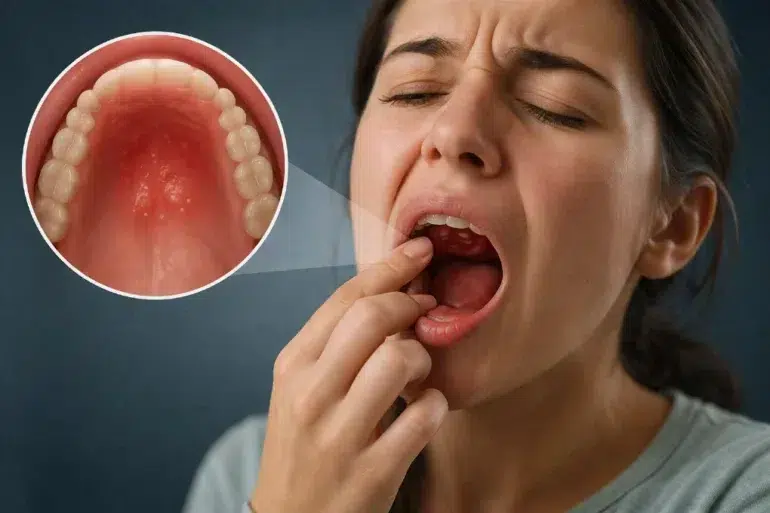
If you’ve ever taken a bite of pizza that was just a little too hot, you already know how unpleasant it can feel. But what if the discomfort lingers? You might start wondering, why does the roof of my mouth hurt, especially when eating, drinking, or even just talking.
This kind of pain can range from mild irritation to something more persistent and concerning. Sometimes it’s something simple like a minor burn, but other times it could point to infections, allergies, or underlying health issues. Understanding what’s behind the discomfort is the first step toward finding relief.
Let’s break it down in a way that actually makes sense, so you can figure out what’s going on and what to do next.
What Is the Roof of the Mouth?
Before diving into causes, it helps to understand what you’re dealing with. The roof of your mouth, also known as the palate, has two parts:
- Hard palate: The front portion, made of bone and covered with tissue
- Soft palate: The back portion, softer and more flexible
Both areas are sensitive and can easily become irritated due to heat, injury, infections, or other triggers.
Common Reasons Why the Roof of My Mouth Hurts
There’s no single answer to why does the roof of my mouth hurt, because multiple factors can be involved. Here are the most common ones.
1. Burns from Hot Food or Drinks
This is by far the most frequent cause. Eating hot pizza, soup, or coffee can easily burn the delicate tissue on your palate.
Symptoms include:
- Tenderness or soreness
- Peeling skin
- Sensitivity to temperature
- A rough or raw feeling
These burns are usually minor and heal within a few days. However, repeated burns can make the tissue more sensitive over time.
2. Mouth Sores or Ulcers
Canker sores can form on the roof of your mouth, though they’re more common on the inside of the cheeks or lips.
Possible triggers:
- Stress
- Nutritional deficiencies (like B12 or iron)
- Minor injuries
- Hormonal changes
These sores can make eating and speaking uncomfortable, especially if they’re large or multiple.
3. Allergic Reactions
If you notice the pain after eating certain foods, allergies could be the culprit.
Common triggers include:
- Pineapple
- Tomatoes
- Spicy foods
- Nuts
You may also feel:
- Itching or tingling
- Swelling
- A burning sensation
This is sometimes referred to as oral allergy syndrome, which is linked to pollen allergies.
4. Dehydration and Dry Mouth
A dry mouth can make tissues more vulnerable to irritation and discomfort.
Signs of dry mouth:
- Sticky feeling
- Cracked lips
- Difficulty swallowing
- Increased sensitivity
Saliva plays a protective role, so when it’s lacking, irritation becomes more likely.
5. Infections (Fungal, Viral, or Bacterial)
Certain infections can cause pain on the roof of the mouth.
Examples include:
- Oral thrush (fungal infection)
- Herpes simplex virus
- Strep throat
These conditions may also come with:
- White patches
- Redness
- Fever
- General discomfort
According to the National Institutes of Health, oral infections are a common cause of mucosal irritation, especially in people with weakened immune systems.
6. Trauma or Injury
Sometimes the answer to why does the roof of my mouth hurt is as simple as accidental injury.
You might have:
- Scratched it with sharp food (chips, toast)
- Burned it repeatedly
- Injured it with dental tools or braces
Even small injuries can feel worse than they look because of how sensitive the area is.
7. Smoking or Irritants
Smoking or exposure to harsh chemicals can irritate the palate.
Effects include:
- Persistent soreness
- Dryness
- Increased risk of infections
Long-term irritation can even lead to more serious conditions, so this is something to take seriously.
8. Nutritional Deficiencies
Your body needs certain vitamins to maintain healthy tissues.
Deficiencies in:
- Vitamin B12
- Iron
- Folate
can lead to mouth pain, inflammation, and sores.
9. Sinus Issues
This might surprise you, but sinus pressure can sometimes cause pain that feels like it’s coming from the roof of your mouth.
If you also have:
- Nasal congestion
- Facial pressure
- Headaches
then sinus-related issues could be the reason.
Quick Comparison of Causes
| Cause | Common Symptoms | Duration |
|---|---|---|
| Burns | Pain, peeling, sensitivity | 2–5 days |
| Sores | Ulcers, sharp pain | 7–14 days |
| Allergies | Itching, swelling | Minutes–hours |
| Infections | Redness, patches, fever | Days–weeks |
| Dry mouth | Sticky feeling, irritation | Ongoing |
When Should You Be Concerned?
Most of the time, palate pain isn’t serious. But there are situations where you shouldn’t ignore it.
Seek medical attention if:
- Pain lasts more than two weeks
- You notice unusual lumps or growths
- There’s severe swelling
- You have difficulty swallowing or breathing
- The pain keeps coming back
Persistent symptoms may require evaluation by a dentist or doctor.
How to Treat Roof of Mouth Pain at Home
If you’re dealing with mild discomfort, there are several simple remedies that can help.
Simple Home Remedies
- Rinse with salt water: Helps reduce inflammation
- Stay hydrated: Keeps tissues healthy
- Avoid hot and spicy foods: Prevents further irritation
- Use cold foods: Yogurt or ice cream can soothe the area
- Maintain oral hygiene: Prevents infections
Over-the-Counter Options
- Oral gels for pain relief
- Antihistamines for allergic reactions
- Antifungal treatments (if prescribed)
Preventing Future Pain
Once you’ve figured out why does the roof of my mouth hurt, prevention becomes easier.
Here’s what you can do:
- Let hot food cool before eating
- Stay hydrated throughout the day
- Avoid known food triggers
- Maintain a balanced diet
- Practice good oral hygiene
These small habits can make a big difference.
Real-Life Scenario
Imagine this: you grab a slice of fresh pizza, take a bite, and immediately regret it. The next day, the roof of your mouth feels sore and rough. That’s a classic minor burn.
Now compare that to someone who notices recurring pain after eating certain fruits. In that case, allergies might be the underlying issue.
Same symptom, different causes. That’s why paying attention to patterns matters.
Frequently Asked Questions
Why does the roof of my mouth hurt when I eat?
It could be due to burns, sores, or sensitivity caused by irritation. Hot or spicy foods often make symptoms worse.
Can stress cause mouth pain?
Yes, stress can trigger canker sores and increase sensitivity, leading to discomfort in the palate.
Is it normal for the pain to last several days?
Yes, especially if it’s caused by burns or ulcers. However, if it lasts more than two weeks, it’s worth checking with a professional.
Can allergies really affect the roof of the mouth?
Absolutely. Oral allergy syndrome can cause itching, tingling, and pain in the palate after eating certain foods.
Deeper Insight into Oral Health
Oral health is closely tied to overall well-being. Conditions affecting the palate are part of a broader system involving tissues known as the oral mucosa. Understanding this can help you take better care of your mouth long-term.
For a deeper look into how these tissues function, you can read about oral mucosa, which plays a key role in protecting your mouth from damage and infection.
Conclusion
So, why does the roof of my mouth hurt? The answer isn’t always straightforward, but in most cases, it comes down to common and manageable causes like burns, sores, allergies, or minor injuries.
The key is to pay attention to your symptoms, notice patterns, and take simple steps to protect your oral health. Most issues resolve on their own, but persistent or severe pain should never be ignored.
Taking care of your mouth doesn’t require anything complicated. A little awareness, a few good habits, and timely action can go a long way in keeping discomfort away.