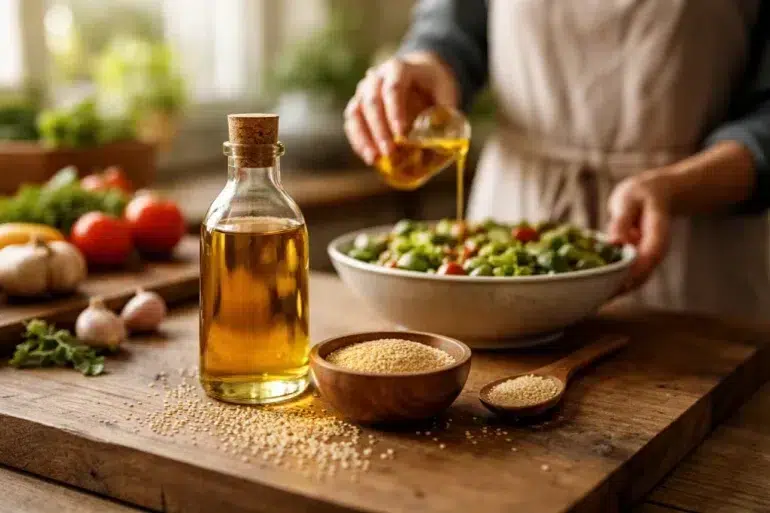
If you grew up in a home where traditional cooking mattered, there is a good chance Oil Gingelly was already part of the kitchen. Also known as sesame oil in many markets, it has a rich aroma, a distinctive nutty taste, and a long reputation for being more than just another cooking fat. People use Oil Gingelly for sautéing, tempering, finishing dishes, body massage, and even basic home wellness routines.
What makes Oil Gingelly stand out is that it brings together flavor, functionality, and nutritional value in one bottle. It contains mostly unsaturated fats, and health authorities consistently recommend replacing more saturated fats with unsaturated fats as part of a heart healthy eating pattern. That does not make Oil Gingelly a miracle food, but it does make it a smart choice when used in sensible amounts as part of a balanced diet.
In everyday cooking, Oil Gingelly works especially well because it adds depth without needing many extra ingredients. In wellness routines, many people value it for how versatile and easy it is to use. From stir fries and dals to skin care and oil pulling traditions, Oil Gingelly keeps showing up for a reason.
This article takes a practical look at the real benefits of Oil Gingelly, how to use it in daily cooking, what research says, and how to choose the right type for your home.
What Is Oil Gingelly?
Oil Gingelly is oil extracted from sesame seeds. Depending on how it is processed, it may be sold as cold pressed, unrefined, refined, or toasted sesame oil. Each version behaves a little differently in the kitchen.
Here is the simple breakdown:
- Cold pressed Oil Gingelly is usually less processed and often preferred by people who want a traditional option with more natural aroma.
- Refined Oil Gingelly has a milder taste and is generally better suited for higher heat cooking.
- Toasted Oil Gingelly has a deeper, nuttier flavor and is best used in small amounts for finishing, dressings, and flavor boosts rather than long high heat cooking.
Sesame seeds are known for compounds such as sesamin and sesamolin, which are lignans associated with antioxidant activity in research literature. That is one reason Oil Gingelly is often discussed in both culinary and wellness circles.
Why Oil Gingelly Fits Daily Cooking So Well
A lot of healthy ingredients fail one simple test. People do not enjoy using them every day. Oil Gingelly passes that test because it is practical.
It works well in real kitchens because it offers:
- Pleasant flavor without tasting overpowering in the right amount
- A balance of cooking performance and aroma
- Versatility across traditional and modern recipes
- Mostly unsaturated fats instead of being dominated by saturated fat
For busy households, that matters. An oil does not need to be trendy to be useful. It needs to work in tempering, roasting, pan cooking, salad dressings, marinades, and quick weekday meals. Oil Gingelly does exactly that.
Nutritional Value of Oil Gingelly
From a nutrition standpoint, Oil Gingelly is primarily a fat source, so portion size still matters. Like other edible oils, it is calorie dense. USDA food composition resources identify sesame oil as a source of unsaturated fats and vitamin E, which helps explain why it is often viewed positively in balanced diets.
Key nutritional points
- Oil Gingelly is rich in unsaturated fats
- It contains naturally occurring vitamin E
- It may contain beneficial plant compounds linked to sesame, including lignans
- It does not replace whole foods like vegetables, legumes, nuts, fruit, or fish, but it can complement them well
A useful way to think about Oil Gingelly is this: it is not healthy because it is oil, and it is not unhealthy because it is oil. Its value depends on how much you use, what you replace with it, and what the rest of your diet looks like.
Health organizations repeatedly emphasize that replacing saturated fats with unsaturated fats is the important shift. So if Oil Gingelly replaces large amounts of butter, hydrogenated fat, or repeated deep frying oil, that can be a meaningful improvement.
Oil Gingelly Benefits for Daily Cooking
1. It supports a better fat profile in meals
This is one of the strongest reasons to keep Oil Gingelly in the kitchen. The American Heart Association and the World Health Organization both emphasize the value of unsaturated fats over saturated fats in a healthy eating pattern.
That means Oil Gingelly can be a better everyday choice when compared with fats that are much higher in saturated fat, especially if your usual cooking style relies on frying, sautéing, or tempering.
2. It adds flavor with less effort
A small quantity of Oil Gingelly can make simple food taste more complete. Lentils, sautéed vegetables, rice bowls, noodles, grilled paneer, chicken marinades, and even roasted potatoes can benefit from it.
This matters more than people realize. If healthy home cooked meals taste good, you are more likely to stick with them.
3. It works across many cooking styles
One reason Oil Gingelly stays relevant is flexibility. It can be used for:
- Tempering spices
- Light sautéing
- Stir frying
- Roasting vegetables
- Finishing soups or stews
- Mixing dressings and dips
- Traditional pickles and chutneys
That versatility makes Oil Gingelly more practical than specialty oils that only work in one type of recipe.
4. It pairs well with nutrient dense foods
A good oil should make healthy foods easier to enjoy. Oil Gingelly pairs especially well with vegetables, legumes, seeds, fish, eggs, and whole grains. When it becomes part of meals built around those foods, its role becomes much more valuable.
Cooking With Oil Gingelly: Best Uses by Type
Not every bottle of Oil Gingelly should be used the same way. This is where many people go wrong.
| Type of Oil Gingelly | Best Use | Flavor Profile |
|---|---|---|
| Cold pressed | Low to medium heat, finishing, traditional recipes | Rich, natural, nutty |
| Refined | Medium to higher heat cooking | Mild |
| Toasted | Dressings, drizzling, final flavor | Strong, roasted, intense |
Cleveland Clinic notes that cooking oils vary by smoke point and intended use, and this is especially relevant when choosing between refined and more delicate oils.
Practical cooking tips
- Use Oil Gingelly for tempering cumin, mustard seeds, curry leaves, and garlic
- Add a small spoon of toasted Oil Gingelly at the end of noodles or stir fried vegetables
- For daily sautéing, use a mild Oil Gingelly if you do not want the flavor to dominate
- Avoid overheating delicate oils until they smoke
A simple rule helps here: the stronger the aroma, the more likely it is better as a finishing oil than a heavy frying oil.
Oil Gingelly and Overall Wellness
The wellness conversation around Oil Gingelly usually includes more than cooking. Some of these uses are cultural and traditional. Some are supported by emerging research. The smartest approach is to separate solid dietary value from exaggerated claims.
Heart smart potential
The strongest wellness case for Oil Gingelly is still its role as an unsaturated plant oil. Replacing more saturated fats with unsaturated oils is associated with better cardiovascular health patterns.
That does not mean pouring extra Oil Gingelly over everything will improve health. It means using Oil Gingelly in place of less favorable fats can support a better overall diet.
Antioxidant compounds
Sesame based products contain lignans such as sesamin and sesamolin, and review literature has highlighted their antioxidant relevance. This is one reason Oil Gingelly gets attention in nutrition discussions.
Still, it is best to treat this as a promising strength rather than a cure all. Antioxidants matter, but health outcomes depend on the total diet, sleep, exercise, and long term consistency.
Traditional body care and massage
In many homes, Oil Gingelly is used for massage before bathing. People like it because it spreads easily and leaves the skin feeling soft. While this is more of a traditional practice than a modern medical recommendation, it remains popular for relaxation and self care.
For readers interested in beauty and body care, Oil Gingelly can be used as:
- A pre bath massage oil
- A carrier oil for simple scalp massage
- A softening oil for dry areas like elbows and knees
Do a patch test first, especially if you have sensitive skin or known sesame allergy.
Is Oil Gingelly Good for Hair and Skin?
This is one of the most common questions online. The honest answer is that Oil Gingelly can be a useful part of a personal care routine, but it is not magic.
For hair
Many people apply Oil Gingelly to the scalp or hair lengths before washing. Its main advantages are practical:
- It helps with dry looking hair
- It can improve slip during pre wash massage
- It may reduce the rough feel of dry ends temporarily
For skin
When used externally, Oil Gingelly can help reduce the feeling of dryness by forming a light barrier on the skin. That can be helpful in dry weather or after bathing.
What it cannot do is replace evidence based treatment for eczema, infections, severe dandruff, or hair loss caused by hormonal or medical issues. In those cases, professional advice matters more than home remedies.
Common Myths About Oil Gingelly
Myth 1: More Oil Gingelly always means better health
Not true. Oil Gingelly is still calorie dense. A good oil becomes helpful when it replaces less favorable fats, not when it is overused.
Myth 2: Any Oil Gingelly works for any recipe
Also not true. Toasted Oil Gingelly is great for flavor finishing, while refined Oil Gingelly may be more suitable for hotter cooking.
Myth 3: Oil Gingelly alone fixes cholesterol problems
No single oil can do that. Overall diet quality, fiber intake, physical activity, weight management, and medical care all matter.
Myth 4: Cold pressed always means unlimited use
Cold pressed sounds appealing, but portion control still matters. Quality matters, but quantity still counts.
How to Choose the Best Oil Gingelly
Buying the right Oil Gingelly can make a huge difference in taste and value.
Look for these details
- A clean ingredient list with sesame oil as the main ingredient
- Packaging that protects from light
- A recent manufacturing date
- A trusted brand with good storage and labeling practices
- The right type for your use, cold pressed, refined, or toasted
Signs of better everyday quality
- Fresh, pleasant aroma
- No stale or paint like smell
- No unusually cloudy texture unless the product type naturally varies
- No bitter aftertaste that suggests poor storage
If you buy Oil Gingelly in larger quantities, transfer some into a smaller bottle for daily use and keep the rest tightly sealed.
How to Store Oil Gingelly Properly
Storage matters more than many people think because oils can go rancid over time.
To keep Oil Gingelly fresh longer:
- Store it in a cool, dark place
- Keep the cap tightly closed
- Avoid keeping it too close to the stove
- Buy a size you can finish within a reasonable period
- Refrigerate only if the product label suggests it or if your climate is very hot
A fresh bottle of Oil Gingelly should smell warm and pleasant, not sharp, sour, or stale.
Simple Ways to Add Oil Gingelly to Your Daily Routine
If you are new to it, start small. Oil Gingelly has a distinct personality, and that is part of its appeal.
Try these easy ideas:
- Add a teaspoon of Oil Gingelly to cooked lentils
- Use it in vegetable stir fry with garlic and chili
- Mix Oil Gingelly with lemon juice for a quick salad dressing
- Drizzle it over roasted sweet potatoes or carrots
- Use it in marinades for tofu, fish, or chicken
- Massage a small amount of Oil Gingelly into dry skin before a shower
These uses make Oil Gingelly feel practical rather than performative.
A Real World Example
Imagine two common weeknight dinners.
In the first, vegetables are cooked in a large amount of butter, served with refined carbs, and followed by a sugary dessert. In the second, vegetables are sautéed in a moderate amount of Oil Gingelly, served with dal, grilled protein, and brown rice. The difference is not just the oil. It is the pattern.
That is the right way to understand Oil Gingelly. It works best inside a bigger healthy lifestyle, not as a shortcut.
Frequently Asked Questions About Oil Gingelly
Is Oil Gingelly the same as sesame oil?
Yes. In many regions, Oil Gingelly refers to sesame oil.
Can Oil Gingelly be used every day?
Yes, Oil Gingelly can be used daily in moderate amounts as part of a balanced diet.
Is Oil Gingelly better than butter for cooking?
For many everyday uses, Oil Gingelly offers a more favorable unsaturated fat profile than butter.
Can Oil Gingelly be used for high heat cooking?
It depends on the type. Refined Oil Gingelly is generally better for higher heat than toasted versions.
Does Oil Gingelly help with skin dryness?
It may help soften dry skin when used externally, but it is not a medical treatment for chronic skin conditions.
Final Thoughts
The real strength of Oil Gingelly is not hype. It is usefulness. It brings flavor to simple meals, fits traditional and modern cooking, and supports a better fat profile when it replaces more saturated cooking fats. On top of that, many people appreciate Oil Gingelly for easy personal care routines at home.
That balance is what makes Oil Gingelly worth keeping in the kitchen. It is flavorful without being fussy, familiar without being boring, and versatile enough to support both cooking and overall wellness habits. If you use the right type, store it well, and keep portions sensible, Oil Gingelly can become one of the most dependable ingredients in your daily routine.
For readers who want to understand the broader history and culinary background of sesame oil, it has a long standing place in traditional food cultures across Asia and beyond. That long history helps explain why Oil Gingelly still feels relevant today, even in modern kitchens focused on practical wellness.