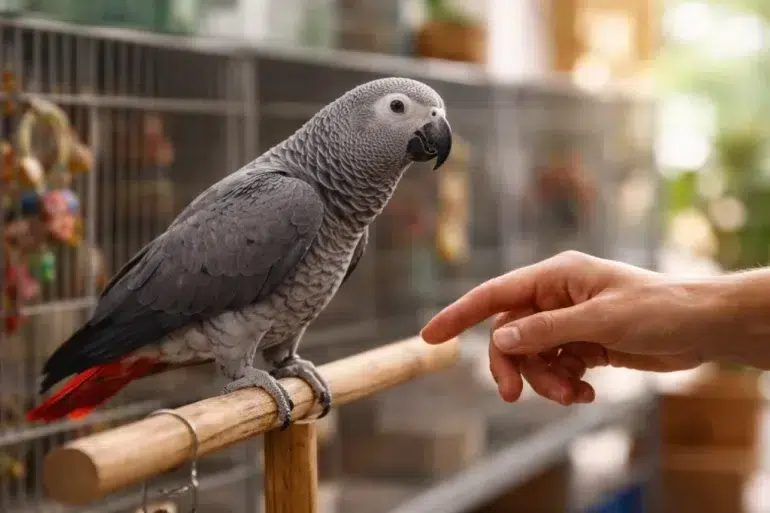
If you have been searching For Sale African Grey listings lately, you have probably noticed two things right away. First, prices are all over the place. Second, not every seller gives you the kind of information a careful buyer actually needs. That matters because an African Grey Parrot for Sale is not an impulse pet purchase. It is a long-term commitment tied to welfare, legal paperwork, health checks, and daily care standards that can make or break the bird’s future. African greys are highly intelligent, commonly bred in captivity, and widely recognized as exceptional talkers, which is exactly why buyers need to slow down and evaluate the bird, the seller, and the paperwork before money changes hands.
A lot of shoppers start with price, but the smarter starting point is value. The cheapest listing is not always the safest, and the most expensive one is not automatically the best. With African greys, what sits behind the price tag is usually more important than the number itself. Age, weaning status, socialization, disease testing, breeder reputation, legal documentation, and whether the bird is hand-fed, hand-tame, or already talking all affect the final asking price. That is why a thoughtful buyer looks past the headline and starts asking specific questions.
Why a For Sale African Grey Costs More Than Many Other Pet Birds
African greys are not ordinary companion birds. Their appeal comes from a combination of intelligence, mimicking ability, trainability, and strong bonding behavior. Britannica notes that the species ranks among the smartest nonhuman animals, and VCA describes African greys as highly intelligent birds that are recognized as some of the best talkers among pet parrots.
That intelligence is exactly why the buying process needs to be more careful than it would be for a lower-maintenance species. A parrot that can learn quickly can also develop stress behaviors quickly if it is poorly socialized, under-stimulated, or moved from one unsuitable home to another. Buyers are not just purchasing a bird. They are stepping into a long relationship with an animal that needs mental engagement, veterinary care, a balanced diet, and a stable routine.
There is also a conservation angle that responsible buyers cannot ignore. The grey parrot is listed by BirdLife Data Zone as Endangered on the IUCN Red List, with a decreasing population trend, and CITES places Psittacus erithacus under Appendix I protections, which means international commercial trade is tightly controlled. That does not mean captive-bred birds cannot be legally sold in many places, but it does mean buyers should treat paperwork and source verification as non-negotiable.
For Sale African Grey Price Range in the Current Market
If you want a real-world snapshot of the market, current breeder listings show how wide the range can be. BirdBreeders recently displayed 26 African Grey listings, with examples around $4,998, $5,500, $6,500, $7,000, $7,500, and $8,500 depending on type, age, and seller presentation. BirdsNow also shows active African grey classifieds across breeders, aviaries, and rescues, which tells you availability exists, but quality varies widely from one source to the next.
Here is a practical way to think about the market:
| Listing type | Typical market feel | What usually affects price |
|---|---|---|
| Young baby or recently weaned Congo African Grey | Higher end | Hand-feeding history, socialization, breeder reputation, demand |
| Older juvenile with training progress | Mid to higher end | Talking ability, step-up training, diet quality, temperament |
| Adult bird from breeder or private owner | Mid range | Health history, behavior, bonding habits, reason for rehoming |
| Timneh African Grey | Mid to higher end | Species variation, temperament, seller reputation, paperwork |
| Rescue or rehome | Usually lower upfront | Adoption fee, screening, support, health and behavioral background |
A fair takeaway is that a For Sale African Grey listing under the broader market rate is not automatically a bargain. It may indicate an urgent rehome, but it may also signal missing health records, incomplete weaning, poor socialization, or legal gaps. On the other hand, a premium price should come with premium transparency. If the seller cannot clearly explain diet, age, testing, and origin, the higher price is not justified.
What Drives the Price Up or Down
Age and weaning status
Baby greys often attract higher asking prices, especially when a breeder markets them as hand-fed or hand-raised. But buyers need to be careful here. A bird that is not fully weaned should not be treated like a quick pickup item. A responsible seller should tell you whether the bird is fully eating on its own, what foods it accepts, and how stable its weight has been.
Congo vs Timneh
Many shoppers still search for one broad term, but sellers may be offering Congo African Grey or Timneh African Grey birds. VCA distinguishes the larger Congo African grey from the smaller, darker Timneh, and BirdBreeders listings show both types appearing in the live market.
Socialization and temperament
A calm, well-handled bird that steps up reliably, tolerates routine interaction, and has exposure to normal household sounds will often command more money. That is not hype. It reflects time invested by the breeder or current owner.
Health screening and paperwork
This is where experienced buyers separate themselves from casual shoppers. The more complete the health record, the easier it is to assess value. If a seller has already completed avian vet checks, maintained records, and documented testing, the price may reasonably be higher.
Location and shipping
Listings that offer shipping, especially across states or long distances, often build transportation and handling costs into the total. That can make the base bird look more expensive than a local pickup listing.
Availability: Where Buyers Actually Find an African Grey Parrot for Sale
Most buyers find an African Grey Parrot for Sale in one of three places: breeder directories, classifieds, or rescue and rehoming networks.
Breeder platforms often have the most polished listings, but polished photos are not the same as proof of good standards. Classifieds can show a larger volume of ads, but quality control is uneven. Rescue routes can be slower and more selective, but they often provide stronger screening and a better welfare framework. The RSPCA notes that it rehomes thousands of animals yearly and that 70 animals a day found new homes last year, which reinforces a point many buyers overlook: rehoming channels are a legitimate path, not a last resort.
In practical terms, availability fluctuates based on:
- Breeding season and current clutch numbers
- Seller location
- Local and import regulations
- Whether buyers want Congo or Timneh birds
- Demand for hand-tame, younger parrots
- Rescue intake and adoption criteria
So yes, a For Sale African Grey can usually be found, but a well-documented, healthy, legally compliant one may take longer.
What Buyers Should Check First Before Paying Anything
This is the part that matters most. Before you compare cages, toys, or talking videos, start with these checks.
1. Confirm the bird is legally sourced
Because grey parrots are protected under CITES Appendix I and remain conservation-sensitive, documentation matters. Ask for every paper relevant in your country or region, including breeder records, hatch certificate, transfer paperwork, closed band information, microchip details if applicable, and any permits the seller is required to provide.
If a seller becomes vague the moment you ask for legal records, walk away.
2. Ask whether the bird is captive-bred
Do not rely on a casual verbal assurance. Ask for documentation that supports the bird’s captive-bred status. This is one of the most important filters when reviewing any For Sale African Grey listing.
3. Verify the bird is fully weaned
An inexperienced buyer should not take home an unweaned African grey. Ask what the bird currently eats, how often, whether the weight is stable, and whether the bird is independently feeding on pellets, vegetables, and other appropriate foods.
4. Request an avian vet health record
A seller should be able to provide recent vet documentation or, at minimum, allow a pre-purchase exam with an avian veterinarian. A basic verbal “the bird is healthy” is not enough.
5. Ask about disease testing
PBFD is one major concern in parrots. VCA notes that psittacine beak and feather disease affects more than 50 bird species and can be fatal after diagnosis, often with severe beak or feather abnormalities and secondary infections.
That does not mean every bird is infected, of course. It means buyers should ask what testing has been done, whether the bird has been exposed to other birds, and whether the seller quarantines new arrivals.
6. Evaluate feather condition, eyes, nares, and droppings
Even before a vet visit, a buyer can look for obvious red flags:
- Ragged or missing feathers
- Crust around nostrils
- Labored breathing
- Dirty vent area
- Lethargy
- Poor balance on the perch
- Visible stress pacing or frantic movement
These signs do not diagnose a condition, but they tell you when to stop and investigate further.
7. Review diet history
VCA warns that African greys are particularly vulnerable to calcium deficiency, vitamin A deficiency, and obesity, especially on poor diets or predominantly seed-based feeding plans.
So ask exactly what the bird eats now. A seller who says “just seeds” is handing you a future health bill.
8. Observe behavior, not just talking ability
Many new buyers get distracted by speech. Talking is fun, but it is not the best indicator of a sound purchase. Watch how the bird responds to human presence, handling, movement, and short interaction. Does it panic, freeze, lunge, or settle? Does it seem curious or chronically stressed?
9. Understand why the bird is being sold
This question reveals a lot. A straightforward answer such as relocation, family changes, or a planned rehome may be reasonable. A vague, shifting story is not.
10. Get everything in writing
At minimum, you want written confirmation of:
- Price
- Deposit terms
- Refund policy
- Health guarantees, if any
- Included accessories
- Hatch date or age estimate
- Identification details
- Pickup or shipping terms
Red Flags Hidden Inside a For Sale African Grey Listing
Some listings look normal at first glance but become risky when you read carefully.
Be cautious if the ad:
- Pushes urgency too hard
- Avoids recent photos or live video
- Mentions shipping first and bird details second
- Has no clear age, paperwork, or diet info
- Uses stock images
- Offers a suspiciously low price for a supposedly premium bird
- Cannot provide seller identity, location, or references
- Refuses a pre-purchase veterinary exam
A serious seller expects serious questions. If your basic questions seem to annoy them, that is useful information.
The Real Cost After Purchase
A lot of people budget for the bird and forget the setup. That is a mistake.
A healthy African grey needs a properly sized cage, perches with varied textures, foraging toys, quality pellets, fresh produce, routine avian vet care, and ongoing enrichment. VCA emphasizes the role of balanced nutrition and regular checkups, and notes that semi-annual checkups help identify health, nutrition, and behavior issues early.
So when you see a For Sale African Grey priced at one number, remember that the first-year cost will be meaningfully higher once you include:
- Cage and stand
- Travel carrier
- Food and supplements if prescribed
- Initial avian exam
- Lab testing if needed
- Toys and enrichment rotation
- Perches and maintenance supplies
The cheaper bird can become the more expensive bird very quickly if it comes with hidden medical or behavioral problems.
Is Buying Better Than Adopting?
That depends on your goals and your experience. Buying from a reputable breeder may make sense if you want a younger bird with a known developmental history. Adoption can make sense if you are open to an older bird and want an organization that screens both the bird and the home.
The smartest approach is not to treat these as competing moral labels. Treat them as two different pathways. The right question is which source gives you the clearest health history, the strongest legal paperwork, and the best welfare outcome.
A Smarter Buying Scenario
Imagine two listings.
One offers a cheaper African grey with limited photos, no test records, unclear weaning status, and a seller who wants a deposit immediately.
The second costs more, but the seller provides hatch details, diet notes, a recent avian vet check, identification records, socialization updates, and a live video call.
Most experienced buyers choose the second bird, not because it is flashy, but because the risk profile is lower. In the African grey market, transparency is part of the product.
Final Thoughts
A For Sale African Grey listing should never be judged by price alone. The best buy is the bird whose health, legal status, diet, and socialization can be clearly verified. Current listings show that prices can sit anywhere from roughly the $5,000 range to well above $8,000, but the number only tells part of the story. The bird’s background, the seller’s honesty, and the quality of care behind the listing are what really determine whether the purchase is wise.
If you are narrowing down an African Grey Parrot for Sale, slow the process down. Ask for records. Ask for a live video. Ask for health documentation. Ask for diet details. A careful buyer usually ends up with a healthier bird and far fewer regrets.
And if you want a quick species refresher before making your final call, the species profile is a useful starting point for basic background reading.
FAQs
How much does a For Sale African Grey usually cost?
Current live breeder listings show a broad asking range, with examples around $4,998 to $8,500 depending on age, type, and seller details.
Is it hard to find an African Grey Parrot for Sale?
Not usually, but finding a legally documented, well-socialized, healthy bird can take time. Classifieds, breeder directories, and rescues all show availability, but quality differs sharply.
What should I check first?
Start with legal paperwork, captive-bred proof, weaning status, avian vet records, disease testing history, and current diet.
Why are African greys more expensive than many other parrots?
Their intelligence, demand, breeder effort, documentation requirements, and long-term care standards all contribute to the higher market price.
Are low-priced listings always bad?
No, but they deserve extra scrutiny. Lower prices can reflect urgent rehoming, or they can hide missing records, poor health, or weak seller credibility.