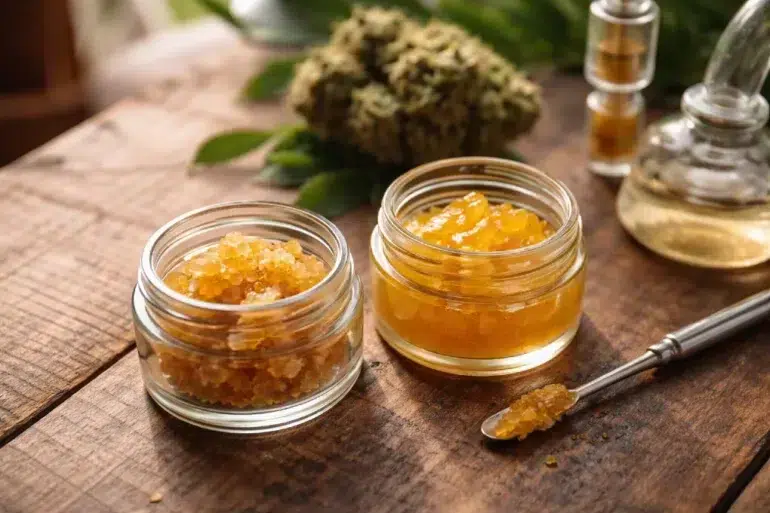
If you have been comparing concentrates lately, you have probably run into the same question over and over: Cured Resin vs Live Resin. On the surface, they can look similar. Both are potent cannabis concentrates. Both can be rich in cannabinoids. Both can deliver a much stronger experience than standard flower. But once you get into flavor, aroma, production methods, texture, and overall value, the differences become a lot more obvious.
For most buyers, the real decision comes down to two things: taste and strength. Some people want the loudest terpene profile possible. Others care more about raw potency, price, and consistency. That is why this comparison matters. The starting plant material, the way the extract is handled after harvest, and how much of the plant’s aromatic compounds are preserved can all shape the final product in meaningful ways. Live resin is generally prized for retaining more of the plant’s original aroma and flavor because it is made from fresh-frozen material rather than dried and cured flower. Leafly’s glossary and explainer both emphasize that “live” products start with fresh-frozen cannabis and are known for stronger flavor and fragrance retention. Public health and research sources also note that cannabis concentrates can carry very high THC levels, often far above typical flower.
So, which one is better? The honest answer is that it depends on what you care about most. If flavor sits at the top of your list, live resin usually wins. If you want a more budget-friendly concentrate that can still hit hard and deliver a solid terpene profile, cured resin often makes more sense. Let’s break it down in plain English.
What Is Cured Resin?
Cured resin is a cannabis concentrate made from flower that has already been dried and cured before extraction. That drying and curing stage is the traditional post-harvest process used for most cannabis flower. Once that material is properly cured, producers extract cannabinoids and terpenes from it to create cured resin.
This matters because curing changes the plant before extraction even begins. Some volatile aroma compounds are lost during drying and curing, which means the final concentrate may not preserve the plant’s original fragrance as completely as a fresh-frozen extract. Still, cured resin can remain highly potent and flavorful, especially when made from quality flower and processed carefully. Retail and educational sources consistently describe cured resin as being derived from dried, cured cannabis, in contrast to live resin, which starts with fresh-frozen material.
In practical terms, cured resin is often the more familiar, accessible option. It tends to be easier for producers to make because it fits into the standard cultivation and post-harvest workflow. That lower production complexity is one reason it is often priced below live resin.
What Is Live Resin?
Live resin is a cannabis concentrate made from fresh cannabis that is frozen immediately after harvest instead of being dried and cured first. That flash-freezing step is the defining feature. The goal is to preserve more of the plant’s original terpene profile and aromatic compounds before they degrade during post-harvest handling.
That is why live resin is so often associated with stronger aroma, brighter flavor, and a profile that feels closer to the original plant. Leafly specifically notes that live resin is valued for retaining the plant’s flavor and fragrance better than many other concentrates, and its glossary entry describes fresh-frozen cannabis as the core difference behind the product category.
For people who care deeply about taste, that distinction is not small. It is often the whole reason they are willing to pay more.
Cured Resin vs Live Resin: The Core Difference
At the heart of Cured Resin vs Live Resin is one simple question: what happened to the plant before extraction?
- Cured resin starts with dried and cured flower
- Live resin starts with fresh-frozen flower
- Cured resin usually costs less to produce
- Live resin is typically chosen for stronger aroma and fuller flavor
- Both can be highly potent, but the experience can feel different because of terpene preservation
That last point is important. Strength is not only about THC percentage. It is also about how the full chemical profile shapes the effect. Aroma compounds such as terpenes contribute heavily to flavor, and researchers continue to examine how they may also influence the overall subjective experience of cannabis products. Reviews of cannabis aroma and flavor describe a wide mix of volatile compounds, including terpenes, aldehydes, esters, ketones, and sulfur-containing compounds, as major drivers of the plant’s sensory profile.
Taste Comparison: Which One Wins?
If the question is strictly about taste, live resin usually comes out ahead.
That does not mean cured resin tastes bad. Far from it. A well-made cured resin can still be flavorful, layered, and enjoyable. But live resin has a built-in advantage because fresh-frozen starting material helps preserve more of the compounds responsible for the plant’s original aroma and flavor.
Why live resin often tastes better
- The plant is frozen right after harvest
- Fewer volatile compounds are lost before extraction
- The terpene profile is often closer to the fresh plant
- The aroma tends to be brighter, louder, and more expressive
Leafly’s educational material repeatedly points to flavor and fragrance retention as one of live resin’s defining strengths. That is consistent with broader chemistry research showing that cannabis flavor and aroma depend heavily on delicate volatile compounds that can shift during handling and processing.
Where cured resin still performs well
Cured resin often has a deeper, slightly more mature profile. Some users actually prefer that. Rather than tasting ultra-fresh or intensely aromatic, cured resin can come across as more grounded, earthy, or rounded depending on the cultivar and extraction method.
In other words, live resin usually wins the flavor contest, but cured resin is not automatically inferior. It is simply different.
Strength Comparison: Which One Hits Harder?
This is where things get a little more nuanced.
If you are defining strength purely as THC percentage, either product can be powerful. Cannabis concentrates in general can contain much higher THC levels than flower. NIDA’s cannabis potency data and public health sources from CDC and other agencies all point to the increasing strength of cannabis products over time, with concentrates occupying the high end of the potency spectrum. DEA material has also described concentrates as commonly ranging from roughly 40% to 80% THC, while some research and trial listings discuss products reaching into the 90% range.
So, does live resin hit harder than cured resin?
Not always.
When live resin may feel stronger
Live resin can feel more intense for some users because of its richer terpene profile. Even when two products have similar THC levels, the one with better terpene retention may feel more vivid, more flavorful, and more immediate in the overall experience.
When cured resin may seem stronger
Cured resin can absolutely feel stronger if:
- It tests higher in THC
- It has a more concentrated cannabinoid profile
- The live resin you compare it with is terpene-rich but slightly lower in total THC
This is why shoppers should avoid assuming that live resin is always the stronger product. It is often the more flavorful product, but not necessarily the most potent one on the label.
Why Terpenes Matter More Than Many Buyers Realize
A lot of buyers reduce concentrates to a simple number on the package. That is understandable, but it does not tell the whole story.
Terpenes are aromatic compounds that play a major role in smell and taste. They help explain why one extract smells citrusy, another skunky, and another sweet or gassy. Research reviews on cannabis aroma emphasize that these compounds, along with several other volatile molecules, shape the sensory identity of the plant.
From a buyer’s perspective, this matters because:
- Higher terpene retention usually improves flavor
- Aroma strongly affects how “fresh” a product feels
- The total experience is not just about THC alone
- Two concentrates with similar potency can feel noticeably different
That is one reason live resin has built such a strong reputation. It often delivers a more expressive, plant-forward profile that many experienced users value more than sheer THC numbers.
Price and Value: Is Live Resin Worth the Extra Cost?
Live resin usually costs more, and there is a logical reason for that.
Producing it requires fresh-frozen material, fast cold-chain handling, and a more specialized post-harvest process. Cured resin fits more naturally into standard cannabis production because the flower is already being dried and cured anyway.
Choose live resin if:
- Flavor is your top priority
- You care about terpene richness
- You want a concentrate that feels closer to the original plant
- You do not mind paying more for a premium sensory experience
Choose cured resin if:
- You want strong effects at a better price
- You are less focused on maximizing aroma
- You want better day-to-day value
- You prefer a more traditional, often less expensive concentrate
For many buyers, cured resin delivers the better value. For connoisseurs, live resin is often worth the premium.
Side-by-Side Comparison Table
| Feature | Cured Resin | Live Resin |
|---|---|---|
| Starting material | Dried and cured flower | Fresh-frozen flower |
| Flavor intensity | Good to very good | Usually excellent |
| Aroma retention | Moderate to strong | Usually stronger |
| Typical price | Lower | Higher |
| Production complexity | Standard | More specialized |
| Best for | Value and potency | Taste and terpene lovers |
| Strength | Can be very potent | Can also be very potent |
| Overall experience | Solid, balanced, often economical | Fresh, aromatic, more premium |
Which One Is Better for Beginners?
Beginners should be careful with either one.
That is not marketing talk. It is practical advice. Concentrates are much stronger than flower, and health agencies continue to warn that higher-THC products may carry greater risks, especially when people underestimate dose or use them frequently. Reviews in The Lancet Psychiatry and public-health summaries have linked higher-potency cannabis to increased concerns around addiction and certain mental health outcomes, while the CDC notes that THC concentration in cannabis products has continued to rise.
If someone is completely new to concentrates, the smartest move is not to chase the “strongest” option. It is to start small, pay attention to labeled potency, and choose a reputable, tested product.
Between the two, beginners often find cured resin easier on the wallet. But from a flavor standpoint, live resin may be more appealing. The better starting choice depends on whether the person cares more about price or sensory quality.
Common Buying Mistakes to Avoid
1. Judging quality by THC alone
A high THC number does not guarantee the best experience. Flavor, aroma, and consistency matter too.
2. Assuming live resin is always stronger
Live resin often tastes better, but cured resin can be just as potent or even stronger depending on the batch.
3. Ignoring freshness
A poorly stored concentrate can lose quality over time. Heat, air, and light all work against cannabinoids and volatile aroma compounds.
4. Buying the cheapest option without checking the source
Low price does not always mean good value. Extraction quality, testing, and storage standards matter.
5. Forgetting your own priorities
The best concentrate for a terpene chaser is not always the best one for a budget-focused buyer.
Best Choice by User Type
Best for taste
Live resin
If flavor, aroma, and a more “fresh plant” profile matter most, live resin is usually the better pick.
Best for strength on a budget
Cured resin
If you want a powerful concentrate without paying a premium for extra terpene retention, cured resin often delivers better value.
Best for experienced concentrate fans
Live resin
Experienced users often notice and appreciate the difference in aroma complexity.
Best for everyday value
Cured resin
For many regular buyers, it strikes a more practical balance between cost and performance.
Final Verdict
When comparing Cured Resin vs Live Resin, live resin is usually better for taste, while cured resin often wins on price-to-potency value.
That really is the cleanest answer.
If your goal is the richest aroma, the brightest terpene expression, and a concentrate that preserves more of the plant’s original profile, live resin is the stronger choice. If your goal is to get solid strength, good flavor, and better overall affordability, cured resin is hard to beat.
So which one is better for taste and strength?
For taste, live resin usually takes the lead.
For raw strength, either one can be powerful, and the better option depends on the actual cannabinoid profile of the product in front of you.
For overall value, cured resin often makes more financial sense.
The best buyers are not the ones chasing hype. They are the ones matching the product to their priorities.
In the end, the smartest way to compare concentrates is to look beyond buzzwords and understand where the extract came from, how it was processed, and what kind of experience you actually want. That broader view helps you make sense of the wider cannabis concentrate category and choose based on flavor, potency, and value instead of marketing alone.
FAQs
Is live resin always better than cured resin?
No. Live resin is usually better for flavor and aroma, but cured resin can be just as potent and often costs less.
Does live resin have more terpenes?
It often does, because it is made from fresh-frozen cannabis rather than dried and cured flower. That helps preserve more volatile aroma compounds.
Is cured resin stronger than live resin?
Sometimes. Strength depends on the actual cannabinoid content of the final product, not just whether it is cured or live.
Why is live resin more expensive?
It requires fresh-frozen material and more specialized handling, which increases production costs.
Which one should I buy for flavor?
Live resin is usually the better option if flavor is your top priority.
Which one gives better value for money?
Cured resin often offers better value if you want strong effects without paying premium pricing.