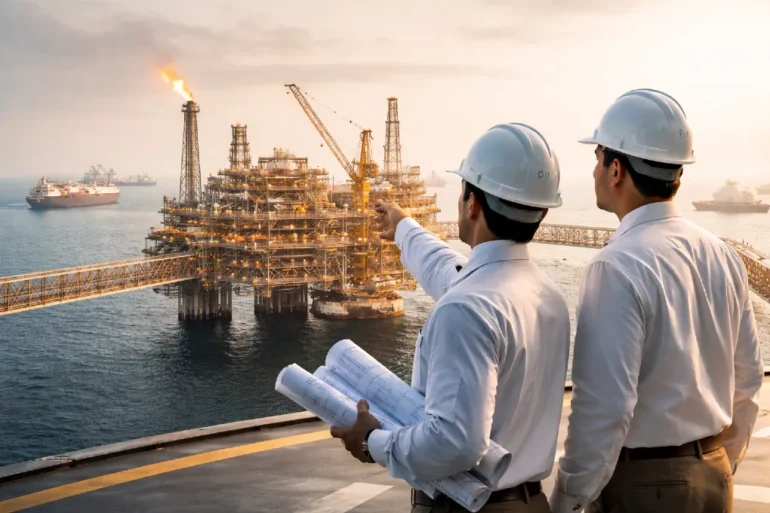
For years, Qatar Petroleum QP has been one of the most closely watched names in the global energy business. Even after the corporate rebrand to QatarEnergy, many readers, investors, and industry followers still search for Qatar Petroleum QP because that name remains tied to Qatar’s rise as a serious force in oil, gas, and especially liquefied natural gas.
What makes the story so important right now is scale. Qatar is not making small, incremental upgrades. The projects associated with Qatar Petroleum QP are part of a multi-year buildout that is reshaping the country’s production profile, export capacity, infrastructure strategy, and long-term role in global energy supply. The centerpiece is the North Field expansion, but it is far from the only major investment. From offshore oil development to carbon capture and overseas LNG assets, Qatar Petroleum QP is connected to a wider expansion plan designed to strengthen Qatar’s influence across the energy value chain.
This article looks closely at the major projects behind that expansion, why they matter, and what they reveal about Qatar’s broader strategy.
Why Qatar Petroleum QP Still Matters in Search and Industry Conversations
Even though the company now operates under the QatarEnergy name, the legacy brand Qatar Petroleum QP still carries strong search visibility and industry recognition. That matters for publishers because many readers use the older name when looking for project updates, production data, partnerships, and expansion plans. QatarEnergy itself has publicly referenced the company’s historical transition from QGPC to Qatar Petroleum and then to QatarEnergy.
For practical purposes, when people search Qatar Petroleum QP, they are usually looking for one of these things:
- North Field expansion updates
- Qatar LNG capacity growth
- Major EPC and upstream contracts
- International partnerships with global energy companies
- Oil field development plans
- Qatar’s broader energy investment strategy
That search intent is important because it shows readers are not after a basic company definition. They want specifics. They want projects, numbers, and direction. And that is where the expansion story becomes especially compelling.
The Big Picture Behind Qatar’s Energy Expansion
The broader strategy tied to Qatar Petroleum QP is straightforward in concept, but massive in execution. Qatar is leveraging the North Field, the world’s largest single non-associated gas field, to expand LNG production, deepen its export advantage, and secure long-term energy relevance in a market that still needs reliable gas even as decarbonization efforts accelerate. QatarEnergy says the North Field spans more than 6,000 square kilometers and represents about 20% of the world’s gas reserves.
The ambition is substantial. The North Field East, North Field South, and North Field West projects together are expected to raise Qatar’s LNG production capacity from 77 million tons per annum to 142 million tons per annum by 2030. QatarEnergy has also stated a post-2030 target of 160 million tons per year as it pushes beyond the current phase of expansion.
That scale matters far beyond Qatar. The International Energy Agency expects around 300 billion cubic meters per year of new LNG export capacity worldwide by 2030, with the United States and Qatar providing much of that growth. In other words, the projects associated with Qatar Petroleum QP are not just domestic industrial works. They are central to the next chapter of global gas trade.
North Field East Is the Flagship Qatar Petroleum QP Project
If one project defines the expansion strategy around Qatar Petroleum QP, it is North Field East.
North Field East, often referred to as NFE, includes four mega LNG trains. Those trains form the first major wave of Qatar’s latest expansion push and account for 32 million tons per annum of added LNG capacity. QatarEnergy has described NFE as part of the largest LNG expansion program in the industry, and in earlier company statements it called NFE the single largest project in the history of the LNG industry.
Why is NFE so important?
First, it is the bridge between Qatar’s established LNG strength and its next production era. Second, it gives Qatar Petroleum QP a way to lock in long-term customer relationships with Asian and European buyers who want dependable LNG supply. Third, it supports Qatar’s ability to stay competitive not only on volume, but also on production efficiency and market presence.
NFE also reflects the partnership model used by Qatar Petroleum QP. Major international energy companies have taken stakes in this project, including firms such as Eni and Sinopec, giving Qatar access to capital, market channels, and commercial relationships that go well beyond the Gulf region.
From an SEO and reader-intent perspective, this is usually the first project people want to understand when they search Qatar Petroleum QP. That makes sense because NFE is the clearest symbol of how Qatar plans to remain a top LNG supplier for decades.
North Field South Adds More Capacity and More Strategic Depth
North Field South, or NFS, is the second major pillar in the Qatar Petroleum QP expansion story. The project comprises two LNG mega trains with a combined capacity of 16 million tons per annum. That means NFS is smaller than NFE, but it is still enormous by global standards.
What makes NFS especially significant is timing and structure. It follows the first expansion phase rather than duplicating it. In practical terms, North Field South gives Qatar a second wave of capacity growth and reduces reliance on one single mega project to deliver future output gains.
It also strengthens the commercial side of the buildout. As more partners joined NFS, Qatar reinforced a model that spreads risk while deepening strategic links with international buyers and operators. For Qatar Petroleum QP, that matters because energy expansion is not only about engineering. It is also about financing, diplomacy, customer security, and market access.
North Field West Pushes Qatar Even Further
The latest major addition to the program is North Field West, or NFW. In February 2026, QatarEnergy announced the EPC contract award for the onshore LNG plant of the North Field West project. The project adds another 16 million tons per annum and completes the trio of major North Field expansion phases that will bring Qatar’s total LNG production capacity to 142 million tons per annum by 2030.
This is where the Qatar Petroleum QP story becomes even more impressive. The expansion is not slowing after the initial phases. It is broadening.
For readers trying to understand the progression, here is the production path:
| Project | Added Capacity |
|---|---|
| North Field East | 32 MTPA |
| North Field South | 16 MTPA |
| North Field West | 16 MTPA |
| Total Added Capacity | 64 MTPA |
That total pushes Qatar from 77 MTPA to 142 MTPA by 2030.
This helps explain why Qatar Petroleum QP remains such a strong search term. The company is not just maintaining existing facilities. It is executing one of the biggest LNG growth programs anywhere in the world.
Qatar Petroleum QP Is Also Expanding Oil Through Al Shaheen
Although gas and LNG dominate the headlines, the expansion linked to Qatar Petroleum QP is not limited to gas.
A major example is the Al Shaheen offshore oil field. QatarEnergy’s annual review noted progress to increase Al Shaheen production by 100,000 barrels per day. Industry reporting tied to official contract awards says the next development phase, known as Project Ru’ya, includes more than $6 billion in contracts, over 200 wells, and a development plan expected to unlock more than 550 million barrels over a five-year period, with startup anticipated in 2027.
This matters because it shows Qatar Petroleum QP is not abandoning oil while expanding LNG. Instead, Qatar is balancing both sides of the portfolio.
That balance has several practical advantages:
- It protects state revenue through diversified hydrocarbon output
- It supports export stability in different market cycles
- It keeps critical offshore infrastructure investment active
- It reinforces Qatar’s position as both an oil and gas producer
For readers looking at long-term national strategy, Al Shaheen is a reminder that Qatar’s energy expansion is broader than many headlines suggest.
International Projects Extend the Reach of Qatar Petroleum QP
Another critical piece of the story is that Qatar Petroleum QP is no longer defined by domestic assets alone. QatarEnergy has been building an international footprint, and one of the most notable examples is Golden Pass LNG in Texas.
QatarEnergy has previously stated that Golden Pass LNG has production capacity in excess of 18 million tons per annum. The project is backed by QatarEnergy and ExxonMobil, and Golden Pass says startup begins in 2026.
This international dimension matters for several reasons.
First, it gives Qatar Petroleum QP exposure to the U.S. export market, which is one of the most important LNG arenas in the world. Second, it spreads geographic risk. Third, it reinforces the company’s identity as a global energy investor rather than a purely domestic producer.
QatarEnergy has also said that with 18 MTPA coming from its LNG project in Texas, the company will effectively be doubling its LNG production capacity in the next few years when international output is considered alongside domestic expansion.
That is a powerful indicator of how Qatar Petroleum QP is thinking. The strategy is not just to produce more at home. It is to control more influence across the global LNG map.
Sustainability Projects Are Becoming Part of the Expansion Formula
One reason the Qatar Petroleum QP expansion story stands out is that it is not framed only around volume. QatarEnergy has increasingly tied growth to lower-carbon production measures.
The company says it operates the largest CO2 capture and sequestration site in the Middle East and North Africa, with current capacity of 2.5 million tons per annum and plans to raise that to 11 million tons by 2030 and about 13 million tons by 2035. It has also linked future LNG growth to lower carbon intensity goals.
This does not erase the environmental debate around fossil fuels, of course. But it does show how Qatar Petroleum QP is trying to position its projects in a market where emissions performance increasingly affects investor perception, buyer preferences, and regulatory pressure.
For businesses watching procurement trends, this matters. Buyers now look beyond supply volume. They also care about lifecycle emissions, operational efficiency, and long-term project resilience.
Why These Projects Matter to the Global Energy Market
The expansion projects tied to Qatar Petroleum QP matter because they arrive at a time when energy security, affordability, and long-term supply contracts are back at the center of policy discussions.
Global gas markets have been shaped by supply disruptions, regional price volatility, infrastructure bottlenecks, and the push to reduce coal dependence in some economies. In that environment, large-scale LNG from a stable producer becomes strategically valuable. The IEA has made clear that Qatar is one of the countries expected to drive the coming wave of LNG export capacity through 2030.
That gives Qatar Petroleum QP a few powerful advantages:
- Stronger leverage in long-term LNG contracting
- Greater relevance in Asian and European energy security
- Higher visibility among industrial buyers and investors
- Better positioning in a market that still needs scalable gas supply
In simple terms, these projects help Qatar move from being a major LNG player to becoming an even more dominant force in the next supply cycle.
Common Questions About Qatar Petroleum QP Projects
Is Qatar Petroleum QP still the company name?
No. The company now operates as QatarEnergy, but many people still search for Qatar Petroleum QP because it was the long-established name and remains widely recognized online.
What is the biggest project linked to Qatar Petroleum QP?
North Field East is the most prominent project. It adds 32 MTPA of LNG capacity and is part of the broader expansion program that will raise Qatar’s LNG capacity to 142 MTPA by 2030.
Is Qatar focused only on gas?
No. Gas is the headline growth area, but Qatar Petroleum QP is also investing in oil development, including the Al Shaheen field expansion.
Why are these projects important globally?
Because new LNG export supply through 2030 is expected to come heavily from Qatar and the United States, making Qatar central to future gas trade flows.
Final Thoughts on Qatar Petroleum QP Projects Driving Qatar’s Oil and Gas Expansion
The expansion story behind Qatar Petroleum QP is really a story about scale, timing, and strategic ambition. Qatar is using a rare combination of vast reserves, infrastructure spending, international partnerships, and global market demand to deepen its energy leadership. North Field East, North Field South, North Field West, Al Shaheen, carbon capture growth, and overseas LNG investments all point in the same direction.
This is not a temporary burst of activity. It is a long-cycle national energy strategy with global implications. For readers, businesses, and analysts tracking the future of LNG and hydrocarbon exports, Qatar Petroleum QP remains a crucial keyword because it connects directly to some of the most important projects in the industry today.
And if you want one simple takeaway, it is this: Qatar is not merely defending its position. It is expanding it aggressively, carefully, and with a clear view of where global energy demand is headed next. In the final analysis, the broader energy industry will keep watching these projects because they are shaping how supply, investment, and competition evolve over the next decade.