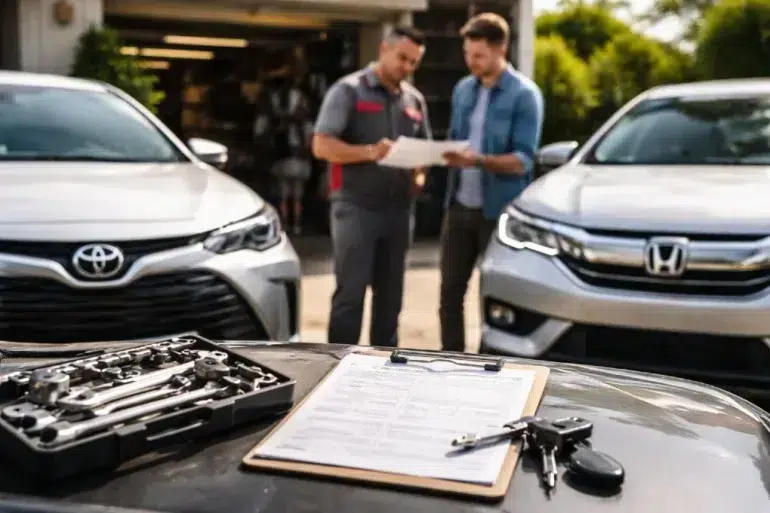
When people start comparing cars, one question always comes up first: which brand is more reliable? The debate around Toyota vs Honda Reliability has been going on for decades, and for good reason. Both brands have built strong reputations for durability, low maintenance costs, and long vehicle life.
But when you look beyond brand loyalty and dig into real data, things get more interesting. Reliability is not just about how long a car lasts. It includes repair frequency, cost of ownership, engine durability, and even how vehicles perform after 100,000 miles.
In this article, we will break down real-world data, industry reports, and owner experiences to help you understand how Toyota and Honda truly compare.
What Does “Reliability” Really Mean?
Before comparing brands, it helps to understand what reliability actually includes. It is not just about whether a car breaks down.
Reliability usually covers:
- Frequency of repairs
- Cost of maintenance and parts
- Engine and transmission lifespan
- Long-term durability beyond 100,000 miles
- Owner satisfaction over time
Organizations like Consumer Reports, J.D. Power, and RepairPal regularly publish reliability rankings based on real data from thousands of vehicles.
Toyota vs Honda Reliability: Quick Overview
Here is a simple snapshot of how both brands compare:
| Factor | Toyota | Honda |
|---|---|---|
| Overall Reliability | Excellent | Very Good |
| Maintenance Cost | Lower | Moderate |
| Longevity | Often exceeds 200,000 miles | Often reaches 150,000 to 200,000 |
| Repair Frequency | Less frequent | Slightly more frequent |
| Resale Value | Very high | High |
Both brands are strong, but Toyota usually edges ahead in long-term dependability.
Real Data from Industry Reports
Consumer Reports Findings
Consumer Reports consistently ranks Toyota near the top for predicted reliability. Models like the Camry, Corolla, and RAV4 often receive high scores year after year.
Honda also performs well, especially with models like the Accord and CR-V, but sometimes shows more variability between model years.
J.D. Power Reliability Ratings
J.D. Power measures reliability based on problems per 100 vehicles. Lower scores mean fewer issues.
- Toyota typically scores around 140 to 160 problems per 100 vehicles
- Honda often falls between 160 to 180
This difference might seem small, but over time it translates into fewer repairs and lower costs.
RepairPal Data
According to RepairPal:
- Toyota average annual repair cost: about $441
- Honda average annual repair cost: about $428 to $500 depending on model
Toyota vehicles also tend to have fewer severe repairs.
Longevity: Which Brand Lasts Longer?
Longevity is one of the biggest factors in the Toyota vs Honda Reliability discussion.
Toyota Longevity
Toyota vehicles are known for reaching extremely high mileage. Many models regularly exceed 200,000 miles with proper maintenance.
Popular long-lasting Toyota models include:
- Toyota Camry
- Toyota Corolla
- Toyota Tacoma
- Toyota Land Cruiser
Some owners report vehicles lasting over 300,000 miles.
Honda Longevity
Honda vehicles also last a long time, but slightly fewer reach extreme mileage compared to Toyota.
Common high-mileage Honda models:
- Honda Accord
- Honda Civic
- Honda CR-V
Honda engines are durable, but transmissions in older models have occasionally shown wear earlier than expected.
Maintenance and Repair Costs
Toyota Maintenance Costs
Toyota vehicles are known for:
- Affordable parts
- Simple engineering
- Lower labor costs
Because of this, they are often cheaper to maintain over time.
Honda Maintenance Costs
Honda maintenance is still affordable but can be slightly higher due to:
- More performance-focused engineering
- Some models requiring specialized parts
In real-world ownership, the difference is not huge, but Toyota still tends to cost less overall.
Engine and Transmission Reliability
Toyota Engines
Toyota engines are designed for consistency rather than performance. This results in:
- Lower stress on components
- Longer engine life
- Fewer major failures
Toyota’s conservative engineering approach plays a big role in its reliability reputation.
Honda Engines
Honda is known for performance-oriented engines, especially in models like the Civic and Accord.
Pros:
- Strong acceleration
- Efficient fuel economy
Cons:
- Slightly more wear over time
- Some past issues with turbocharged engines
Real Owner Experiences
Looking at forums, reviews, and owner reports gives additional insight.
What Toyota Owners Say
- “My Camry crossed 220,000 miles with no major repairs.”
- “Routine oil changes are all it needs.”
- “Parts are cheap and easy to find.”
What Honda Owners Say
- “My Accord still runs great at 180,000 miles.”
- “Maintenance is predictable but slightly higher than expected.”
- “Fun to drive compared to Toyota.”
Both brands receive strong praise, but Toyota owners often highlight fewer issues over time.
Reliability by Vehicle Category
Sedans
- Toyota Camry vs Honda Accord
- Toyota Corolla vs Honda Civic
Toyota wins slightly in long-term reliability, while Honda offers more driving enjoyment.
SUVs
- Toyota RAV4 vs Honda CR-V
Both are reliable, but Toyota often has fewer reported issues.
Trucks
Toyota dominates here with models like the Tacoma and Tundra. Honda does not compete strongly in this segment.
Common Problems Reported
Toyota Common Issues
- Minor oil consumption in older engines
- Occasional infotainment glitches
These issues are usually minor and inexpensive to fix.
Honda Common Issues
- Transmission issues in older models
- Turbo engine concerns in certain years
- Electrical system quirks
While not widespread, these problems occur more frequently than Toyota issues.
Which Brand Has Better Resale Value?
Resale value is closely tied to reliability.
Toyota vehicles tend to hold their value better because:
- They are trusted for long-term use
- Buyers expect fewer repairs
Honda also holds value well, but Toyota usually leads in this area.
Cost of Ownership Over Time
When you combine fuel efficiency, maintenance, and resale value:
Toyota generally offers a lower total cost of ownership.
Honda can be slightly more expensive, but still remains one of the most affordable brands overall.
Safety and Reliability Connection
Reliability also impacts safety. A well-maintained and dependable car is less likely to fail unexpectedly.
Both Toyota and Honda include:
- Advanced safety features
- High crash test ratings
- Strong build quality
However, Toyota’s consistency gives it a slight advantage in long-term dependability.
Toyota vs Honda Reliability: Which One Should You Choose?
Choosing between Toyota and Honda depends on your priorities.
Choose Toyota if you want:
- Maximum longevity
- Lower maintenance costs
- Fewer unexpected repairs
Choose Honda if you want:
- Better driving experience
- Slightly sportier performance
- Still strong reliability
Expert Tips for Maximizing Reliability
No matter which brand you choose, maintenance matters more than the badge.
Follow these tips:
- Change oil regularly
- Use genuine or high-quality parts
- Follow manufacturer service schedules
- Avoid aggressive driving habits
- Address small issues early
A well-maintained Honda can outlast a poorly maintained Toyota and vice versa.
Frequently Asked Questions
Is Toyota more reliable than Honda?
Yes, based on most industry data, Toyota has a slight edge in reliability, especially in long-term ownership.
Do Honda cars last as long as Toyota?
They can, but fewer Honda vehicles reach extremely high mileage compared to Toyota.
Which brand is cheaper to maintain?
Toyota is generally cheaper due to lower repair frequency and simpler engineering.
Are both brands good for used cars?
Yes, both Toyota and Honda are excellent choices in the used car market.
Final Thoughts
The Toyota vs Honda Reliability debate is not about which brand is bad. Both are among the most reliable automakers in the world.
However, when you look at real data on longevity, repair frequency, and cost of ownership, Toyota consistently comes out slightly ahead. Its conservative engineering and proven track record make it a top choice for buyers who want a car that lasts as long as possible.
Honda remains a strong competitor, especially for those who want a more engaging driving experience without sacrificing reliability.
If your main goal is peace of mind and fewer repairs over time, Toyota is the safer bet. If you want a balance between reliability and driving enjoyment, Honda is still an excellent option.
In the end, both brands represent smart choices, but Toyota’s edge in long-term durability is hard to ignore, especially when considering real-world data and ownership experiences tied to overall automotive reliability.