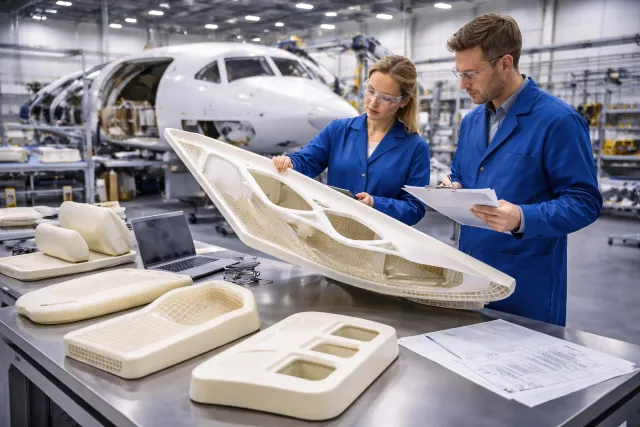
In aerospace engineering, every gram matters, but performance can never be compromised. Engineers constantly balance weight reduction, mechanical reliability, thermal stability, and manufacturability across thousands of components, from interior panels to structural housings and vibration-damping systems. Polyurethane has become a material of choice because it delivers an exceptional strength-to-weight ratio while remaining highly adaptable to complex geometries and demanding operating environments. Modern manufacturing platforms, including polyurethane processing equipment and polyurethane casting machines, allow aerospace suppliers to precisely control material consistency, part repeatability, and cycle efficiency. The result is a material system that supports innovation in aircraft design without sacrificing durability, safety, or scalability.
The strength-to-weight advantage engineers depend on
Polyurethane offers high tensile strength and excellent impact resistance while remaining significantly lighter than many traditional metal or rigid plastic alternatives. This combination supports fuel efficiency, payload optimization, and extended component life. Aerospace engineers frequently specify polyurethane for parts that must absorb vibration, resist fatigue, and maintain dimensional stability under fluctuating loads. Its elastomeric behavior allows it to dissipate energy effectively, reducing stress transfer to adjacent assemblies. This contributes directly to lower maintenance requirements and improved operational reliability over the aircraft lifecycle.
Design flexibility for complex aerospace geometries
Aircraft components often feature intricate contours, tight tolerances, and integrated functional features. Polyurethane adapts well to these design requirements because it can be molded into highly detailed shapes without sacrificing mechanical performance. Engineers can tailor hardness, elasticity, and surface finish through formulation adjustments, enabling one material family to support multiple applications across the aircraft. Advanced tooling paired with polyurethane casting machines ensures consistent fill, uniform curing, and minimal post-processing, even for thin-wall or multi-cavity molds. This flexibility allows aerospace manufacturers to move from prototype to production with minimal design compromise.
Durability under thermal and environmental stress
Aerospace materials must tolerate temperature fluctuations, humidity exposure, oils, hydraulic fluids, and ultraviolet radiation. Polyurethane formulations are engineered to maintain mechanical integrity and chemical resistance across these conditions. This stability reduces the risk of cracking, deformation, or premature aging in service. For cabin interiors, seals, protective housings, and structural dampers, polyurethane delivers dependable long-term performance while meeting strict regulatory requirements for quality and consistency.
Manufacturing efficiency and production scalability
Modern aerospace programs require repeatable production processes that support tight quality standards and scalable output. Automated polyurethane processing equipment provides precise metering, mixing, and dispensing control, ensuring consistent material properties from batch to batch. Integrated monitoring systems improve traceability, reduce scrap, and support continuous improvement initiatives. When paired with optimized tooling strategies, manufacturers achieve faster cycle times, lower material waste, and improved overall equipment effectiveness, helping aerospace suppliers remain competitive while maintaining strict compliance.
Supporting lightweight innovation across aerospace platforms
From commercial aviation to advanced unmanned systems, polyurethane continues to enable lighter structures without compromising strength or durability. Its adaptability supports rapid product development, design optimization, and production scalability, making it a strategic material for forward-thinking engineering teams. As aerospace platforms evolve toward higher efficiency and smarter manufacturing workflows, the combination of reliable materials and advanced production technology remains essential.
Polyurethane delivers a rare balance of lightweight strength, design flexibility, and environmental durability that aligns directly with aerospace performance requirements. When supported by modern polyurethane processing equipment and precision polyurethane casting machines, manufacturers gain the process control and scalability needed to deliver consistent, high-quality components at production speed. For aerospace engineers focused on efficiency, reliability, and innovation, polyurethane continues to be a material that strengthens both performance and competitiveness.