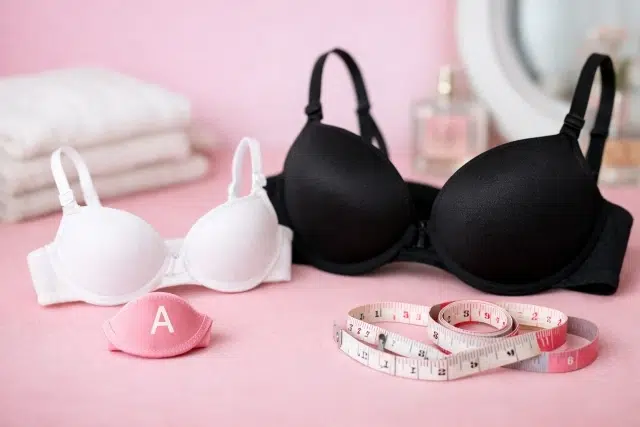
If you have ever Googled smallest bra size and ended up more confused than before, you are in good company. Bra sizing sounds simple until you realize it is not just “small, medium, large.” It is a mix of two measurements working together: the band (the number) and the cup (the letter). And the “smallest” size can change depending on the country, the brand, and even the style of bra.
In this guide, we will break down what the smallest bra size can be, why it is not one single universal answer, and how band vs cup really works in everyday terms. No complicated math vibes, just clear explanations that help you understand what you are seeing on size tags and why two people with the same cup letter can have totally different volumes.
First, what does “smallest bra size” actually mean?
When people say “smallest bra size,” they usually mean one of these things:
- The smallest cup letter available (like AAA or AA)
- The smallest band size available (like 26 or 28 in US/UK sizing)
- The smallest bra size sold in most stores (often something like 32A, depending on region)
- The smallest size that fits a specific body (which is personal, not universal)
So the “smallest” can be about cup, band, or availability.
The quick truth
A bra size is not one measurement. It is two measurements that depend on each other. That is why the smallest bra size is not just a letter like “AA.” The band number matters just as much.
Band vs cup: the simplest explanation that actually makes sense
A standard bra size looks like this: 32A, 28AA, 34B, 30C.
- Band size (the number): your ribcage measurement where the bra band sits
- Cup size (the letter): the difference between your bust measurement and your band measurement
Most mainstream fitting guides explain it this way: measure your ribcage (band), measure your bust at the fullest point, then use the difference to estimate cup size. Here are two clear, mainstream references that explain the same band-and-cup concept in consumer friendly language:
- Good Housekeeping bra measuring guide
- ThirdLove bra sizes explained
Why cup letters are relative, not absolute
This is the part that surprises most people.
A “B cup” is not a fixed volume across all sizes. A 28B is not the same volume as a 38B. The letter only describes the bust-to-band difference, not “how big” someone looks.
That is why someone can be a D cup and still have a smaller overall chest than someone who wears a B cup, depending on band size.
So what is the smallest bra size in real life?
There are two ways to answer this, and both are useful.
1) The smallest cup sizes that exist
Some brands make cups smaller than A, including:
- AA cup
- AAA cup (less common, but it exists in some lines)
These smaller cups are often discussed in “small bust” sizing, especially for petite frames.
Important detail: AA and AAA availability is brand-dependent. Many big retailers do not stock them widely in-store, even if they exist online.
2) The smallest band sizes that exist
Band sizes commonly found in stores often start at 30 or 32, but smaller bands like 28 (and sometimes 26) can exist depending on the brand and market.
So, in practical shopping terms:
- The smallest sizes commonly stocked in many stores: 32A (varies by retailer/region)
- Smaller sizes that may exist online or in specialty ranges: 28A, 28AA, 26A, 26AA (availability varies)
Because brands do not all use the exact same grading rules, the “smallest” size you can buy depends on what that brand actually produces.
Why bra sizes feel inconsistent (and it is not just you)
Even if you measure carefully, you might try on two bras with the “same size” and get two different fits. That happens for a few reasons:
Fit is shaped by more than size
Size gives you a starting point. Fit depends on shape details such as:
- wide-set vs close-set breasts
- shallow vs projected shape
- fuller on top vs fuller on bottom
- breast root width (the footprint where breast tissue attaches)
This is why reputable fashion outlets often stress that measuring is step one, then you fine-tune by how the bra sits on your body. Vogue’s bra measuring overview also highlights that shape affects fit, even when the measurements look “right”
Many people wear the wrong size
This is not meant to scare anyone, just to normalize the confusion.
Multiple studies have found significant mismatch between self-selected bra sizes and professionally assessed fit. For example:
- A study in the Journal of Plastic, Reconstructive & Aesthetic Surgery looking at women referred for breast surgery reported that participants wore incorrect sizes in that sample
- Research on bra fit and health outcomes has also discussed how common poor fit is and why it matters for comfort and support
Translation: if sizing feels weird, you are not “bad at bras.” The system itself is messy.
How to measure band and cup at home without overthinking it
You do not need a perfect measuring session. You need a decent baseline.
Step 1: Measure your band
Wrap a tape measure around your ribcage where the band sits.
- Keep it level all the way around.
- Snug, not squeezing.
That number helps estimate your band size.
Step 2: Measure your bust
Measure around the fullest part of your bust.
- Tape should be level
- Do not pull tight
Step 3: Understand the difference
Most mainstream guides use the difference between bust and band to estimate cup letter.
If you want a practical summary, this is what many consumer charts use as a starting point:
- smaller difference = smaller cup letter
- bigger difference = larger cup letter
Good Housekeeping lays out this “measure band, measure bust, compare difference” approach in a simple way, including sister sizes:
The smallest bra size depends on the sizing system (US, UK, EU)
Bra sizing changes by region. Even when the measurements are similar, the label can look different.
US and UK sizing
Both commonly use a number for band and letters for cups, but cup progressions can differ after DD.
Small cup labels like AA can appear in both markets, but not all brands use AA consistently.
EU sizing
EU bands often use numbers like 65, 70, 75 instead of 30, 32, 34.
A rough example:
- 28 band is often close to EU 60
- 30 band is often close to EU 65
- 32 band is often close to EU 70
Because of these differences, “smallest” can look different depending on which chart you are using.
Band size controls the foundation (and most of the support)
This matters whether you are looking at small sizes or any size.
A supportive bra gets much of its support from the band, not the straps. Lingerie experts often repeat this because people commonly buy bands too large and tighten straps to compensate. A well-known consumer explanation of this idea appears in The Guardian’s bra fitting guide, which also stresses correct band tension and fit checks.
For small-bust sizes, this is still important. A too-loose band can cause gaping cups and sliding straps, which then makes people assume they need an even smaller cup. Sometimes the cup is fine, but the band is not doing its job.
Cup size controls volume, but it scales with the band
Here is the easiest way to “see” it:
- 28A is a smaller cup volume than 32A
- 32A is a smaller cup volume than 36A
Same letter, different volume.
That is also why people sometimes change band size and cup letter together and still keep similar cup volume. Those are called sister sizes.
Sister sizes: why a “bigger band” can still keep a small cup volume
Sister sizing means you adjust the band and cup in opposite directions to keep a similar cup capacity.
Example idea:
- If the band goes up, the cup letter goes down
- If the band goes down, the cup letter goes up
So someone might find that 30A and 28B feel closer than expected, depending on the bra style and brand.
If you want a simple explanation with an easy chart concept, this guide explains sister sizes in plain language.
What “smallest” looks like in everyday shopping
Let’s talk about what people actually find, because that is what most readers care about.
In many physical stores
A common “smallest available” starting point is often:
- bands: 32 or 34
- cups: A or sometimes AA
That is why people often assume 32A is the smallest bra size, because it is the smallest they see on racks.
In wider online inventories and specialty size ranges
You can sometimes find:
- 28 bands
- AA cups
- occasionally 26 bands or AAA cups in limited lines
So the smallest bra size you can buy is often smaller online than what your local store stocks.
Signs a “small size” bra actually fits well
Whether you are wearing 28AA, 30A, 32A, or anything else, good fit has the same basics.
Band fit
- sits level around your body
- does not ride up in the back
- feels snug on the loosest hook
Cup fit
- no gaping at the top
- no wrinkling or collapsing (unless the style is meant to be unstructured)
- breast tissue feels contained without cutting in
Center front (the gore)
In many underwire styles, the center should sit close to the sternum. Some shapes and some wireless styles behave differently, but in a typical underwire bra, floating gore can be a sign the cup volume or shape is off.
Why “smallest cup size” does not mean “no support needed”
There is a common myth that smaller busts do not need support. Support is only one reason people wear bras. Others include:
- comfort
- shaping under clothing
- nipple coverage
- confidence
- reducing bounce during activity
Research in breast health and sports science frequently notes that breast motion and breast discomfort can affect activity participation and comfort, and that proper support and fit matter across sizes. One review on experiences and challenges related to breast support in physical activity highlights that knowledge and fit are common issues.
In other words, fit matters even when the cup is small.
Real-world examples: how two “small” sizes can be totally different
Scenario A: 32A vs 28A
Both are A cups, but:
- 28A usually suits a smaller ribcage
- 32A suits a larger ribcage
Even with the same cup letter, the overall bra footprint changes.
Scenario B: 30AA vs 28A
These can feel close in some bras, depending on shape, elastic stretch, and how the cups are designed.
This is why “smallest bra size” cannot be answered correctly without acknowledging band size.
Common questions about the smallest bra size
Is AA smaller than A?
Yes, in most sizing systems that use AA, it is considered smaller than A. But not all brands use AA the same way, and some skip it.
Does AAA exist?
Sometimes, yes, but it is less common and availability depends heavily on the brand and market.
Is 32A always the smallest bra size?
Not always. It is often the smallest size stocked in many stores, but smaller bands like 28 (and smaller cups like AA or AAA) can exist in wider inventories.
Why do cups gap even when the cup letter is small?
Common reasons include:
- band is too big, so the bra is not anchored
- cup shape mismatch (too tall, too wide, too shallow)
- straps over-tightened to compensate for loose band
- style mismatch (some molded cups gap on certain shapes)
How often should someone re-check their bra size?
Bodies change with weight shifts, muscle changes, hormones, aging, and even posture changes. Many fit guides suggest re-checking periodically rather than assuming one size forever. Good Housekeeping notes the idea of checking your size about yearly as a practical habit.
Conclusion: the smallest bra size is about the combination, not just the letter
The phrase smallest bra size sounds like it should have one neat answer, but bra sizing is a two-part system. The smallest cup letter might be AA or even AAA in some ranges. The smallest band might be 26 or 28 in some inventories. And the smallest size you will see in many stores might be 32A simply because of what is stocked locally.
Once you understand band vs cup, bra sizes start to feel less mysterious. You stop treating the cup letter like a standalone label and start seeing the full picture: a size is a relationship between your ribcage measurement and your bust measurement, plus the shape of the bra itself.
In the end, the “smallest” is not a number you chase. It is a bra size that matches your body comfortably, and that is what makes it the right one. If you ever want to dig deeper into how the labeling system developed, this quick background on bra size explains the basics in a simple, historical overview.