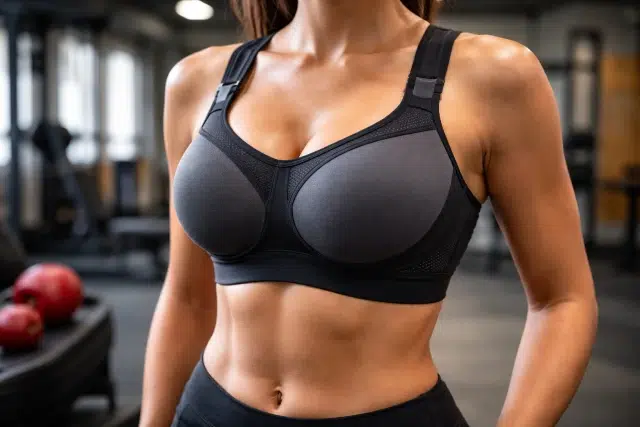
If you have a fuller bust, you have probably learned this the hard way: a random “cute” sports bra is not the same thing as real support. High-impact workouts like running, HIIT, jumping rope, boxing drills, and court sports create movement in multiple directions, and without the right bra, that movement can mean discomfort, shoulder strain, skin irritation, and a constant need to readjust. When people search Biggest Bra Size, they are often trying to figure out two things at once: what “biggest” really means in bra sizing, and how to stay comfortable and confident while training.
This article is your practical guide to choosing high-impact workout support when you wear a larger size. We will cover how bra sizing actually works, what features matter most for stability, how to pick the right style for your workout, and how to get a fit that feels secure without feeling suffocating. Research consistently shows that a well-designed sports bra can significantly reduce breast movement during running.
What “Biggest Bra Size” really means in fitness and fashion terms
“Biggest bra size” can mean different things depending on where you live, which brand you buy, and whether you are talking about off-the-rack sizes or custom-made bras. In everyday shopping, bra size is a combination of two measurements:
- Band size: the number (like 32, 36, 40) is based on your ribcage measurement.
- Cup size: the letter (like D, G, K) is based on the difference between bust and band.
Here is the part many people miss: cup letters are not universal “volumes” on their own. A 32G is not the same breast volume as a 40G. Cup size scales with band size, which is why the same letter can feel totally different across different bands.
From a lifestyle and fitness perspective, “Biggest Bra Size” often translates to “I need serious support that actually works.” And that is less about chasing a record size and more about choosing the right engineering for your body and activity level.
Why high-impact workouts feel harder with a fuller bust
High-impact movement is not just up and down. Your chest can move:
- Up and down (vertical)
- Side to side (lateral)
- Forward and back (anterior-posterior)
When that movement is not controlled, it can lead to pain and discomfort. Studies measuring breast kinematics during running show that sports bras reduce breast displacement compared with everyday bras or no support, with measured reductions reported in research.
That reduction matters for more than comfort. When you are distracted by bounce, you often change your posture, shorten your stride, tighten your shoulders, and even avoid certain exercises. That is a fitness issue and a confidence issue at the same time.
The two main support systems: compression vs encapsulation
If you remember one section from this article, make it this one. High-impact support comes down to how the bra controls motion.
Compression support
Compression bras press the bust closer to the chest wall to reduce movement. They often feel sleek and sporty.
Best for:
- Smaller to medium busts
- Lower to moderate impact activities
- People who prefer a “locked down” feel
Possible downside for larger busts:
- Can create a “uniboob” feel
- May not control side-to-side movement as effectively on very full busts
- Can feel too tight around the ribs if sizing is off
Encapsulation support
Encapsulation bras use separate cups (like a structured bra) to support each breast individually.
Best for:
- Larger busts
- High-impact workouts
- Better shape, separation, and control
Many experts describe combination designs that blend encapsulation and compression for the best high-impact performance.
If your goal is serious high-impact support in a larger size range, encapsulation or hybrid designs are usually the strongest starting point.
High-impact support checklist for larger sizes
A high-impact bra for a fuller bust should feel secure, but not painful. These are the features that tend to matter most.
1) A firm band that does most of the work
The band is the foundation. If the band is too loose, straps get overloaded, shoulders hurt, and bounce increases.
What to look for:
- Firm, wide underband
- Multiple hook-and-eye closures for adjustability
- Band stays level around your torso, not creeping upward
Quick self-check:
Raise your arms and twist side to side. If the band slides easily, it is not giving you real support.
2) Supportive cup structure that matches your breast shape
For larger sizes, cups should contain tissue without cutting in.
Good signs:
- No spilling at the top or sides
- No “floating” cup fabric with empty space
- The center panel (if present) sits comfortably against the sternum in structured designs
3) Straps that stabilize without digging
Straps should help fine-tune fit, not carry the full weight.
Look for:
- Wider straps for comfort
- Adjustable straps, ideally with easy adjustment sliders
- Optional cross-back or racerback configuration for extra stability
Avoid:
- Thin straps that create pressure lines
- Straps that slip constantly even when adjusted
4) Reduced stretch in high-motion zones
Stretch is not always your friend. High-impact bras often use firmer materials and reinforced panels to reduce bounce.
Look for:
- Stabilizer panels
- Higher neckline or structured upper cup for containment
- Minimal bounce when you do a quick jump test
5) Breathability that works in real workouts
For lifestyle comfort, fabric matters.
Look for:
- Moisture-wicking lining
- Ventilation zones or mesh panels placed strategically
- Smooth seams that reduce chafing
Because with bigger sizes, friction is not a small issue. It can ruin your workout week.
How to pick the right high-impact bra for your workout style
Not all “high impact” workouts stress the body the same way. Match the bra to how you move.
Running and HIIT
You need strong vertical and forward-back control.
Prioritize:
- Encapsulation or hybrid support
- Firm band and stable cups
- Higher coverage for containment
- Minimal stretch on the upper cup
Jump rope, plyometrics, dance cardio
You need multi-directional control and a secure feel.
Prioritize:
- Compression plus encapsulation if possible
- Wide, stable straps
- Snug underband
- A neckline that prevents spillage during repeated jumps
Boxing, kickboxing, agility drills
You need side-to-side stability and a bra that stays put during pivots and torso rotation.
Prioritize:
- Strong side panels
- A back design that prevents strap slip
- High-impact support that does not restrict breathing
Strength training
This is often moderate impact, but still needs stability during bent-over movements.
Prioritize:
- Comfortable compression or light encapsulation
- Good range of motion in shoulders
- Breathability and chafe-resistant seams
A lot of people with a bigger bust prefer a supportive high-impact bra even for lifting simply because it feels more secure. That is personal, and it is valid.
Fit matters more than the label: how to check if it’s actually working
A bra can say “high impact” and still fail you if the fit is wrong. Here’s how to check like a pro in under two minutes.
The 60-second fitting test
Put the bra on and do this:
- Deep inhale
You should be able to breathe fully. If you cannot, the band may be too tight or the cup shape may be wrong. - Arm raise
The band should not ride up. The cups should not shift dramatically. - Jog in place for 10 seconds
Watch and feel for bounce. Some movement is normal, but it should feel controlled, not chaotic. - Lean forward
No spillage. No gaping. No painful digging.
If the bra fails more than one of these checks, it is not your bra, even if it looks great.
Common problems with bigger sizes and how to fix them
Problem: The band rides up in back
What it usually means:
- Band too big
- Band not firm enough
Fix:
- Go down in band size and up in cup size if needed (a common fit adjustment).
- Choose bras with wider, firmer underbands.
Problem: Straps dig into shoulders
What it usually means:
- Band not supporting enough
- Cup shape mismatch causing weight shift
Fix:
- Start with the band fit first.
- Look for wider straps and better cup structure.
Problem: Spillage at the top during jumps
What it usually means:
- Cup too small
- Neckline too low for your activity
Fix:
- Move up a cup size or choose fuller-coverage cups.
- Consider bras designed specifically for high-impact containment.
Problem: Chafing under the band or between breasts
What it usually means:
- Too much movement
- Rough seams or sweaty friction
Fix:
- Choose smoother seam finishes and moisture-wicking lining.
- Make sure the band is snug enough to reduce rubbing.
- Consider anti-chafe balm for long runs.
High-impact bra styles that work well for larger sizes
This is the fashion and lifestyle part people care about, because support is not the only goal. You want something you will actually wear.
Encapsulation sports bras with underwire
Why people like them:
- Strong lift and separation
- Great for high-impact control
Watch out for:
- Underwire fit must be correct to avoid discomfort
- Not everyone likes wire during intense sweat sessions
Wireless encapsulation bras
Why people like them:
- More comfort with good structure
- Often a strong option for daily workouts
Watch out for:
- Some wireless designs lose stability in the very largest sizes unless reinforced
Hybrid designs (encapsulation + compression)
Why people like them:
- Strong motion control without feeling bulky
- Often a sweet spot for running and HIIT
Research on sports bra characteristics shows a wide range of breast movement reduction across designs, which is why the right structure matters more than the marketing label.
Front-zip high-impact bras
Why people like them:
- Easy on and off
- Helpful if you struggle with shoulder mobility
Watch out for:
- Zippers must be well-designed to avoid rubbing
- Not all zips provide the same stability as a firm back closure
A simple sizing approach for fuller bust workout support
You do not need complicated math, but you do need consistency.
- Measure your underbust snugly for the band.
- Measure the fullest part of your bust without compressing too much.
- Use the brand’s sizing chart for sports bras, because sports bra sizing can differ from everyday bra sizing.
- When in doubt, prioritize band fit first, then adjust cup.
If you are between sizes:
- Choose the size that gives the best band stability for high impact.
- Make sure the cups do not cut in or flatten uncomfortably.
And if you are shopping online, choose sellers with clear return policies, because fit is personal.
How to build a small “sports bra wardrobe” that fits real life
If you train regularly, one bra does not do everything.
A practical setup:
- One high-impact bra for running, HIIT, and jump-heavy sessions
- One medium-impact bra for strength training and brisk walks
- One comfort sports bra for lifestyle days, errands, and recovery
This approach helps your bras last longer and keeps you comfortable across different workouts.
Care tips that keep support strong
Support wears out faster when elastic gets cooked by heat and sweat.
Do this:
- Air dry whenever possible
- Wash on gentle cycle in a lingerie bag
- Use mild detergent
- Fasten hooks before washing to prevent snagging
Avoid:
- High heat drying
- Fabric softener (can reduce wicking performance over time)
- Twisting and wringing, which can distort the band
If your high-impact bra suddenly feels bouncier than before, it may not be your body changing. It might be the elastic giving up.
Confidence and comfort: the lifestyle side nobody talks about enough
The right support changes how you show up. You stop thinking about bounce. You stop tugging straps mid-set. You stand taller. You breathe better. And you can wear fitted gym tops without feeling like you need to hide. In the world of sports bras, support is not a luxury. It is equipment.
This is why “Biggest Bra Size” is not just a sizing question. It is a comfort and confidence question. When your support is right, your workouts feel more like freedom and less like a negotiation.
Conclusion: Biggest Bra Size support is about smart structure, not suffering
Choosing high-impact support when you wear a larger size is not about forcing yourself into the tightest bra you can tolerate. It is about smart structure: a firm band, stable cups, supportive straps, and materials that reduce motion while letting you breathe and move.
If you want one takeaway: start with the band, choose encapsulation or hybrid support for high impact, and test the bra with real movement before committing. Once you find your right fit, training gets easier, outfits look better, and your focus goes where it should: your performance.