As of 2025, global data traffic continues to grow at double-digit rates each year, driven by cloud computing, AI workloads, video streaming, and enterprise digitalization. Industry analysts estimate that fiber-optic connections now carry over 90% of international data traffic, making optical networking components more critical than ever for modern networks, according to the IEEE ComSoc latest blog.
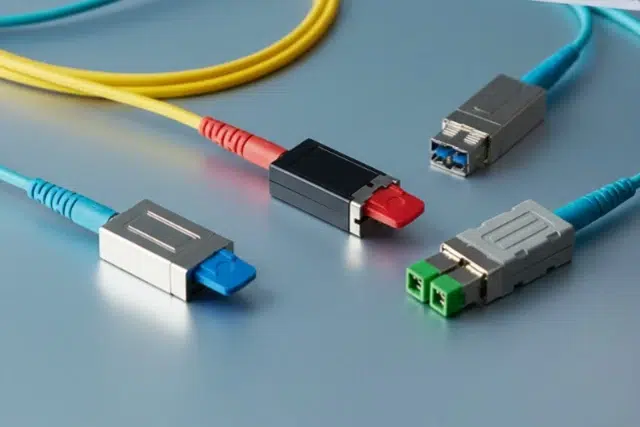
One essential component enabling this high-speed, flexible connectivity is the SFP module. Small Form-factor Pluggable (SFP) modules allow network devices to adapt to different transmission speeds, distances, and media types without replacing core hardware.
However, choosing the right SFP module requires understanding factors such as data rate, transmission distance, and compatibility with existing equipment.
For anyone looking to build a flexible and efficient network, knowing what SFP modules are and how to select the right one is a critical step.
Understanding SFP Modules
The Small Form-factor Pluggable (SFP) module is a hot-swappable transceiver packed into a compact space, designed to enable a network switch, forthcoming router, or other network equipment to facilitate sending and receiving data via fiber-optic or copper cables.
Unlike solidified port designs, SFP modules can be pulled out and placed as and when required, thereby allowing a networking admin to change their network configuration and not have to power down a device.
Primarily designed for rates up to 1Gbps, SFP technology has undergone extensive evolution. Nowadays, superior forms of SFP technology, including SFP+, SFP28, and QSFP are designed to cater to high-speed access, typically in the 10 Gbps to 400 Gbps speed ratio, responding to the huge thirst for high-caliber enterprise and data center networks.
Why SFP Modules Are Essential in Modern Networks
Current network infrastructure should be able to operate within different environments: from short-range setups in a building’s data center to long-distance links between two buildings or campuses. SFP modules give you that flexibility in that you can plug in a transceiver to a switch or router and immediately get support for a different cable type and different distance.
This circumvents hardware costs, adds scalability, and minimizes downtime. SFP modules are now just a block of the standardized ‘flexible network’ modules resulting from the numerous designing possibilities the market presents.
Common Types of SFP Modules
SFP modules are generally classified based on speed, transmission medium, and distance. Fiber-based SFP is usually used for long distances and high speeds, while copper-based SFP supports short Ethernet connections with standard RJ45 cables.
Single-mode fiber SFPs are meant for long-distance communication and multi-mode fiber SFPs are mainly for data pathways within buildings or campuses. The selection between the two depends on the physical layout and network performance requirements.
Key Factors to Consider When Choosing an SFP Module
One of the most crucial points for any SFP module in any network deployment is compatibility. SFP types differ from one device to another-a fact aggravated by variations in supported speed, wavelength, and vendor specifications. If at all, the use of non-compatible modules may lead either to poor performance or complete link failures.
Another major consideration for an SFP is the distance under consideration. Where only short links are needed, use of long-range SFPs can significantly increase the cost to the network for no good reason, while the cost of employing short-range SFPs for a long fiber run is excessive signal loss. This is why the data rate, fiber type, and connector standards all must match the existing network infrastructure.
Launching SFP modules also must deal with environmental considerations. For industrial or outdoor deployments, ruggedized SFP modules capable of performing in extreme environmental conditions such as temperature or strong signals should be used.
Performance, Reliability, and Network Efficiency
Organizations will incur tremendous financial losses from network downtimes long past 2025. These losses can reach up to a thousand dollars every hour. Deploying high-quality SFP modules works to reduce this potential damage by ensuring a steadier stream of data and overall network performance.
The latest changes to SFP improvements are things like Digital Diagnostic Monitoring (DDM). This allows administrators to monitor temperature, voltage, and signal strength in real time. With such data insight allows maintenance to be done proactively to prevent oscillatory equipment failure before downtimes.
Best Practices for Deployment and Maintenance
Installing and handling an SFP module is of great help for reaching high reliability in the long term. Careful insertion of a module, maintenance, and dust protection are some of the most important features, along with correct cabling. Many network management tools can gauge link performance for early detection of any degradations.
Today’s enterprises that plan for growth should also think about future bandwidth needs when selecting an SFP module. Making an investment in a higher-capacity or upgrade-ready model will surely cut off replacement costs as the needs of the network grow.
Choosing the right SFP module — based on compatibility, distance, and performance requirements—ensures reliable connectivity today while preparing networks for tomorrow’s demands.