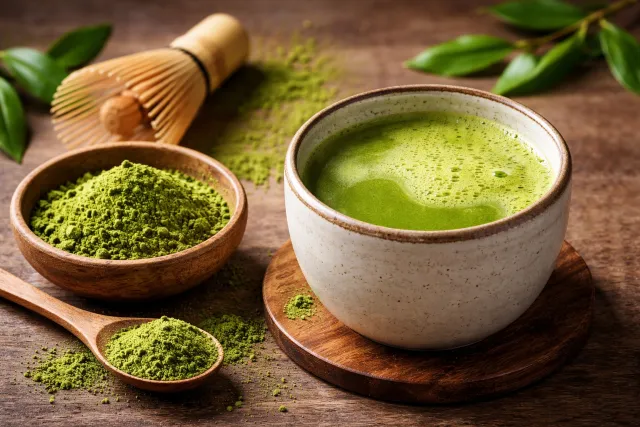
If you’ve ever asked yourself What does Matcha Taste Like, you’re not alone. Matcha has a reputation that’s oddly split down the middle. Some people describe it as smooth, creamy, and pleasantly “green.” Others take one sip and swear it tastes like lawn clippings.
So what’s the truth?
The honest answer is this: matcha has a range of flavors, and the way it tastes depends heavily on quality, preparation, and what you’re used to drinking. When it’s good and made correctly, matcha can taste like a rich green tea with gentle sweetness and a savory, almost brothy depth. When it’s low-grade or prepared wrong, it can swing bitter, chalky, and harsh.
This guide breaks down the taste of matcha in normal-human language, explains why it varies so much, and helps you figure out what you’ll probably taste on your first cup.
The simplest answer: What does Matcha Taste Like?
At its core, matcha tastes vegetal, fresh, and grassy, with a mix of:
- Umami (a savory, almost creamy depth)
- Mild natural sweetness (especially in higher grades)
- Bitterness/astringency (more common in cheaper matcha or poor prep)
- A smooth, thick mouthfeel (because you’re drinking powdered leaf)
Unlike brewed green tea, matcha is suspended in water, so you’re consuming the whole leaf. That’s a big reason its flavor feels bolder and more “present” than regular green tea, and why it can taste intense if you’re not expecting it. A widely cited analysis comparing compounds in matcha vs brewed tea also highlights how matcha can deliver a much higher concentration of catechins (including EGCG) because you consume the leaf itself rather than steeping and discarding it. One study reported EGCG availability from matcha as dramatically higher than a brewed green tea comparator.
Now let’s make that flavor easier to picture.
Matcha’s flavor profile in everyday terms
If you’re trying to imagine matcha before you buy it, think of these comparisons:
- Fresh spinach or baby greens (that clean, green taste)
- Edamame (especially for the savory, nutty side)
- Seaweed or nori (only lightly, mostly as a “marine” umami note)
- A sweet grassy scent like spring fields (more aroma than literal taste)
High-quality matcha often tastes rounded. The bitterness is low, the sweetness is subtle, and the umami is the star.
Lower-quality matcha can taste:
- sharply bitter
- muddy or stale
- chalky
- metallic
- overly astringent (drying on the tongue)
That difference is not you being picky. It’s real, and it comes down to farming, harvest timing, processing, storage, and how you mix it.
Why matcha tastes the way it does
Matcha’s taste is basically chemistry plus craft.
1) Umami and sweetness come from theanine (and how matcha is grown)
Traditional matcha is made from tea plants that are shade-grown for a period before harvest. Shading changes the plant’s biochemistry, increasing compounds like theanine and chlorophyll, and shifting the balance away from harsher polyphenols. A review on matcha’s composition notes shading can enhance accumulation of theanine, caffeine, chlorophyll, and catechins.
That theanine is a big reason good matcha tastes more smooth, brothy, and slightly sweet instead of sharp.
2) Bitterness comes from catechins (and they’re not “bad”)
Catechins are part of what makes green tea famous, but they also contribute bitterness and astringency. If matcha is made from older leaves, grown differently, or processed for culinary use, the bitter edge can be more noticeable.
3) “Grassy” comes from chlorophyll and fresh leaf character
That bright green color isn’t just for aesthetics. Shade-growing boosts chlorophyll, and chlorophyll-rich leaves tend to taste more “green,” fresh, and plant-like. Research on shading in tea cultivation reports changes in chlorophyll content and other quality-related compounds under heavier shade.
What matcha should taste like (by grade)
Not all matcha is meant to taste the same. Here’s a realistic expectation:
| Matcha Type | Typical Taste | Best Use |
|---|---|---|
| Ceremonial-grade | Smooth, creamy umami, mild sweetness, very low bitterness | Drinking straight (usucha) |
| Premium “daily” grade | Balanced green flavor, light bitterness, still pleasant | Straight or light sweetening |
| Latte grade | Stronger bitterness, more “green,” less umami | Milk drinks, sweetened matcha |
| Culinary grade | Bold, bitter, sometimes earthy | Baking, smoothies, desserts |
A lot of people try matcha for the first time in a sweet latte and assume that’s the “real” taste. It’s not wrong, but it’s also not the full story. Milk and sugar can hide bitterness, mute grassy notes, and turn matcha into something closer to a vanilla-green tea milkshake.
So… what does Matcha Taste Like when it’s prepared different ways?
Here’s how the same powder can taste completely different depending on your cup.
Traditional hot matcha (usucha)
This is matcha whisked with hot (not boiling) water.
Expect:
- strongest umami and grassy notes
- thick, slightly creamy mouthfeel
- gentle sweetness if it’s high-quality
- bitterness if it’s low-quality or overheated
If you want the clearest answer to What does Matcha Taste Like, this is the preparation that shows matcha’s true character.
Matcha latte
Milk changes everything.
Expect:
- softer, rounder taste
- less bitterness (especially with sweetener)
- flavors like “sweet cream,” “vanilla grass,” and “toasted nuts” depending on the milk
Tip: oat milk tends to make matcha taste dessert-like, while dairy can emphasize creaminess and soften sharp edges.
Iced matcha
Cold drinks often make matcha taste:
- cleaner and sharper
- less sweet (cold can mute sweetness perception)
- more refreshing and “green”
If you didn’t love hot matcha, you might like it iced.
Matcha in desserts
In cookies, cakes, and ice cream, matcha becomes more:
- nutty
- chocolate-adjacent (in bitterness)
- aromatic and “tea-like”
- less umami-forward
This is why matcha pairs so well with white chocolate, vanilla, strawberry, and toasted flavors.
Why some matcha tastes bitter (and how to fix it fast)
Bitterness is the #1 reason people decide matcha “isn’t for them.” Often, it’s not matcha itself. It’s one of these issues.
Common causes of bitter matcha
- Water is too hot (boiling water can pull harsher notes)
- Too much powder for the amount of water
- Poor whisking (clumps taste stronger and chalky)
- Low-grade matcha used for straight drinking
- Stale matcha (oxidation changes flavor fast)
Quick fixes that actually work
- Use water around 70–80°C (158–176°F) for a smoother cup
- Start with 1–2 grams of matcha
- Sift your powder before mixing
- Whisk until foamy (or use a handheld frother)
- If it’s still harsh, add a splash of milk or a small amount of sweetener and try again
A beginner’s “taste checklist” for your first sip
If you’re tasting matcha for the first time, pause and notice:
- Smell: fresh greens? sea breeze? sweet hay?
- First taste: sweet? bitter? savory?
- Mid-palate: creamy or thin?
- Finish: drying (astringent) or smooth?
Good matcha often has a smooth finish with a lingering, pleasant green-tea aroma. Lower quality matcha can leave a dry, mouth-puckering feel.
What does Matcha Taste Like compared to coffee and green tea?
People often ask this because they’re deciding whether matcha can replace their daily drink.
Matcha vs brewed green tea
- Matcha is stronger, thicker, and more savory
- Green tea is lighter, clearer, and often more floral
- Matcha is less about “tea water” and more about “tea essence”
Matcha vs coffee
- Coffee is roasted, bitter, and acidic
- Matcha is vegetal, umami, and generally less acidic
- The caffeine experience can feel different because matcha contains both caffeine and theanine, which is often discussed as contributing to a calmer alertness in many people. Popular health outlets summarize this effect and why matcha can feel smoother than coffee for some drinkers.
How to tell if your matcha will taste good before you even drink it
You can predict a lot just by looking and smelling.
Color
- Bright, vibrant green usually signals fresher, higher-quality matcha
- Dull olive or yellow-green can signal age or lower grade
Aroma
- Fresh matcha smells like sweet greens, not dust
- A stale or fishy smell is a red flag
Texture
- Finer powder tends to whisk smoother
- Gritty powder can taste chalky
A practical “choose your matcha” guide based on taste preference
If you want matcha but you’re worried about the flavor, match your taste personality:
If you hate bitterness
- Choose ceremonial or premium daily grade
- Drink as a latte at first
- Keep water cooler
If you love dark chocolate, espresso, or hoppy IPA
- You may enjoy a stronger, more astringent matcha
- Try a latte grade in water for a bolder edge
If you like savory flavors
- Look for descriptions like “umami,” “creamy,” “brothy,” “sea breeze”
- Traditional Japanese matcha styles often lean into this profile
Real-life scenarios: what you’ll probably taste
Scenario 1: You buy cheap matcha and whisk it with boiling water
You’ll likely taste: bitter greens, a dry finish, and a slightly chalky texture.
Scenario 2: You buy decent matcha and make an iced oat milk latte
You’ll likely taste: creamy sweetness, light green notes, and a mild tea finish.
Scenario 3: You try high-quality matcha traditionally
You’ll likely taste: smooth umami, soft sweetness, fresh green aroma, and a clean finish.
These scenarios are why the question What does Matcha Taste Like can have totally different answers depending on what’s in the cup.
Frequently asked questions
Does matcha taste like spinach?
It can remind people of spinach or leafy greens, especially in aroma and “green” flavor, but high-quality matcha is usually smoother and more complex, with umami and mild sweetness.
Is matcha supposed to taste sweet?
Not sugary sweet, but good matcha often has a gentle natural sweetness that balances the savory notes. If it tastes only bitter, something is off (quality or preparation).
Why does matcha taste fishy to some people?
That “sea” note is often matcha’s umami showing up strongly, but if it smells stale or unpleasantly marine, it can be oxidation or poor storage.
What does Matcha Taste Like in a latte?
In a latte, matcha tastes softer, creamier, and dessert-like. Milk reduces bitterness and turns the flavor into something closer to sweet cream plus fresh greens.
Can I learn to like matcha?
Yes, especially if you start with a latte or iced version and work toward traditional prep. Many people’s palate adapts quickly once they find a quality powder and the right ratio.
The bottom line
So, What does Matcha Taste Like when you strip away the hype?
It tastes like a concentrated green tea experience: fresh, grassy, and vegetal, with a signature umami depth and a smooth mouthfeel when it’s good. The best matcha has a gentle sweetness and creamy savoriness that feels almost comforting. The worst matcha tastes bitter, dusty, and harsh, usually because of low quality or the wrong preparation.
If you want to enjoy matcha, don’t judge it by one bad cup. Change the water temperature, adjust the ratio, and try it iced or with milk. Once you find a matcha that fits your taste, the flavor starts to make sense, and it’s easy to see why this green tea has become a staple in cafes and kitchens worldwide.