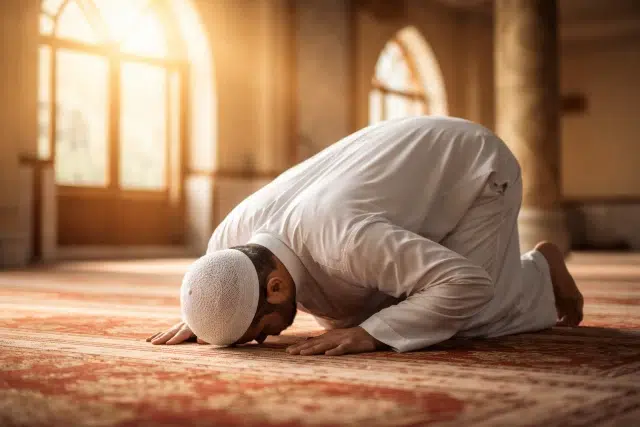
If you’ve ever wondered, What Do You Understand by Kneeling and Bowing Five Times, you’re not alone. The phrase immediately brings to mind devotion, discipline, and a structured spiritual practice. For millions of people around the world, kneeling and bowing five times a day is not just a ritual. It is a deeply meaningful act of faith, humility, and connection with the Divine.
In most contexts, this practice refers to the five daily prayers in Islam, where believers physically bow and prostrate as part of a structured act of worship. But beyond the movements, there is a powerful spiritual philosophy behind it. Let’s explore what it truly means, why it is practiced five times, and how it shapes daily life.
Understanding the Meaning Behind Kneeling and Bowing Five Times
At its core, kneeling and bowing five times refers to the five obligatory daily prayers observed by Muslims, known as Salah. These prayers are performed at specific times throughout the day and include physical movements such as standing, bowing, kneeling, and prostrating.
The five daily prayers are:
• Fajr – Before sunrise
• Dhuhr – Midday
• Asr – Afternoon
• Maghrib – After sunset
• Isha – Night
Each prayer includes cycles of movements called rak’ahs, which involve bowing and kneeling as expressions of submission and humility before God.
When someone asks, What Do You Understand by Kneeling and Bowing Five Times, the answer goes far beyond physical action. It represents obedience, gratitude, discipline, and spiritual mindfulness throughout the day.
The Spiritual Significance of Bowing and Kneeling
Bowing, known as ruku, and kneeling or prostration, known as sujood, are not random gestures. They symbolize surrender and humility.
In sujood, the forehead touches the ground. This position represents the ultimate humility of a human being before their Creator. According to Islamic teachings, this is the closest a person comes to God in prayer.
The Quran repeatedly emphasizes the importance of prayer and prostration. For example, Surah Al-Baqarah 2:43 instructs believers to establish prayer and bow with those who bow. This command reflects unity, discipline, and collective worship.
Psychologists have also studied the impact of regular prayer and meditation on mental health. Research published by the National Institutes of Health shows that structured spiritual practices can reduce stress and improve emotional well being. The repeated act of kneeling and bowing fosters calmness and mindfulness.
Why Five Times a Day?
One common question related to What Do You Understand by Kneeling and Bowing Five Times is why it happens exactly five times.
The number five is not random. According to Islamic tradition, the five daily prayers were prescribed during the Night Journey of Prophet Muhammad. Initially, more prayers were commanded, but eventually reduced to five, while retaining the spiritual reward of many more.
From a practical perspective, praying five times divides the day into spiritual checkpoints. It prevents life from becoming purely materialistic. Each prayer acts as a pause button.
Imagine a busy professional working a demanding job. Stopping five times to reflect, bow, and kneel creates mental resets throughout the day. It builds balance.
Physical and Mental Benefits
While the purpose of kneeling and bowing five times is spiritual, the physical and psychological benefits are noteworthy.
Physical Benefits
The movements in Salah resemble gentle yoga stretches:
• Standing straight improves posture
• Bowing stretches the back and hamstrings
• Prostration increases blood flow to the brain
• Sitting positions support flexibility in knees and hips
Medical professionals have observed that regular prayer movements can contribute to improved joint flexibility and circulation.
Mental and Emotional Benefits
Structured prayer routines help with:
• Stress management
• Emotional regulation
• Increased gratitude
• Better focus
Studies on mindfulness meditation published by Harvard Health indicate that regular contemplative practices lower anxiety levels and improve cognitive function. While Islamic prayer is distinct from meditation, the repetitive spiritual focus produces similar calming effects.
A Discipline That Shapes Daily Life
When discussing What Do You Understand by Kneeling and Bowing Five Times, it is important to recognize the discipline it builds.
Praying five times requires:
• Time management
• Cleanliness and preparation
• Intentional focus
• Consistency
These habits often extend into other aspects of life. Many practicing individuals report improved punctuality and stronger self control because their day revolves around scheduled acts of worship.
It also builds community. Congregational prayers in mosques strengthen social bonds and foster unity among believers.
Symbolism of Humility and Submission
Kneeling and bowing represent humility in action. In many cultures, bowing is a sign of respect. In prayer, it symbolizes submission to God’s will.
This posture reminds individuals that human power is limited. Wealth, status, and achievement disappear when one’s forehead touches the ground.
That moment of humility can be transformative. It nurtures gratitude and reduces arrogance.
Frequently Asked Questions
What is the purpose of kneeling and bowing five times daily?
The purpose is to worship God, maintain spiritual awareness, and structure daily life around faith.
Is it mandatory?
For practicing Muslims, the five daily prayers are obligatory. They are one of the Five Pillars of Islam.
Does it have to be performed in a mosque?
No. While congregational prayer carries additional reward, individuals can pray at home, work, or while traveling.
What happens if someone misses a prayer?
Islamic jurisprudence provides guidelines for making up missed prayers, emphasizing accountability and consistency.
Cultural and Historical Context
The act of prostration is not unique to Islam. Across history, kneeling has symbolized reverence in many civilizations.
In Christianity, kneeling during church services reflects humility before God. In Eastern traditions, bowing is a sign of respect. However, in Islam, kneeling and bowing five times daily forms a structured, mandatory act of worship integrated into daily living.
The practice is closely tied to the broader tradition of Islamic prayer, which outlines detailed steps, timings, and spiritual intentions.
Real World Impact
Let’s consider a practical example.
A university student managing exams, social life, and part time work may feel overwhelmed. Incorporating five structured pauses for prayer can create stability.
These prayer intervals offer:
• Mental clarity
• Emotional grounding
• Spiritual reassurance
Over time, this rhythm builds resilience.
Common Misconceptions
Some people assume kneeling and bowing five times is rigid or burdensome. In reality, many believers describe it as freeing.
Rather than being controlled by constant stress, they anchor themselves to consistent spiritual moments.
Another misconception is that prayer interrupts productivity. On the contrary, short structured breaks often improve performance. Productivity experts frequently recommend interval breaks to enhance focus.
Deeper Reflection on What Do You Understand by Kneeling and Bowing Five Times
If we return to the original question, What Do You Understand by Kneeling and Bowing Five Times, we can now see that it represents:
• A structured daily spiritual practice
• An expression of humility and devotion
• A discipline that organizes life
• A method for mental clarity and emotional strength
• A connection between individual and Creator
It is not simply movement. It is meaning embodied in action.
Practical Insights for Understanding the Practice
If you want to better understand this tradition:
• Observe a congregational prayer respectfully
• Read translations of the Quran
• Study the history of Salah
• Speak to practicing Muslims about their personal experiences
Understanding grows through conversation and openness.
Conclusion
So, what do you understand by kneeling and bowing five times? It is far more than a physical routine. It is a disciplined spiritual framework that structures the day, strengthens character, and fosters humility.
The act of kneeling and bowing five times daily connects the believer to something greater than themselves. It creates rhythm, balance, and purpose in everyday life. Whether viewed spiritually, psychologically, or culturally, it remains one of the most structured and meaningful devotional practices in the world.